Ukraine’s 50-Year Security Proposal: A Long-Term Bet on Peace and Deterrence
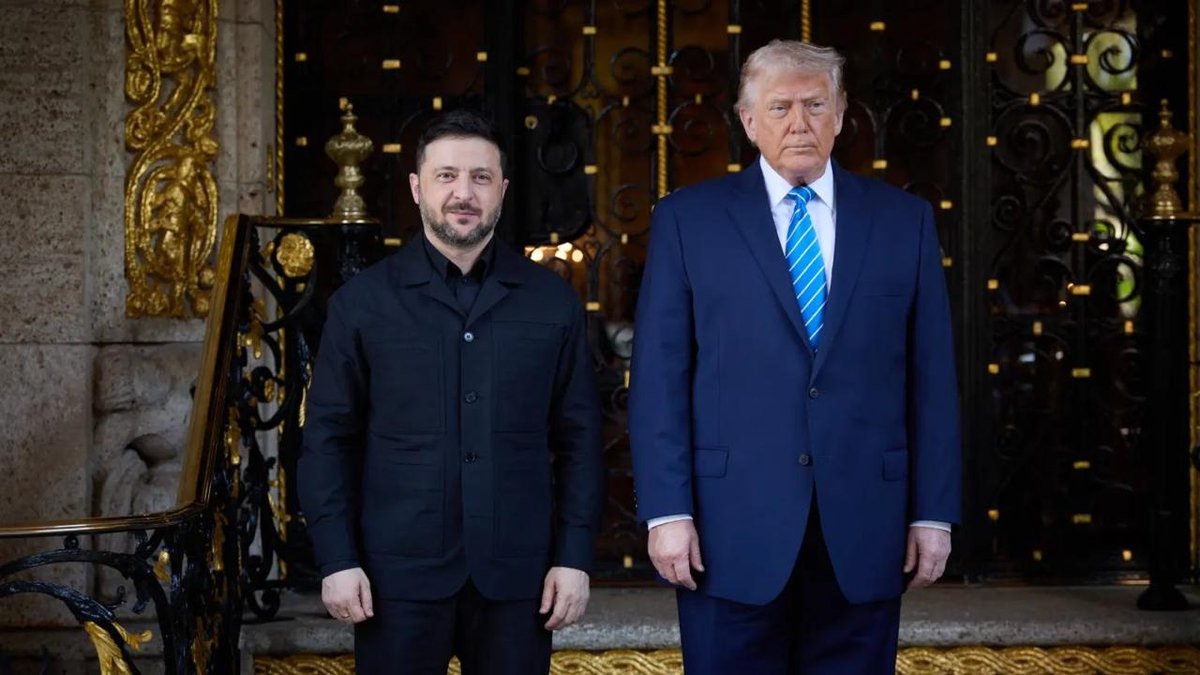
As the war drags on and the human and economic costs keep rising, Ukraine is trying to move the discussion about peace away from tactical pauses and toward a long-term security architecture. In a recent statement, President Volodymyr Zelenskyy revealed that he has asked the United States to provide security guarantees lasting up to 50 years, compared with the 15-year horizon in the current draft peace framework. According to Zelenskyy, only once Ukraine, the United States and European partners agree on such a framework will talks with Russia become meaningful.
That request, ambitious on its face, is more than a negotiating detail. It reflects how Ukraine now sees its place in the European security order, how deeply it distrusts short-term arrangements, and how central Western commitments have become to any eventual settlement. At the same time, Zelenskyy insists that any peace agreement must be approved by Ukrainian citizens through a referendum held during a 60-day ceasefire period, even though Russia at this stage is not ready to declare a ceasefire.
This article unpacks the logic behind a 50-year guarantee, the conditions under which Kyiv believes talks with Moscow could realistically happen, the role of the planned referendum, and the main obstacles that still stand between today’s battlefield and a sustainable peace.
1. From 15 Years to 50 Years: Why the Time Horizon Matters
The difference between a 15-year and a 50-year security guarantee is not just arithmetic. It signals how Ukraine thinks about deterrence, reconstruction, and its alignment with Western institutions.
A 15-year arrangement would likely be interpreted as a transitional safeguard: long enough to cover immediate reconstruction and military rebuilding, but short enough that future leaders could revisit the arrangement or scale it back as the security environment changes. In contrast, a 50-year framework stretches across multiple generations. It resembles the kind of long-standing security commitments that shape alliances and regional orders, rather than temporary ceasefire deals.
For Kyiv, pushing the horizon out to half a century serves several purposes:
• Deterrence beyond political cycles. U.S. administrations change, parliaments and coalitions rotate in Europe, and leadership contests in Russia will eventually reshape Moscow’s policies. Ukraine wants a framework that survives those rotations and signals to any future government in the region that renewed aggression would trigger a predictable, long-term response.
• Anchor for reconstruction and investment. Rebuilding infrastructure, relocating industries and restoring energy systems are multi-decade projects. Investors, development banks and domestic planners all look for long-term security signals. A 50-year guarantee is meant to tell them that Ukraine will not be abandoned after the headlines fade.
• Psychological reassurance for citizens. After years of conflict, many Ukrainians are exhausted but still wary of compromises that could leave the country exposed. A lengthy guarantee from the United States is a way for political leaders to say: any peace plan will not put you back into a grey zone without protection.
The request is therefore as much about political symbolism as legal design. It tells Ukrainians, Russians and Western partners that Kyiv sees its future firmly tied to the Euro-Atlantic camp and expects that relationship to be codified at a level approaching a quasi-alliance.
2. Why Kyiv Wants a Western Framework Before Talking to Moscow
Zelenskyy has emphasized that talks with Russia will only make sense once Ukraine, the United States and Europe have agreed among themselves on what peace should look like. That sequencing is deliberate.
From Kyiv’s perspective, entering negotiations without a pre-agreed Western position would be risky for several reasons:
• Risk of external pressure. If major partners are not aligned on key parameters, Ukraine might face pressure to accept concessions on territory, neutrality or demilitarization in exchange for short-term calm. A shared framework gives Kyiv a degree of protection against ad hoc compromises made under duress.
• Credibility of guarantees. Security commitments are only reassuring if the guarantors themselves have built consensus on their scope and red lines. Agreeing those details in advance makes it less likely that differences among Western capitals will later weaken deterrence.
• Clarity for Moscow. A coherent Western position also simplifies the message towards Russia: there is one peace framework on the table, backed collectively, rather than a menu of bilateral deals that could be played off against one another.
This approach essentially treats peace with Russia as a second step. The first step is for Ukraine and its partners to decide how deeply integrated Ukraine will be into their security architecture and what kind of military, economic and political guarantees will be offered over the long term.
3. The Referendum Requirement: Domestic Legitimacy as a Red Line
Another central element in Zelenskyy’s proposal is that any peace agreement must be approved in a national referendum. The vote would take place during a 60-day ceasefire, giving the public time to debate the terms while active hostilities are paused. Even if foreign governments and negotiators reach a compromise, it will not become binding unless Ukrainian voters endorse it.
This requirement serves several functions:
• Democratic legitimacy. Territorial questions, security guarantees and potential concessions directly affect the future of the nation. A referendum converts those decisions from elite bargaining into a collective choice.
• Shield against accusations of betrayal. Any peace plan is likely to involve painful trade-offs. By putting the final say in the hands of citizens, the government can argue that it did not unilaterally "give away" anything; it facilitated a process where the public made an informed decision.
• Signal of confidence. Asking for a referendum suggests that Ukraine’s leadership believes the population is prepared to engage with difficult realities rather than simply reject compromise on principle.
The referendum plan also introduces complexity. Holding a nationwide vote in a country that has partially mobilized, with many citizens displaced or living abroad, poses significant logistical and legal challenges. It may require creative solutions, such as extended voting periods, robust monitoring and special provisions for refugees. Yet for Kyiv, these hurdles are outweighed by the need to avoid a settlement that lacks public acceptance and could be revisited in the future.
4. The Missing Piece: A Ceasefire Russia Has Yet to Accept
There is a paradox at the heart of the current diplomacy. For a referendum to occur, there must be at least a temporary ceasefire of around 60 days. Yet Russia has so far resisted calls for a ceasefire, preferring to keep military pressure on the ground while negotiations about broad principles continue.
This leaves Ukraine and its partners in a difficult position:
- If they push ahead with designing a 50-year security framework without any sign of a ceasefire, they risk raising expectations domestically that peace is near, when in fact the fighting may continue.
- If they wait for a ceasefire before finalizing the framework, they may never get to the stage where a referendum is even possible.
Because of this tension, diplomats are focused on incremental progress: humanitarian arrangements, prisoner exchanges, and discussions about broader principles, even as territorial control and military operations remain contested. The goal is to reach a point where Moscow sees value in a temporary halt, perhaps in exchange for steps on sanctions relief or reconstruction funds, while Ukraine and its partners insist that any such halt must be tied to a credible long-term security package.
5. Territorial Questions: The Hardest Part of Any Framework
Even with a multi-decade security guarantee, agreed Western coordination and a validated referendum process, one obstacle still looms largest: territory. Which borders would a 50-year guarantee actually protect? How would areas under contested control be treated in a peace plan? And what role would displaced populations play in determining their future status?
Zelenskyy’s remarks acknowledge that territorial issues remain the biggest obstacle to a comprehensive settlement. For both Ukraine and Russia, territory carries not only strategic value but also symbolic weight. Any arrangement involving special statuses, demilitarized zones or international monitoring will be politically sensitive.
Here, the referendum requirement again becomes crucial. A plan that proposes changes to control or administration of certain areas would need explicit public approval. That, in turn, raises the stakes for how clearly the terms are presented and how transparent the trade-offs are. A vague or rushed proposal could be rejected by voters, sending negotiators back to the drawing board.
6. How a 50-Year Guarantee Could Be Structured
While the details remain to be negotiated, several design options are already being discussed in policy circles for what a long-term security guarantee might look like.
• Defense cooperation and arms support. A treaty could formalize commitments on training, equipment supply, intelligence sharing and joint exercises, ensuring that Ukraine’s armed forces maintain a certain level of capability over decades.
• Industrial and energy resilience. Security is not only military. The framework could include support for energy infrastructure, cyber defense and supply chains to reduce vulnerabilities that could be exploited in future crises.
• Automatic consultations and response mechanisms. Similar to other security arrangements, the treaty might contain clauses requiring rapid consultations if Ukraine faces renewed aggression, with pre-agreed steps ranging from diplomatic measures to defense assistance.
• Integration with European structures. A U.S. guarantee would likely be coordinated with European partners and linked to Ukraine’s gradual integration into European institutions, so that commitments are not carried by Washington alone.
Importantly, such a framework can be seen as complementary to, not a replacement for, potential future membership in formal alliances. A 50-year guarantee could serve as a bridge, providing stability while political debates about full membership continue.
7. Broader Implications for the Global Security Order
If implemented, Ukraine’s proposed framework would set precedents that go beyond Eastern Europe.
First, it would illustrate how medium-sized states can seek long-duration guarantees without formally joining existing alliances. That model may be studied by other countries facing security threats but not yet ready or able to join collective defense pacts.
Second, it would reinforce the idea that territorial changes brought about by force are unlikely to be accepted quietly. By tying a long-term guarantee to the outcome of a democratic referendum, Ukraine and its partners would be sending a message that questions of sovereignty and alignment must be resolved with the consent of citizens, not only through power politics.
Third, it would highlight the importance of combining hard security commitments with domestic legitimacy. International guarantees can deter external threats, but they are most resilient when they rest on public support inside the protected state. Ukraine’s insistence on a referendum is a reminder of that connection.
8. What Investors and Observers Should Watch Next
For market participants and observers trying to understand how this evolving security framework may affect regional stability, several signposts are worth monitoring:
• Formal proposals from Washington and European capitals. Drafts or public outlines of a long-term security arrangement will indicate how far partners are willing to go and what conditions they attach.
• Signals from Moscow about ceasefire conditions. Any shift in Russia’s stance toward a temporary halt in hostilities would open the door, at least in principle, to the referendum process and more concrete negotiations.
• Domestic debates within Ukraine. Discussions among political parties, civil society and regional leaders will reveal what kind of compromises might gain enough support to pass a nationwide vote.
• Reconstruction and investment planning. The willingness of international institutions and private investors to commit funds will depend heavily on how credible they judge the future security architecture to be.
9. Conclusion: A Long-Term Horizon in a Short-Term World
In an international environment often dominated by short political cycles and rapid news rotations, the idea of a 50-year security guarantee stands out. Ukraine’s proposal is both a reflection of past experience and a statement about the kind of future it is seeking. It embodies a belief that genuine peace will not come from temporary pauses but from a durable framework supported by major partners and endorsed by citizens.
Whether that vision becomes reality will depend on many factors: the evolution of the conflict on the ground, domestic politics in all countries involved, and the willingness of governments to commit resources and credibility for decades. For now, what is clear is that Kyiv is trying to move the conversation from immediate survival to long-term stability, even as serious obstacles remain.
In that sense, the 50-year guarantee is more than a diplomatic talking point. It is a reminder that for societies living through war, security is not measured only in months or years, but in generations. Any peace that eventually emerges will have to speak to that timescale.
Disclaimer: This article is intended for educational and analytical purposes only. It does not constitute political advice, legal guidance or an endorsement of any specific policy position. Readers should consult multiple sources and expert opinions when forming views on international security issues.