Crypto’s Real 2026 Battleground: Market Plumbing, Not Narratives
Most market recaps treat crypto like weather: a collection of headlines that “explain” a price candle after it forms. But the last 24 hours reads differently if you zoom out. What moved wasn’t only sentiment—it was the market’s belief about infrastructure: who can be trusted, what rails will carry liquidity, and which systems can survive stress without breaking their own credibility.
That sounds abstract until you line up the day’s signals: a reported criminal investigation into the sitting Fed Chair, a legislative push to tighten crypto market structure, stablecoins showing up where sanctions and everyday payments collide, and a fresh reminder that fast on-chain systems sometimes need “undo buttons.” This is not a meme cycle. It’s a plumbing cycle.
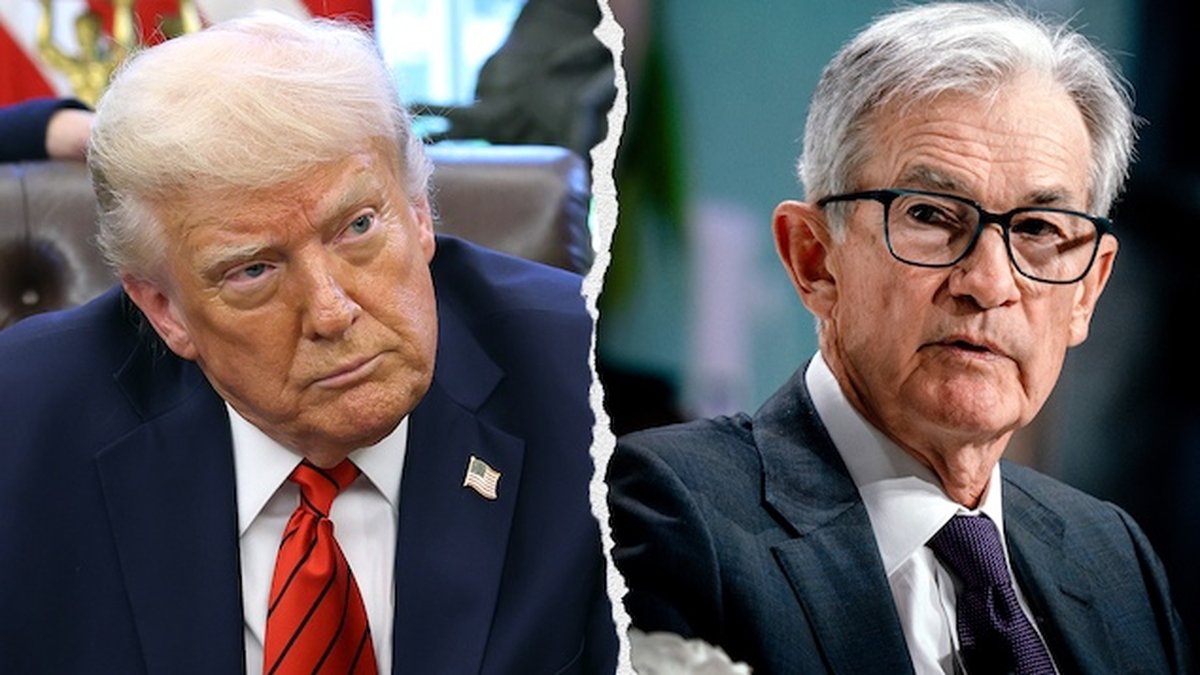
1) The Powell Investigation Isn’t Just Political Noise—It’s a Trust Shock
When markets hear “Fed Chair under criminal investigation,” the first impulse is to trade the headline: lower confidence, higher volatility, maybe a dash of rate-cut speculation. But the deeper issue is institutional trust. Central banks aren’t only rate-setters—they are stability brands. Their power relies on the perception that rules are consistent, process is clean, and policy isn’t being steered by legal turbulence.
In practical terms, a credibility shock can create two opposing forces at once. On one hand, traders may price in a more dovish future if the Fed becomes politically constrained or eager to avoid additional stress. On the other hand, risk assets can wobble because investors hate uncertainty around the referee. You can see the split in how different assets tend to react: gold often benefits immediately from institutional doubt, while crypto’s response depends on whether the market interprets the shock as “liquidity-positive” or “system-risk negative.”
The key insight: Bitcoin doesn’t need the Fed to be wrong about rates to benefit; it benefits when confidence in the system’s continuity weakens. But that is a long-game dynamic. In the short run, trust shocks often tighten risk budgets across funds, which can pressure crypto if it’s treated as a high-volatility sleeve.
So the signal here is not “bullish” or “bearish.” It’s that 2026 is shaping into a year where institutional legitimacy matters as much as monetary policy. That changes which crypto sectors outperform: transparent collateral, regulated wrappers, and compliant rails tend to win when the world feels legally complicated.
2) CLARITY Act: Cleaning Up the Tape vs. Redesigning the Game
Markets often celebrate “regulatory clarity” as if it’s a universal good. It’s not. It is a trade: clarity reduces legal ambiguity, but it also defines what must be measured, reported, audited, and sometimes censored. The debate around the CLARITY Act (and related U.S. market-structure proposals) is a perfect example—because it isn’t only about protecting users. It’s about deciding what crypto is allowed to become.
If the stated intent is to target fake volume, wash trading, and opaque reserves, that aims at a real weakness: crypto has historically struggled with credibility in its own market data. Once you clean up the tape, you change incentives. Exchanges and venues that depended on “marketing volume” lose power; venues that can prove real liquidity and enforce surveillance gain it. That is exactly how traditional markets evolved.
But here’s the philosophical friction: crypto started as an attempt to remove gatekeepers, not strengthen them. Market-structure rules can produce a paradox—making the ecosystem safer while also making it more permissioned. The long-term pricing impact is usually positive for core assets (because large allocators can finally participate), yet controversial for experimental governance models (because compliance costs crush small teams and grassroots protocols).
In other words, don’t read “CLARITY” as a green candle. Read it as a filter. If 2026 is a plumbing year, the winners will be the projects that can survive being measured like utilities: audited, stress-tested, and easy to explain to a risk committee.
3) Stablecoins Are Becoming Dollar Infrastructure—Even Where Dollars Are ‘Complicated’
The most important “crypto adoption” story rarely looks like a new token listing. It looks like money quietly choosing the most convenient rails. Stablecoins are doing exactly that, especially in regions where the financial system is either restricted (sanctions) or unreliable (inflation, capital controls, or weak banking access).
Consider Venezuela. Reports indicate stablecoins—particularly USDT—have been used in oil trade flows and everyday economic life as a practical bridge around payment friction. This is not a marketing victory; it’s an infrastructure reality. When stablecoins become the default unit for settlement, they create a shadow dollar network: faster than SWIFT, more portable than cash, and often easier to route than correspondent banking.
Now zoom in from geopolitics to consumer behavior: pilot experiments in Vietnam that convert stablecoin value into local currency through QR-based payment rails show where this is headed. The clever part isn’t the crypto—it’s the last mile. Stablecoins win when they can dissolve into normal payments: a QR scan, an instant conversion, a merchant who doesn’t need to know what USDT is.
Here’s the uncomfortable truth: stablecoins are not “anti-system.” They are increasingly the system’s prosthetic. They patch gaps where traditional rails fail, but they also inherit the system’s enforcement logic: blacklists, compliance partnerships, and surveillance pressure. The market implication is subtle but huge—stablecoin growth is bullish for on-chain activity overall, yet it also pushes the industry toward regulated issuance, transparent reserves, and institution-grade custody.
4) Ethereum’s ZK Focus and Monero’s Momentum Show the Same Hunger—But With Different Answers
“Privacy” is often framed as a moral argument. In reality, privacy is a market demand: businesses need confidentiality, users need safety, and institutions need compliance. That’s why zero-knowledge proofs (ZK) have moved from a niche concept to a strategic direction. ZK is not just about hiding information—it’s about proving correctness without revealing sensitive data. That’s a very different value proposition from pure anonymity.
If Ethereum prioritizes ZK in its medium-term roadmap, it’s partly an admission that scaling alone isn’t enough. The next wave is about being able to move value and identity through systems that are both efficient and legally legible. ZK can enable selective disclosure: you can prove you’re compliant without exposing your entire wallet history. In a world tightening AML standards, that capability is a competitive edge.
Meanwhile, Monero hitting new highs (with some data sources showing prices in the mid-$500s range) reflects something else: a portion of the market wants privacy that is simple, native, and uncompromising. The demand is real—but so is the regulatory tension. That’s why the deeper takeaway isn’t “privacy coins are back.” It’s that the privacy problem is being attacked from two ends: one end says “privacy as a right,” the other says “privacy as a compliance feature.” ZK is the bridge between those worlds—if implemented well.
5) Starknet’s Rollback Reminder: Speed Is Easy—Credibility Is Hard
Layer-2 and app-chain ecosystems compete on latency, cost, and throughput. But the market’s real test is resilience: what happens when something breaks? Reports around Starknet experiencing a serious technical incident—requiring restoration procedures before returning to normal—are a case study in why maturity isn’t just about shipping features. It’s about incident discipline.
In traditional finance, outages are reputational events because they threaten trust in settlement. On-chain systems are no different. When users see rollbacks, halts, or emergency patches, they don’t only worry about the chain—they worry about whether the chain behaves like a dependable utility or a fast-moving startup. And in a plumbing cycle, that difference becomes pricing power.
This also explains why perpetual DEX narratives keep gaining traction: users want self-custody and transparency, but they also want reliability that feels invisible. The winners will be the systems that make complexity disappear without making trust disappear.
6) The ‘Wrapper Layer’ Keeps Growing: Indices, Custody, and the Normalization of Crypto Risk
Another quiet signal in the last 24 hours: the continued construction of tradable reference points—indices, benchmarks, and institutional packaging. When Nasdaq and CME-branded crypto indices emerge, it’s not just a product announcement. It’s an attempt to standardize what “the crypto market” even means for portfolio construction.
Standardization matters because institutions don’t allocate to vibes; they allocate to frameworks. An index is a governance tool: it decides inclusion rules, data standards, and what counts as “real.” Over time, this wrapper layer can reduce volatility by broadening participation—yet it can also concentrate influence in the hands of benchmark providers and regulated venues.
If you want one unifying theme across today’s headlines, it’s this: crypto is becoming easier to hold, measure, and route through traditional pipes. That’s bullish for adoption, but it also shifts where the alpha lives. The alpha moves away from launching new tokens and toward building the infrastructure that institutions can’t ignore.
Conclusion: 2026 Looks Like a Utility Race
The last 24 hours offered a snapshot of the next phase: trust shocks at the top of the monetary system, rule-making in Washington, stablecoins expanding the dollar’s footprint through new rails, and on-chain networks learning that reliability is not optional. This is a different kind of cycle—less about storytelling, more about settlement.
If 2025 was a warning shot against value-less tokens, 2026 is shaping into a sorting mechanism. Markets may still pump narratives, but capital tends to stay where the plumbing is strongest: transparent reserves, credible governance, resilient uptime, and rails that connect to the real economy.
Frequently Asked Questions
1) Does a Fed credibility shock automatically benefit Bitcoin?
Not automatically. In the short run, institutional uncertainty can reduce risk appetite. Over longer horizons, structural distrust in monetary institutions can strengthen the case for scarce, non-sovereign assets—but timing depends on liquidity conditions.
2) Why do stablecoins matter more than most new token launches?
Because stablecoins are used as settlement. They connect trading, payments, remittances, and savings behavior. When settlement rails grow, everything built on top gains optionality.
3) Is regulatory clarity always good for crypto?
It’s good for institutional participation and risk management. It can be bad for permissionless experimentation if compliance burdens become too heavy for small teams or community-run protocols.
4) Why is ZK a big deal beyond privacy?
ZK can enable selective disclosure and verifiable compliance. That makes it useful for institutions that need confidentiality and regulators that need assurance.
5) What should observers watch next?
Watch how legal uncertainty around the Fed evolves, whether U.S. crypto market-structure proposals gain durable momentum, and whether stablecoin rails continue to integrate with everyday payment endpoints.
Disclaimer: This article is for educational and informational purposes only and does not constitute financial, legal, or investment advice. Cryptocurrency markets are volatile, and regulatory outcomes can change quickly. Always do your own research and consult qualified professionals where appropriate.