From BITW to Bank Credit Against Bitcoin: A 24-Hour Snapshot of Crypto’s Integration Into Global Finance
Every now and then, the news cycle offers a compressed picture of where an entire asset class is heading. The last 24 hours did exactly that for digital assets. In the space of a single trading day, U.S. regulators approved a new multi-asset crypto ETP, major banks were linked to credit lines backed by Bitcoin, a large regional bank announced a direct trading partnership with Coinbase and markets priced in a near-certain Federal Reserve rate cut.
At the same time, Bitcoin recovered the 94,000 USD level, Ether traded around 3,300 USD and roughly 150 billion USD flowed into total crypto market capitalisation, partly driven by the liquidation of short futures positions. On the structural side, a cluster of protocol launches, ETF filings and licensing decisions showed how quickly the onchain economy is professionalising.
This article walks through these developments and, more importantly, connects them into a coherent narrative. The goal is not to celebrate every headline, but to understand what they collectively say about the maturity, opportunities and risks of today’s market.
1. BITW and the Rise of Multi-Asset Crypto ETPs
The headline of the day on the regulatory front was the U.S. Securities and Exchange Commission’s approval of BITW, Bitwise’s index-style exchange-traded product that tracks the ten largest cryptoassets by market capitalisation. It is only the second multi-asset ETP of its kind in the American market, following earlier products that focused on narrower baskets or specific themes.
From a structural perspective, BITW matters for three reasons:
1. Index exposure becomes “default”. For many investors, especially those using retirement accounts or model portfolios, buying a diversified basket is simpler than selecting individual tokens. An ETP that behaves like a broad market index allows them to express a view on the overall asset class without taking idiosyncratic project risk.
2. Capital starts to flow beyond Bitcoin and Ether. While BTC and ETH are still likely to dominate the basket, the remaining constituents give smaller protocols a regulated channel into traditional portfolios. Inclusion in such an index can influence liquidity, research coverage and even protocol governance over time.
3. Benchmarks for performance and risk management. With more index-style products, asset managers can compare active strategies against recognisable reference points. That is a prerequisite for a mature industry where mandates, benchmarks and risk budgets are clearly defined.
BITW’s approval also signals something about the SEC’s evolving stance. While individual token listings can still raise complex questions, a diversified ETP that limits exposure to the largest, most liquid assets can be framed as a relatively conservative option for investors seeking broad digital-asset exposure under familiar protections.
2. Banks Extend Credit Against Bitcoin: From Asset to Collateral
In parallel with the BITW decision, Michael Saylor highlighted a list of large U.S. banks that now issue credit lines secured by Bitcoin holdings: Citi, JPMorgan, Wells Fargo, BNY Mellon, Charles Schwab and Bank of America. Even if the scale of these programmes is still modest, the symbolic step is important.
When a bank is willing to lend against an asset, it is effectively stating that the asset is robust enough to serve as collateral under its risk framework. That does not mean Bitcoin is risk-free, but it does mean risk management teams have built models for its volatility, liquidity and correlation characteristics, and feel comfortable integrating it into secured-lending products for certain clients.
This shift has several implications:
• Corporate treasuries. Firms that hold Bitcoin on their balance sheets, whether for strategic or treasury reasons, can now potentially use those holdings to secure credit facilities without selling. That makes BTC behave more like a productive reserve asset and less like a static speculative position.
• Private-bank clients. High-net-worth individuals with significant Bitcoin exposure can treat it more like a portfolio building block, borrowing against it for liquidity needs instead of liquidating in stressed markets.
• Risk management discipline. Credit against volatile collateral requires tight monitoring. Haircuts, margin calls and diversification limits are core safeguards. The fact that traditional banks are building these systems is a sign of growing institutional comfort, but it also means users must understand that borrowing against Bitcoin amplifies both upside and downside.
The regulatory backdrop matters here. The U.S. national bank regulator has clarified that banks may act as intermediaries in digital-asset activities under existing laws, provided they manage risks appropriately. That guidance gives compliance departments a framework within which to innovate, instead of defaulting to blanket exclusion.
3. PNC and Coinbase: Direct Trading Comes to a Mainstream Bank
Alongside credit products, distribution channels are expanding. Regional giant PNC Bank, with around 410 billion USD in assets, has partnered with Coinbase to offer direct Bitcoin trading to its clients. It is the first major U.S. bank to market such a service.
This is structurally different from an ETF. Instead of buying a share in a fund, customers gain direct exposure to the underlying asset via a bank-linked interface. In practice, Coinbase handles trading and custody under its specialised infrastructure, while PNC supplies the client base, brand and regulatory relationship.
The move reflects a simple reality: many clients prefer to keep their financial activities under one umbrella. If a bank does not offer digital-asset access, customers may migrate elsewhere or open accounts on external platforms beyond the bank’s risk perimeter. By integrating with a dedicated crypto provider, the bank retains the client relationship while leveraging specialist expertise.
4. Macro Backdrop: Markets Lean Into the Fed’s Next Move
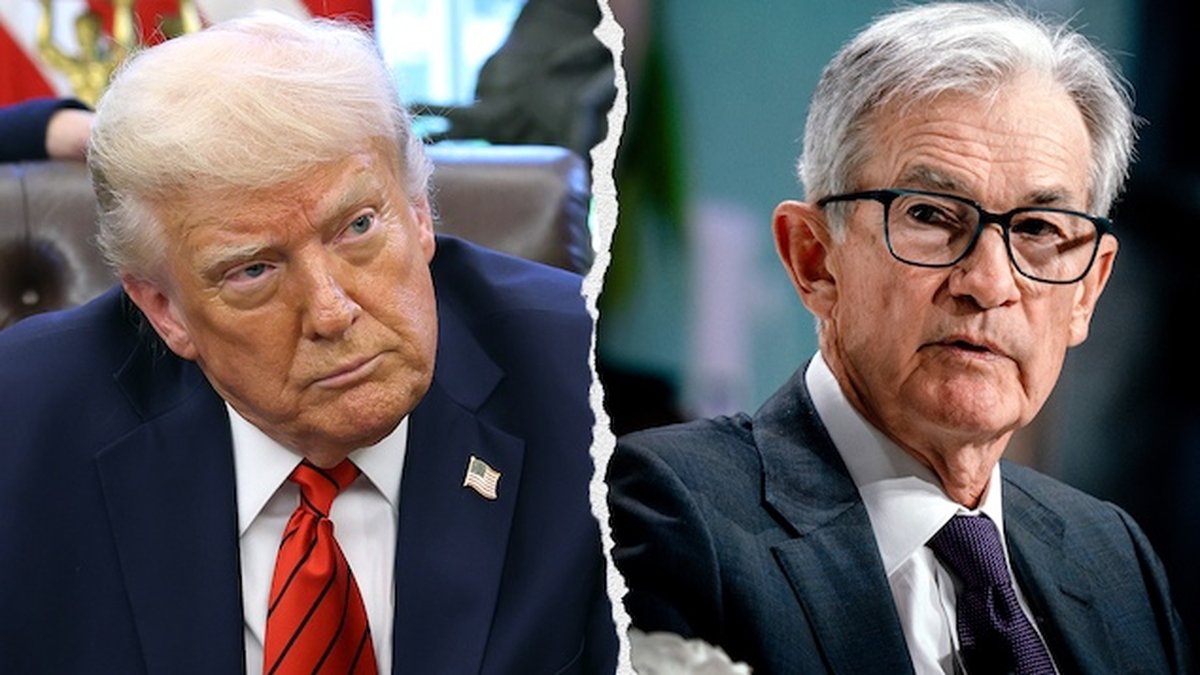
All of this is playing out against a macro environment that is unusually supportive for risk assets. President Trump has publicly stated that immediate rate cuts are a requirement for the next Federal Reserve Chair, while White House economic adviser Kevin Hassett argues there is "plenty" of room for easing. Prediction platforms such as Polymarket assign a roughly 95% probability to a 25 basis-point cut at the upcoming Federal Open Market Committee decision, with a consensus that further reductions will follow if inflation data allow.
A lower-rate environment affects digital assets through several channels:
• Discount rates. When the risk-free rate falls, the present value of future cash flows and long-dated risk premia rises, supporting valuations of growth-oriented equities and, by extension, high-volatility assets like Bitcoin and Ether.
• Search for alternative returns. As yields on cash and short-term bonds decline, some investors look further out the risk spectrum. Crypto, with its 24/7 liquidity and narrative of structural growth, often attracts a fraction of that incremental demand.
• Currency dynamics. Lower U.S. rates can weaken the dollar at the margin, reinforcing the appeal of scarce or non-sovereign assets such as Bitcoin, gold and, as today’s move shows, silver—which has reached a new all-time high around 60 USD.
Rhetoric around tariffs adds another twist. President Trump has hinted he might reduce duties on "some" goods, a departure from earlier episodes of trade tension. Looser trade policy, combined with easier monetary conditions, would reinforce the soft-landing narrative that markets have been pricing for months.
5. Price Action: Squeezed Shorts and a 150 Billion USD Market Cap Jump
Against this macro and structural backdrop, the market’s near-term reaction has been unsurprising. Bitcoin has reclaimed roughly 94,000 USD, while Ether trades near 3,300 USD. Over the same window, total crypto market capitalisation has grown by around 150 billion USD.
A notable part of this move came from positioning rather than fresh spot demand. In the past hour alone, about 155 million USD of short futures positions were liquidated as prices moved higher. When funding markets are skewed toward bearish positions, a modest price rise can cascade into forced buy-backs, accelerating the rally.
Short squeezes do not change fundamentals, but they do remind participants of two important lessons:
- Leverage cuts both ways. Borrowed exposure can amplify returns in calm periods and magnify losses when volatility spikes.
- Risk management matters more than headlines. A well-diversified portfolio with sensible position sizing and clear rules for leverage is more resilient than one anchored on a single directional bet, regardless of how compelling that bet seems in the moment.
6. Long-Horizon Conviction: From Jack Mallers to Strive and SpaceX
In the background of short-term moves, several headlines underscored the depth of long-term conviction around digital assets. Jack Mallers of Twenty One Capital summed up his firm’s approach bluntly: they intend to acquire as much Bitcoin as they responsibly can. Meanwhile, asset manager Strive, co-founded by Vivek Ramaswamy, is reportedly raising 500 million USD to purchase additional BTC.
These announcements do not guarantee future performance, but they illustrate how Bitcoin is being framed inside certain institutional circles: not as a short-term trade, but as a strategic reserve asset. When combined with the earlier news that large U.S. banks are lending against Bitcoin holdings, the picture is one of gradual integration into corporate and asset-management balance sheets.
Interestingly, this strategic narrative is unfolding alongside transformative stories elsewhere in the real economy. SpaceX is said to be targeting a 1.5 trillion USD valuation for a potential 2026 public offering, which would be the largest IPO in history. At the same time, Amazon plans to invest 35 billion USD in India, creating an estimated one million jobs by 2030. Crypto markets do not exist in isolation; they are increasingly one component of a broader technology and capital-investment super-cycle.
7. Onchain Finance and Protocol-Level Developments
While ETP approvals and macro headlines capture attention, the onchain ecosystem continues to evolve at its own pace. Several developments from the last day highlight progress across different layers of the stack.
7.1 Institutional onchain finance: Ondo and Ethena
Ondo Finance hosted its first summit in New York, bringing together institutions exploring tokenized Treasuries, onchain money-market funds and other real-world asset strategies. The goal is to bridge the gap between traditional fixed-income products and programmable settlement, allowing institutions to hold regulated exposures that can interact with DeFi protocols.
Meanwhile, Ethena has been listed by Grayscale Research as one of the top twenty digital assets to watch in Q1 2026. Ethena’s focus on synthetic dollar exposure and hedged yield has attracted attention from users looking for alternatives to traditional stablecoins, though its long-term sustainability will depend on how well its risk-management framework handles volatility and funding-market stress.
7.2 New mainnets and tokens: Intuition, Monad and Plume
Intuition launched its mainnet and the $TRUST token, aiming to build decentralised reputation and information systems. In parallel, Monad went live as a high-performance Layer-1 with its token immediately listed on Upbit, Bithumb, Bybit and Coinbase. Fast exchange listings can accelerate liquidity but also introduce rapid speculative cycles, so watching how developers and users engage with the chain over the coming quarters will be more informative than any first-day price move.
In the regulatory arena, Plume obtained an Abu Dhabi Global Market (ADGM) commercial licence, positioning itself as a compliant hub for onchain activity in the UAE. The Middle East continues to cultivate a role as a jurisdiction that welcomes digital-asset businesses under clear legal frameworks, complementing—and sometimes competing with—Singapore, Hong Kong and European financial centres.
7.3 Data, privacy and infrastructure: zkPass, Chainlink, Hyperliquid and Zcash
zkPass (ZKP) has been added to Coinbase’s spot-listing roadmap. The project focuses on zero-knowledge proofs that allow users to verify information about themselves (such as credit scores or identity credentials) without revealing the underlying data. This kind of privacy-preserving infrastructure is likely to be essential if DeFi and onchain compliance are to coexist.
On the oracle side, Grayscale has filed for a potential Chainlink (LINK) ETF, signalling that data-infrastructure tokens are moving closer to the mainstream. In parallel, Grayscale Research added Hyperliquid (HYPE) to its list of top-twenty assets to watch, underscoring the market’s interest in purpose-built derivatives platforms that operate directly onchain.
Finally, Zcash developments show how privacy assets are entering a more nuanced regulatory conversation. Shielded Labs has proposed a dynamic-commission marketplace aimed at improving incentives for the network, while reports suggest that ZEC may be held in certain U.S. government wallets in a confidential manner. That juxtaposition—privacy-enhancing technology and official scrutiny—encapsulates the delicate balance between user confidentiality and regulatory expectations.
8. Putting It All Together: Integration, Not Isolation
When viewed individually, each of these headlines can feel like just another item in an endless stream of news. Taken together, they describe a clear direction of travel.
• Regulated wrappers like BITW lower the barrier to entry for traditional capital by packaging digital assets in familiar formats.
• Banks extending credit against Bitcoin and partnering with exchanges to offer trading reflect a shift from "crypto versus banks" to "crypto with banks".
• Macro policy leaning toward rate cuts provides a supportive backdrop for all long-duration assets, including digital ones, even as it requires careful monitoring of inflation risks.
• Onchain protocols and Layer-1 launches continue to push the frontier of what can be built, particularly in areas like tokenized real-world assets, data privacy and high-performance execution.
The main risk is not that adoption is slow, but that enthusiasm runs ahead of fundamentals. When market participants see headlines about super-cycles, potential trillion-dollar IPOs and aggressive accumulation plans, it can be tempting to extrapolate recent gains indefinitely. History suggests that cycles driven purely by excitement, without matching progress in sustainable use cases and robust risk management, tend to be fragile.
For that reason, the most constructive way to read this 24-hour news burst is as evidence of structural integration, not as a guarantee of one-way price action. The underlying story is that digital assets are being woven into banks, ETPs, payment systems and institutional portfolios. How smoothly that integration proceeds will depend on regulation, macro conditions and the discipline with which builders and investors manage risk.
Educational Note
This article is designed for education and analysis. It summarises recent public information and places it in a broader context, but it does not constitute financial, investment, legal or tax advice. Digital assets and traditional markets alike can be volatile and carry risk, including the risk of loss of principal. Anyone considering exposure to these markets should carry out independent research, assess their own financial situation and risk tolerance, and consult appropriately qualified professionals before making decisions.