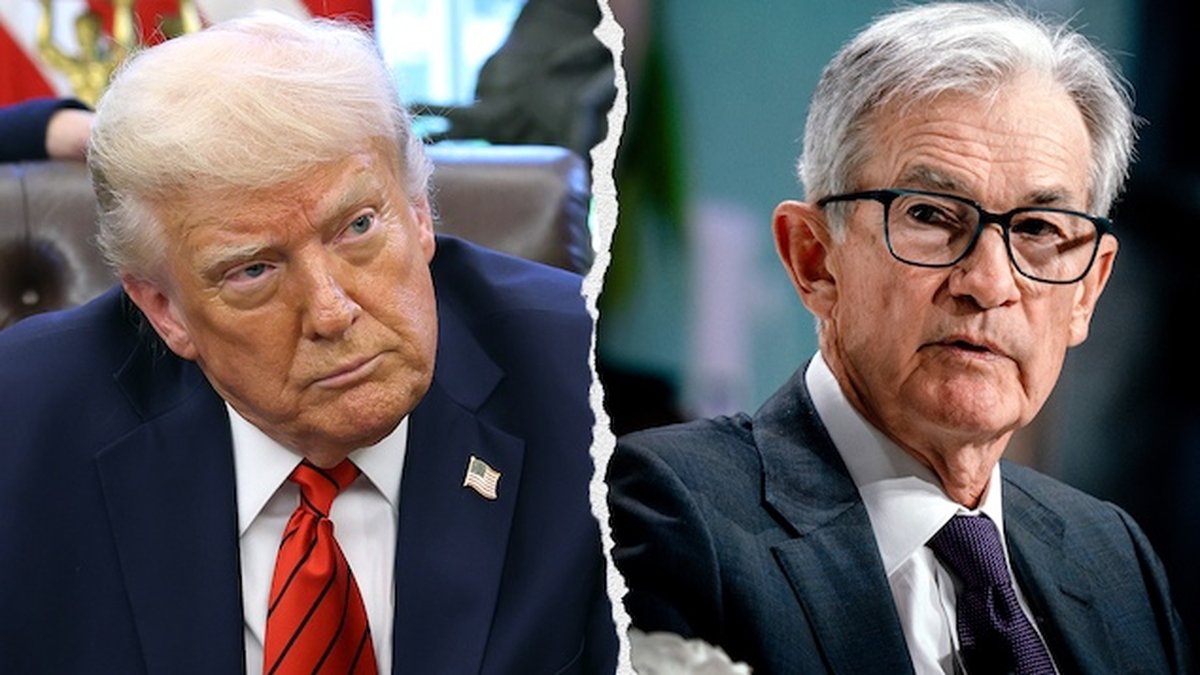

Goolsbee Calls for Patience: What a Slower Fed Means for Gold, Stablecoins and the Next Phase of Crypto
The last 24 hours have delivered a familiar contradiction for global markets: macro caution on one side, structural progress on the other. While Chicago Fed President Austan Goolsbee argues that the US central bank should not rush into aggressive rate cuts, gold has pushed above 4,350 USD and parts of the digital asset space have faced another burst of forced deleveraging. At the very same time, regulators are granting new banking permissions to major crypto firms, stablecoins are entering mainstream brokerages, and new infrastructure keeps rolling out on both Ethereum and alternative networks.
To make sense of this, it helps to separate the noise from the underlying shifts. Short term price swings are being driven by expectations around interest rates and liquidations. But in the background, we are seeing deeper changes in how digital assets plug into the existing financial system. This article unpacks the main headlines and explores what they might mean for the months ahead.
1. Goolsbee vs. the Market: Why One Fed Voice Matters
Austan Goolsbee, who leads the Federal Reserve Bank of Chicago and has a vote on policy decisions, has emerged as one of the most cautious voices on the Federal Open Market Committee. He was one of only two members to formally oppose the most recent rate cut, arguing that inflation near 2.8% is still uncomfortably above the Fed's 2% target and that the central bank should demand clearer evidence before moving further toward an easy-money stance.
His reasoning is straightforward: the labour market, in his view, remains broadly resilient, and the risk of cutting too quickly is that inflation expectations become unsettled again. In other words, he worries about repeating the mistakes of the 1970s, when early celebrations of victory over inflation proved premature.
Why does this matter for digital assets? Because the market had begun to price in a fairly rapid path to lower rates over the next 12–18 months. When a voting member publicly signals discomfort with that pace, it forces investors to re-evaluate how generous liquidity conditions will actually be in 2026. Digital assets tend to be highly sensitive to these expectations: they have historically performed best when real interest rates are falling and policymakers are perceived as supportive of risk-taking.
Goolsbee is not arguing against cuts forever. He has said that by 2026 he still expects policy rates to be lower. But his emphasis on patience means the journey there could be slower and bumpier than optimists hoped. That is a subtle but important distinction for any asset whose valuation depends heavily on future growth and liquidity – including Bitcoin, Ethereum and the broader Web3 ecosystem.
2. Macro Snapshot: Gold Strength, Crypto Liquidations and Diverging Narratives
2.1 Gold quietly prices in long-term uncertainty
Gold moving past 4,350 USD per ounce is more than just a headline about a record high. It reflects deep-seated demand from investors who want a hedge against both inflation and policy uncertainty. When central bankers sound cautious but governments continue to run large deficits, holders of long-term savings often look for assets that are historically resilient in turbulent environments.
In that sense, gold's strength coexists with Goolsbee's message. A slower, data-dependent path of easing implies that the Fed is still worried about underlying price pressures. For some investors, that is a reason to hold more traditional safe assets. For others, it reinforces the long-term case for assets with limited supply – including Bitcoin – even if short-term volatility remains high.
2.2 Crypto weathers another wave of forced selling
Over 140 million USD in crypto positions were liquidated in the last hour alone, according to derivatives data. These episodes have become a regular pattern in the current market: leverage builds up during periods of optimism, then is unwound rapidly when macro headlines or order flow shift.
The important point is that these liquidations say more about market structure than about underlying adoption. Forced selling can temporarily push prices lower even if long-term holders are not changing their view. That distinction is crucial when interpreting short bursts of downside volatility following comments from policymakers like Goolsbee or strong moves in gold.
2.3 Conflicting narratives: from 'digital toy' to emerging collateral
Vanguard, one of the world's largest asset managers, reiterated its view that Bitcoin remains a speculative digital toy rather than a core portfolio component. For its conservative client base, that stance is consistent: Vanguard has long prioritised broad, low-cost exposure to traditional markets over concentrated thematic bets.
Yet elsewhere the picture is very different. A growing number of institutions are treating digital assets, particularly Bitcoin and stablecoins, as legitimate forms of collateral and funding. The same news cycle that carried Vanguard's comment also brought several developments that point in the opposite direction: stablecoins being used to top up brokerage accounts, regulators granting national trust bank status to major crypto firms, and new wrapped assets designed to plug legacy networks into on-chain finance.
3. Stablecoins Move Deeper Into Traditional Finance
3.1 Interactive Brokers opens the door to stablecoin-funded trading
Interactive Brokers, a global name in equities, options and futures, has announced that brokerage accounts will be able to receive funding via crypto stablecoins. This is a quiet but significant step toward normalising digital cash equivalents as part of everyday portfolio management.
From the user's perspective, the advantage is practical: funds can move faster than traditional wire transfers, time zones matter less, and transaction costs can be lower. For Interactive Brokers, the move helps attract clients who hold a portion of their liquidity in tokenised dollars and want to bridge seamlessly between on-chain and off-chain markets.
More broadly, stablecoin-based funding blurs the line between 'crypto investing' and traditional investing. A client who funds an account via stablecoins might still buy only equities or bonds, but the underlying payment rail is already digital-asset-native. Over time, that makes it easier to imagine a world where tokenised treasuries, real-world asset funds or on-chain repo markets exist alongside conventional instruments in a single interface.
3.2 OCC grants conditional trust charters to major crypto firms
The US Office of the Comptroller of the Currency has issued conditional approval for Ripple, BitGo, Fidelity Digital Assets and Paxos to operate as national trust banks. While these approvals come with conditions and supervisory expectations, they are nonetheless a major milestone.
National trust charters allow these firms to provide custody and related services across the United States without navigating a patchwork of separate state licences. That reduces operational friction and gives institutional clients greater clarity about how their assets are held and supervised. It also signals that digital asset specialists are increasingly being treated as part of the banking perimeter rather than permanent outsiders.
For stablecoins in particular, this matters because bank-level infrastructure can support more robust reserve management, clearer disclosure and better integration with payment systems. Circle, Paxos and others have long argued that regulation at the federal level would ultimately strengthen confidence in tokenised dollars. The OCC's latest moves push the ecosystem further in that direction.
3.3 Tether's interest in Juventus: branding, not just balance sheets
In a separate headline, USDT issuer Tether has reportedly submitted a proposal to acquire Italian football club Juventus. While the outcome of that process remains uncertain, the intent alone tells us something about how large stablecoin issuers are thinking.
Owning or partnering closely with a major sports brand would not only diversify corporate assets but also embed a tokenised-dollar brand inside mainstream culture, from stadium payments to fan engagement programmes. It is another example of how digital assets are moving from niche finance into broader consumer contexts. For regulators and investors, the key question will be how such ventures are funded and governed, and whether core reserve backing for stablecoins remains ring-fenced from more speculative corporate activities.
4. Policy, Politics and the Long Road to Comprehensive Legislation
Despite all this structural progress, the legislative path for clear, nationwide crypto rules in the United States remains uncertain. Prediction platforms now price the probability of comprehensive market-structure legislation being signed into law this year at roughly 7%. That low figure reflects both political complexity and competing priorities in Washington.
Legal debates are not limited to digital assets. California and several other states have launched legal action against the federal government over a new 100,000 USD fee for H-1B visa applications, arguing that it could harm innovation and the supply of skilled workers. At the same time, President Trump has floated the idea of cutting taxes on certain gaming-related winnings and has publicly argued that interest rates should fall to 1% or lower next year.
For markets, this mix of policy signals is confusing. On the one hand, there is clear political appetite in some quarters for lower borrowing costs and more supportive conditions for risk assets. On the other, actual decision makers at the Fed, such as Goolsbee, are urging patience, and legislative progress on crypto-specific rules is slower than many industry figures hoped.
The upshot is that digital asset markets are likely to continue operating in a world where regulatory clarity improves step by step—through charters, guidance and court decisions—rather than via one sweeping law that settles every issue at once.
5. Micro Stories: Wrapped XRP, Protocol Controversies and New Trading Features
5.1 Hex Trust brings XRP into cross-chain liquidity
Institutional custodian Hex Trust has launched a wrapped version of XRP (wXRP) on the LayerZero interoperability framework, backed 1:1 by native XRP. From an infrastructure point of view, this is part of a broader effort to plug legacy networks into the multi-chain world.
Wrapped assets allow holders to use familiar tokens in new environments—such as lending protocols or liquidity pools on other chains—without abandoning the original chain's ecosystem. For XRP, whose primary use case has historically focused on cross-border payments and institutional settlement, wXRP could become a bridge into newer DeFi-style architectures, assuming risk controls and transparency around reserves are maintained.
5.2 Governance tensions surface at Aave
Within the Aave ecosystem, delegates and community members have raised concerns about the revenue distribution of a new interface built on top of the CoW Swap aggregator. Critics argue that a portion of trading-related fees that could have flowed into the Aave DAO treasury may instead be accumulating in an external address that is not explicitly subject to on-chain governance.
This dispute highlights a recurring theme in decentralised finance: aligning incentives between front-end providers, protocol contributors and token holders. As products mature and generate meaningful cash flows, questions about who controls interfaces and how revenue is shared are becoming more prominent. For observers, it is a reminder that decentralisation is not just a technical property but a continuous governance process.
5.3 Ondo expands to BNB Chain, Jupiter and Hyperliquid keep building
Real-world-asset specialist Ondo Finance has expanded its products to BNB Chain, working with partners such as Shift and xStocks. The move fits a wider pattern in which tokenised treasuries and yield-bearing products aim to be chain-agnostic, making regulated yield accessible across multiple ecosystems.
On Solana, Jupiter continues to be viewed by some analysts as one of the more promising DeFi-focused assets after recent funding news tied to Ethereum infrastructure. The key long-term question is whether exchange and liquidity-routing platforms like Jupiter can translate transaction volume into sustained protocol revenue once the current cycle of enthusiasm settles.
Derivatives venue Hyperliquid, meanwhile, is preparing to introduce margin accounts as part of its next network upgrade. If executed safely, margin enhancements could improve capital efficiency and make it easier for sophisticated traders to manage directional and hedging positions on-chain. As always, however, increased leverage magnifies both opportunity and risk, and responsible use remains critical.
5.4 A security wake-up call at Zerobase
Not all headlines are positive. Zerobase has reported a security incident affecting its user interface, through which malicious actors were able to misdirect transactions and obtain over 240,000 USD from more than 270 users. While the sums are modest relative to the size of the market, the episode is a reminder that front-end security and clear signing prompts are as important as smart-contract audits.
For users, this underlines the value of cautious behaviour: double-checking URLs, using hardware wallets where possible, and testing with small amounts before committing larger sums to any new platform. For builders, it emphasises that trust is earned not only through technical elegance but also through operational resilience and swift incident response.
5.5 From oncology to compute: AGPU rebrands
On the capital markets side, Predictive Oncology has rebranded as Axe Compute and now trades on Nasdaq under the ticker AGPU. The shift reflects a broader repositioning toward data and compute infrastructure, themes that increasingly intersect with both AI and blockchain. While the company is not a pure crypto play, the rebranding highlights how quickly market narratives are rotating toward computational intensity as a core driver of value.
6. How All of This Fits Together
Taken together, the past day's headlines share a common pattern: short-term uncertainty, long-term integration.
• On the macro side, Goolsbee's caution and renewed debate about the pace of rate cuts remind markets that monetary policy will not necessarily deliver a straight line back to near-zero rates. That keeps volatility elevated and reinforces the need for risk management.
• At the same time, assets traditionally associated with stability, like gold, are making new highs, while stablecoins quietly become accepted funding tools for major brokerages and potential owners of household-name sports clubs.
• Regulators such as the OCC are bringing leading crypto firms into the national banking framework, even as legislative progress remains slow and large asset managers express scepticism.
• On-chain, wrapped assets, cross-chain expansion, new margin systems and governance debates show that the crypto-native world is still experimenting and iterating rapidly, far beyond daily price moves.
For individual participants, the key is to distinguish between noise and signal. Liquidations, social media commentary and political soundbites can move prices in the short run, but the deeper story lies in whether digital assets are becoming more integrated into real-world finance and whether the surrounding infrastructure is becoming safer and more robust.
In that sense, the current environment rewards a disciplined, long-horizon approach more than ever. Rather than chasing every spike, it may be more constructive to monitor how institutions adopt stablecoins, how banking charters evolve, how regulatory attitudes shift over time and how protocols address governance and security challenges. Those elements are likely to shape the next multi-year cycle far more than any single data point on inflation or any one comment about digital assets being a toy.
The message from the last 24 hours is therefore mixed but ultimately constructive: monetary policy remains uncertain, but the structural integration of digital assets into mainstream finance continues to advance. For an industry still working to prove its durability beyond speculative phases, that slow, steady progress could matter more than headline volatility suggests.