Greenland’s Economic Slowdown Is Not a Footnote—It’s the Price Tag Behind the Geopolitical Headlines
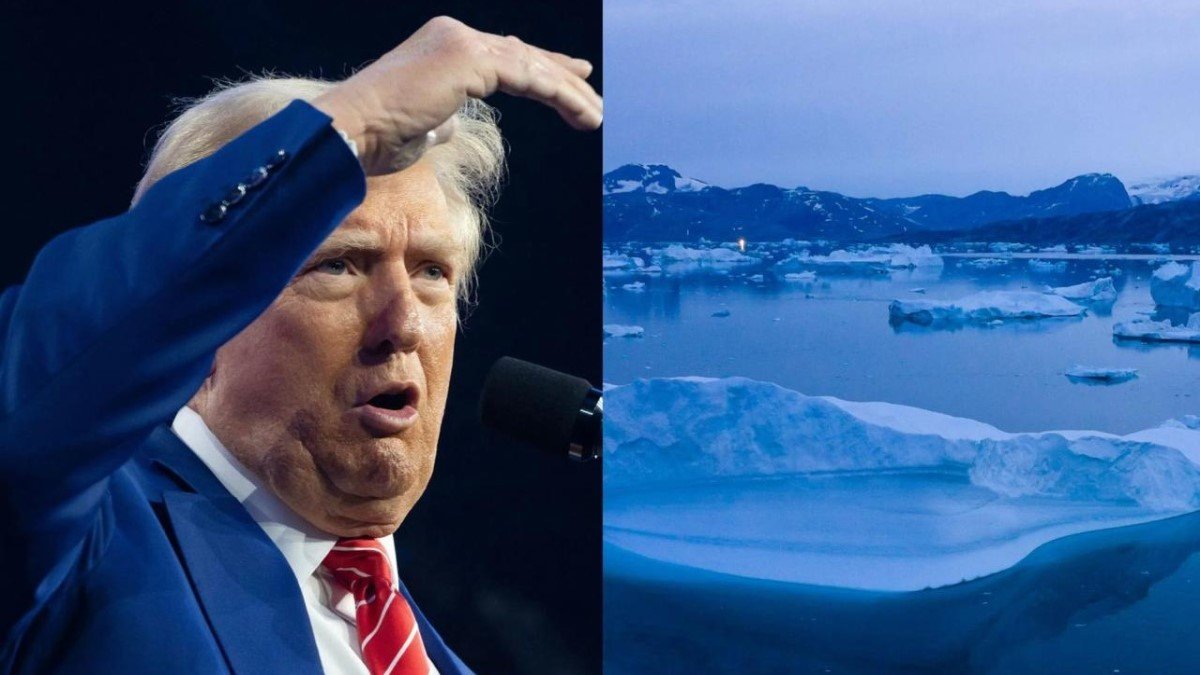
When U.S. President Trump says America needs to “take over” Greenland for security reasons, the debate usually jumps straight to geopolitics: sovereignty, alliances, and strategic posture in the Arctic. But there is another layer that quietly determines what is plausible. Greenland is not just a piece of territory; it is an economy with real constraints—slow growth, a narrow export base, an aging and shrinking population, and a public-finance profile that can worsen quickly when one core industry wobbles.
This piece avoids arguing what is right or wrong. Markets and macro outcomes do not price morality first—they price feasibility, funding, and second-order effects. If Greenland’s economy is slowing to around 0.8% annual growth and remains heavily tied to fishing, then any grand strategic plan—whether led by Denmark, the U.S., or private investors—runs into the same question: where does the durable cash flow come from to pay for infrastructure, defense logistics, and long-cycle resource development?
Greenland’s core vulnerability is not “small size”—it’s single-engine economics
Small economies can thrive when they have either diversified exports, a strong services hub, or a stable external anchor that absorbs shocks. Greenland’s challenge is more specific: it relies heavily on fisheries, and that reliance turns normal volatility—like changes in shrimp stocks—into a macro event. When one sector dominates employment, exports, and fiscal revenue, you don’t just lose output when the sector weakens; you lose the government’s ability to smooth the cycle.
The result is a fragile kind of stability. Growth can look acceptable during good biological and commodity conditions, and then suddenly disappoint when the resource base shifts. That is why a central bank warning about slowdown matters more here than it would in a diversified economy. In Greenland, the word “slowdown” often means something closer to “less buffer,” because fewer alternative industries exist to catch the fall.
In practical terms, a fisheries-heavy model behaves like a concentrated portfolio. It can do well, but it is not resilient. And resilience is exactly what a strategic-security narrative demands: consistent logistics, predictable budgets, and an investment environment that does not swing wildly with a single export category.
The shrimp signal is bigger than seafood—it’s a stress test for public finance
A decline in shrimp stocks sounds like a narrow industry problem until you map its transmission channels. First, it pressures export receipts. Second, it hits local employment and incomes. Third, it can reduce tax intake while increasing social spending needs. In large economies, that’s manageable. In Greenland’s structure, it can be a turning point, especially when paired with other headwinds like a declining workforce and limited new project pipelines.
Now add the infrastructure cycle described by policymakers: major projects nearing completion, with fewer new ones starting. That creates an “investment cliff.” During the build phase, construction and related services inflate activity. When the projects finish, output can drop back unless new initiatives replace them. If the project pipeline dries up at the same time the main export engine weakens, public finances can deteriorate quickly—less revenue, higher cyclical costs, and more political pressure to find external funding.
This is where Greenland’s economic story meets geopolitics. External actors often interpret economic fragility as “opportunity,” but fragility is also leverage in reverse: it increases the likelihood that big ambitions require public subsidies, sovereign guarantees, or direct fiscal transfers. The question stops being “Is Greenland strategic?” and becomes “How strategic is it once you count the recurring bill?”
Demographics are Greenland’s slowest-moving crisis—and the most expensive
Population decline and aging do not produce dramatic daily headlines, but they quietly set the ceiling for growth. A shrinking population reduces the domestic labor pool, constrains local consumer demand, and increases the dependency ratio. Even if new industries arrive, they can run into talent bottlenecks that force higher wages, more imported labor, or slower execution. In remote geographies, that friction tends to compound: housing, healthcare capacity, and training pipelines all become binding constraints.
A projection of population falling meaningfully by 2050 is not just a demographic statistic—it is a long-term liability profile. Aging increases healthcare and social spending demands, while a smaller working-age base makes it harder to fund those demands internally. When policymakers say “long-term pressure,” they are talking about a structural fiscal squeeze: more obligations, fewer taxpayers, and limited diversification to offset the imbalance.
In other words, even if Greenland becomes more geopolitically central, its demographic trajectory pulls in the opposite direction: it makes large-scale development more dependent on external capital and external labor. Any strategic plan that assumes quick, self-sustaining economic transformation should be treated cautiously, because the labor math is not neutral.
Why security talk escalates when the economic base is weak
From a purely economic lens, there is a pattern worth noticing: when a region is strategically important but economically narrow, external powers tend to frame engagement as “security” rather than “investment.” Security language can justify state spending, accelerate permitting, and override the slower discipline of return-on-investment constraints. That does not mean the security rationale is fake; it means security is often the political mechanism that makes funding possible when private capital would hesitate.
Greenland sits in a geography where logistics, surveillance, and Arctic routes matter. It also holds potential in minerals and critical materials, but extraction in harsh environments is expensive and slow. If the local economy is slowing and public finances are tightening, then the region becomes more sensitive to external funding decisions. In that context, the real strategic variable is not only geography—it is balance-sheet capacity: who can afford to underwrite development that may not pay back quickly?
This is why Greenland triggers strong reactions from Denmark and parts of Europe. The political argument is sovereignty, but the economic subtext is that sovereignty comes with fiscal responsibility. If another power can credibly offer funding at scale—whether for defense, ports, airfields, or mining logistics—it changes the bargaining dynamics even if nothing formally “changes hands.”
The financing dilemma: private capital is curious, but governments end up owning the tail risk
It is easy to imagine a story where U.S. private companies rush in—minerals, defense supply chains, shipping, telecom, logistics—creating jobs and tax revenues that lift growth. That story is possible, but it collides with a practical truth: most Arctic-scale projects have long payback periods and high upfront costs. Private capital can participate, but it often demands either higher expected returns or some form of protection—subsidies, off-take agreements, political-risk guarantees, or shared infrastructure costs.
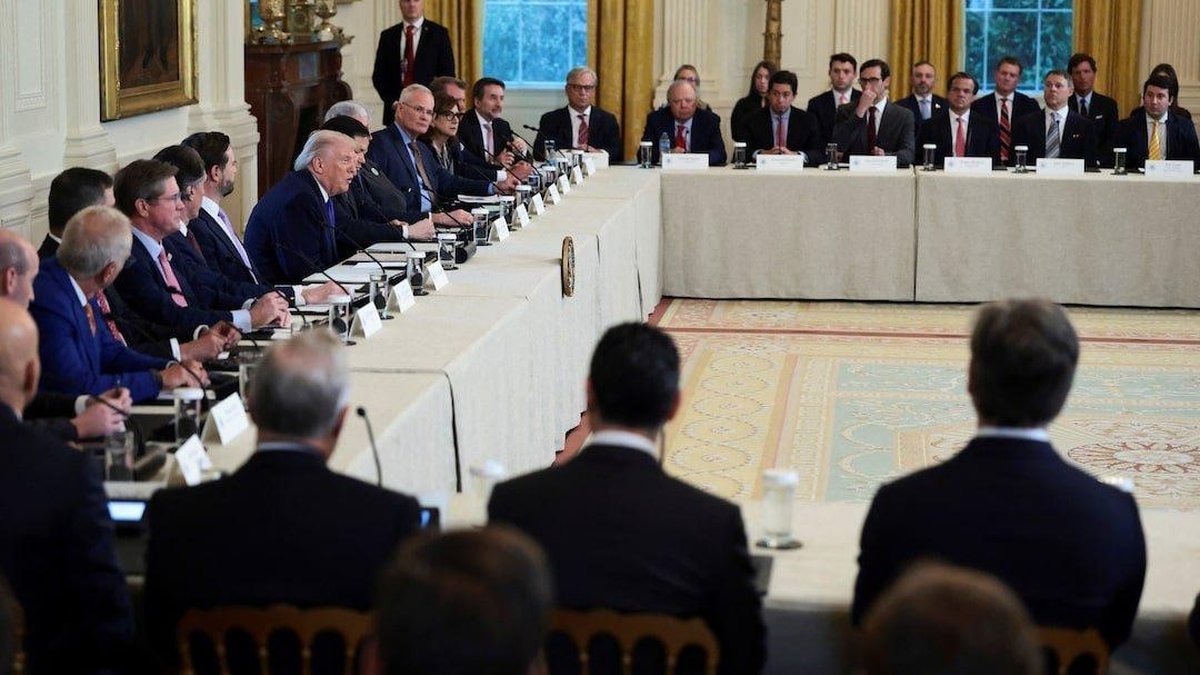
That is why the most important line in the debate is not “will companies invest?” but “will the public sector backstop the investments?” If private funding is insufficient, the shortfall does not vanish. It moves onto a government balance sheet—through direct spending, tax incentives, or debt issuance. And if the U.S. were to take on that role at scale, it would imply trade-offs elsewhere: higher deficits, reprioritized budgets, or increased political scrutiny around why Arctic spending is growing while domestic needs remain large.
Put differently: Greenland’s economic slowdown is not just a local issue; it determines whether Greenland becomes an investable growth story or a subsidized strategic outpost. Those are two very different financial regimes—and markets react differently to each.
Market implications: the “Greenland trade” is not one trade—it’s a chain of second-order effects
If the world moves from headlines to implementation—meetings with industry leaders, concrete plans, funding frameworks—the impact will likely appear as a sequence, not a single event. Early beneficiaries tend to be firms positioned for planning and enabling: logistics, engineering, security infrastructure, and commodity supply-chain services. Only later, if projects advance, do you see the heavier capex cycle and the long-duration resource monetization story.
There is also a macro overlay. If large public spending becomes necessary, markets start asking how it is financed. Higher deficits can affect bond supply expectations, currency narratives, and risk appetite—especially if other fiscal pressures are already present (for example, legal disputes over tariffs or budget reallocations). In that environment, even assets that are not directly connected to Greenland can move, because markets are reacting to the funding mechanism rather than the location itself.
For Greenland and Denmark specifically, the key variable is credibility: can the transition from a fisheries-heavy model to a broader base happen without destabilizing public finances? If the answer is “yes,” then Greenland becomes a frontier-growth narrative. If the answer is “not without large guarantees,” then it becomes a sovereign-risk and subsidy narrative—still strategic, but financed in a way that can be politically and economically contentious.
Conclusion
Greenland’s slowdown matters because it reveals the constraint behind grand geopolitical statements: cash flow. A narrow export base, weakening shrimp stocks, an infrastructure pipeline gap, and demographic decline are not separate problems—they are one combined limitation on self-funded development. Security interest can bring attention and capital, but attention is not the same as a sustainable growth engine.
If Greenland becomes more central to U.S. strategy, the world should watch less for slogans and more for balance-sheet signals: who underwrites ports, who funds defense logistics, who guarantees private projects, and how long the funding commitment lasts. In 2026, the most realistic question is not whether Greenland is important—it is whether the importance comes with a durable economic model, or a durable subsidy.
Disclaimer: This article is for educational and informational purposes only and does not constitute investment, legal, or political advice. It discusses macroeconomic mechanisms and potential scenarios, which may change as new information emerges.
Frequently Asked Questions
Why does a 0.8% growth rate matter so much for Greenland?
In a concentrated economy, slow growth usually means limited fiscal buffer. When one main sector dominates, a small slowdown can quickly translate into weaker public finances and reduced ability to fund new projects.
Could minerals diversify Greenland quickly?
Minerals can diversify over time, but Arctic extraction is typically capital-intensive, slow to permit, and dependent on infrastructure. Diversification is possible, but it is rarely fast.
If private U.S. companies invest, why would the U.S. government need to spend?
Large frontier projects often require shared infrastructure and political-risk protection. Private capital may invest more readily if governments fund enabling infrastructure or provide guarantees.
Is this mainly a Denmark–U.S. issue?
Not entirely. Greenland’s strategic position in the Arctic, combined with potential resource development, intersects with broader NATO and European security considerations—especially if funding and control structures shift.