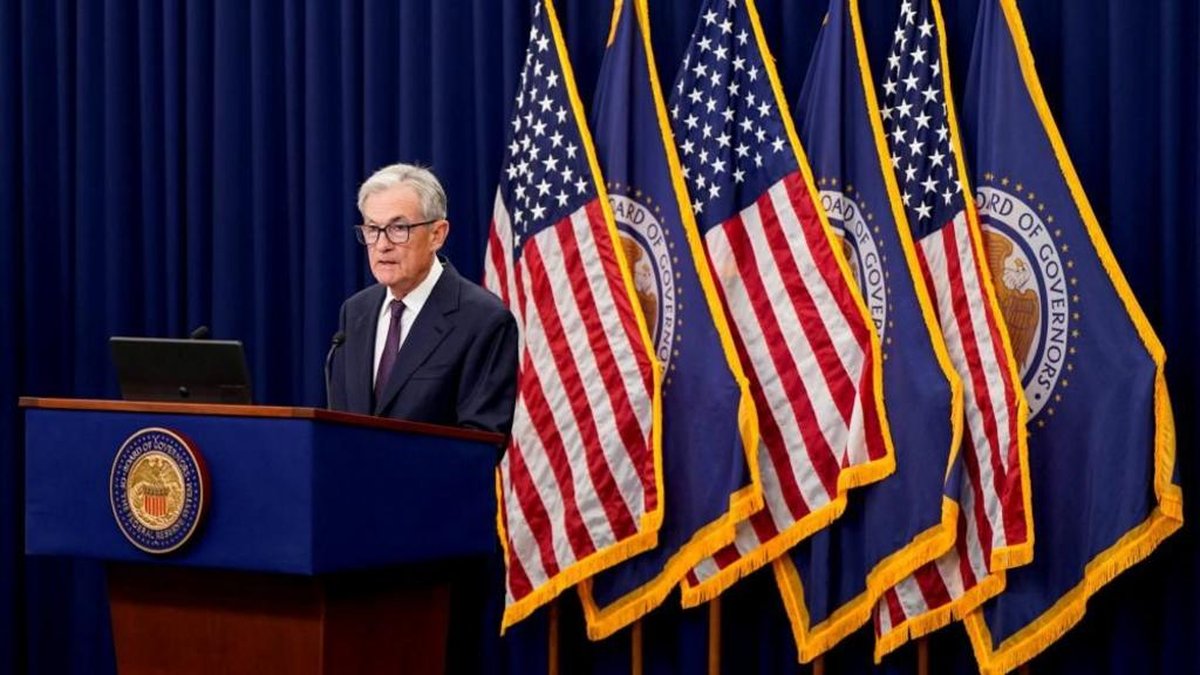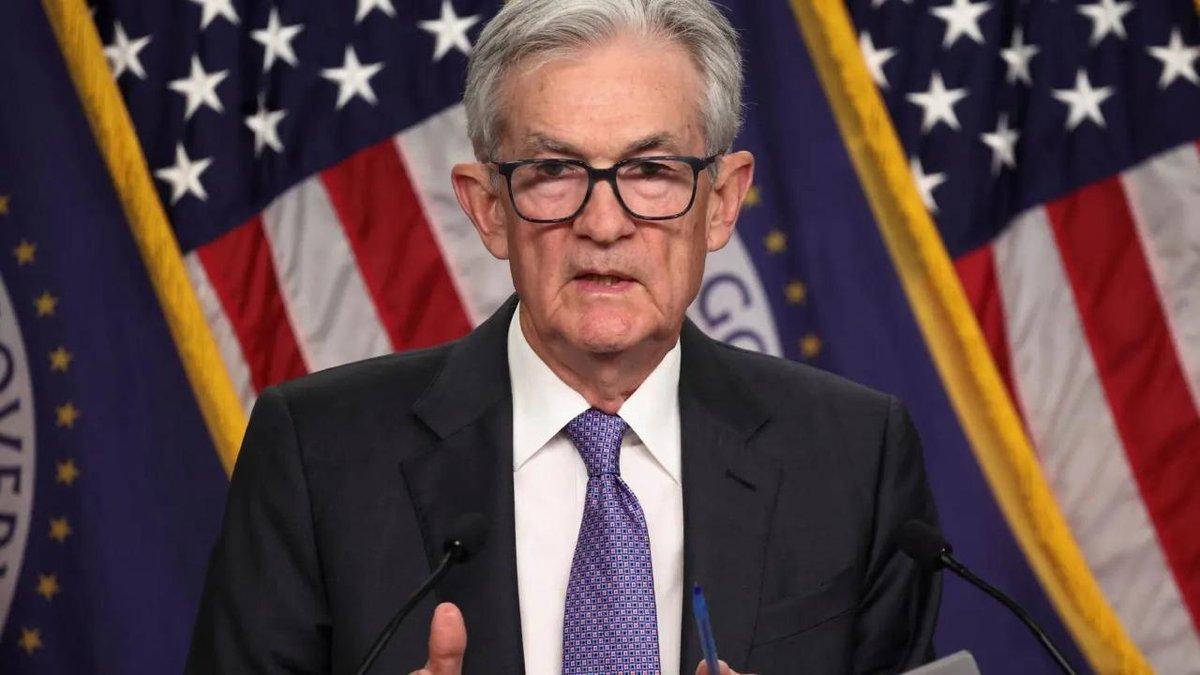
Powell’s Press Conference: A Window Into a Fed That Is Easing With One Foot on the Brake
Headlines will say the Federal Reserve cut rates by 0.25%. Markets will debate whether that was already priced in. But if you listened carefully to Chair Jerome Powell’s press conference, the more important story was not the size of the cut – it was the way he framed uncertainty, dissent and the limits of the Fed’s own forecasts.
The decision itself was already unusual: a 9–3 vote with visible tension about the direction of policy. The press conference confirmed that the Fed is stepping into a transition zone, where the old "higher for longer" narrative is fading, but a new, clearly dovish regime has not yet been born. Instead, every path – holding steady, cutting slowly or cutting faster – remains open, and Powell wanted investors to understand that.
1. The Split Vote: A Rare Glimpse of Genuine Disagreement
The first striking detail is the composition of the dissent. Three members broke from the majority:
- Austan Goolsbee, President of the Chicago Fed, opposed the cut.
- Jeffrey Schmid, President of the Kansas City Fed, also wanted to keep rates unchanged.
- Stephen Miran, a Fed Governor, voted the other way – he wanted a larger cut of 0.5%.
The remaining nine members supported the 0.25% step. This is not just a technical footnote. A 9–3 split is one of the clearest signs in years that the FOMC is genuinely divided on how restrictive policy still needs to be.
From a market perspective, the dissents matter for three reasons:
• They reveal competing risk priorities. Goolsbee and Schmid still see inflation and financial-stability risks as high enough to justify holding rates steady. Miran is more worried about the damage that prolonged tight policy could inflict on growth and employment.
• They limit how strong any forward guidance can be. When the committee is this split, the chair has less room to promise a clear path. That is why Powell repeatedly emphasised that future moves will depend on incoming data, not on any pre-set schedule.
• They highlight that the Fed’s internal models are not giving a single answer. If the models clearly indicated one optimal path, the vote would likely be more unified. The disagreement suggests that estimates of the neutral rate, the output gap and the labour market’s slack are all subject to meaningful uncertainty.
In other words, the dissents are not a sign of crisis inside the Fed. They are a reminder that, in this phase of the cycle, reasonable policymakers can look at the same data and reach different judgments about the appropriate speed of easing.
2. Powell’s Forward Guidance: All Paths Open, Hikes Off the Table
Pressed on what happens next year, Powell offered a deliberately flexible message. He noted that the Fed could hold, cut modestly or cut more decisively in 2026, depending on how inflation and growth evolve. Crucially, he added that he does not see further rate hikes as the baseline scenario for any FOMC member.
That sentence matters more than it might appear. It effectively closes the door on a full-blown "double-hike" narrative unless the data deteriorate sharply. The Fed is no longer in a posture of searching for the peak; it is managing the descent.
At the same time, Powell refused to commit to any specific outcome for the January meeting. That ambiguity serves two purposes:
- It reduces the risk of mispricing if the data surprise between now and then, especially with job figures still subject to revisions.
- It keeps all factions of the committee engaged, by not forcing anyone to pre-endorse a path that might soon prove inappropriate.
For analysts, the key takeaway is that the Fed has shifted from a regime of directional forward guidance (where the question was how many hikes were left) to a regime of conditional guidance, where the sign and size of each move now sit on a three-way fork.
3. Labour Market and Neutral Rate: Powell Acknowledges Data and Model Risk
Powell spent a notable amount of time on the labour market. Two points stood out:
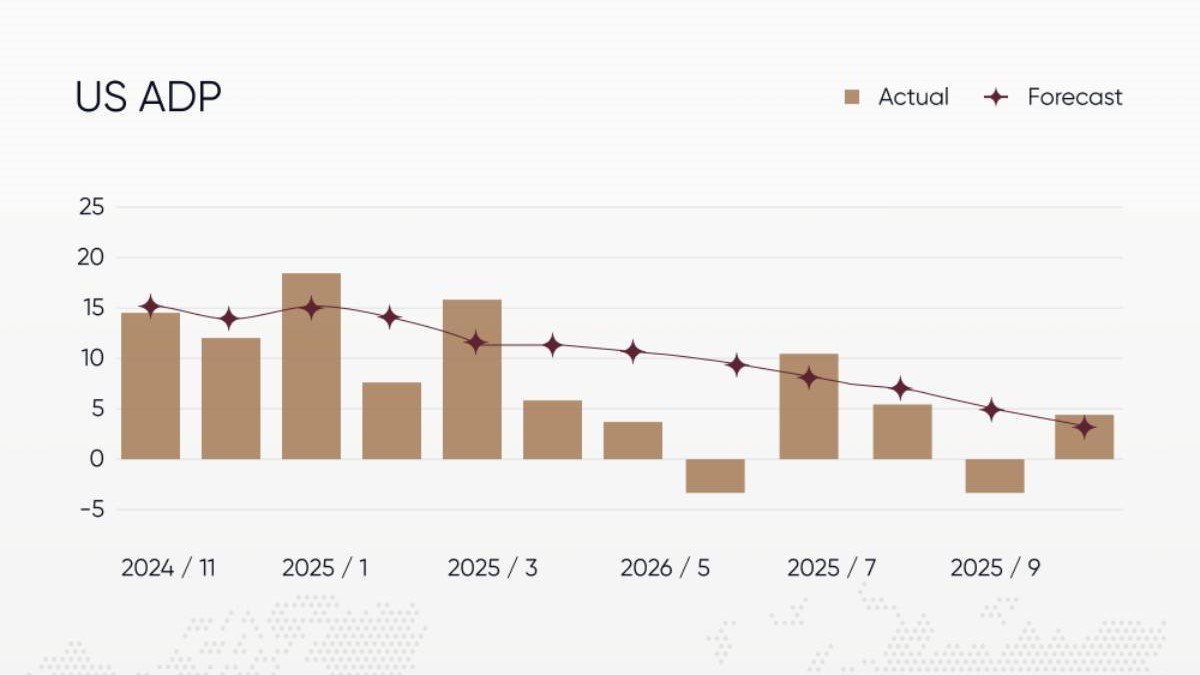
- He suggested recent payroll data may have been overstated by roughly 60,000 jobs per month, implying that headline strength may be somewhat exaggerated.
- He described the current policy stance as being at the upper end of the neutral range – near the top of where rates are neither clearly stimulating nor clearly restraining the economy.
Both remarks are subtle, but important.
First, if job growth has indeed been overstated, then the underlying labour market might be softer than the official figures imply. That would strengthen the case for gradual easing, as it would mean the economy has been absorbing tighter policy with less slack than previously thought. Powell did not go so far as to declare the labour market weak, but he clearly wanted to inject some humility into how these numbers are read.
Second, framing rates as being near the high end of neutral is a way of saying that the Fed is no longer aiming to apply intense braking. Instead, it is edging toward a configuration that is balanced between supporting employment and containing inflation. In practical terms, this view supports the idea that further large hikes are unlikely, while also justifying a cautious pace of cuts: if you are near neutral, every additional move has to be justified by the data, not by a sense of being far from equilibrium.
Combined, these points underpin Powell’s central message: there is no risk-free path. Move too quickly, and you may let inflation re-accelerate. Move too slowly, and you risk an unnecessary slowdown in hiring and investment. The Fed is trying to calibrate policy at the margin, not overhaul it.
4. AI and Tariffs: Structural Forces, Managed With Caution
On artificial intelligence, Powell’s comments were deliberately open-ended. He acknowledged that AI could replace some jobs while also boosting productivity, corporate profitability and ultimately GDP. Importantly, he did not anchor policy to any specific AI scenario.
From a macro perspective, that approach makes sense. AI is a structural force whose full impact will unfold over years, not quarters. It can change the economy’s speed limit (potential growth) and the balance of power between capital and labour, but those changes are hard to quantify in real time. For now, the Fed is watching rather than reacting. That restraint keeps monetary policy focused on observed inflation and employment rather than on speculative trajectories of technology adoption.
On trade tariffs, Powell’s message was equally measured. He expects the full effects of new tariffs to become clearer in the first quarter of 2026, but does not believe they will generate a major macro shock. In his view:
- Tariffs are likely to push inflation slightly higher in the short term, as some import prices adjust.
- This impact is mostly a one-off level effect, rather than the start of a self-reinforcing inflation spiral.
- After this adjustment, inflation dynamics should return to their previous downward path, assuming underlying conditions do not change dramatically.
By stressing the one-off nature of tariff effects, Powell is signalling that the Fed will not overreact to a transient bump in prices. At the same time, he refused to comment on ongoing legal and political disputes around tariffs, including cases before the Supreme Court, underlining the Fed’s stance of staying out of explicit political debates.
5. T-Bill Buybacks: Plumbing Repair, Not Classic QE
One of the more technical topics in the press conference was the Fed’s upcoming programme to buy back Treasury bills. Starting 12 December, the Fed plans to purchase around 40 billion USD of short-dated government paper as an initial step.
There is a real risk that markets latch onto the word “buying” and automatically label this as a new round of quantitative easing. Powell went out of his way to push back on that interpretation.
His framing was clear:
- The programme is aimed at keeping bank reserves at comfortable levels, not at compressing long-term yields across the curve.
- The focus is on the smooth functioning of money markets and repo rates, ensuring that very short-term funding costs remain aligned with the Fed’s target range.
- The programme will end once the Fed judges that reserves are sufficiently ample; it is not an open-ended expansion of the balance sheet.
In other words, this is plumbing, not a macro easing tool. That distinction matters because it separates the Fed’s role as a monetary authority (setting the stance of policy) from its role as a provider of financial infrastructure (ensuring the pipes do not clog).
For markets, the practical implication is that this programme may stabilise very short-term rates and reduce the risk of sudden funding spikes. However, it should not be interpreted as a deliberate attempt to push investors further out the risk curve as earlier large-scale asset purchase programmes did.
6. Powell’s Future and the Turning of the Leadership Cycle
In a notable personal disclosure, Powell reminded the audience that his term as Fed Chair ends in May. He has not yet decided whether he will remain on the Board of Governors for the rest of his term as a governor.
This matters for two reasons:
- Forecasts beyond 2026 are implicitly tied to leadership assumptions. A new chair may weigh inflation risks, labour-market slack and financial stability in a different way, even if the formal mandate remains the same.
- The internal balance of the FOMC could shift. The split vote we saw today hints at different blocs of opinion inside the Fed. Changes in leadership and future appointments can subtly change which bloc sets the centre of gravity.
Powell’s comment is also a reminder that the dot plot is not a binding contract. Even without a leadership change, the Fed’s own expectations can shift rapidly. Powell highlighted this when he noted how quickly markets moved from assigning a very low probability to a December cut just three weeks ago to fully pricing it in by the meeting date.
If expectations for a single month can shift that quickly, projections for 2026 and 2027 should clearly be treated as conditional sketches, not promises. Add the likelihood of a new chair, and the only safe conclusion is that the medium-term rate path is more uncertain than a static chart implies.
7. Tone Check: Neutral With a Subtle Dovish Lean
Going into the meeting, some analysts feared a "hawkish cut" – a scenario where the Fed would trim rates but accompany the move with language that effectively tightened financial conditions through guidance. That did not fully materialise.
The tone of the press conference was best described as neutral with a slight dovish tilt:
- Powell refused to rule out slower or faster cuts, but he clearly downplayed the chance of renewed hikes.
- He acknowledged signs that the labour market may be softer than the headline numbers imply.
- He framed tariffs as a modest, one-off inflationary force, rather than a reason to keep policy extremely tight for longer.
- He described the current stance as being in the upper band of neutral, which implicitly suggests that the next medium-term moves are more likely to be downward than upward.
At the same time, nothing in Powell’s remarks resembled an attempt to engineer a rapid loosening of financial conditions. He did not signal an aggressive cutting cycle, did not minimise the challenge of bringing inflation from 2.8% down to 2%, and did not frame the T-bill buybacks as a new wave of liquidity for markets.
For investors, the resulting picture is nuanced. Policy is no longer in emergency tight mode, but it is also not on a fast track back to the ultra-low-rate environment of the previous decade. The central bank is managing risk on both sides, and its communication now aims to keep options open rather than to guide the market in a single direction.
8. How to Read This Meeting Going Forward
From an educational standpoint, the main lesson from this press conference is that macro policy is moving into a regime of conditionality and pluralism:
- Conditionality, because the Fed is openly tying its next steps to data that it admits may be noisy and subject to revision.
- Pluralism, because the split vote and impending leadership change show that there is no single, dominant view inside the institution.
Market participants and observers should adapt their frameworks accordingly. Instead of asking, "How many cuts did the Fed promise for 2026?" a better question is, "Which data would push the committee toward the faster or slower path, and how likely are those data to materialise?" Instead of treating the dot plot as a timetable, it should be seen as a snapshot of today’s median view in a room where at least three people already think that view is wrong.
The coming year will test how well this more flexible framework works in practice. Labour-market revisions, tariff implementation, AI-related productivity surprises and political transitions could all push the Fed off its current trajectory. Powell’s press conference did not resolve those uncertainties, but it did something equally valuable: it made them visible.
Educational note: This article is for information and analytical purposes only. It does not constitute financial, investment, legal or tax advice, and it should not be used as the sole basis for any financial decision. Economic conditions, policy choices and data releases can change quickly, and readers should conduct their own research and consult qualified professionals where appropriate.