Bank of America Opens the Advisory Door to Spot Bitcoin ETFs: A Quiet Shift That Changes the Texture of Demand
Some market events move prices. Others move plumbing. The second category rarely trends, yet it’s the one that quietly rewires how capital enters an asset class. Bank of America reportedly allowing its investment advisors to proactively recommend spot Bitcoin ETFs belongs to the plumbing category—a policy change that turns Bitcoin exposure from an exception into something closer to a standard menu item for wealthy clients.
This matters because the wealth-management channel doesn’t behave like crypto-native trading. It is slower, more constrained, and more consistent—less about excitement and more about suitability, process, and repeatable frameworks. That sounds dull until you realize that repeatable frameworks are exactly how large pools of capital become comfortable allocating anything at all.
What Bank of America actually changed (and why it’s more than a headline)
Historically, many traditional advisory platforms treated Bitcoin exposure as “reactive”: advisors could facilitate an allocation only when a client explicitly asked. That posture keeps the institution’s relationship with the asset at arm’s length. The reported change is that advisors can now initiate the conversation—anchored by official research from the bank’s Chief Investment Office (CIO) and supported by internal guidance and training.
In practice, this is not a trivial difference in sales behavior; it’s a governance difference. Client-request-only policies tend to produce sporadic, sentiment-driven flows. Advisor-led recommendations tend to produce policy-driven flows—allocations that repeat across households, model portfolios, and rebalancing schedules.
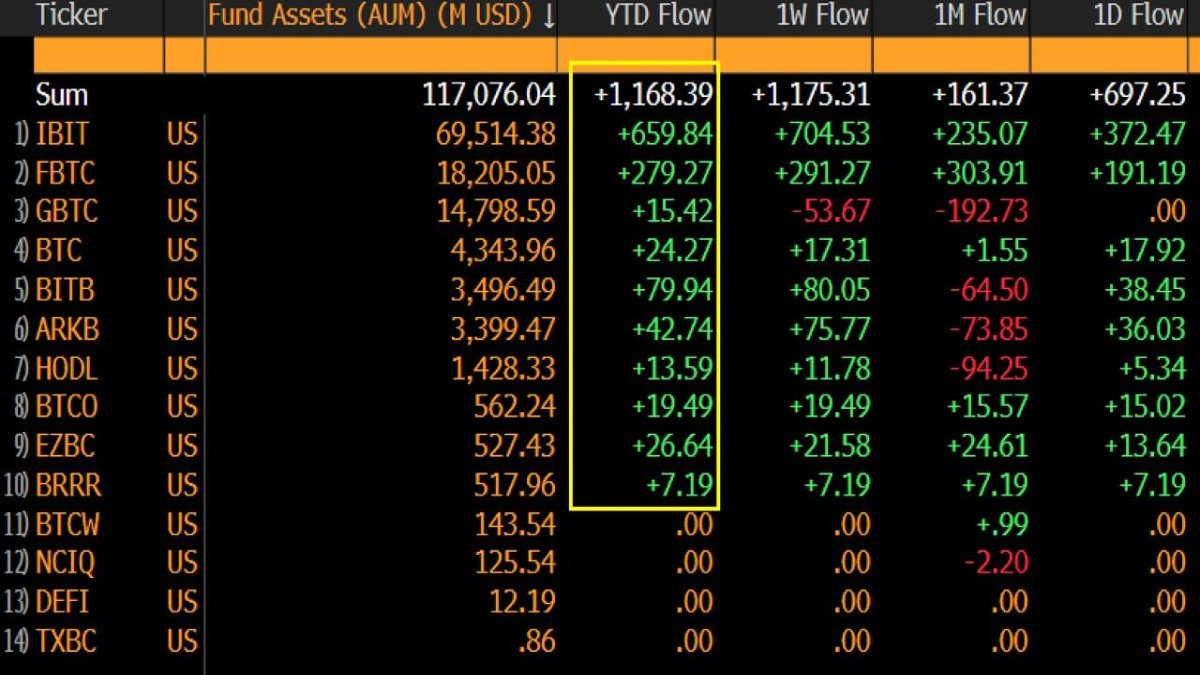
Bank of America’s approved spot Bitcoin ETFs reportedly include:
• Bitwise Bitcoin ETF (BITB)
• Fidelity Wise Origin Bitcoin Fund (FBTC)
• Grayscale Bitcoin Mini Trust (BTC)
• BlackRock iShares Bitcoin Trust (IBIT)
The selection itself is revealing. Large, liquid ETFs are easier to supervise operationally, easier to explain to compliance teams, and easier to trade at scale without unpredictable execution issues. In wealth management, “liquidity” isn’t a buzzword—it’s a risk-control tool.
The real story: Bitcoin is becoming a portfolio component, not a special request
The reported CIO guidance—Bitcoin at roughly 1% to 4% of a suitable client portfolio—sounds small. And it is small, intentionally. But small allocations can still produce a big structural effect because they change who participates and how they participate.
When an asset moves into the “1–4% allocation” bucket, it shifts from the world of high-conviction trades to the world of risk budgeting. That is a different psychology. It frames Bitcoin less as a dramatic bet and more as a position sized to be survivable. In that world, the question is not “Will it outperform everything?” but “Can it improve the portfolio’s long-run profile without dominating outcomes?”
This is one reason the advisory channel can look underwhelming in price terms at first. Wealth-management adoption is rarely a single burst; it’s a slow normalization—more like adding a new ingredient to a recipe than reinventing the kitchen.
Why the ETF wrapper is the institution-friendly compromise
From the outside, it can feel odd that institutions prefer ETFs over direct Bitcoin custody—especially when crypto’s original promise involved self-custody and permissionless ownership. But institutional finance optimizes for auditability, standardized reporting, and operational clarity. ETFs offer a familiar wrapper that fits existing rails: brokerage accounts, statements, tax documents, compliance checks, and trading workflows.
Just as importantly, ETFs reduce the number of “new” problems a bank must solve at once. The bank can focus on suitability and allocation guidance while the ETF ecosystem handles custody, creation/redemption mechanics, and much of the operational complexity. This doesn’t remove risk, but it concentrates risk into known, regulated structures that institutions are built to monitor.
That’s why large, liquid spot ETFs tend to be favored first: they are easier to integrate into supervision systems designed for traditional securities. In institutional terms, the ETF wrapper is not a preference about ideology—it’s a preference about control surfaces.
How this could change the “texture” of Bitcoin demand
Markets are shaped not only by the amount of demand, but by its character. A wave of short-term speculation behaves differently from a steady stream of policy-driven allocations. The advisory channel tends to be slower—but it also tends to be stickier, because it is reinforced by periodic rebalancing and portfolio reviews rather than daily sentiment.
If advisors are trained and supported to treat Bitcoin as a modest allocation for certain profiles, flows can become more evenly distributed across time. That can influence market behavior in subtle ways:
• Rebalancing effects: When Bitcoin rallies, some portfolios trim; when it falls, some portfolios add back. That can dampen extremes at the margin, even if it doesn’t eliminate volatility.
• A baseline of participation: Client portfolios that hold small allocations are less likely to fully exit at the first drawdown compared to momentum-driven traders. Not always, but often.
• More “boring” ownership: Boring ownership is underrated. It can reduce reflexive panic because the allocation is sized to be held through cycles.
None of this should be read as a promise of stability—Bitcoin remains volatile and can experience large drawdowns. The point is narrower: a shift toward policy-guided allocation can gradually change the mix of participants, which can change how markets respond to shocks.
Why only Bitcoin (for now): liquidity, governance, and reputational math
The reported note that the bank is not yet committing to Ether ETFs or broader crypto baskets is also informative. From an institutional perspective, Bitcoin occupies a unique place: it is the most liquid, most widely held, and most legible crypto asset in traditional finance conversations. That legibility reduces internal friction.
Expanding beyond Bitcoin requires more than a view that “crypto is the future.” It requires confidence in market depth under stress, clarity on how an asset behaves, and robust governance around suitability. That’s why commentary suggesting expansion to ETH or multi-asset products depends on liquidity and infrastructure maturity makes sense. It’s not necessarily ideological caution; it’s operational caution.
Think of it like this: banks don’t just ask, “Is this asset attractive?” They ask, “Can we defend every step of offering it—on paper—when someone audits the decision?” Bitcoin is increasingly defensible in that framework. Other assets may get there, but the path is slower.
What investors should take away (without turning it into a trade call)
It’s tempting to treat this as a simple bullish signal: a major bank approves ETF recommendations, therefore price must go up. Real markets are rarely that linear. Flows take time, client suitability varies, and the bank’s own guidelines emphasize modest sizing. The more useful takeaway is about structural adoption, not immediate price.
Here are the practical implications worth watching:
• Distribution scaling: Training and tooling for thousands of advisors (reportedly more than 15,000) is a real operational commitment. If the advisory platform treats Bitcoin as “standard eligible,” the channel can keep compounding quietly.
• Portfolio construction norms: A 1–4% guideline, if widely implemented, nudges the market toward a common language. Common language is how asset classes become mainstream.
• The next bottleneck: The next phase won’t be about whether clients can buy Bitcoin exposure. It will be about how institutions manage it—risk controls, rebalancing policy, and client communication during volatility.
Ultimately, this is what maturity looks like: less drama, more process. Bitcoin does not need every institution to become enthusiastic. It only needs enough institutions to make holding a small allocation feel routine.
Frequently Asked Questions
Why does it matter that advisors can recommend, not just execute on request?
Because recommendation capability turns an asset from a client-driven exception into a policy-guided allocation option. That tends to create steadier, more repeatable participation—especially through model portfolios and periodic rebalancing.
Why would a bank choose only a handful of spot Bitcoin ETFs?
Institutions typically prioritize scale and liquidity for operational control, execution quality, and compliance oversight. Large, liquid ETFs are easier to supervise than smaller or more complex products.
Is a 1%–4% allocation “small” or “meaningful”?
It’s small enough to limit portfolio dominance, but meaningful enough to influence long-term outcomes for some investors—especially given Bitcoin’s historical volatility. It’s a risk-budgeting approach, not an all-or-nothing stance.
Does this imply ETH ETFs are next?
Not necessarily. Expansion depends on market liquidity, infrastructure maturity, and institutional risk-management comfort. Bitcoin’s liquidity and legibility often make it the first step.
Disclaimer: This article is for educational purposes only and does not constitute financial, investment, legal, or tax advice. Digital assets and ETFs involve risk, including volatility, liquidity constraints under stress, tracking differences, and regulatory change. Any allocation ranges mentioned are informational context and may not be appropriate for all investors. Consider your objectives and consult qualified professionals before making decisions.