
From Tokenized Gold to Stablecoin Loops: What the Last 24 Hours Revealed About Crypto’s New “On-Ramp”
Markets love simple stories. “Risk-on” days get a clean headline; “risk-off” days get a different one. But the last 24 hours have been messier—and that’s the point. We saw a session where a lot of things were green at the same time: major U.S. equity indices, Bitcoin, and precious metals, with oil oscillating rather than screaming higher.
When everything moves together, it’s tempting to call it euphoria. Yet the more interesting reading is structural, not emotional: money is gradually shifting from betting on narratives to buying better rails. The most important “trade” may not be a ticker at all. It may be a migration toward assets that settle quickly, collateralize cleanly, and fit inside emerging regulatory boxes.
A Risk-On Day With a Risk-Off Core
The U.S.–Venezuela shock is a reminder that geopolitics can still change the macro tape overnight. Reports over the weekend said the U.S. launched a large strike, captured Venezuela’s President Nicolás Maduro and his wife, and signaled it would “run” Venezuela temporarily during a transition. Events like that usually inject fear into markets—especially anything energy-related.
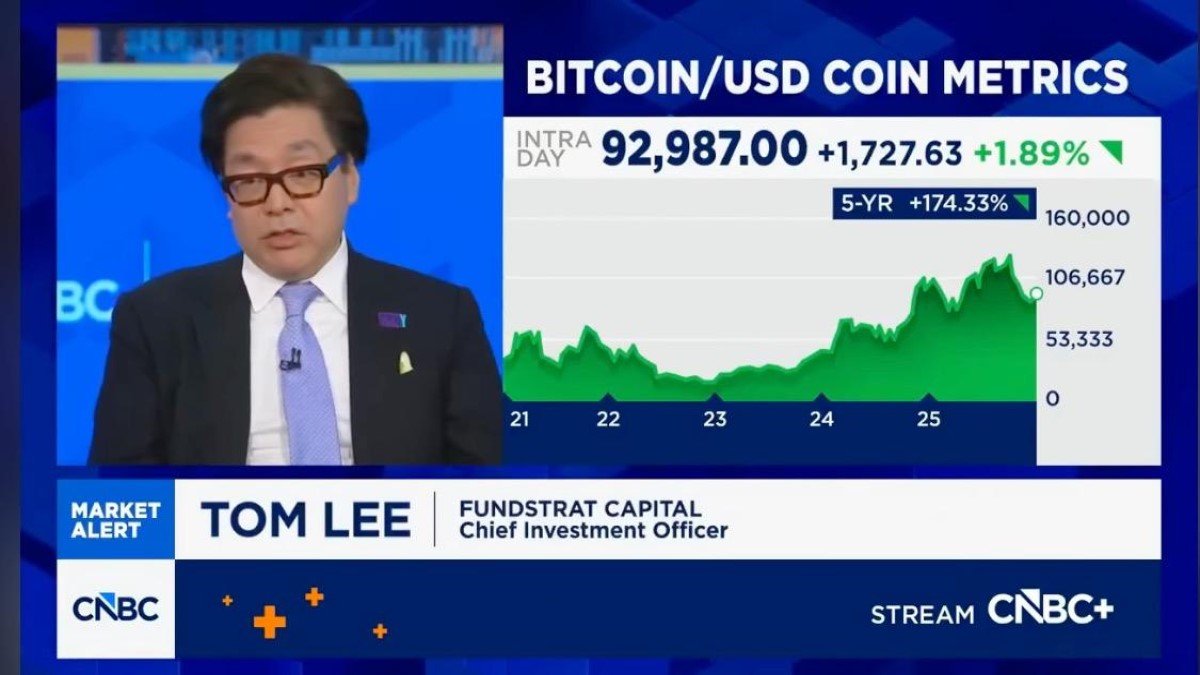
Instead, the early price action looked like a blend: equities firmed, Bitcoin traded in the low-to-mid $90k zone after recent volatility, and gold pushed to fresh highs around the $4,500 level in some quotes. That combination matters because it tells you investors are not choosing one regime. They are holding both the growth bet (equities/tech) and the protection bet (gold/crypto) at the same time.
One interpretation: the market is treating the event less as a near-term “supply shock” and more as a “policy transition.” If investors believe sanctions could be lifted, infrastructure rebuilt, and barrels eventually returned to market, oil doesn’t need to spike today. Meanwhile, hedge demand stays alive because the bigger uncertainty is not barrels—it’s the precedent, the second-order geopolitical reactions, and the broader “resource diplomacy” that is hard to price in one session.
Tokenized Gold’s Quiet Upgrade: Why “Scudo” Would Matter (If Confirmed)
In the middle of all this, a seemingly small product update has been circulating: Tether Gold (XAU₮) is reportedly introducing a smaller unit called “Scudo,” equal to 1/1000 of XAU₮. On the surface, this sounds like a UX tweak. In reality, it is an admission that the next phase of crypto adoption is about granularity and spendability, not just “store of value” memes.
Gold-backed tokens often run into a psychological hurdle: one token representing a full ounce feels “too big” to use, even if the token is already divisible on-chain. Packaging divisibility into an explicit unit does two things. First, it reduces unit bias (people like owning “more units”). Second, it makes pricing and integrations easier for apps that want a stable, commodity-linked denomination without making users do fractional math in their heads.
But tokenized gold is not “just gold on a blockchain.” It is a contract stack:
• Custody: where the metal sits, under what legal regime, and how often it is audited.
• Redemption: who can redeem, at what minimum size, with what fees and delays.
• Regulatory perimeter: commodity rules, money-transmission considerations, and cross-border compliance.
• DeFi behavior: how the token behaves when used as collateral, especially in stressed markets.
So if “Scudo” becomes official, the strategic question is not the name. It is whether tokenized gold is being positioned as a transactional bridge—a way to move “hard money” with stablecoin-like ergonomics. That is a serious theme in a world where fiat politics and commodity politics are converging.
The Stablecoin Stack Is Splitting in Two
Stablecoins used to be a single category: “a dollar on-chain.” That era is ending. What we’re seeing now is a split between transactional stablecoins (optimized for speed, liquidity, and payments) and financial stablecoins (optimized for collateral efficiency, composability, and capital markets use).
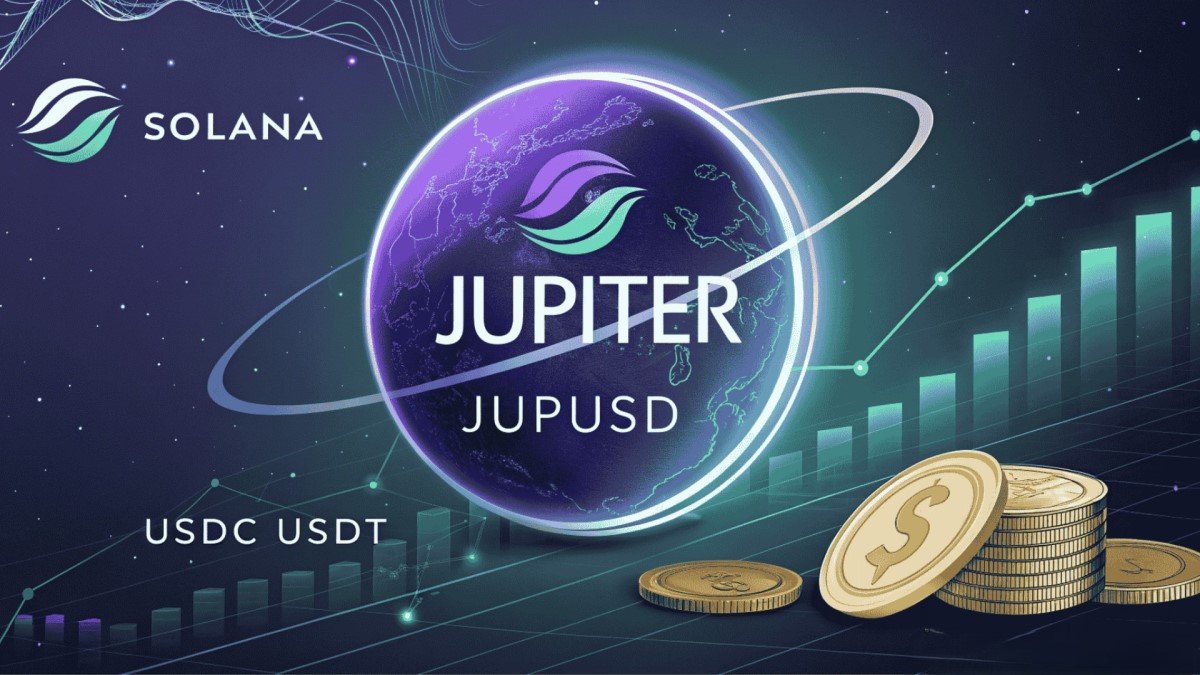
Jupiter’s announcement of jupUSD, built with Ethena, fits this “financial stablecoin” direction. The design—reported to hold a large share of reserves in USDtb and a smaller share in USDC for liquidity—signals a deliberate tradeoff: reduce reliance on a single asset type, keep liquidity for redemptions and routing, and integrate directly into a lending stack where capital efficiency is the product.
This is where the market needs nuance. A stablecoin integrated into lending and leverage tools can unlock real economic activity, but it can also create reflexivity:
• Looping (deposit → borrow → deposit) can amplify both growth and drawdowns.
• Collateral quality matters more than marketing. “Fully reserved” is not one standard; it’s a spectrum with different liquidity profiles.
• Liquidity access during stress is the whole game. “Stable” is tested at the margin, not the mean.
In parallel, reports that Ethena is adding Kraken as a custody partner (alongside other institutional custodians) highlight an underrated truth: the “crypto bull market” increasingly runs through custody, treasury operations, audits, and legal enforceability. The next growth wave won’t be won by who has the fastest chain alone. It will be won by who can translate on-chain instruments into off-chain comfort for institutions.
Vietnam’s Pilot Framework: Why This Isn’t a Local-Only Story
Another signal that matters more than a one-day candle: Vietnam has moved forward with a government-backed pilot program for a digital asset market. Public reporting on Resolution 05/2025/NQ-CP describes a multi-year pilot aimed at creating a legal framework, defining responsibilities across agencies, and designing a supervised sandbox rather than leaving the market in a permanent gray zone.
Whether or not licenses are issued on a specific near-term date, the direction is clear: large, fast-growing economies are treating digital assets as something to structure, not something to pretend doesn’t exist. That has two market implications. First, it reduces the “all or nothing” regulatory risk that often freezes institutional participation. Second, it accelerates demand for stablecoin rails—because payments, remittances, and settlement are the first use-cases regulators can monitor and supervise before they expand into more complex on-chain finance.
Vietnam’s move also creates competitive pressure in the region. When one jurisdiction builds a sandbox, others tend to respond—not always by liberalizing, but by clarifying. Clarity is a catalyst, even when rules are strict, because businesses can price compliance and plan product roadmaps. For the crypto market, this matters because stablecoins and tokenized assets thrive when they can plug into compliant venues rather than relying on offshore workarounds.
Institutional Plumbing: Indices, ETFs, and 24/7 Markets
Several headlines today sit in the same bucket: financial plumbing. Think: index inclusion decisions, ETF gatekeeping, and broker infrastructure. Even when specific claims on social media are hard to verify immediately, the trajectory is visible. Banks and advisors are increasingly willing to treat Bitcoin exposure as a portfolio component rather than an exception request. Exchanges are experimenting with 24/7 access to non-crypto assets using crypto as collateral. And prediction markets are evolving from a niche toy into a serious financial primitive.
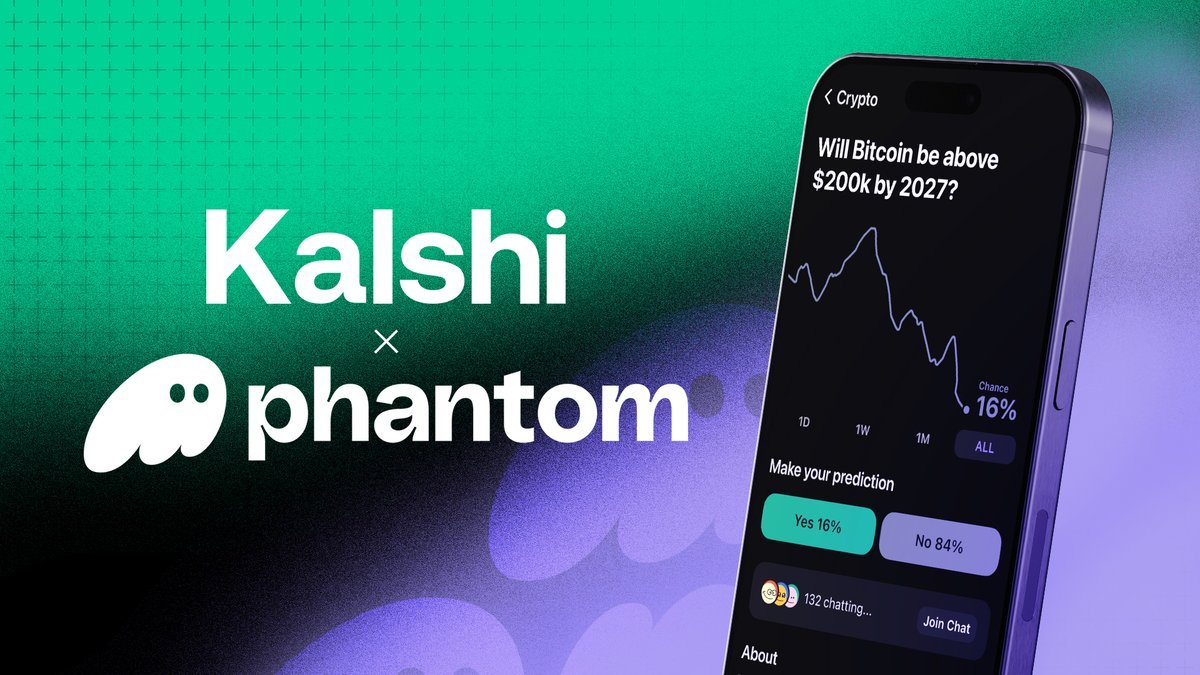
For example, the push to embed prediction markets into consumer wallets is a small product step with a large directional meaning: “financial apps” are absorbing crypto UX rather than the other way around. The user doesn’t wake up wanting to “use a blockchain.” They wake up wanting a convenient interface for risk, hedging, and exposure. If a wallet becomes the home for stablecoins, prediction markets, and tokenized assets, then crypto’s distribution starts to look like fintech—not like a separate universe.
That matters because the biggest adoption unlock is not “more leverage.” It’s more boring access. If a wealth manager can allocate a small percentage via regulated wrappers, if an index provider doesn’t force an exclusion, and if custody is standardized, flows become habitual rather than heroic. The market stops relying on viral moments and starts relying on monthly rebalancing.
At the same time, liquidations over the last day (both long and short) are a reminder that crypto is still a leverage-driven arena. A green day can be partly mechanical: forced buying after shorts are liquidated, or relief after earlier leverage is cleared. Price can move for microstructure reasons even when fundamentals are unchanged. This is exactly why the rails story matters: deeper, more regulated liquidity tends to reduce the kind of fragile, cliff-edge positioning that turns normal volatility into sharp cascades.
How to Read the Tape: Three Clocks, Not One
If you want a cleaner mental model, stop trying to compress everything into “bullish vs bearish.” Instead, watch three clocks:
1) The Geopolitical Clock. Venezuela headlines, tariffs, sanctions, and resource politics change risk premia. They often show up first in energy and metals, then spill into equity style factors (defense, infrastructure, semis, data centers).
2) The Regulatory Clock. When legislation advances or sandboxes launch, it doesn’t instantly pump price—but it widens the set of actors who are allowed to touch the asset. That changes the “buyer base,” which changes market structure.
3) The Liquidity Clock. Stablecoin supply, exchange reserves, whale activity, and liquidation flows are the short-term engine. This clock is noisy, but it explains why price can move “too far” in either direction.
Over the last 24 hours, all three clocks ticked. That’s why the market felt contradictory. It wasn’t. It was layered.
What to Watch Next Without Turning It Into a Trade Call
For the coming sessions, focus on observable indicators rather than predictions:
• Stablecoin growth and distribution: issuance is less important than where liquidity concentrates (CEX vs DeFi vs payment rails).
• Vault behavior: if looping increases, watch borrow rates and liquidation thresholds rather than headlines.
• Cross-asset correlation: if equities and Bitcoin rally together while gold stays bid, that’s not “one story”—it’s diversification demand.
• Policy signaling: not only U.S. crypto policy, but emerging-market sandboxes (Vietnam is a useful bellwether).
• Energy markets: oil’s reaction function will tell you whether traders are pricing near-term disruption or longer-term supply normalization.
Conclusion
The crypto market is still loud, but it’s becoming less adolescent. The center of gravity is shifting from “coins that go up” to “instruments that settle.” Tokenized gold trying to become more usable, stablecoins evolving into a spectrum, and governments building sandboxes all point to the same thesis: crypto’s next growth phase is about infrastructure credibility.
In that world, Bitcoin can remain the flagship asset, but the real adoption battle will be fought by the pipes underneath it—stablecoin reserves, custody networks, compliance layers, and settlement UX. If you want to understand 2026, don’t just watch price. Watch the rails.
Disclaimer: This article is for educational purposes only and does not constitute financial, legal, or investment advice. Digital assets are volatile and carry significant risk. Always do your own research and consider your risk tolerance.