If the 4-Year Bitcoin Cycle Breaks in 2026: Stress-Testing Tom Lee’s $250K Thought Experiment
Bitcoin is famous for being “the asset with a calendar.” Every four years the block subsidy halves, narratives ignite, leverage builds, and the market tends to lurch into a familiar boom-and-bust rhythm. That story is tidy, memeable, and—until recently—useful. But tidy stories rarely survive contact with scale.
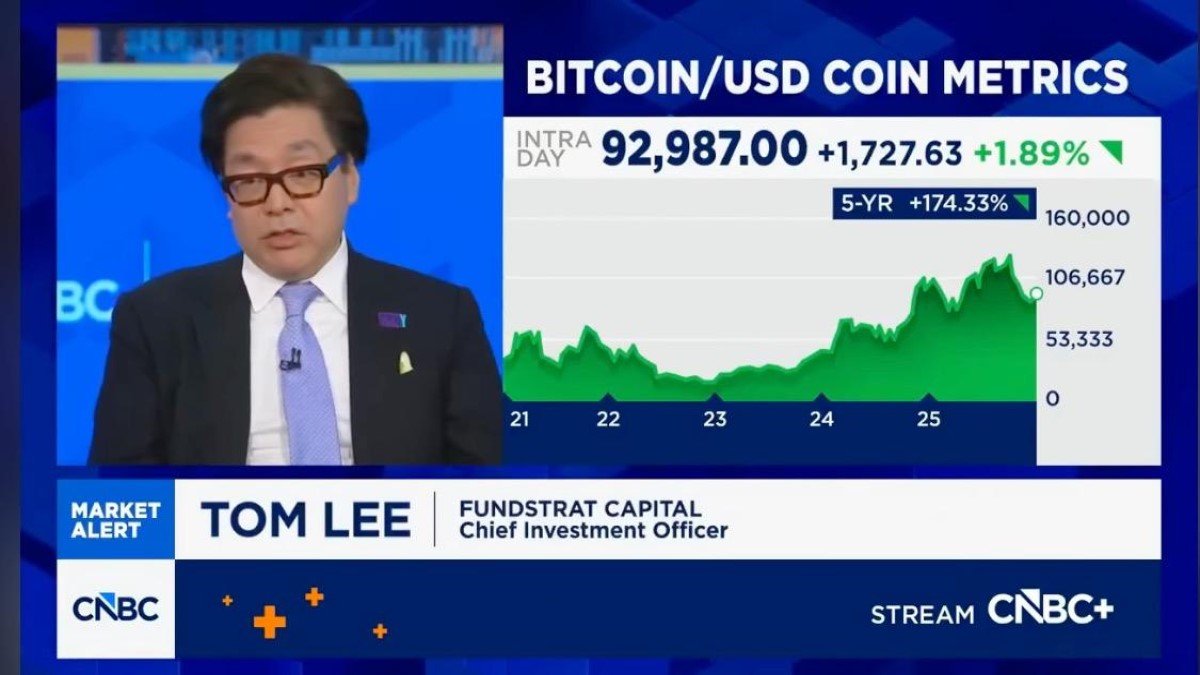
Fundstrat’s Tom Lee has floated a bullish scenario that puts Bitcoin in the $250,000 neighborhood. What matters is not the number itself. The deeper claim is that a mature Bitcoin may stop behaving like a halving-driven roller coaster. In other words: 2026 could be the year the market stops trading the “clock” and starts trading something closer to a macro asset with a permanent institutional bid.
A “cycle break” is not a price target—it’s a regime change
Price targets are headlines. Regime changes are plumbing. When someone says the four-year cycle could break, they are not just arguing for a higher high; they are arguing that the engine of price formation is evolving. In the early eras, Bitcoin’s marginal buyer was often retail, and the marginal seller was often miners or early holders reacting to volatility.
As participation broadens, the market’s microstructure shifts. Derivatives deepen, liquidity becomes more continuous, and the set of “natural holders” expands beyond true believers. A cycle break, in that sense, is what happens when the market’s most important flows no longer peak at the same time. If the marginal buyer becomes steadier, the classic post-halving surge can fade—even if long-term adoption continues.
What Tom Lee’s $250K scenario is really testing
Take the $250K figure as a stress test, not a promise. The implicit question is: what conditions would make Bitcoin behave like a scarce macro asset that institutions can hold in size, rather than a trade dominated by reflexive leverage? In that world, “cycle” becomes less about a scheduled supply shock and more about liquidity, regulation, and risk appetite.
Lee’s thesis typically leans on a few pillars: (1) institutional capital is more comfortable entering via regulated wrappers, (2) demand can compound even when the halving narrative weakens, and (3) Bitcoin increasingly trades in the same mental bucket as gold—especially when investors worry about long-run purchasing power. Those are not crazy assumptions. But they require the market to graduate from a crowd psychology game into a balance-sheet game.
The hidden role of liquidations: why a leverage flush can reset the board
One reason “cycle” talk persists is that leverage compresses time. When leverage is cheap and crowded, price can sprint far ahead of fundamentals—and then snap back violently. A major liquidation event does more than punish late risk-takers; it can remove unstable positioning and rebuild the market’s foundation for the next leg of adoption-driven demand.
That’s why analysts keep pointing to big deleveraging moments—like the widely discussed “10/10” liquidation episode—as psychologically important. After a flush, the market can sometimes climb with less fragility because fewer participants are forced sellers on small drawdowns. This is not bullish or bearish by itself; it is a statement about structure. The same inflows that would have fueled a blow-off top can, post-flush, fuel a steadier grind.
Why gold often moves first—and why that matters for Bitcoin in 2026
There’s a recurring pattern in macro markets: the “boring hedge” often gets the first bid, and the “high-beta hedge” gets the second. When inflation worries rise, or when policy risk thickens, gold can rally because it’s already institutionalized. Bitcoin, still newer and more volatile, may follow later—once investors are convinced the fear is not a headline but a regime.
In practice, this can create a narrative relay. Gold absorbs cautious capital early. Bitcoin absorbs the next wave, when investors start asking a different question: “What if I want scarcity with portability and a fixed issuance rule?” If this relay strengthens, 2026 could look less like a single explosive post-halving year and more like a multi-asset rotation where Bitcoin’s role becomes clearer as part of a broader “hard money” allocation.
Where the 4-year cycle model breaks: ETFs, compliance rails, and the portfolio slot
The four-year cycle model came from an era when access was friction and custody was a niche skill. That friction created bursts: people rushed in during hype windows and rushed out during fear windows. The more access becomes “one click,” the more demand can behave like a slow-moving allocation decision instead of a speculative fling.
That is why ETFs and wealth-platform distribution matter even if you dislike “TradFi.” They can turn Bitcoin from a tactical trade into a strategic sleeve—small, but persistent. If enough portfolios treat Bitcoin like an allocation (rather than a lottery ticket), cycle peaks can compress, drawdowns can shallow, and the timeline can stretch. That is the quiet mechanics behind the phrase “cycle break.”
Three 2026 paths that can all be consistent with “maturity”
Investors often treat “maturity” as a synonym for “up only.” That’s a mistake. Maturity can mean lower volatility, slower but steadier returns, and fewer mania-driven overshoots. It can also mean that Bitcoin becomes more sensitive to the same forces that move other macro assets: real rates, dollar liquidity, and policy surprises.
To make sense of the year ahead, it helps to think in regimes rather than targets. Below are three plausible paths that don’t require you to believe any single forecast—only that structure is changing.
Regime 1 — The classic cycle survives, just weaker: The halving narrative still matters, but returns are more muted because the market is deeper and already priced by sophisticated participants. You might still see a mid-cycle rally and a later drawdown, but with less dramatic percentages than earlier eras.
Regime 2 — The “balance-sheet era” arrives: Institutional demand behaves like a ratchet. Flows come through compliant rails, corporate treasuries add cautiously, and volatility compresses. In this regime, big upside targets like $250K are not impossible—but they arrive through time, not through a single euphoric blow-off.
Regime 3 — Macro shock dominates: Trade policy, geopolitics, or a sharp repricing of rates overwhelms crypto-specific narratives. Bitcoin can sell off in the short term for the same reason equities sell off: liquidity gets scarce. In this regime, “digital gold” is a long-term label that does not prevent short-term drawdowns.
So, can a $250K print coexist with a “broken cycle”?
Yes—if you interpret “broken cycle” correctly. A broken cycle does not mean “no rallies.” It means rallies are driven less by synchronized halving hype and more by broader adoption and capital allocation. Ironically, that can make upside levels more believable over a longer horizon because the move is less dependent on fragile leverage and more dependent on repeated, incremental demand.
But a sober read also admits the constraints. For Bitcoin to sustain a much higher price regime, it needs a market structure that can absorb institutional size without constant volatility spikes, plus a regulatory and custody environment that keeps large allocators comfortable. Those conditions are improving in some jurisdictions, but they are not guaranteed. The point is not to worship a number—it is to identify which inputs must change for that number to be meaningful.
Conclusion
Tom Lee’s bullish thought experiment is useful because it forces a better question than “What’s the target?” The better question is: “What kind of market is Bitcoin becoming?” If 2026 is truly a cycle-break year, you should expect fewer calendar-based certainties and more macro-style ambiguity—where liquidity, policy, and institutional positioning matter as much as the halving narrative.
Bitcoin grew up on clean myths: halving in, mania out. A mature Bitcoin will be messier, because it will be owned by more kinds of people for more kinds of reasons. That messiness can be frustrating for traders—but it can also be the signature of an asset transitioning from a speculative story into a durable allocation debate.
Frequently Asked Questions
Does “cycle break” mean Bitcoin won’t be volatile anymore?
No. It usually means volatility may compress over time, not disappear. Macro shocks can still create sharp moves.
Why do analysts compare Bitcoin to gold?
Both are often framed as scarce assets that can hedge long-run currency debasement. Bitcoin adds portability and a fixed issuance schedule, but it comes with higher volatility.
What would most strongly invalidate the $250K thought experiment?
A sustained contraction in dollar liquidity, major regulatory disruptions to access/custody, or a collapse in demand for risk assets broadly could all delay or invalidate that path.
If the halving matters less, what matters more?
Market structure: access rails (ETFs, custody), liquidity conditions, and the willingness of institutions to hold Bitcoin as a portfolio sleeve rather than a trade.
Disclaimer: This article is for informational and educational purposes only and does not constitute financial, investment, or legal advice. Cryptoassets are volatile, and market outcomes are uncertain. Consider your objectives, risk tolerance, and local regulations before making any financial decisions.