
Inside Tom Lee’s Bitmine Deal: How An ETH-Centric Pay Package Shapes Risk, Incentives and Strategy
Executive compensation packages are often discussed in terms of headline numbers. In Tom Lee’s case at Bitmine, those numbers are striking: up to 95 million USD of cash over five years and an additional 6 million shares in stock-based awards. But the real story is not the total; it is the way the package is engineered around Ethereum, revenue milestones and strict performance gates.
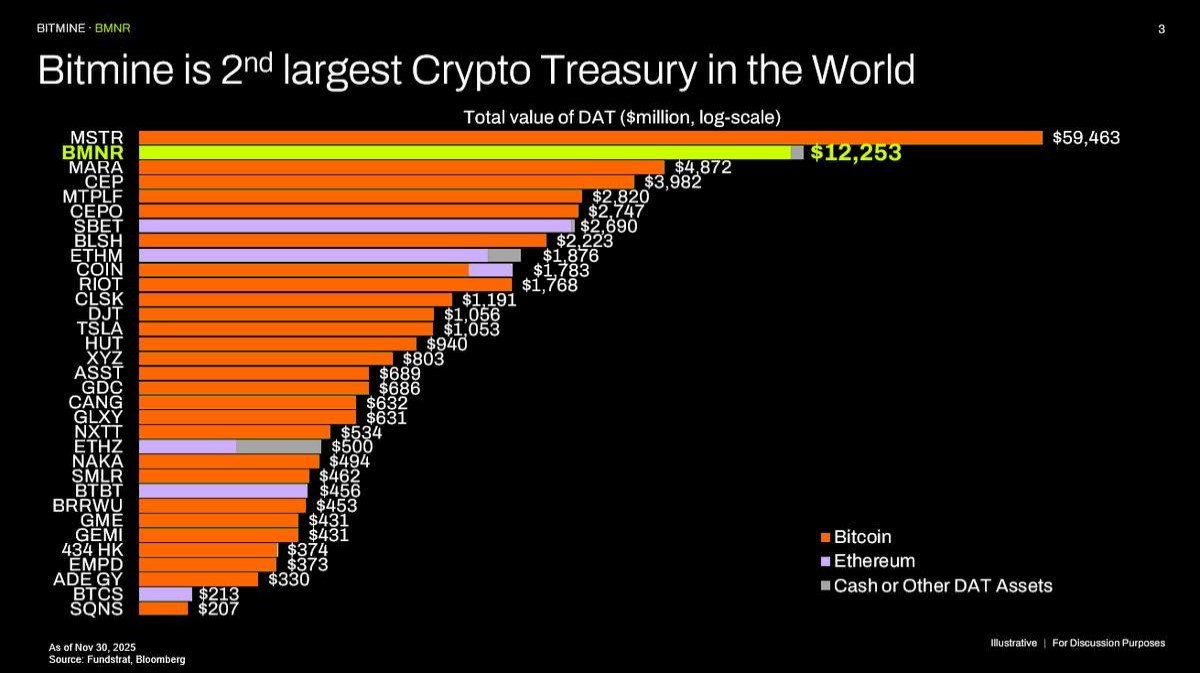
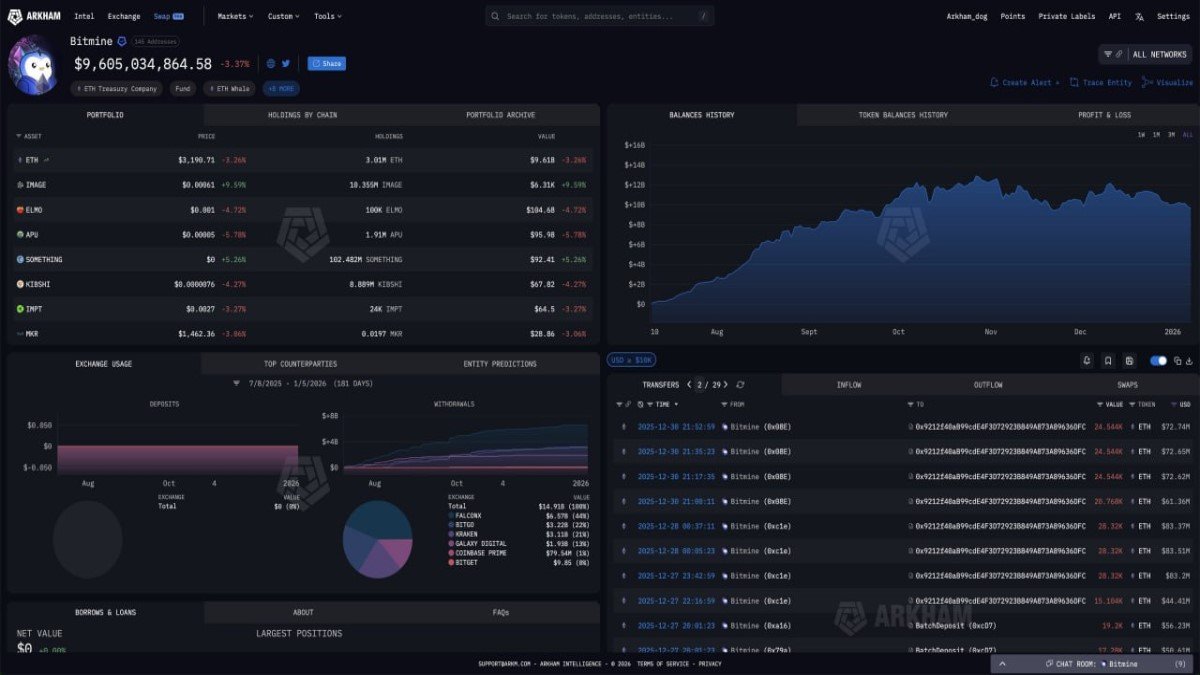
Bitmine is positioning itself as an ETH-focused financial platform. It plans to stake Ethereum, use ETH as collateral to access leverage, deploy funds across decentralised finance services and design structured products for clients based on its ETH inventory. In that context, Tom Lee’s incentives are more than a personal reward. They are a blueprint that links the company’s balance sheet, revenue plan and long-term share price to the trajectory of Ethereum itself.
This article breaks the package into its core components, examines the economic logic behind each piece, and explores what it means for Bitmine’s shareholders, for Tom Lee and for investors watching the ETH ecosystem from the sidelines.
1. The Headline Numbers: 35 Million Guaranteed, 60 Million At Risk
On paper, Tom Lee’s cash compensation is split into two buckets:
- 35 million USD of guaranteed cash, regardless of business performance.
- 60 million USD of performance-based cash, only paid if demanding revenue targets are met in each of four fiscal years from 2027 to 2030.
The guaranteed portion is structured as:
- A 15 million USD signing payment once the package is formally approved.
- A fixed salary of 5 million USD per year for four years, totalling 20 million USD.
The company frames this as a recognition of Tom Lee’s past contribution to the broader digital-asset industry and as an assurance of management stability. From a governance standpoint, it locks in leadership but also creates a baseline cost that shareholders will carry regardless of outcomes.
The performance bucket is stricter. It consists of 15 million USD per year in potential cash bonuses, payable only if Bitmine reaches explicit revenue hurdles:
- 2027: 200 million USD of revenue.
- 2028: 300 million USD.
- 2029: 400 million USD.
- 2030: 500 million USD.
The key detail is that the bonus is binary. Falling even slightly short of the target in a given year causes the entire 15 million USD for that year to vanish. There is no partial payout for hitting 95% or 98% of the goal. This kind of design creates very sharp incentives: management is strongly motivated to clear the hurdle, not just come close.
2. How the Revenue Targets Shape Bitmine’s Business Model
Hit-or-miss incentives only make sense if the underlying business model has a realistic path to those numbers. Bitmine’s plan centres on Ethereum in three main ways:
- Staking ETH at scale. By locking up a large ETH position in validator infrastructure, Bitmine aims to earn protocol rewards, effectively treating staking yield as the foundation of its income statement.
- Using ETH as collateral. ETH holdings can be pledged in decentralised lending markets or with institutional partners to obtain funding, which is then deployed into other opportunities.
- Building ETH-linked financial products. Structured notes, yield products, or diversified pools can be offered to clients, with Bitmine capturing fees while its own ETH inventory anchors the strategy.
The revenue targets from 200 million USD up to 500 million USD, combined with the binary nature of the bonus, tell us something important about how aggressively Bitmine is expected to pursue these activities. A conservative, low-risk approach would make those numbers difficult to achieve. Instead, the incentives push management toward scale: more ETH under management, more clients, more complex products and deeper integration with on-chain markets.
For investors, the upside is clear. If the strategy works, Bitmine becomes a central player in ETH-based yield and collateral markets, and the company’s revenue line grows in step with the broader Ethereum economy. The risk is that strong financial incentives may encourage the pursuit of volume and growth before risk controls and diversification are fully mature.
3. Equity Compensation: 6 Million Shares Tied Directly to Execution
The second pillar of the package is stock-based compensation totalling 6 million shares. This equity component is designed to align Tom Lee’s personal wealth with Bitmine’s market valuation and with a very specific balance-sheet target: reaching 5% of Ethereum’s total supply.
3.1 Time-based RSUs: 1.5 Million Shares
The first segment consists of 1.5 million restricted stock units (RSUs) that vest purely with time. They are distributed evenly over three years, at roughly 500,000 shares per year. There are no performance conditions attached beyond continued employment.
These RSUs function as a retention tool. They encourage Tom Lee to stay and oversee the build-out of Bitmine’s ETH strategy through at least the early phases. For shareholders, they are a predictable dilution cost that can be evaluated against the value of stable leadership.
3.2 Performance-based PSUs: 4.5 Million Shares
The more consequential piece is the 4.5 million performance share units (PSUs). These only vest if Bitmine meets stringent, pre-defined criteria along three axes:
- Share price performance. The company’s stock must achieve and maintain levels consistent with the growth story presented to investors.
- Market capitalisation growth. Bitmine must expand its overall market value, signalling that external investors are genuinely convinced by the business.
- Strategic ETH accumulation. The firm aims to hold a quantity of Ethereum equivalent to 5% of total ETH supply, a very ambitious goal that would make Bitmine one of the single largest holders of the asset.
Even if these hurdles are met, the PSUs do not vest all at once. The shares are released gradually:
- 60% after the first year of meeting the criteria.
- 20% after the second year.
- 20% after the third year.
This slow-release mechanism is deliberate. It encourages sustained performance rather than a one-off surge in metrics. If Bitmine hits its targets briefly but then stumbles, a meaningful portion of the PSU pool would never be delivered.
4. What This Package Implicitly Demands From Tom Lee
When we translate these mechanics into expected behaviour, three responsibilities stand out.
4.1 Sustained public conviction in Ethereum
Bitmine’s strategy and Tom Lee’s upside both rely heavily on Ethereum’s long-term success. The pursuit of 5% of total ETH supply, combined with staking and product design built around ETH, effectively commits the company to a structurally positive view on the asset.
In practice, that means Tom Lee is not merely an executive; he is also a visible advocate. It would be difficult for him to publicly express a negative long-term outlook on Ethereum while his compensation is tied to ETH-based revenue, ETH-based balance-sheet targets and share-price performance driven by ETH narratives. The package, therefore, practically requires consistent, long-horizon optimism about Ethereum, even through cycles where market sentiment might turn cautious.
4.2 Extracting value from Bitmine’s ETH inventory
Accumulating large quantities of Ethereum is only part of the story. Bitmine’s investors will expect that inventory to work for them: earning staking rewards, generating fee income and supporting well-managed lending or structured-product businesses.
For Tom Lee, this means:
- Designing staking operations that are secure, resilient and competitively priced.
- Deciding how much leverage to take on against ETH collateral without exposing the company to excessive downside in volatile conditions.
- Ensuring that client-facing ETH products are transparent and understood, so that confidence is not shaken during periods of market stress.
The package rewards him for turning Ethereum holdings into sustainable, repeatable income streams, not just for accumulating tokens on a balance sheet.
4.3 Driving share price and market capitalisation higher
Because PSUs depend on market capitalisation and share price, Tom Lee’s role extends beyond operations. He must also manage expectations in public markets. That involves:
- Maintaining a credible narrative about Bitmine’s edge in ETH-based finance.
- Delivering financial results that match or exceed guidance.
- Building trust with analysts, regulators and large shareholders.
In essence, the package asks him to be chief strategist, chief risk officer and chief storyteller at once.
5. Risks and Alignments: A Balanced Look
From an educational perspective, Tom Lee’s package offers a clear case study in how incentive design can both align and distort behaviour.
5.1 Where incentives are well aligned
Several elements of the package are firmly in line with shareholder interests:
- Performance hurdles for most of the upside. The majority of the cash potential (60 million USD) only materialises if Bitmine delivers revenue at scale. This directly ties management reward to measurable business outcomes.
- Multi-year vesting of PSUs. Spreading equity payouts over three years after performance is achieved discourages short-lived spikes in metrics and encourages durable execution.
- Focus on ETH as productive capital. Setting goals around staking and ETH-based products encourages Bitmine to treat its ETH inventory as working capital rather than as a speculative stash.
5.2 Where risks emerge
There are also areas where investors should remain vigilant:
• Binary revenue bonuses. All-or-nothing structures can create incentives to push aggressively for late-year deals, relax underwriting standards or draw forward future revenue in order to clear a threshold.
• Concentration in a single asset. Targeting 5% of ETH’s total supply concentrates Bitmine’s fate in one ecosystem. While it might cement the company’s status as an ETH specialist, it also amplifies exposure to any unexpected protocol changes, competitive threats or regulatory shifts affecting that network.
• Communication constraints. Since the package implicitly rewards persistent optimism on Ethereum, it may become difficult for management to communicate caution even when it would be healthy to do so.
These are not flaws unique to Bitmine; they are recurring themes in incentive design across many industries. The key is whether the board implements risk limits, independent oversight and transparency around how targets are pursued.
6. What It Could Mean for the Ethereum Market
If Bitmine genuinely pursues the goal of holding 5% of Ethereum’s total supply, the implications for the market could be significant. That magnitude of accumulation, spread over time, may:
- Reduce freely circulating ETH available for other participants, particularly if Bitmine stakes a large portion.
- Increase the importance of Bitmine as a validator and liquidity provider, potentially giving it outsized influence in staking economics and large client flows.
- Signal to other institutions that it is feasible to build substantial businesses around ETH-based services, accelerating competition.
From a market-structure standpoint, it is also a reminder that executive incentives can shape asset flows. When a company’s leadership is rewarded for accumulating a specific token and building layered services on top of it, that token becomes more than a neutral protocol asset. It becomes a focal point of corporate strategy.
7. Lessons for Investors and Builders
Beyond the specifics of Tom Lee and Bitmine, this package offers broader educational lessons for anyone following digital-asset companies.
• Always read beyond the headline number. The total value of a compensation package matters less than how it is earned. Binary hurdles, vesting schedules and asset-specific targets reveal more about future behaviour than the headline sum.
• Incentives can lock a firm into an asset narrative. When compensation is tied tightly to a single token, the company’s ability to pivot is reduced. That can be a strength if the thesis is correct, but it is a vulnerability if conditions change.
• Negative outcomes are not only market-driven. Overly aggressive incentive structures can lead to operational risk, not just price volatility. Shareholders should ask how boards intend to monitor risk-taking in pursuit of ambitious targets.
• Alignment is not automatic. Even carefully designed packages require ongoing oversight. Boards may need to adjust goals, cap leverage or reinterpret metrics if conditions evolve in unexpected ways.
8. Conclusion: A High-Conviction Bet on Ethereum and Execution
Tom Lee’s compensation at Bitmine is more than an executive pay story. It is a statement about how the company intends to compete: by placing Ethereum at the centre of its strategy, scaling staking and ETH-backed products, and tying management’s upside to revenue milestones and market valuation.
The guaranteed 35 million USD creates a solid base for leadership. The potential 60 million USD of performance cash and 6 million shares, however, are the real levers. They effectively require Tom Lee to remain a consistent advocate for Ethereum, to harness Bitmine’s ETH inventory as productive capital and to convince public markets that the business deserves a growing valuation.
For outside observers, the package is a useful reminder that in digital-asset finance, incentives and technology are deeply intertwined. The way executives are paid can influence which networks grow, how much capital flows into staking, and how aggressively firms pursue new products. Understanding those incentives is part of understanding the market itself.
Disclaimer: This article is for educational and informational purposes only and does not constitute investment, legal or tax advice. Digital assets and equity investments involve risk and may not be suitable for every investor. Always conduct your own research and consult a qualified professional before making financial decisions.