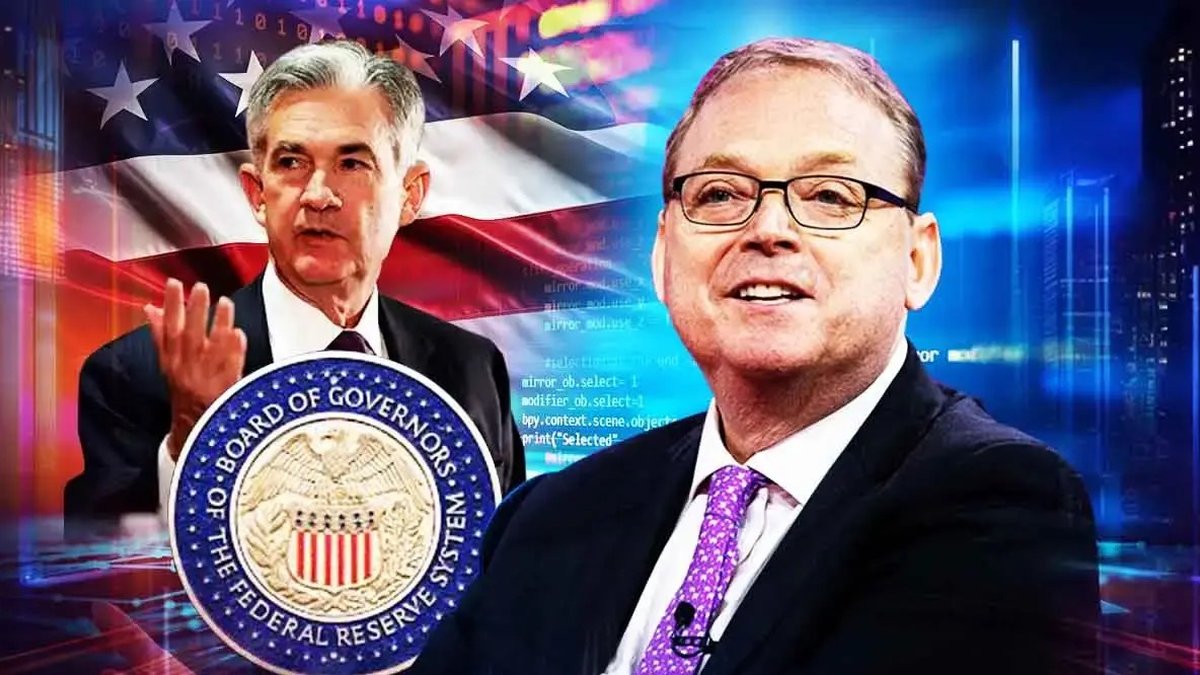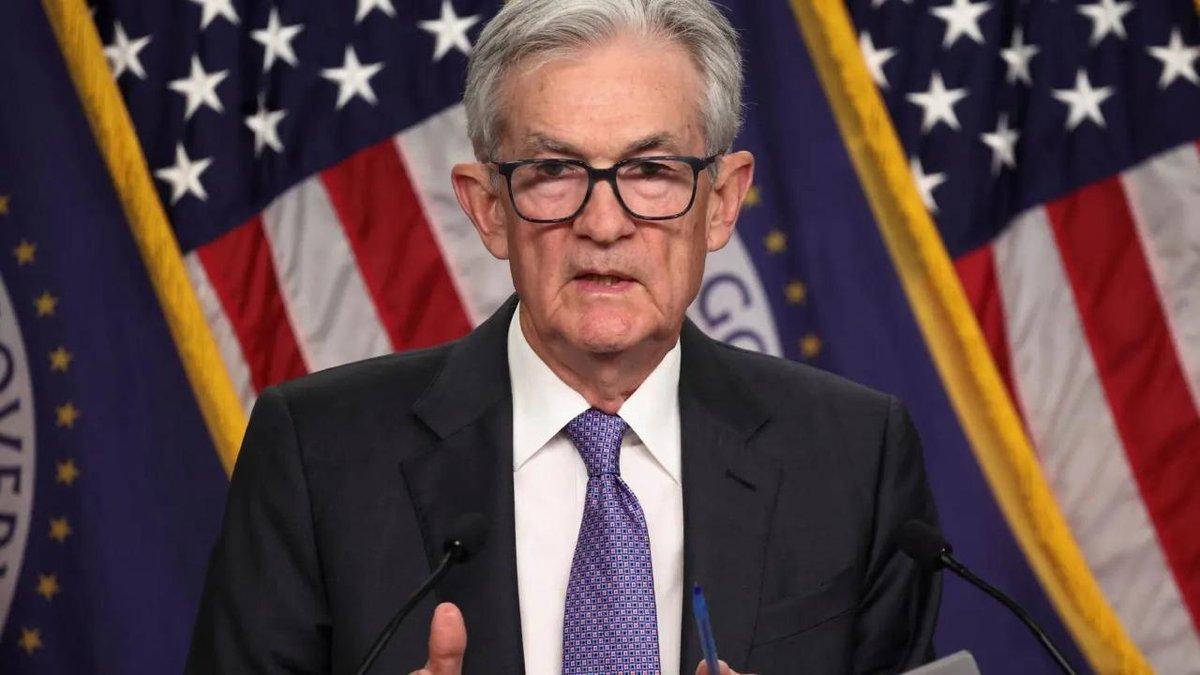
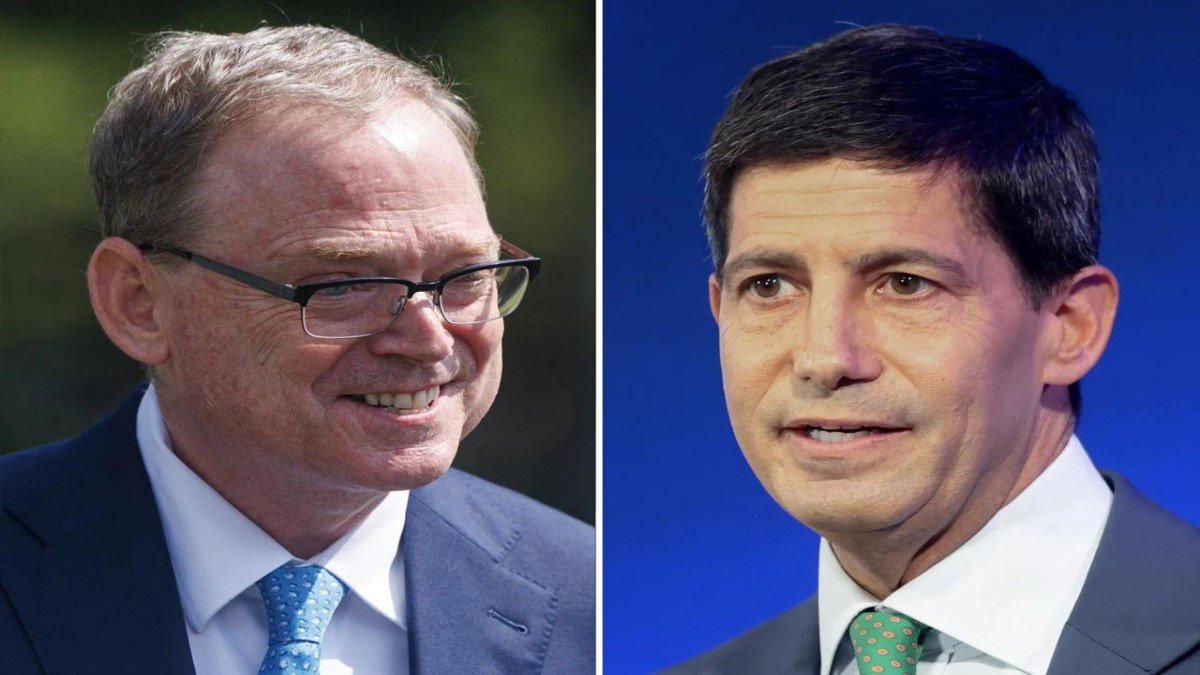
When a sitting US president starts talking publicly about who should lead the Federal Reserve, markets tend to listen very carefully. Donald Trump’s recent comments that former Fed governor Kevin Warsh is currently at the top of his list to become the next Fed Chair, with Kevin Hassett also under consideration, are not just political soundbites. They are an early signal about the kind of interest-rate regime, US dollar environment and risk appetite that could shape the second half of this decade.
At first glance this may look like a story that only matters in Washington and on bond-trading desks. In reality, the choice of Fed Chair can reshape the backdrop for every major asset class, from US Treasuries and global equities to Bitcoin and other digital assets. Understanding who Kevin Warsh is, what Trump appears to want from the next chair, and how those preferences might alter the liquidity landscape is essential context for any investor who thinks in multi-year cycles rather than just chasing the next price move.
Kevin Warsh: a crisis-era insider with a cautious streak
Kevin Warsh is a known quantity in macro and policy circles. He served on the Federal Reserve’s Board of Governors from 2006 to 2011, a period that spans the build-up to the global financial crisis, the collapse of major financial institutions and the first wave of unconventional monetary policy in modern US history.
During that time Warsh was deeply involved in discussions about emergency rate cuts, liquidity programs and the first large-scale asset-purchase schemes that dramatically expanded the Fed’s balance sheet. In speeches and writing since leaving the Fed, he has repeatedly warned about the side effects of keeping interest rates too low for too long and relying heavily on asset purchases. In his view, ultra-easy policy can distort asset prices, encourage leverage and leave the central bank with very little room to maneuver when inflation eventually returns.
That history matters because it suggests Warsh is not instinctively comfortable with a world of permanently low interest rates and ever-expanding central-bank balance sheets. If Jerome Powell has come to symbolize a gradual normalization after the pandemic shock, Warsh is often associated with a more skeptical stance toward prolonged stimulus and a stronger focus on long-term price stability.
Where does Kevin Hassett fit into the picture?
Trump has also mentioned Kevin Hassett as a serious contender for the role. Hassett is a conservative economist who has advised Republican policymakers for decades. He led the Council of Economic Advisers during Trump’s first term and later returned as a senior adviser during the pandemic period. More recently he has played a key role in shaping economic plans in the current administration.
Market commentary often frames Hassett as somewhat more comfortable with rapid rate cuts than Warsh, especially if growth slows. Investors who worry about recession risk tend to see him as a figure who might lean earlier toward easing. By contrast, Warsh’s past skepticism about prolonged low rates suggests he would want clearer evidence that inflation is moving decisively toward target before endorsing an extended cutting cycle.
The reality is that both candidates would inherit a complex set of trade-offs: inflation that has come down from its peak but remains above the Fed’s 2% goal, a labor market that has cooled but not collapsed, and a federal debt load that makes the level of interest rates politically sensitive. How each candidate prioritizes those trade-offs will matter more than any individual soundbite.
What does Trump say he wants from the next Fed Chair?
In recent months Trump has been unusually explicit about his preferences. Public remarks indicate that he wants lower interest rates and believes the Fed Chair should engage more directly with the White House on rate decisions. In his view, interest rates affect growth, employment, inflation and the cost of servicing government debt so profoundly that the elected president should have a stronger voice in the conversation.
That perspective immediately revives an old debate about the independence of the Federal Reserve. Since the 1980s, markets have largely operated under the assumption that the Fed is insulated from short-term political pressure: it sets policy based on its dual mandate and economic data, not the electoral calendar. The classic argument is that if political leaders have too much influence, the temptation will always be to push rates lower in the short run, at the cost of higher inflation and instability later.
Trump is not proposing to rewrite the legal framework that underpins Fed independence. The Chair still has a fixed term and cannot be removed simply for disagreeing with the president. But by emphasizing that the Fed should “consult” more closely with the White House, he is signaling that he wants a more politically engaged relationship. In that light, picking Warsh could be seen as an attempt to find someone who shares concerns about inflation and the side effects of aggressive stimulus, but who is also willing to discuss the growth and employment consequences of policy choices in real time.
How might policy look under a Warsh-led Fed?
No Fed Chair operates in a vacuum: every decision must be approved by the Federal Open Market Committee (FOMC), where 12 voting members bring different regional and ideological perspectives. Even so, the Chair sets the tone, frames the narrative and plays a dominant role in communicating with markets.
Based on Warsh’s track record and public statements, a few broad themes are plausible if he becomes chair:
• Greater sensitivity to inflation risk. Warsh has argued that reacting too slowly when inflation pressures emerge can make the eventual adjustment far more painful. That suggests he might be more willing than some peers to keep rates elevated for longer if inflation proves sticky, even at the cost of slower growth in the short term.
• Less enthusiasm for long-running asset-purchase programs. He has previously warned that a very large central-bank balance sheet can blur market signals and create challenges when the time comes to unwind support. That does not mean asset purchases would never be used, but the bar for multi-year programs might well be higher.
• Greater respect for market price signals. Warsh tends to emphasize the information content of market prices – from yield curves to credit spreads – as indicators of investor expectations. A Fed led by him might avoid extremely detailed forward guidance and allow rates to respond more flexibly to incoming data and market conditions.
For the US dollar, such an approach would likely mean a somewhat firmer backdrop than under a very dovish chair. If markets believe that rates will stay in positive real territory for longer, US assets retain an attractive yield advantage over other developed economies. For global risk assets, including digital assets, that implies a world where liquidity is available but not abundant in the way it was during the zero-rate era.
Fed independence in practice: politics never fully disappears
Legally, the Fed remains independent regardless of who chairs it. In practice, no Fed leadership team can ignore the political environment. The institution has always had to explain itself to the White House and to Congress, where members regularly press for explanations on inflation, unemployment and the distributional impact of monetary policy.
What may be changing is the level of transparency around that pressure. When a president publicly names preferred candidates and discusses desired rate levels, markets are reminded that the Fed operates within a political system. A Warsh-led Fed would need to show that it is listening to elected officials without becoming an extension of the executive branch. That balance is delicate but crucial for maintaining credibility with investors at home and abroad.
One additional layer is the federal debt burden. With debt-to-GDP high by historical standards, even modest moves in interest rates have sizeable implications for the government’s interest bill. A chair who is perceived as “too hawkish” could face political pushback for raising the cost of servicing that debt, even if the goal is to keep inflation expectations anchored. Navigating that tension will be a central challenge for any new chair, Warsh included.
Why this matters for Bitcoin, Ethereum and digital assets
For many crypto investors the Federal Reserve can feel like a distant institution, but its decisions still loom large over the market. Digital assets remain highly sensitive to swings in global liquidity and to shifts in investors’ appetite for risk. The 2020–2021 cycle, with near-zero rates and large asset purchases, coincided with a powerful advance in many growth assets, including digital tokens. The subsequent tightening cycle saw a sharp correction across the same universe.
In that sense, the identity of the next Fed Chair is not about whether they “like” Bitcoin or Ethereum; it is about the environment they create. A chair with a strong bias toward very low rates and frequent asset purchases tends to support abundant liquidity, which can fuel rapid price appreciation but also more violent corrections when conditions change. A chair with a more cautious stance, like Warsh, may preside over a world in which liquidity grows more slowly and investors demand clearer fundamental stories before allocating capital.
For Bitcoin, which some investors view as a hedge against long-term monetary expansion, a Warsh-style focus on inflation discipline can cut both ways. On one hand, if the Fed convincingly keeps inflation in check, the urgency of using alternative stores of value may feel lower. On the other hand, if investors believe that structural forces – such as debt levels or supply shocks – will keep pressure on prices despite the Fed’s efforts, a disciplined central bank does not necessarily eliminate the case for holding scarce digital assets. It simply changes the narrative from “easy money forever” to “diversification in a complex macro regime.”
For Ethereum and other platforms that support on-chain finance and applications, the key link is more about risk appetite and funding conditions. Higher for longer rates usually mean that only the strongest projects, with real user demand and clear revenue models, can attract sustained institutional interest. Marginal or purely speculative projects find it harder to raise long-term capital when investors can earn a solid yield in low-risk assets.
Institutionalization of digital assets under a new Fed regime
Warsh and Hassett are not known as vocal commentators on digital assets, and the Fed itself is not the primary regulator for crypto markets. That role falls mainly to Congress, the Treasury, the Securities and Exchange Commission (SEC), the Commodity Futures Trading Commission (CFTC) and various banking regulators. Even so, the Fed still matters for the institutionalization of digital assets in several indirect ways.
• System-wide liquidity and funding costs. Interest rates set the baseline cost of leverage across the financial system. That affects everything from the economics of Bitcoin-backed credit lines to the risk budgets of hedge funds and proprietary trading firms that play a growing role in digital-asset markets.
• Payments and settlement infrastructure. Debates about stablecoins, real-time settlement systems and, in some regions, central bank digital currency experiments all intersect with the Fed’s view of what constitutes a safe and efficient payment architecture. A chair who is open to innovation but demanding on risk controls could encourage well-regulated gateways between traditional finance and on-chain finance.
• Confidence for long-term allocators. Pension funds, insurers and large asset managers tend to move cautiously into new asset classes. A Fed that communicates clearly, avoids abrupt policy swings and maintains credibility on inflation makes it easier for these institutions to plan multi-year allocation strategies that may include a small but meaningful exposure to digital assets.
In that context, an environment of moderate but predictable interest rates can actually be constructive for the gradual integration of digital assets into mainstream portfolios, even if it does not deliver the dramatic liquidity surge that accompanied earlier speculative phases.
How investors can interpret the Warsh signal
For individual investors it is tempting to reduce everything to a simple question: “If Warsh becomes Fed Chair, will prices go up or down?” Unfortunately markets rarely move in such a mechanical way. The impact of any chair appointment will be filtered through economic data, FOMC dynamics, Congressional oversight and unpredictable external events, from geopolitical shocks to technological breakthroughs.
A more useful way to read the situation is to treat the Warsh discussion as evidence of a broader shift. Regardless of who ultimately takes the chair, there is a clear desire in policy circles to avoid a return to the combination of zero rates and massive balance-sheet expansion as a permanent default. That implies a world where capital is not free, where investors are rewarded for careful selection and where the long-term business models of projects matter more than pure momentum.
For portfolios that include digital assets, that shift argues for a focus on quality, resilience and time horizon:
- Prioritizing assets with strong network effects, deep liquidity and credible governance over those that rely solely on short-term narratives.
- Thinking of Bitcoin and other major assets as part of a diversified macro portfolio, not as isolated bets disconnected from interest-rate dynamics and growth expectations.
- Accepting that cycles may become longer and more nuanced, with fewer episodes of vertical price action driven purely by extreme policy easing.
Conclusion: one chair, many layers of impact
Trump’s statement that Kevin Warsh is currently leading the race to become the next Fed Chair is more than a headline. It marks the opening phase of a transition in US monetary leadership at a time when inflation, debt and technological change are all reshaping the global financial system. Warsh brings crisis-era experience, a cautious attitude toward prolonged stimulus and a clear concern about the long-term costs of high inflation. Hassett, the other prominent candidate, is associated with pro-growth policies and a willingness to ease when conditions warrant.
For investors in both traditional and digital markets, the key takeaway is not to guess the next day’s price move, but to recognize that the era of unconditional easy money has likely passed. The coming years are more likely to be defined by disciplined but data-dependent policy, positive real yields and a political environment that openly debates the trade-offs of interest-rate decisions. In such a world, understanding the macro context – and positioning portfolios for a range of scenarios rather than a single forecast – is just as important as picking the right stocks, tokens or protocols.
Whoever ultimately takes the chair will inherit a complex and demanding job. For long-term investors, the most constructive response is to treat this leadership transition as another reminder that macro, policy and digital innovation are now deeply intertwined – and to build strategies that can weather different combinations of all three.