January 2026’s Macro “Stress Test”: Five Dates That Can Quietly Reprice Crypto and Risk Assets
New Year’s optimism has a habit of meeting January’s calendar—hard. The first month of 2026 stacks multiple policy and market-structure catalysts into a tight window, and the interesting part isn’t any single headline. It’s the way these events interact: legal uncertainty can spill into inflation expectations, inflation expectations can reshape the Fed path, and the Fed path can change the discount rate that quietly sits under everything from high-growth equities to crypto.
This is not a “predictions” piece. It’s a map: why these dates matter, how to think about the mechanisms (not the noise), and which signals are worth tracking if you want to understand market behavior without getting pulled into overconfident narratives. Crypto tends to magnify macro impulses—not because it’s irrational, but because it’s structurally reflexive, globally liquid, and sentiment-sensitive.
Fed Chair succession: why the market cares before any vote happens
Leadership transitions at the Federal Reserve are often misunderstood as personality drama. In markets, they function more like “regime rumors.” Even if policy decisions still require a committee, investors use the chair as a shorthand for reaction function: What does the Fed tolerate—higher inflation for longer, or higher unemployment for longer? That shorthand becomes a pricing input long before any Senate hearing or official handover.
Reports suggest the White House could announce a preferred successor to the current Fed chair in January, with the chair term ending in mid-2026. That timing matters because it creates a months-long “shadow pricing” period where markets reprice not only the likely path of rates, but also the perceived independence and communication style of the institution.
• The mechanism: rate expectations are a discount rate. A small shift in the expected policy path can move long-duration assets sharply—tech, speculative growth, and often crypto.
• The second mechanism: uncertainty premiums. When the market can’t confidently model the next regime, it prices a wider distribution of outcomes. That tends to raise volatility even if spot prices initially drift.
• The crypto translation: crypto reacts less to the “identity” of the chair and more to what the market believes the chair will do to liquidity conditions and real yields.
In other words, the Fed-chair storyline is not about hero-villain narratives. It’s about whether the market’s internal model of “future money” just changed shape.
Supreme Court tariffs case: an inflation shock hiding inside a legal question
Tariffs sound like trade policy, but in markets they often behave like a blend of tax, supply shock, and political risk premium. The Supreme Court is widely expected to weigh disputes around the scope of tariff authority and the use of emergency powers. That sounds technical, yet the consequences can be macro: if broad tariff moves remain easy to deploy, the “policy tool” stays on the table; if not, the tool gets dulled, and uncertainty shifts elsewhere.
The key point: this isn’t just about whether tariffs are legal. It’s about whether the market must price a world where large tariff moves can arrive quickly, with fewer legislative bottlenecks. That uncertainty can ripple into inflation expectations, corporate planning, and global risk appetite.
• The mechanism: tariff uncertainty can feed inflation expectations (or at least inflation fear). Inflation fear can push up yields and real yields. Real yields are historically a headwind for risk assets.
• The “macro-to-crypto” bridge: when rates volatility rises, correlations often rise too. Crypto can move less like a standalone asset and more like a high-beta expression of global risk appetite.
• The nuance: outcomes can be “risk-on” or “risk-off” depending on context. Limiting tariff authority could reduce uncertainty (supporting risk), but it could also trigger political escalation via other policy levers (reintroducing uncertainty elsewhere).
So the analysis isn’t “tariffs up = crypto down.” The analysis is: how much uncertainty premium is being added or removed from the market’s inflation-and-growth distribution?
MSCI vs. MicroStrategy: when “passive plumbing” becomes a catalyst
Most investors treat index provider decisions as background paperwork—until they’re not. MSCI is expected to decide by mid-January whether to remove MicroStrategy (MSTR) from certain MSCI indexes. This matters for a simple reason: indexes create mechanical demand. If a stock sits inside major benchmarks, passive funds must own it. If it leaves, passive funds must sell it. That selling isn’t a “view.” It’s a rule.
MicroStrategy has evolved into a highly visible public-market proxy for Bitcoin exposure. That makes it uniquely sensitive to two forms of volatility: Bitcoin’s own price swings and the equity-market “flow shocks” that come from inclusion or exclusion rules. In January, those two volatilities can collide—creating a catalyst that looks like a stock story but can influence crypto sentiment through narrative and positioning channels.
• The mechanism: potential index removal can force rebalancing flows, which can amplify moves around the decision window—regardless of fundamentals.
• The sentiment spillover: MSTR often becomes a headline proxy for “institutional BTC appetite.” If it sells off on index mechanics, the story can be misread as “Bitcoin demand weakening,” even when the cause is structural.
• The practical insight: when you see sharp moves, ask first: “Is this information… or plumbing?” January is full of plumbing.
If you want one mental model: passive rules can briefly overwhelm active beliefs. In reflexive markets, price moves then become the story that triggers more price moves.
FOMC Jan 27–28: the meeting that sets the tone
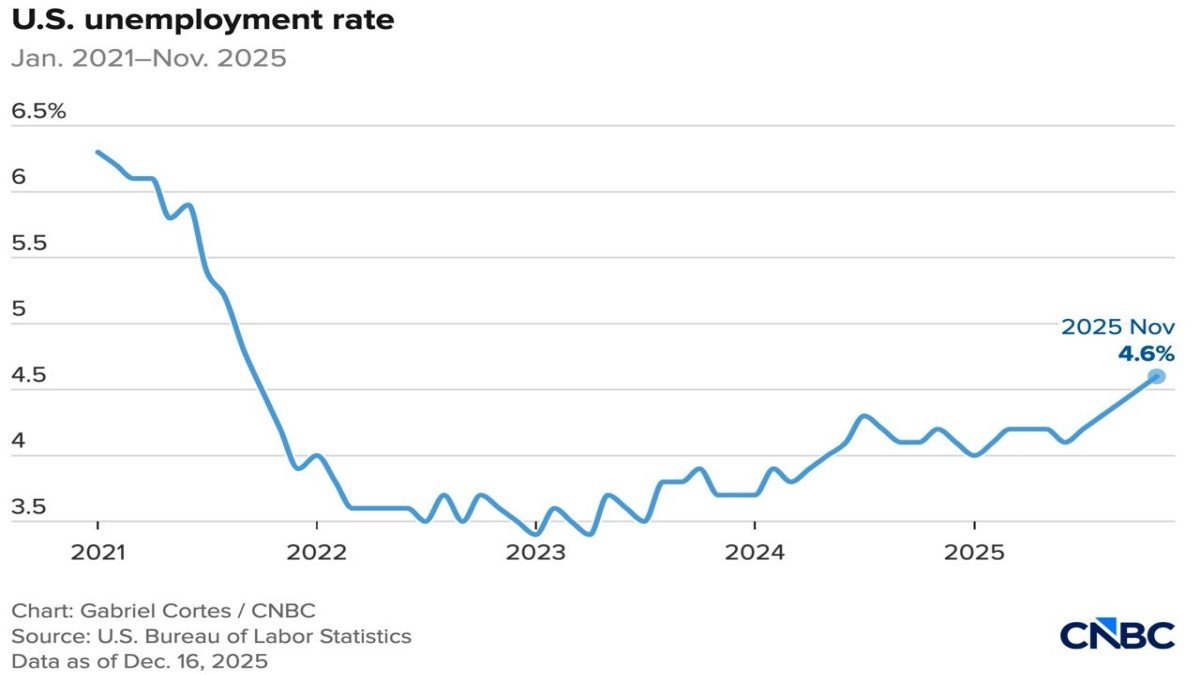
The first Federal Open Market Committee meeting of the year is rarely the most dramatic—yet it often becomes the “tone setter.” The first 2026 meeting is scheduled for late January. Even if no major change is expected, the meeting matters because it anchors expectations: how the committee frames inflation, labor-market slack, and financial conditions tends to shape the next few months of narrative gravity.
Markets don’t just trade decisions; they trade surprise. The January meeting is a risk event because it can alter the market’s confidence in its own forecast. A subtle change in language can move the probability distribution of the next two meetings—and that is enough to move yields, the dollar, and global risk appetite.
• The mechanism: guidance sensitivity is highest when investors are unsure about the regime. Add a Fed leadership transition narrative, and sensitivity increases.
• The crypto translation: crypto often responds to broad financial conditions—especially real yields and dollar strength—more than to the policy rate itself.
• The warning label: one-day moves can be about positioning, not truth. The “meaning” emerges in the following week as markets digest and re-hedge.
For educational tracking, the most useful question after the meeting is not “did rates change?” It’s “did the distribution of plausible outcomes get narrower or wider?”
Funding deadline around Jan 30: volatility via uncertainty (and sometimes missing data)
Political funding deadlines rarely feel like crypto catalysts—until they touch uncertainty and data reliability. Recent stopgap funding measures were designed as temporary bridges, which means late January carries a familiar risk: if lawmakers fail to reach another agreement, shutdown pressure returns.
Shutdown risk matters in markets not because investors obsess over federal operations, but because uncertainty has a price. In some episodes, shutdowns can also delay economic data releases, making it harder for investors (and the Fed) to “read the dashboard.” When the dashboard gets fuzzy, markets often compensate with wider risk premiums and choppier price action.
• The mechanism: policy uncertainty tends to raise volatility and can tighten financial conditions at the margin.
• The macro-to-crypto bridge: when volatility rises across rates and equities, crypto often experiences sharper intraday swings because leverage and liquidity are globally distributed.
• The practical framing: treat it as a volatility input, not a directional signal. The market can rally or sell off into a deadline depending on positioning and last-minute headlines.
In January 2026, this deadline lands just days after the first FOMC meeting—meaning macro attention may already be elevated.
Putting it together: a January framework for reading risk
January’s calendar looks like five separate stories. A better way to read it is as one integrated system: (1) the market’s expected path of money (Fed leadership + FOMC), (2) the market’s uncertainty about inflation and policy tools (tariffs disputes), and (3) the market’s mechanical flow dynamics (MSCI/MSTR), all against (4) a political uncertainty backdrop (funding deadline).
If you’re trying to understand crypto’s behavior through this month, the most useful move is to shift from “headline reactions” to “variable tracking.” Headlines are noisy; variables are the levers those headlines pull.
• Variable 1: Real yields. When real yields rise, high-beta assets often face headwinds; when they fall, risk appetite often improves.
• Variable 2: Dollar strength. A stronger dollar can tighten global liquidity conditions; a weaker dollar can do the opposite.
• Variable 3: Volatility regime. When rates volatility increases, cross-asset correlations often rise—crypto included.
• Variable 4: Flow shocks. Index rebalances and mechanical selling/buying can dominate short windows and distort “signal vs. noise.”
And here’s the deeper, more “January” insight: markets are usually not reacting to what happened; they’re reacting to what the future might allow. That’s why legal authority, leadership signals, and funding cliffs matter even before any concrete economic data changes.
Conclusion
January 2026 isn’t just busy—it’s structurally informative. The month compresses multiple forces that shape how risk is priced: the future path of monetary policy, the scope of tariff authority (and its inflation implications), the hidden power of index mechanics, and a funding deadline that can reintroduce political uncertainty.
For crypto, the lesson is not that these events “control” the market. The lesson is that crypto often amplifies shifts in financial conditions and uncertainty premiums. If you can separate plumbing from information—and variables from narratives—you can read the month with more clarity and less emotional whiplash.
Frequently Asked Questions
Is this article predicting price direction for crypto?
No. It explains mechanisms—how certain events can affect rates, uncertainty premiums, and market structure—without making investment recommendations or performance promises.
Which single event matters most for crypto in January?
There isn’t a single “most important” event. Crypto tends to respond to the combined effect on financial conditions—especially real yields, dollar strength, and volatility regimes.
Why would an MSCI decision about a stock matter to crypto?
Because MicroStrategy is widely treated as a Bitcoin proxy in public markets. Index inclusion/exclusion can trigger mechanical flows that move the stock—and that move can spill into crypto sentiment and positioning.
What should I watch instead of headlines?
Educationally: real yields, broad dollar direction, rates volatility, and evidence of mechanical flows (rebalances, forced selling) tend to explain more than social-media narratives.
Disclaimer: This article is for informational and educational purposes only and does not constitute financial, investment, legal, or tax advice. Markets involve risk, and policy outcomes can change. Consider consulting qualified professionals for advice specific to your situation.