Trust Wallet Integrates Revolut in Europe: A New On-Ramp for the Next Wave of Crypto Adoption
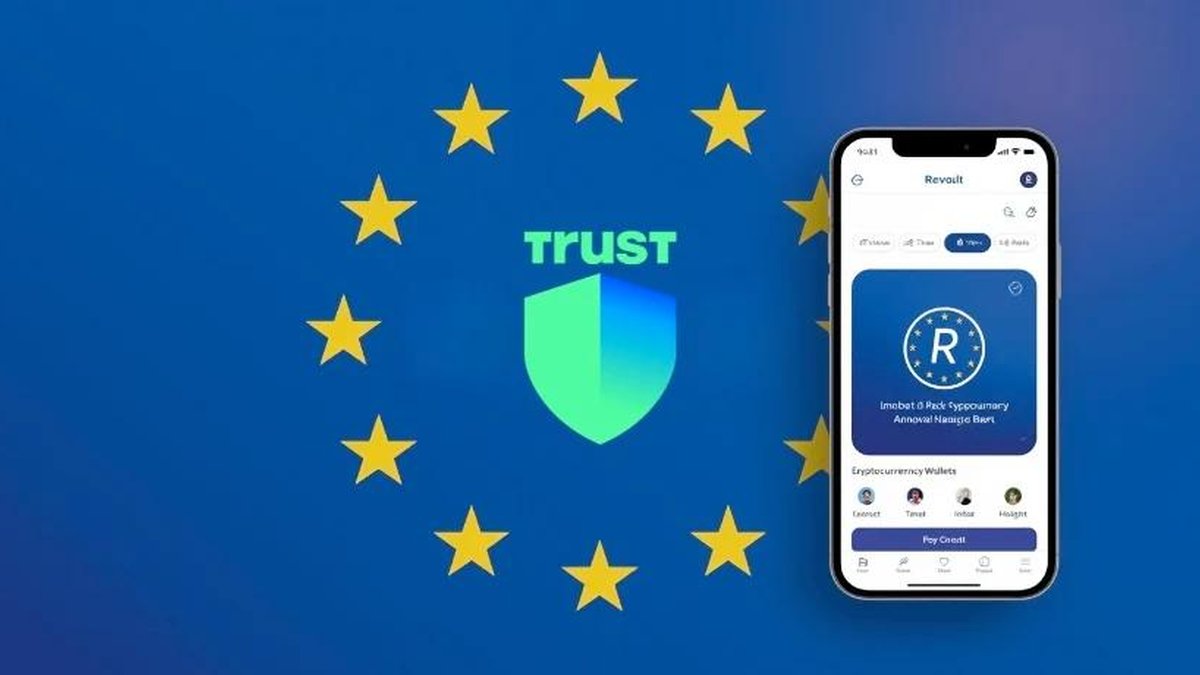
Sometimes the most important upgrades in the crypto ecosystem are not new blockchains or complex protocols, but small pieces of user experience that quietly remove friction. The recent integration between Trust Wallet and Revolut in Europe is exactly that kind of change. On the surface, it is a new button inside an app. Underneath, it signals how quickly the boundary between traditional fintech and self-custodial wallets is disappearing.
With this partnership, European users can purchase digital assets directly inside Trust Wallet using Revolut, including an option to pay via Revolut Pay with zero transaction fees. Funds move from a familiar mobile banking interface straight into a non-custodial wallet, without the usual maze of exchanges, intermediate transfers and manual address copying.
In this article we unpack what this integration really changes, why it matters strategically for both companies, and how it fits into the broader competition to become the primary interface for the next generation of crypto participants.
1. What Exactly Has Changed?
Trust Wallet is one of the largest self-custodial wallets in the world, with a user base reportedly exceeding 200 million accounts. Revolut, meanwhile, has grown into a European financial super-app with around 65 million users globally, offering multi-currency accounts, cards, cross-border payments and in-app access to various investment products.
The new integration allows European users to:
- Purchase digital assets inside Trust Wallet using their Revolut balance or linked funding methods.
- Top up instantly without switching between multiple apps or dealing with long settlement times.
- Use Revolut Pay to complete purchases with a stated transaction fee of 0%, at least for the current promotional phase.
In practical terms, a user who previously had to send money from a bank to an exchange, execute a trade, and then withdraw to their self-custodial wallet can now move from euros or pounds to on-chain assets in a few taps. The wallet remains in the user’s control, while Revolut acts as the regulated payment and funding rail.
2. Why On-Ramps Matter More Than New Tokens
The crypto ecosystem has never lacked new assets or technical experiments. What it consistently lacked was frictionless access. For many potential users, the problem is not choosing between networks, but simply getting their first 100 euros into a wallet without feeling overwhelmed.
Traditional entry routes looked something like this:
- Open an account on a centralized exchange.
- Complete an identity check, often on a separate interface.
- Deposit funds via bank transfer and wait for settlement.
- Place a buy order on the exchange.
- Generate a wallet address and withdraw to a self-custodial wallet.
Every step is a potential drop-off point. Each new screen is a moment for a new user to ask whether the process is worth the effort, or whether they should abandon it altogether.
By embedding Revolut directly into Trust Wallet, the entire flow compresses into a simple purchase journey inside an app that already stores the user’s assets. The payment layer becomes almost invisible. For an industry that talks about mass adoption, this kind of simplification is far more important than yet another speculative token.
3. A Quiet Re-Drawing of the Competitive Map
At first glance, this looks like a pure partnership. Revolut gains more transaction volume; Trust Wallet gains a smoother on-ramp. But strategically, it is also a sign that the battle for the primary customer relationship is shifting.
For years, centralized exchanges were the default gatekeepers for new users. They controlled the fiat on-ramp, the spot market and often the custody of user funds. Wallets were mainly seen as tools for more experienced participants. Now, neobanks and wallets are meeting in the middle:
- Revolut wants to be more than a bank-like app; it aims to be a universal financial interface where users save, spend, invest and explore digital assets without leaving its environment.
- Trust Wallet wants to be more than a storage tool; it is evolving into a full-stack access point for Web3, with built-in swaps, staking options and cross-chain support.
The integration lets both sides leverage their strengths. Revolut brings a regulated, familiar funding rail and deep experience with payments and compliance. Trust Wallet brings a global user base that is comfortable with self-custody and Web3 applications. Together, they edge closer to displacing exchanges as the first stop for newcomers.
From the perspective of traditional trading venues, this is a subtle competitive risk. If users can buy directly into a self-custodial wallet with a near-instant, low-cost on-ramp, the role of exchanges may gradually shift toward being deep-liquidity backends rather than the main consumer entry point.
4. Why This Matters for European Regulation
Europe is in the midst of implementing one of the most comprehensive digital asset frameworks in the world. The Markets in Crypto-Assets regulation (MiCA) and related rules on fund transfers and identity verification are reshaping what is allowed, how stablecoins must be backed, and how service providers must treat clients.
Within that context, the Trust Wallet–Revolut integration is notable for several reasons:
• Clear division of roles. Revolut operates as a regulated payments and e-money institution in multiple European jurisdictions. It handles client onboarding, identity checks and fiat balances. Trust Wallet, by contrast, remains a self-custodial interface where users control their own keys.
• Alignment with emerging stablecoin rules. As Europe finalises requirements for reserve backing, disclosure and redemption rights, mainstream apps that deal with digital assets will increasingly need to demonstrate that their partners can meet these standards. Integrations between regulated fintechs and established wallets are easier to defend than ad-hoc links to unregulated platforms.
• Support for travel-rule compliance. Regulators care about how funds move between identifiable entities and self-hosted wallets. The more structured the on-ramp, the easier it is for providers to build appropriate safeguards and reporting.
In other words, this is not just a user-experience story. It is also a sign that the industry is steadily learning how to operate inside a maturing regulatory perimeter without losing the benefits of self-custody.
5. What Users Actually Gain From the Integration
For everyday users, the integration has three main implications: convenience, cost and control.
5.1 Convenience: fewer hops, fewer chances for error
Most people do not think in terms of exchanges and wallets; they simply want to move from national currency to digital assets safely and quickly. Using Revolut inside Trust Wallet means:
- No manual copying of deposit addresses.
- No waiting for bank transfers to settle.
- No juggling several usernames, passwords and security steps across platforms.
Everything happens inside two applications that already feel like part of the same digital finance stack.
5.2 Cost: zero-fee via Revolut Pay (but spreads still matter)
The headline of zero-fee purchases via Revolut Pay is attractive, especially for smaller tickets and regular dollar-cost-averaging. It reduces the psychological barrier for new users who might hesitate to pay a visible platform fee on a small order.
However, it is important to remember that the total cost of a transaction also depends on the price spread and foreign exchange conversion, not just on explicit fees. For educational purposes, users should still compare effective execution prices over time rather than assuming that a zero-fee label always means the lowest possible cost.
5.3 Control: self-custody from day one
Perhaps the most meaningful change is that new users can now begin their journey directly in a non-custodial environment. Instead of first parking assets on a platform account and later learning how to withdraw them, they can start with the mindset that they are responsible for their keys.
This has trade-offs: it requires paying attention to backup phrases, device security and phishing-resistant habits. But it also reduces dependence on centralized entities and encourages people to interact with on-chain services directly, whether that is moving funds between networks, using stablecoins for cross-border transfers, or participating in decentralised applications that match their risk tolerance.
6. Strategic Value for Trust Wallet and Revolut
From a business perspective, the integration is more than a feature request. It aligns with long-term strategic goals on both sides.
6.1 Why Trust Wallet Benefits
• Higher activation rates. Download numbers are impressive, but a large share of wallet installations never see meaningful on-chain activity. By embedding a familiar payment method, Trust Wallet can convert more first-time users into active participants.
• Deeper engagement. Once a user has funded the wallet seamlessly, they are more likely to explore swaps, staking options or cross-chain transfers, all of which strengthen Trust Wallet’s role as their default Web3 hub.
• Regulatory signalling. Partnering with a well-regulated fintech like Revolut sends a signal to policymakers that self-custodial tools can coexist with strong compliance practices on the fiat side.
6.2 Why Revolut Benefits
• Access to a global Web3-native audience. Trust Wallet’s user base is heavily concentrated among people already comfortable interacting with on-chain assets. Integrating with such a community reinforces Revolut’s image as a forward-looking financial app.
• Increased payment volume. Even with promotional fee discounts, additional volumes generate revenue through foreign-exchange conversions, card interchange and broader usage of Revolut accounts.
• Optional bridge to future products. Over time, Revolut can build additional services – such as budgeting tools, recurring purchases or savings features – around the flows created by this on-ramp, as long as they remain aligned with local regulations.
7. Risks and Responsibilities: A Balanced View
The integration is a positive step for usability, but it does not eliminate risk. In fact, easier access places a greater responsibility on platforms to educate users.
Key considerations include:
• Self-custody education. Newcomers must understand the difference between holding funds in a regulated account (such as Revolut) and holding them in a self-custodial wallet where loss of keys can mean permanent loss of access.
• Volatility awareness. Frictionless purchase flows can make it tempting to treat digital assets like a casual in-app purchase. Clear disclosures about price volatility and long-term risk are essential to keep behaviour responsible.
• Regulatory boundaries. Users should be aware that Revolut’s responsibilities and protections apply to their fiat balances, not necessarily to on-chain assets once they have left the payment environment.
From a policy standpoint, supervisors will be watching these integrations closely. The key question is whether smoother on-ramps can be paired with equally strong safeguards, not just for financial integrity but also for consumer understanding.
8. A Glimpse of the Future: Wallets as Financial Operating Systems
Seen from a wider lens, the Revolut–Trust Wallet partnership is one piece of a broader trend: wallets are slowly transforming into full financial operating systems.
If a user can:
- Receive their salary in a bank account or digital wallet,
- Convert part of it to stablecoins or other assets with a few taps,
- Store those assets in a self-custodial interface,
- Use them for payments, remittances or participation in on-chain services,
…then the distinction between traditional finance and blockchain-based finance starts to blur. Payments, savings and investment begin to share the same underlying rails, while the user experience remains as simple as using a mobile banking app.
In that future, partnerships like this one may become the norm rather than the exception. Digital banks will increasingly integrate with self-custodial tools; custodial platforms will offer seamless exits to personal wallets; and regulatory frameworks will evolve to treat on-chain operations as a standard part of financial infrastructure rather than a separate universe.
9. Key Takeaways for Investors and Builders
For market observers, the lesson is not that one product integration will suddenly change price trends. Instead, it is that the industry is quietly solving its most persistent obstacle: how to make participating in crypto feel as straightforward as using any other digital financial service.
- For investors, smoother on-ramps typically support long-term adoption trends, even if they do not remove short-term volatility.
- For builders, the integration underscores the importance of working with regulated partners, aligning user experience with compliance rather than treating them as competing goals.
- For policy makers, it shows that self-custody and regulated intermediaries can be complementary: one protects individual control, the other provides safeguards at the entry and exit points.
10. Conclusion
The integration of Revolut into Trust Wallet for European users may appear modest at first glance, but it is part of a much larger pattern. Digital banks, wallets and regulators are gradually building a shared environment where moving between traditional money and on-chain assets feels natural, regulated and largely invisible from a user-experience perspective.
By combining Revolut’s reach as a mobile financial platform with Trust Wallet’s scale as a self-custodial wallet, the partnership lowers one of the final remaining barriers for mainstream adoption: getting money into the ecosystem without confusion or unnecessary friction. At the same time, it raises the bar for responsibility, education and risk management.
If the next wave of adoption is driven less by speculation and more by useful, user-friendly infrastructure, then integrations like this one may, in hindsight, turn out to be more important than any single price milestone. They quietly teach millions of people that holding and using digital assets can be as simple as using the financial apps they already trust.