MetaMask’s Native Bitcoin Support: A Quietly Radical Upgrade
For most of the past decade, MetaMask has been synonymous with Ethereum. It was the default browser extension for interacting with ERC-20 tokens, DeFi applications and NFTs, long before the term “multi-chain wallet” became fashionable. That mental model now needs an update. With its latest release, MetaMask has added native support for the Bitcoin network, allowing users to buy, send, receive and swap BTC directly from the same interface they use for Ethereum and other EVM chains.
The shift sounds incremental on the surface, but structurally it is a big deal. MetaMask is no longer just an Ethereum gateway with side support for EVM-compatible networks. It is becoming an all-purpose digital asset hub that understands very different protocol families, starting with Bitcoin and potentially extending further. At the same time, MetaMask is moving into prediction markets through a direct integration with Polymarket, while its parent company Consensys prepares a MASK token and explores the path to a public listing. Taken together, these moves hint at a deliberate strategy: turn MetaMask from a simple wallet into a universal, regulated-friendly front end for on-chain finance.
1. From Wrapped BTC To Native BTC: Why The Difference Matters
Before this update, users who wanted to access Bitcoin liquidity through MetaMask typically relied on wrapped versions of BTC, such as WBTC or renBTC, issued on Ethereum or other smart contract networks. Those instruments have played an important transitional role, but they come with compromises. They depend on custodians or bridge operators to hold the underlying BTC, and they introduce additional smart contract and operational risk on top of Bitcoin’s own security model.
Native Bitcoin support changes that equation. With the new release, MetaMask can generate and manage Bitcoin addresses directly, starting with SegWit formats and with Taproot support on the roadmap. When a user receives BTC, those coins live on the Bitcoin blockchain itself, not as a representation on another network. Transactions are signed locally in the wallet and broadcast to Bitcoin nodes, mirroring the self-custody experience Ethereum users expect for ETH and ERC-20 tokens.
This delivers three important benefits:
• Reduced intermediary risk. Users no longer need to rely on wrapping services or cross-chain bridges simply to hold BTC alongside their Ethereum assets. The number of trusted third parties in the flow decreases.
• Clearer mental model. For newcomers, it is easier to understand that they truly own Bitcoin on the Bitcoin network, rather than a derivative that tracks BTC’s price.
• Better alignment with Bitcoin’s design. Many long-time Bitcoin users are wary of wrapped versions because they dilute the asset’s core promise of self-custody. Native support inside a familiar wallet can help bridge that cultural gap.
In practice, this means that a user can hold BTC, ETH, stablecoins and other tokens side by side in one interface, choosing the most appropriate network for each task instead of forcing every flow through the EVM stack. It also means that Bitcoin can gradually participate in the same UX improvements — such as account abstraction and multi-device syncing — that MetaMask has been rolling out on the Ethereum side.
2. SegWit Today, Taproot Tomorrow: Building A Modern Bitcoin Wallet
MetaMask’s implementation starts with SegWit addresses, the standard widely supported across exchanges and services. SegWit reduces transaction size and fees and is fully compatible with most existing tooling. The roadmap includes Taproot support, which would unlock more advanced scripting possibilities and improve privacy characteristics compared with legacy formats.
From a technical standpoint, integrating Bitcoin is very different from adding yet another EVM chain. Bitcoin uses an unspent transaction output (UTXO) model rather than account balances, relies on different fee estimation logic, and has its own conventions around change addresses and key derivation paths. To provide a smooth user experience, MetaMask has to abstract away those differences without hiding important details such as fee levels and confirmation times.
If the execution is successful, the result will be more than just another Bitcoin wallet. It will be one of the first mainstream, non-custodial extensions where a user can manage complex DeFi positions on Ethereum, hold BTC as a long-term reserve asset and interact with dApps and prediction markets — all without juggling multiple interfaces or seed phrases.
3. Prediction Markets Inside The Wallet: Polymarket Integration
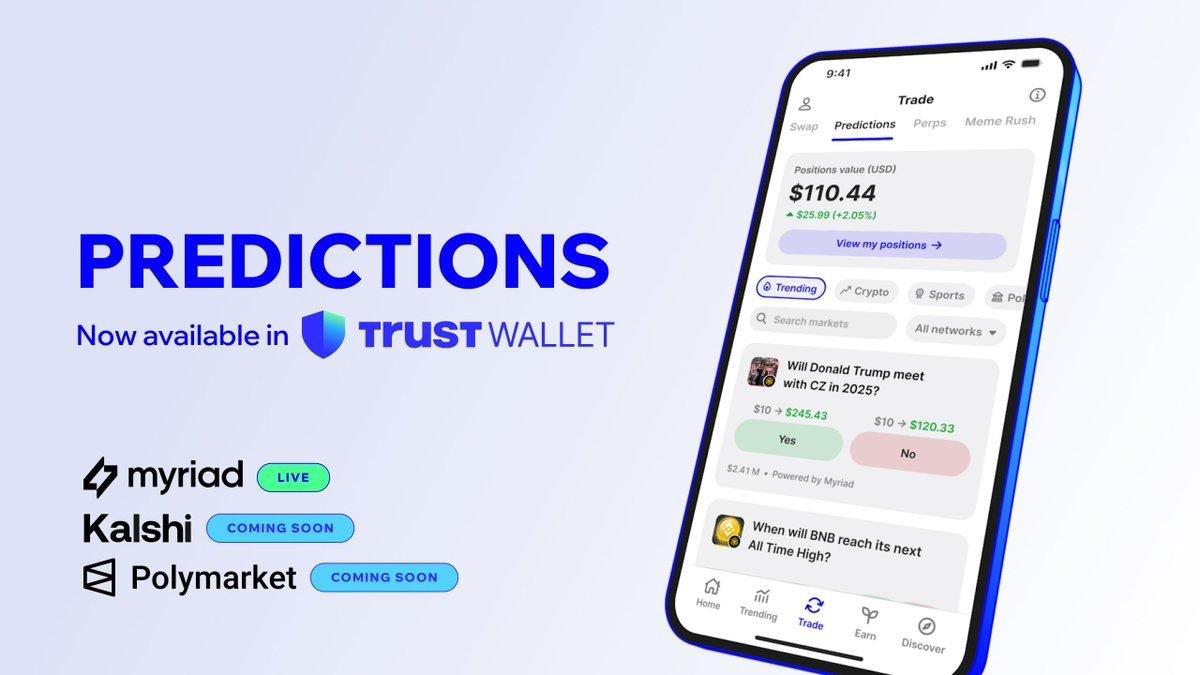
Alongside native BTC support, MetaMask is expanding into the prediction market space via integration with Polymarket. Instead of visiting a dedicated website, connecting a wallet and learning a new interface, users can now access event markets from within MetaMask’s ecosystem. Orders are still executed on chain and settled according to clear rules, but the journey from curiosity to participation becomes much shorter.
For MetaMask, this is strategically meaningful for several reasons:
• Increased stickiness. The more financial tools a wallet aggregates — from swaps and staking to event markets — the less incentive users have to move elsewhere.
• Data and insight. Understanding which types of markets attract interest, and how users allocate across assets and events, can help MetaMask refine its product roadmap while still preserving user privacy at the protocol level.
• Positioning as a neutral access layer. By integrating third-party protocols instead of building every product in-house, MetaMask reinforces its role as an operating system for Web3 rather than a vertically integrated exchange.
For the broader ecosystem, bringing prediction markets into a mainstream wallet could normalize them as a standard financial primitive, similar to how perpetual futures or automated market makers gradually moved from niche experiments to core infrastructure. As always, the regulatory angle will matter: the more these platforms resemble structured financial products with transparent rules and disclosures, the easier it becomes for policymakers to treat them as part of the formal financial system rather than purely entertainment products.
4. Consensys, MASK And The Path Toward A Public Listing
The timing of these product moves is not accidental. Consensys, the company behind MetaMask, has signaled that it is preparing a MASK token and considering an initial public offering. For a firm that already plays a central role in Ethereum infrastructure, those steps are about crystallizing value and aligning incentives among users, developers and shareholders.
A multi-chain MetaMask that supports Bitcoin, integrates prediction markets and acts as a gateway to tokenized assets is a much more compelling story for public market investors than a single-network browser extension. Revenue can come from a diversified mix of sources: swap routing fees, institutional APIs, premium features, and potential revenue-sharing arrangements with partner protocols. A well-designed token could add another layer by rewarding usage and governance participation, although the exact structure will matter greatly for regulatory classification.
At the same time, the step toward public markets subjects Consensys to higher expectations around compliance, risk management and transparency. Features like native Bitcoin support and Polymarket integration will be scrutinized not just for their technical merit but for their alignment with emerging rules on digital asset custody, disclosures and consumer protection. That tension — between innovation and regulatory clarity — is likely to shape MetaMask’s roadmap in the coming years.
5. Wallets As Super Apps: Challenging Centralized Platforms
MetaMask’s evolution illustrates a broader trend: non-custodial wallets are slowly turning into super apps that compete directly with centralized exchanges and brokerages. For many users, the main attraction of an exchange was the ability to view all balances in one place, trade between assets, and access structured products. As wallets integrate swaps, cross-chain bridges, staking dashboards, lending, NFTs, prediction markets and now native Bitcoin, they erode that advantage.
The non-custodial model has structural strengths. Users retain control over their keys, assets are held on public networks rather than in centralized ledgers, and counterparty risk is lower when smart contracts and audited protocols handle settlement. Of course, self-custody also shifts responsibility to the individual: losing a seed phrase still means losing access. That is why UX features such as social recovery, hardware wallet support and secure cloud backups are starting to matter as much as raw protocol integrations.
By adding Bitcoin, MetaMask taps into a community that has historically favored dedicated wallets and hardware devices. Some Bitcoin holders may still prefer to keep their reserves separate from their day-to-day DeFi activity, but others will welcome the ability to monitor and move BTC from the same interface they already use for Web3 applications. Over time, as taproot and layered solutions mature, the distinction between “Bitcoin wallet” and “Web3 wallet” may fade.
6. Risk, Regulation And The Importance Of Clear Education
With greater functionality comes greater responsibility. MetaMask’s own communication around the update emphasizes security and education: the wallet remains non-custodial, and users must understand the implications of managing keys across multiple networks. Native Bitcoin support removes intermediary risk but does not remove market risk or operational mistakes. Transactions on Bitcoin, like on Ethereum, are irreversible.
Prediction market access via Polymarket also requires careful framing. These platforms can be used for information discovery and price discovery on real-world events, but they must operate under appropriate guardrails depending on local laws. For a wallet that serves users in many jurisdictions, the safest path is to provide clear disclosures, allow for geographic controls where required and treat event markets as one financial primitive among many rather than as a central attraction.
Looking ahead, the regulatory trend is toward bringing more digital asset activity into transparent, supervised frameworks. Guidance such as the US SEC’s recent note on crypto custody for retail investors, or the EU’s MiCA regime, highlights the importance of clear ownership records, robust technical security and straightforward risk disclosure. MetaMask’s choices — emphasizing self-custody, reducing unnecessary intermediaries and partnering with regulated entities where fiat connections are involved — align with that direction.
7. What This Means For Users And The Next Cycle
For individual users, the practical implications of MetaMask’s upgrade can be summarized in a few points:
- You can hold and move native BTC inside the same wallet you already use for Ethereum and other EVM chains, without relying on wrapped versions.
- You can access prediction markets and other advanced applications more easily, but you remain responsible for understanding the rules of each platform and the risks involved.
- You benefit from the network effects of a wallet that is becoming a multi-chain standard: more dApps and services are likely to design their onboarding flows around MetaMask compatibility.
For the ecosystem, the move pushes the industry one step closer to a unified user experience where chain boundaries are mostly invisible. Developers can focus on building useful applications — from lending protocols and on-chain funds to data marketplaces — while wallets handle network selection, bridging and signing under the hood. Bitcoin’s inclusion in that experience is symbolically important: it signals that the oldest and largest digital asset is not standing apart from the multi-chain world but can participate in it on its own terms.
The bigger picture is that infrastructure is quietly catching up with the narrative of an “on-chain economy.” A few years ago, talk of global, 24/7 tokenized markets and autonomous agents paying each other in digital currencies still felt speculative. Today, we see regulated banks exploring tokenized bonds, large asset managers launching on-chain money market funds, and now one of the most widely used wallets bridging Bitcoin, Ethereum and event markets in a single interface.
Whether the next cycle is dominated by Bitcoin, by smart contract platforms or by new categories such as tokenized real-world assets, tools like MetaMask will be the primary interface through which most users experience that evolution. Native Bitcoin support is not the final step, but it is an important milestone in turning the idea of a truly multi-chain financial web into something concrete and usable.
Disclaimer: This article is for educational and informational purposes only and does not constitute financial, investment, legal or tax advice. Digital assets involve risk, and readers should conduct their own research and consult qualified professionals before making financial decisions.