Ledger’s Dimensity 7300 Warning: What It Really Means for Solana Seeker and Mobile Crypto Security
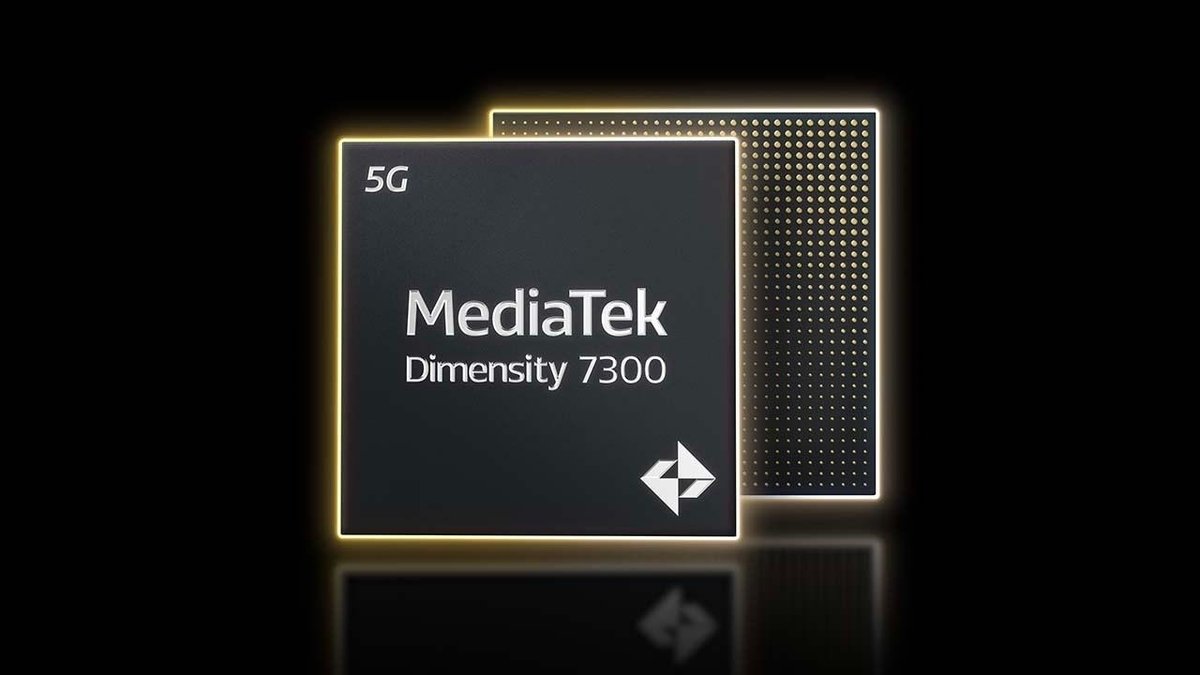
When Solana Mobile announced its second-generation Seeker phone, one of the major selling points was a smooth, integrated Web3 experience: a Seed Vault for keys, a native dApp store and tight integration with the Solana network. Under the hood, Seeker is powered by MediaTek’s Dimensity 7300 system-on-chip, a modern 4 nm SoC designed for mass-market Android devices.
That same chip is now at the centre of a serious—but also widely misunderstood—security story. Ledger’s research team has shown that, under laboratory conditions, it is possible to use electromagnetic pulses during boot to wrest full control of a Dimensity 7300 device and pull sensitive secrets from memory, including private keys stored by software wallets.
Headlines quickly followed: “unpatchable chip flaw”, “phones can be fully taken over”, “keys at risk”. For crypto users who have increasingly relied on phones as self-custody devices, the natural question is simple: should I be worried?
This article aims to answer that question calmly and in depth. We will unpack what Ledger found, how electromagnetic fault attacks work at a high level, what this means for Solana Seeker and other phones, and how to balance convenience and safety when holding digital assets on consumer hardware.
1. What Exactly Did Ledger Discover?
According to Ledger’s disclosure, their researchers targeted the Dimensity 7300’s secure-boot process using an electromagnetic fault technique. In simplified terms, they:
- Placed the device in a lab setup with specialised electromagnetic equipment.
- Applied precise pulses at the chip while it was starting up.
- Induced faults in the secure-boot sequence, causing it to misbehave.
- Used this misbehaviour to bypass normal protection layers and run their own code very early in the boot process.
Once they had this low-level control, the researchers were able to capture and read data that should have been protected by the operating system, including private keys stored by mobile wallets that rely on the main application processor for security.
Two aspects make the finding especially notable:
- The issue is rooted in hardware. The vulnerability relates to how the silicon handles certain operations under extreme electromagnetic conditions, not a bug in Android or an app. That is why Ledger states that it cannot be fully corrected with a software patch.
- The attack breaks through multiple layers at once. Because the researchers gained control before the operating system even loads, they effectively sidestepped lock screens, biometric checks and many normal protections.
MediaTek, for its part, has emphasised that Dimensity 7300 is a consumer SoC, not a certified secure element. The company notes that the chip was never intended to resist this category of physical intrusion and that the demonstrated scenario goes beyond its original threat model.
2. Why a Silicon-Level Issue Cannot Simply Be Patched
Most security updates work by changing software: altering code paths, tightening permissions, or adding checks and mitigations. When a problem lives in hardware, the options are more limited.
In the Dimensity 7300 case, Ledger’s team found that misbehaviour occurs when the chip is subjected to extremely precise electromagnetic disturbances during boot. That behaviour is baked into the silicon. Firmware can try to detect anomalies or add extra verification steps, but it cannot change how individual transistors react under physical stress.
This is similar in spirit to past side-channel and fault-injection findings on other processors, where carefully timed voltage, temperature or electromagnetic changes altered computations in ways that revealed secrets. Modern secure elements—like those used in dedicated hardware wallets or payment cards—are explicitly engineered and certified to resist such techniques. General-purpose smartphone chips rarely are.
The practical consequence is that there is no over-the-air update that magically makes Dimensity 7300 behave like a specialised secure element. Device makers can still improve software defences and user experience, but the fundamental property that Ledger exploited remains part of the silicon.
3. How Electromagnetic Fault Techniques Work (Without the Scary Jargon)
Electromagnetic fault techniques sound intimidating, but conceptually they follow a straightforward idea: if you disturb a processor at just the right moment, it may skip a step, misread a value or branch down the wrong path. If that step is part of a security check—say, verifying a signature—then the disturbance can sometimes open a door that should have stayed shut.
In practice, such techniques usually require:
- Physical access to the device.
- Lab-grade equipment capable of generating very precise electromagnetic pulses.
- Extensive experimentation to find the right timing and intensity.
Because of those constraints, this is not the sort of problem that can be widely exploited over a network. It is much more relevant in targeted scenarios: think high-value individuals, corporate devices, or forensic labs with both the time and the incentive to work on a specific phone.
That nuance is important. The existence of a physical attack path does not mean that every smartphone is suddenly unsafe to use in everyday life. It does mean that, for serious long-term storage of digital assets, we should understand the limits of consumer chips and design our custody approach accordingly.
4. Where Does This Leave Solana Seeker and Other Web3 Phones?
Solana Seeker sits at the centre of this conversation because it combines three ingredients:
- It uses the Dimensity 7300 SoC as its main processor.
- It ships with Seed Vault, a hardware-assisted key-storage module integrated into Android.
- It is explicitly marketed as a crypto-friendly device, targeted at users who may store meaningful value on it.
The Seed Vault feature aims to keep keys protected from normal malware by isolating them from the main Android environment. From Ledger’s description, however, the electromagnetic fault technique interacts one level below that, at the chip level. Once an attacker has early-boot control, they can observe or modify what happens inside the vault.
In that sense, the Ledger finding is not about Seeker alone; it is about any phone that uses this chip as the foundation for software-based key storage. The security model essentially becomes:
- Strong protection against remote attacks delivered through apps or browsers.
- Weaker protection against highly resourced actors who can obtain the device and place it in a lab.
For many everyday users, that might still be an acceptable balance—especially if the phone is used as a convenient hot wallet with limited funds. For high-net-worth individuals, fund treasuries, protocol teams or creators managing large treasuries, the bar should be higher. In those cases, phones like Seeker are best treated as user interfaces to more robust custody setups, not as vaults themselves.
5. Who Should Worry—and How Much?
To move from headlines to risk assessment, it helps to think in terms of threat models.
5.1 Everyday users
If you are a typical crypto user who keeps modest balances on a mobile wallet for payments, DeFi interactions, NFTs or gaming, the immediate risk from this Dimensity 7300 finding is limited. An attacker would still need physical possession of your phone and specialised equipment, and they would need to invest time into the attack. For the vast majority of users, more realistic threats remain social-engineering scams, malware and simple loss of seed phrases.
5.2 Power users and professionals
For traders, founders, protocol multisig signers or anyone holding substantial value, the calculus changes. Physical attacks that once seemed theoretical are increasingly within reach for well-funded actors. For this group, relying solely on a smartphone as a primary key store is not advisable, regardless of the chip vendor.
Here, the take-away is not panic but segmentation: treat phones as high-convenience, medium-security devices. Use them for day-to-day operations, small balances and short-lived keys, while storing the majority of funds on hardware wallets or multisig setups that use certified secure elements.
5.3 High-value or high-profile targets
Executives at crypto firms, large miners, fund managers and public figures may face a level of targeted risk where laboratory-grade physical attacks become plausible. For these individuals, operational security should already assume that phones, laptops and travel devices can be compromised. The Ledger finding simply reinforces a familiar lesson: never let a single general-purpose device become the sole guardian of major keys.
6. Practical Safety Guidelines for Mobile Crypto Users
Instead of treating the news as a reason to abandon mobile wallets, it is more useful to frame it as a reminder of good hygiene. A few practical guidelines can significantly reduce risk:
1. Separate convenience from cold storage. Use smartphones—including Solana Seeker—as convenient gateways to Web3, but keep long-term holdings on dedicated hardware wallets or in well-audited multisig arrangements.
2. Limit the value stored on any single phone. Decide in advance what level of loss would be painful but survivable, and avoid keeping more than that on a mobile device.
3. Use Seed Vault or similar features as a hardening layer, not a silver bullet. Hardware-assisted key storage inside a consumer SoC is still better than a plain software wallet, but it does not equal the assurance of a secure element designed and certified for this purpose.
4. Keep devices physically secure. Most sophisticated physical attacks require time with the device. Avoid leaving phones unattended in untrusted environments, and consider strong device-lock policies.
5. Maintain good backup practices. Store seed phrases or recovery keys in secure offline locations. That way, even if a phone is lost, damaged or examined, you can move funds to a new wallet.
6. Stay updated. Even when a vulnerability cannot be fully removed, operating-system and firmware updates often add additional checks or mitigations that make practical attacks harder.
These habits are valuable regardless of the specific chip in your phone; the Dimensity 7300 story simply shines a spotlight on them.
7. What This Means for the Broader Industry
The Ledger finding lands at an important moment for mobile Web3. Solana Mobile is rolling out its SKR token and Guardian-based governance model, explicitly positioning its hardware line as a long-term piece of the Solana ecosystem. At the same time, other projects are experimenting with crypto-first phones, browser-integrated wallets and in-app self-custody.
A clear message emerges: if smartphones are going to play a central role in digital-asset ownership, then the security architecture of those devices must keep evolving.
Several developments are likely over the coming years:
• Closer collaboration between wallet providers and chip vendors. Security-focused teams such as Ledger’s are already probing SoCs for weaknesses. Bringing those conversations into the design phase can help ensure that future chips include hardened pathways for key storage and secure boot.
• More widespread use of dedicated secure elements alongside application processors. Rather than relying solely on the main SoC, manufacturers can integrate tamper-resistant chips, similar to those used in payment cards and passports, to store keys and enforce transaction policies.
• Clearer communication of threat models to users. Marketing that simply calls a phone “secure” is no longer enough. Ecosystems will need to explain what kinds of attacks their devices are designed to withstand and which scenarios still require external hardware.
• Potential regulatory attention. As more traditional institutions enter crypto and mobile self-custody becomes common, regulators may eventually define minimum standards for devices marketed as financial tools. That could nudge the entire supply chain toward more robust designs.
From this perspective, Ledger’s disclosure is not just a negative story about one chip. It is also a useful pressure point that can encourage better engineering and clearer communication across the industry.
8. Takeaways: A Wake-Up Call, Not a Reason to Abandon Mobile Web3
The Dimensity 7300 vulnerability uncovered by Ledger is serious and deserves thoughtful attention. It shows that even modern smartphone chips, when subjected to precise physical interference, may not uphold the security guarantees that many users assume. For a device like Solana Seeker—explicitly built for crypto—that message is especially important.
At the same time, context matters. The attack requires physical access, specialist equipment and technical expertise. It is far removed from the kinds of remote threats that most users face in day-to-day life. For many, the more immediate risks remain unsafe key storage, poor backup habits and falling for social-engineering schemes.
A balanced view looks like this:
- Smartphones are excellent interaction devices for Web3 but should not be the sole vault for life-changing savings.
- Dedicated hardware wallets, secure elements and well-designed multisig systems remain the gold standard for long-term storage.
- Findings such as Ledger’s accelerate the industry’s push toward more robust, transparent security architectures—ultimately a positive for everyone who uses digital assets.
For Solana Seeker owners and anyone holding crypto on a phone, the practical advice is straightforward: treat your mobile device like a powerful but fallible tool. Enjoy the convenience of signing transactions, exploring dApps and managing smaller balances on the go—but keep your most important keys in environments that are engineered, from the silicon up, to withstand exactly the kind of advanced physical attacks that Ledger has just reminded us are possible.
Disclaimer: This article is for informational and educational purposes only. It does not constitute financial, investment, legal or tax advice, and it should not be treated as a recommendation to buy, sell or hold any digital asset or hardware product. Digital assets are volatile and carry risks, and no security measure can guarantee complete protection. Readers should conduct their own research and, where appropriate, consult qualified professionals before making decisions related to cryptocurrencies, wallets or other financial instruments.