Trust Wallet Turns Into a Prediction Hub: What Its New “Predictions” Feature Really Means
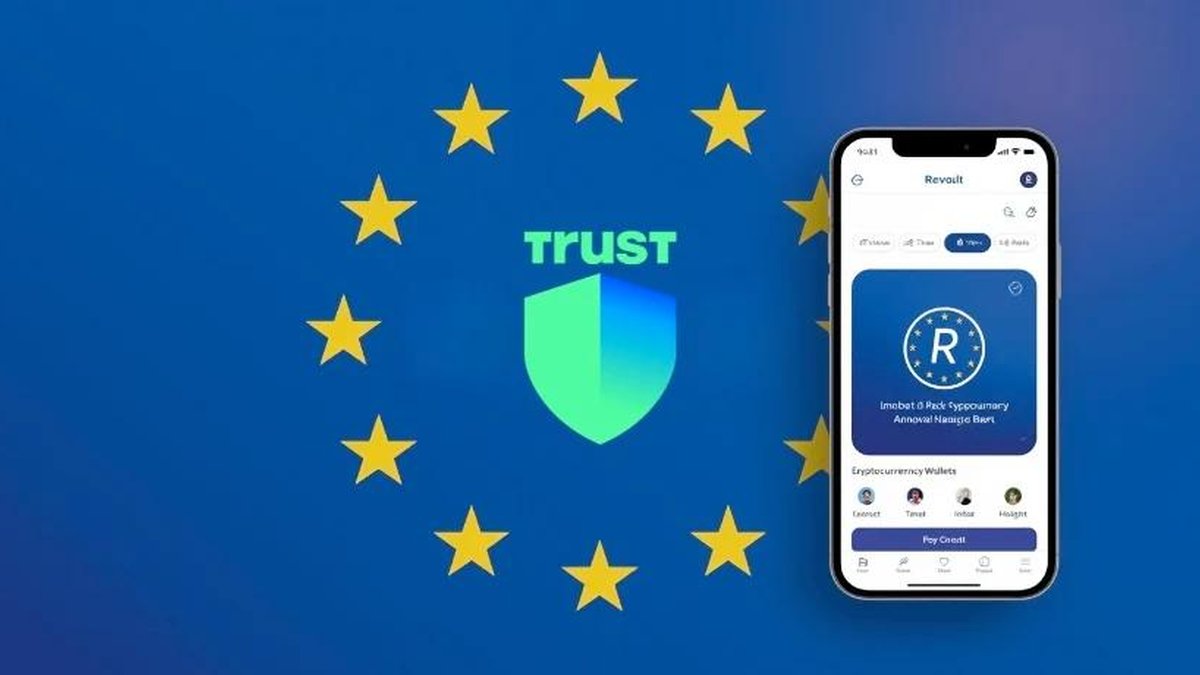
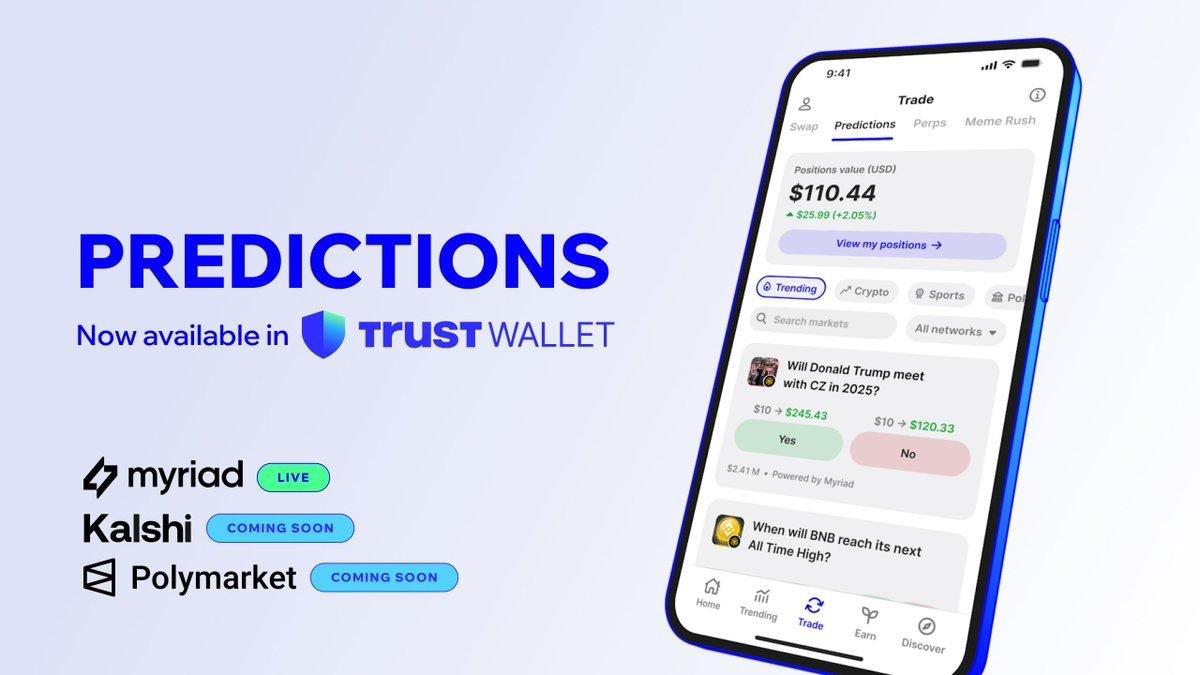
Trust Wallet is no longer just a place to hold tokens, swap assets or store NFTs. With the launch of its new “Predictions” feature, the self-custody wallet is positioning itself as a gateway to onchain prediction markets, starting with Myriad and expanding to established platforms such as Kalshi and Polymarket. Instead of forcing users to jump between specialised websites and separate applications, Trust Wallet wants to make it possible to access event-driven markets directly from the interface people already use to manage their digital assets.
This shift is not happening in isolation. In a recent roadmap, the team behind Trust Wallet outlined an ambition to evolve from a simple storage tool into a full trading hub, with advanced features like cross-chain swaps, derivatives and prediction markets, all built around self-custody and a growing role for the Trust Wallet Token (TWT). The new Predictions hub is one of the clearest manifestations of that strategy so far.
But what does it actually mean to have prediction markets embedded inside a mainstream wallet? How do Myriad, Kalshi and Polymarket differ from each other? And what should users bear in mind before interacting with these products, especially given the complex regulatory and risk landscape around event-based contracts?
This deep dive takes a brand-safe, educational look at Trust Wallet’s Predictions feature, highlighting both its potential and its limitations.
1. From Simple Wallet to Onchain Decision Terminal
Since its launch in 2017, Trust Wallet has grown into one of the most widely used self-custody wallets in the world, supporting more than 100 blockchains and securing billions of dollars in user assets. For many people, it is the first interface they use to buy, hold and transfer crypto.
Over time, the wallet has steadily added more capabilities: in-app swaps, staking, NFT galleries, dApp browsing and safety tooling that helps users avoid risky interactions. The new Predictions section represents the next step in that evolution. Instead of being a passive storage tool, the wallet is becoming an active decision terminal where users can observe, analyse and engage with markets that reflect expectations about real-world events.
In practical terms, the Predictions hub sits alongside other features in the Trust Wallet interface. When a user opens it, they see a curated set of event markets supplied by partner protocols. To participate, they connect the same self-custody wallet they already use; no additional custodial account or separate sign-up is required. Positions, collateral and settlement all remain under the user’s direct control, subject to the rules of each underlying protocol.
This design reflects a clear principle: the wallet is a gateway, not a custodian. Trust Wallet is not issuing its own prediction products; instead, it surfaces options from third-party platforms while keeping control of private keys in the user’s hands.
2. How the “Predictions” Hub Works at a High Level
While the technical details vary by integration, the core pattern is similar across Myriad, Kalshi and Polymarket:
• The user browses a list of markets—covering topics such as crypto events, macroeconomic data releases, sports competitions or major political outcomes—within the Trust Wallet interface.
• When they choose to take a position, the wallet constructs a transaction that interacts directly with the relevant protocol’s smart contracts or API endpoints.
• The user signs that transaction with their own private key, confirming the collateral amount and the side of the outcome they want exposure to.
• The resulting position is recorded at the protocol layer; the wallet merely displays balances, potential payouts and settlement updates over time.
This architecture has several important consequences:
• Self-custody remains intact. The user keeps full control of their funds at the key level. There is no need to deposit assets into a centralised account owned by Trust Wallet.
• Protocols retain their own rules. Each platform—Myriad, Kalshi, Polymarket—maintains its own listing standards, dispute resolution procedures, jurisdictional restrictions and fee schedules. The wallet simply exposes them.
• Regulatory context depends on the underlying platform. For example, a CFTC-regulated event-contract exchange has a different legal framework from a purely onchain information market, even if both are accessible via the same wallet interface.
For everyday users, the appeal is convenience: instead of juggling multiple browser tabs and seed phrases, they can manage positions from a single app. But that convenience also raises the stakes for clear communication around risk, which we will revisit later.
3. Myriad: The First Onchain Building Block
The first live integration inside Trust Wallet’s Predictions hub is Myriad, a decentralised prediction-market protocol that focuses on crypto-native, onchain event markets. Myriad allows participants to create and trade contracts linked to the outcomes of real-world events, settling in stablecoins such as USDC. According to public reports, the protocol has already processed around $100 million in cumulative trading volume, signalling meaningful traction among onchain users.
Several aspects of Myriad make it a logical launch partner for Trust Wallet:
- Onchain architecture. Markets live on a blockchain, so positions can be transparently verified, and settlement logic is handled by smart contracts rather than off-ledger spreadsheets.
- Crypto-first collateral. Because markets settle in stablecoins, they fit naturally into existing onchain portfolios. Users who already hold USDC or similar assets in Trust Wallet can allocate a portion to event markets if they choose.
- Modular design. Myriad is built to integrate with external interfaces, making it relatively straightforward for wallets and dashboards to list its markets.
From an educational standpoint, Myriad provides a clear example of how prediction markets work in a crypto-native environment. Each market is defined by an underlying question (“Will a certain network upgrade activate by date X?”, “Will a particular token reach a threshold by month Y?”) and a set of possible outcomes. Prices on those outcomes move based on supply and demand, and at expiry the protocol resolves the market based on verifiable information sources.
Through Trust Wallet’s Predictions hub, users can observe these dynamics in real time without leaving their familiar wallet context.
4. Why Prediction Markets Fit Trust Wallet’s Roadmap
Trust Wallet’s roadmap emphasises four growth pillars: everyday finance, advanced trading, earning products and future-looking features such as identity and credit. Prediction markets touch at least two of these directly.
First, they are part of the advanced trading story. Beyond simple spot swaps, many experienced users want tools that express views about macro events, protocol milestones or cross-asset relationships. Event markets allow them to do that in a structured way, separate from pure price charts.
Second, prediction markets can complement earning and analytics. Even users who never open a position can still benefit from watching implied probabilities on key events—such as central-bank decisions, major network upgrades or large token launches—as an additional data source when making portfolio decisions.
Strategically, integrating Predictions also strengthens the role of TWT as a utility token. As Trust Wallet rolls out premium features, loyalty programs and access tiers powered by TWT, interactions with prediction markets could become one more dimension in which active users are rewarded or prioritised, all within a self-custodial framework.
5. The Kalshi and Polymarket Angle: Bridging Regulated and Onchain Worlds
In the coming weeks, Trust Wallet plans to extend Predictions beyond Myriad by integrating Kalshi and Polymarket. While both deal with event-driven markets, they occupy very different positions in the broader ecosystem.
5.1 Kalshi: Regulated Event Contracts
Kalshi is a US-based platform that operates as a CFTC-regulated designated contract market (DCM) for event contracts. In practice, this means it offers markets that allow participants to trade on the outcomes of specific real-world events under a regulatory framework similar to that applied to traditional derivatives venues.
Examples include markets linked to macroeconomic data releases, interest-rate decisions or other measurable outcomes. Because Kalshi operates under US regulation, it must adhere to strict rules on who can participate, how markets are structured and what kinds of events can be listed.
Integrating Kalshi into a self-custody wallet like Trust Wallet is notable for two reasons:
- It connects regulated event contracts with a crypto-native interface, potentially making it easier for compliant users to manage both digital-asset portfolios and event-driven exposures in one place.
- It underscores the importance of jurisdiction and eligibility. While the wallet may display Kalshi markets, actual access will still depend on the user’s location, KYC status and local rules.
5.2 Polymarket: Onchain Information Markets at Scale
Polymarket sits at the other end of the spectrum: an onchain information-market platform that runs primarily on Ethereum and related networks. It has become known for deep liquidity on topics ranging from elections and macroeconomic outcomes to sports and cultural events, with cumulative volumes in the billions of dollars.
Polymarket’s design emphasises:
- Onchain settlement of positions using stablecoins.
- Decentralised resolution frameworks for determining outcomes based on publicly verifiable information.
- A broad catalog of markets that mirror what people are already debating in news and social media.
By integrating Polymarket into Predictions, Trust Wallet is effectively giving users a window into one of the most active information-driven platforms in the crypto space. Even for users who choose not to trade, watching how probabilities evolve around key events can provide insight into how a large pool of participants collectively assesses risk.
6. Prediction Markets as Data Tools, Not Just Trading Venues
It is easy to think of prediction markets mainly as places to seek profit. A more balanced, brand-safe view sees them as data tools that compress a wide range of opinions into a single, continuously updated probability.
Consider a market on whether a central bank will lower interest rates by a certain date. If the “Yes” contract trades around 0.65 (on a 0–1 scale), that price can be loosely interpreted as the market assigning a 65% probability to that outcome, given all available information. Similarly, a market on whether a particular network upgrade will ship on schedule can summarise the community’s collective confidence in the technical and governance process.
Viewed this way, integrating Predictions into Trust Wallet does two things:
- It gives users a dashboard of expectations about macro and crypto-specific events alongside their portfolio.
- It encourages a more probabilistic mindset, where outcomes are seen in shades of likelihood rather than binary certainty.
Importantly, nothing about this perspective requires users to take positions. Simply monitoring where the probabilities sit—and how they move as new information arrives—can already be valuable for investors who want to understand how the market is thinking.
7. Risks, Responsibilities and a Brand-Safe Perspective
While the user experience is becoming more seamless, the underlying risks of prediction markets remain real and multi-layered. A responsible, educational analysis needs to highlight at least four categories of risk.
7.1 Regulatory and Jurisdictional Risk
Different jurisdictions treat event-based contracts in very different ways. In some regions, certain kinds of markets are regulated as derivatives or restricted products; in others, they may not be permitted at all. Platforms like Kalshi operate under explicit regulatory oversight, while onchain protocols may rely on geofencing and terms of service to manage access.
Trust Wallet’s Predictions hub does not change these rules. Users are still responsible for understanding and complying with the laws that apply in their location. The fact that an event market appears inside a wallet interface does not mean it is suitable or accessible for everyone.
7.2 Market and Liquidity Risk
Event markets can be volatile, especially when new information arrives or when liquidity is thin. Prices can move significantly in short periods, and it may be difficult to adjust positions at a fair level during highly active news cycles. Slippage, spreads and fees can all affect realised outcomes.
From a risk-management perspective, this means:
- Avoiding concentration in a small number of binary outcomes.
- Recognising that even high-probability events sometimes fail to occur.
- Understanding that liquidity can vary widely across markets and platforms.
7.3 Smart-Contract and Platform Risk
Onchain protocols such as Myriad and Polymarket rely on smart contracts, oracles and other infrastructure. While many of these systems are audited and battle-tested, they are not risk-free. Design flaws, integration issues or unforeseen edge cases can sometimes lead to unexpected behaviour.
Using a wallet-level interface does not remove these technical risks. Users should consult each protocol’s documentation, audits and transparency reports to understand how markets are implemented and how disputes are resolved.
7.4 Self-Custody and Operational Risk
Finally, self-custody remains a double-edged sword. On the one hand, it eliminates reliance on central custodians; on the other, it places full responsibility for key management and transaction approval on the user. Mistyped addresses, unintended approvals or mis-clicks can have lasting consequences.
Trust Wallet has invested heavily in security certifications and user-protection features, but no wallet can completely remove the need for careful behaviour. When interacting with prediction markets, that means double-checking transaction details, understanding position sizing and ensuring that one’s overall financial plan does not depend on the outcome of a few concentrated event exposures.
8. What This Means for TWT and the Broader Wallet Ecosystem
By embedding Predictions into its core experience, Trust Wallet is making a clear statement about where wallets are heading: away from being passive vaults and toward becoming multi-purpose financial dashboards. In this model, the wallet is where users monitor their net worth, access yield opportunities, interact with dApps and, increasingly, observe and participate in event-based markets.
For TWT, this evolution expands the space in which the token can be useful. As a utility asset designed to power access, participation and premium features within the Trust Wallet ecosystem, TWT can potentially be linked to:
- Enhanced analytics or visualisation tools for prediction markets.
- Priority access to new integrations and experimental features.
- Loyalty programs that reward consistent, responsible use of the wallet.
At the ecosystem level, the move also signals a narrowing gap between wallets and exchanges. If wallets can aggregate advanced tools—from cross-chain swaps to event markets—while keeping self-custody at the centre, they may become the default interface for a much broader range of financial activity in Web3.
9. Key Takeaways for Users and Analysts
Summarising the main points:
• Trust Wallet is launching a dedicated Predictions hub that lets users access event-driven markets directly from their self-custody wallet, starting with Myriad and expanding to Kalshi and Polymarket.
• Myriad brings fully onchain, crypto-native markets with stablecoin settlement, while Kalshi contributes regulated event contracts and Polymarket offers large, information-rich markets across global events.
• Prediction markets can be powerful information tools. Even without taking positions, users can watch implied probabilities for macro and crypto-specific events as one more input into their research process.
• Risk remains multi-dimensional. Regulatory, market, infrastructural and operational risks all need to be considered carefully, and they are not removed just because interaction happens through a familiar wallet interface.
• TWT stands to gain new avenues of utility as Trust Wallet deepens its role as an all-in-one hub for Web3 activity, with self-custody and user ownership at the core.
As prediction markets migrate from niche dashboards into mainstream wallets, the line between observing and participating will become easier to cross. That makes thoughtful, brand-safe education more important than ever. For users, the most resilient approach is to treat these tools as context and probabilities, not as shortcuts to guaranteed outcomes—and to pair any interaction with a clear understanding of personal risk tolerance and local regulation.
Disclaimer: This article is for informational and educational purposes only. It does not constitute financial, investment, legal or tax advice, and it should not be treated as a recommendation to use any specific platform, protocol or financial instrument. Digital assets and event-based contracts carry risk, including the possibility of loss. Always conduct your own research, consider your regulatory environment and, where appropriate, consult qualified professionals before making decisions related to cryptocurrencies or other financial products.