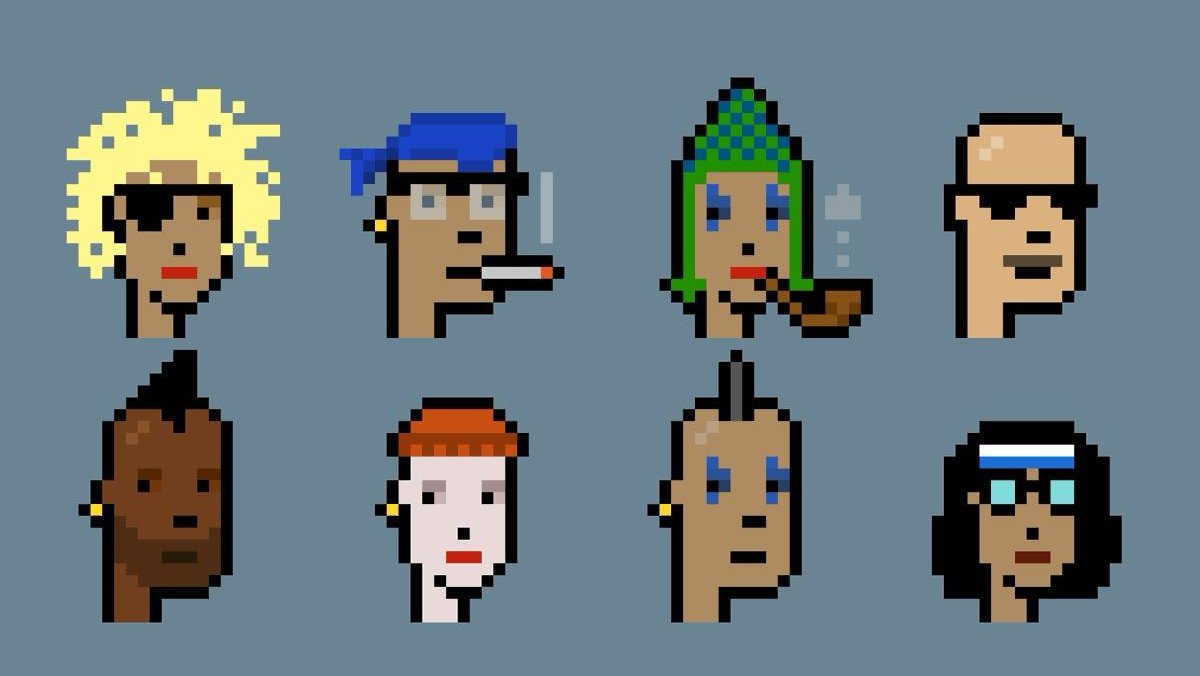
MoMA, CryptoPunks and the Moment NFTs Enter the Art Canon
When the Museum of Modern Art (MoMA) in New York decides that something belongs in its permanent collection, it is making a statement that reaches far beyond the walls of the museum. MoMA is not just any gallery; it is one of the key institutions that has defined what counts as modern and contemporary art for nearly a century. So when MoMA confirmed that eight CryptoPunks NFTs will now live in its collection as works of art, the decision resonated across both the traditional art world and the digital-asset ecosystem.
This move is more than a headline about a museum buying pixels on a blockchain. It is a signal that non-fungible tokens (NFTs) have moved from experimental subculture to an acknowledged part of art history. The acquisition is the result of donations from multiple collectors, but the important point is what MoMA chose to do with those gifts: treat them as long-term cultural artifacts rather than short-lived speculative objects.
For years, public discussion around NFTs has oscillated between extremes. At one end, enthusiasts framed them as the future of culture and ownership. At the other, critics saw only price volatility and hype. MoMA’s decision does not settle that debate, but it does reframe it. The question is no longer whether NFTs are real art. The more interesting question is which NFTs will matter once the excitement fades, and why.
1. Why MoMA’s Decision Matters
To understand the significance of this moment, it helps to place it in MoMA’s longer history. The museum has a track record of embracing emerging media long before they are widely accepted. Photography, film, video art, design objects and even video games have all found a home in its galleries. Each time, the pattern has been similar: a new medium appears, is initially seen as a curiosity, and only later passes through the filter of curators, historians and critics into the canon.
The inclusion of CryptoPunks follows this pattern. MoMA is not endorsing every digital collection or marketplace. Instead, it is making a more focused statement: this particular body of work has lasting historical and aesthetic value. Once a museum of this stature takes that step, other institutions have a reference point for their own decisions. Art schools, curators and scholars now have a concrete example to study when they discuss on-chain art in the same breath as photography or conceptual sculpture.
There is also a symbolic dimension. Museums often act as mediators between experiments on the fringe and broader public understanding. By exhibiting and preserving NFTs, MoMA invites visitors who may never open a crypto wallet to engage with the ideas behind digital ownership, scarcity and provenance. The conversation moves from price charts to questions like: What does it mean to own a digital object? How does a distributed ledger change the way we record culture? Those are questions that sit comfortably within the mission of a modern art museum.
2. Why CryptoPunks, of All Projects?
Among thousands of NFT projects, why did CryptoPunks become the first major collection to enter MoMA’s permanent holdings? The answer lies in a mix of chronology, design and cultural impact.
Released in 2017 by the studio Larva Labs, CryptoPunks are often described as one of the foundational experiments in generative, on-chain collectibles. The series consists of 10,000 algorithmically generated portraits, each with its own combination of attributes—hats, glasses, hairstyles and other details—rendered in a minimalist 24-by-24 pixel grid. At a glance, they look simple. But that simplicity is part of their strength: the images are easy to recognize, easy to reproduce at different sizes, and easy to remix in other media.
Over time, the Punks evolved from a technical curiosity into a kind of visual shorthand for the early NFT era. They appeared in profile pictures, conference presentations and news articles. Collectors treated specific Punks as characters with their own personalities and stories. The project’s age, relative to many later collections, also gives it a sense of historical weight. Just as early photographs hold special interest for historians of photography, early on-chain artworks often become reference points for the evolution of the medium.
For curators, this mix of technical innovation, cultural symbolism and distinctive visual language makes CryptoPunks a natural candidate for preservation. The goal is not to celebrate the market highs the collection reached during past cycles, but to document the moment when digital-native identity and ownership practices crystallized into a widely recognizable aesthetic.
3. From Speculation to Art History
One of the challenges in discussing NFTs is that price movements are so visible. Every sale is recorded on-chain; charts and leaderboards are a click away. It is easy to conflate artistic significance with floor price. MoMA’s acquisition subtly resists this assumption.
Museums have always had to navigate the tension between market value and cultural value. Many works that are priceless today once sold for modest sums, while others that fetched high prices in their own time have faded from view. Curators know this, and they generally base acquisition decisions on a broader set of criteria: originality, influence, technical innovation, and the way a work speaks to the concerns of its era.
Seen through that lens, the case for CryptoPunks is not about their valuation during the peak of NFT trading. It is about how they encapsulate several themes of the early 2020s: the blending of online and offline identity, the rise of community-owned networks, and the search for a new language of digital portraiture. Whether any particular token later changes hands for more or less money does not change the fact that, as a body of work, the Punks occupy a distinct place in cultural memory.
This shift—from speculation to historical context—is important for the broader NFT ecosystem. It suggests that, over time, projects may be judged less by their market performance and more by their contribution to the ongoing conversation between artists, technologists and audiences. That reorientation is healthy. It pushes creators to think beyond quick trends and ask: what will still matter ten or twenty years from now?
4. How Do You Put an NFT in a Museum?
Adding a digital token to a collection is not as simple as hanging a painting on a wall. It raises practical questions that museums and crypto-native communities are still learning to answer together.
First, there is the issue of custody and security. An NFT is ultimately an entry in a blockchain ledger, controlled by a private key. Museums must decide whether to manage those keys themselves, use specialist custodians or design hybrid arrangements. Each approach involves trade-offs between security, independence and convenience. Unlike traditional artworks, which can be locked in a climate-controlled storage room, digital pieces require ongoing management of wallets, hardware and software.
Second, there is the question of display. When visitors see a CryptoPunk on a screen at MoMA, the visual representation is only part of the story. The museum also has to decide how much of the underlying technical context to show—contract addresses, transaction histories, links to the original smart contract code. Some institutions choose to pair digital displays with physical labels or wall texts that explain how ownership is recorded and verified on-chain, turning the exhibition itself into a gentle introduction to blockchain concepts.
Third, museums must think about long-term preservation. Blockchains aim for permanence, but no technology is completely immune to change. Over decades, networks may upgrade, interfaces may be replaced and file formats may evolve. Curators are therefore beginning to collaborate with technologists on strategies to ensure that today’s tokens can still be understood and accessed in the future—whether through archival nodes, detailed documentation, or migration paths that respect the work’s integrity.
These challenges are not reasons to avoid NFTs. They are part of the learning process whenever art encounters a new medium. Similar questions arose when museums started collecting video works, interactive installations and internet-based projects. The difference now is that the underlying infrastructure is decentralized, which gives creators and communities a more direct role in supporting preservation.
5. What This Means for Artists and Collectors
MoMA’s move has implications that reach beyond the eight specific tokens it now holds. For artists working with NFTs, the acquisition provides an important kind of validation: it confirms that digital-native practices can stand alongside painting, sculpture and photography in the eyes of major institutions.
This does not mean that every collection will end up in a museum. But it does suggest that artists who care about concept, execution and long-term relevance can aspire to more than short-term exposure on marketplaces. They can imagine careers in which on-chain work is studied, written about and exhibited with the same seriousness as other media.
For collectors, the message is more nuanced. Museum recognition may shift attention from rapid trading toward stewardship. Donating an NFT to an institution is a way of transforming a private holding into a public good. It can also help ensure that culturally important works remain accessible, rather than disappearing into cold storage or private vaults. At the same time, collectors may start to evaluate projects not only on potential profit, but on whether the work has the depth needed to sustain long-term interest.
For the broader ecosystem—including platforms, infrastructure providers and protocols—the MoMA acquisition underscores the importance of reliability and standards. If museums and cultural organizations are going to build programming around NFTs, they will expect predictable behavior from the networks that host them: stable contracts, clear licensing, and robust community support. Experiments are welcome, but they need a foundation that can survive beyond a single market cycle.
6. NFTs in the Art Canon: Inclusion Without Overstatement
It is tempting to read MoMA’s decision as a blanket endorsement of all things NFT, but such a conclusion would be too simplistic. The art canon is expansive but also selective. For every work that enters a major collection, many others remain outside. The same will be true in the digital realm.
In practice, only a small fraction of NFT projects are likely to achieve lasting recognition. Those that do will probably share certain characteristics: a clear conceptual framework, a distinctive visual or experiential language, and evidence that they influenced other creators. Historical position matters as well. Early experiments, or projects that marked turning points in the evolution of the medium, tend to attract scholarly attention even if they look technically modest by later standards.
Recognizing this selectivity is useful because it allows the conversation around NFTs to become more sophisticated. Rather than asking whether NFTs are good or bad in general, observers can ask more focused questions. How does a particular project relate to earlier digital art movements? What does it say about identity, ownership or community? Does it use the underlying technology in a way that is integral to the work, or could the same idea be realized without a blockchain at all?
MoMA’s acquisition of CryptoPunks does not imply that every future innovation will follow the same formula. On the contrary, it raises the bar. Once one landmark project has been recognized, subsequent projects will be evaluated against that standard—and against the broader history of art and design.
7. Takeaways for the Crypto Community
For participants who primarily view digital assets through a financial lens, the news from MoMA may seem distant. Yet there are several practical lessons worth considering.
• Cultural traction can outlast market cycles. Prices rise and fall, but certain images, ideas and communities lodge themselves in the public imagination. Those are the projects most likely to attract institutional attention over time.
• Interdisciplinary dialogue matters. The path from experimental codebase to museum collection often runs through writers, curators, designers and technologists who can explain why a project is meaningful. Building bridges with those communities can be as important as iterating on smart contracts.
• Infrastructure decisions have cultural consequences. Choices about licensing, on-chain storage, and governance tokens may seem technical, but they shape how easy it is for institutions and researchers to work with a project years later.
• Speculation is not the only narrative. As NFTs mature, their value will increasingly be measured in terms of influence, creativity and the new forms of collaboration they enable, not just in trading volumes.
8. Looking Ahead: NFTs as Part of a Larger Story
MoMA’s embrace of CryptoPunks should not be read as the final chapter in the NFT story. Rather, it is a sign that the medium has reached a new stage. The initial wave of experimentation has given way to a period of reflection, curation and integration with existing cultural institutions.
In the coming years, we can expect more museums and galleries to develop thoughtful strategies for engaging with on-chain art. Some will build dedicated digital collections; others will incorporate NFTs into broader exhibitions about technology, media and society. Artists will keep pushing boundaries, exploring ways to use smart contracts, generative algorithms and community ownership to create works that could not exist in any other form.
For visitors walking through MoMA, the presence of eight pixelated faces among sculptures and paintings is a reminder that art has always been tied to the technologies of its time. From oil paint and photography to video and virtual reality, each new medium initially feels unfamiliar. Over time, the best works outlive their tools and enter the shared archive of human imagination.
With its latest acquisition, MoMA is effectively saying that NFTs have earned a seat at that table. The challenge for artists, collectors and technologists now is to make sure that what sits on that seat continues to justify its place—not only as a record of a particular market cycle, but as a meaningful contribution to the evolving story of how we create, share and preserve art in a digital world.
Disclaimer: This article is for educational and informational purposes only and does not constitute investment, legal or tax advice. Digital assets and NFTs involve risk and may not be suitable for all investors. Always conduct your own research and consult a qualified professional before making financial decisions.