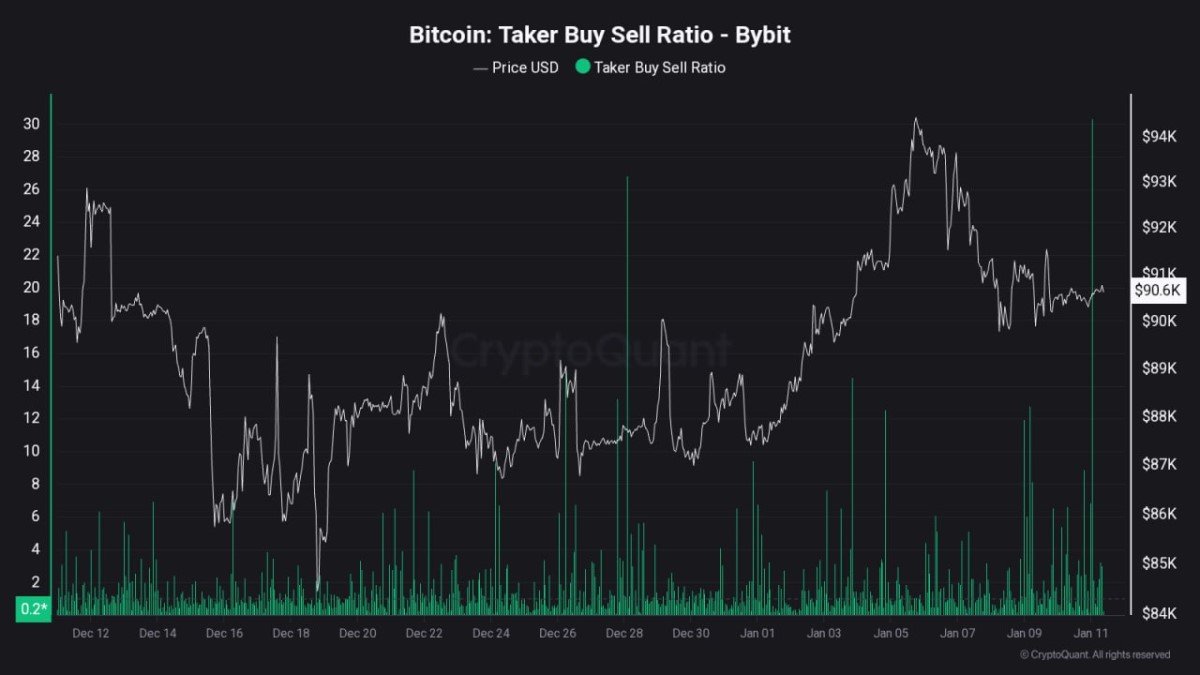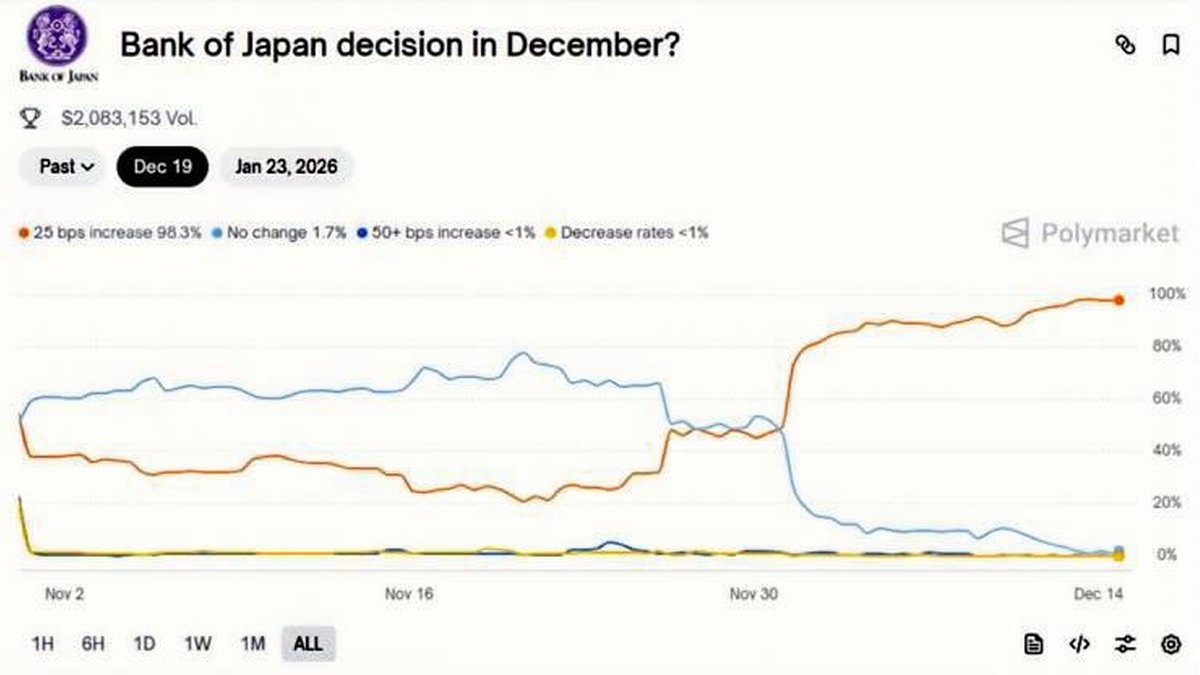
When Japan Raises Rates, What Really Happens to Bitcoin?
Every time the Bank of Japan (BoJ) hints at or delivers an interest-rate hike, crypto timelines fill up with the same question: Is this bad for Bitcoin? The instinctive answer from markets is usually “yes” – prices wobble, funding tightens and sentiment turns cautious.
But the reason has little to do with some fundamental flaw in Bitcoin itself. Instead, it is about something more mechanical and less visible: how Japanese interest rates shape global liquidity through the yen carry trade, and why that matters so much for assets that depend on abundant capital – from tech stocks to digital assets.
1. Why Japan’s interest rate decisions echo across global markets
For decades, Japan has been the world’s main supplier of ultra-cheap capital. Policy rates hovered around zero (and at times below), while inflation stayed low and stable. That combination turned the Japanese yen into the funding currency of choice for global investors.
The logic behind the so-called yen carry trade is simple:
- Borrow in yen at very low interest rates.
- Convert those yen to another currency.
- Invest in higher-yielding assets: equities, corporate bonds, real estate – and more recently, digital assets.
As long as Japanese rates stay pinned near zero and the yen does not surge sharply, this strategy can work for years. It quietly channels capital from Japan into risk assets worldwide. Crypto has been one of the downstream beneficiaries: it sits at the high-risk, high-beta edge of the global portfolio, where surplus liquidity tends to end up.
When the BoJ raises rates, it is not just an abstract policy move. It changes the economics of this entire funding structure. Borrowing in yen becomes more expensive, and the risk that the currency suddenly strengthens becomes more painful for those who are still leveraged.
2. What happens to the carry trade when BoJ hikes?
The spillover to Bitcoin comes mostly from how investors adjust their positions when Japanese rates rise. The chain reaction usually looks like this:
1. Funding costs increase. Investors financing positions in yen see their interest expense rise. Strategies that previously looked comfortable now have tighter margins.
2. Currency risk gets more dangerous. If the yen strengthens while an investor is still borrowing in JPY and holding foreign assets, their liability in yen terms grows. To limit that risk, they may reduce exposure to those assets.
3. Risk positions are trimmed. The easiest way to reduce risk quickly is to sell the most volatile holdings first – typically growth stocks, high-yield credit and digital assets. That selling creates pressure on Bitcoin, even if nothing inside the Bitcoin network has changed.
4. Risk-off mood feeds on itself. News headlines emphasize that “Japan is tightening” and “liquidity is shrinking”. Algorithms and discretionary traders alike tend to reduce leverage, pushing prices lower and reinforcing the perception that risk assets are under pressure.
None of this requires Japanese investors to be the main holders of Bitcoin. What matters is that BoJ policy is a cornerstone of global liquidity. When that cornerstone shifts, leveraged positions everywhere get re-evaluated, and Bitcoin – as one of the most liquid risk assets – often becomes part of the adjustment.
3. Bitcoin’s dependence on liquidity rather than interest income
There is another reason rate moves in Japan feel heavy on the crypto market: Bitcoin does not generate cash flow. Unlike a government bond or a dividend-paying stock, Bitcoin does not pay coupons or earnings. Its value is driven by a mix of scarcity, adoption and the willingness of investors to hold it as a monetary asset.
When global liquidity is abundant and investors are comfortable taking risk, that mix works in Bitcoin’s favour. Capital looking for alternative stores of value and high-beta exposure can flow into BTC. But when liquidity tightens – whether because the US Federal Reserve is raising rates or the BoJ is normalising – the same characteristic becomes a weakness: non-yielding assets are easier to trim from a portfolio than instruments that generate predictable income.
This does not mean Bitcoin has no long-term role. It does mean that in the short term, its price tends to track liquidity cycles more than textbook valuation models. BoJ rate hikes are part of that liquidity story.
4. The role of the yen in a dollar-centric system
At first glance, it might seem strange that a central bank whose currency is not the global reserve currency could have such influence on assets quoted in US dollars. The bridge is the way professional investors structure funding and hedges.
In practice, many funds treat the yen and the dollar as two legs of a global funding engine. They might finance strategies in both currencies, hedging foreign-exchange risk dynamically as opportunities arise. When the BoJ tightens, it subtly changes the relative cost of funding in yen versus dollars. Strategies that depended on ultra-cheap yen suddenly lose some of their appeal, and capital may rotate toward safer, higher-quality dollar assets instead of more volatile holdings like Bitcoin.
The result is that BoJ policy can indirectly reinforce a global preference for short-dated government bonds and money-market instruments over risk assets. In such an environment, even strong long-term narratives for Bitcoin can be overshadowed by portfolio-level de-risking.
5. Short-term shock vs. long-term monetary backdrop
From a structural perspective, however, nothing about a BoJ rate hike resolves the deeper issues that have driven interest in Bitcoin over the past decade.
• Public debt levels remain very high across major economies, including Japan, the United States and many European countries. Higher interest costs eventually put pressure on fiscal budgets.
• Central banks still act as backstops for government bond markets. Even if they move away from extraordinary stimulus, history suggests that in moments of stress they are willing to return to large-scale interventions.
• Fiat currencies continue to lose purchasing power over long horizons, even when inflation is nominally under control. That slow erosion is one of the reasons some investors see Bitcoin as a complementary store of value.
In other words, a BoJ rate hike can cause a meaningful adjustment in the short term – via the carry trade and changes in risk appetite – but it does not rewrite the long-term story about how societies manage debt, inflation and savings. For investors who view Bitcoin through that broader lens, the key is to distinguish between temporary liquidity shocks and structural changes in the monetary system.
6. How long-term investors can navigate BoJ-driven volatility
For individuals and institutions with a long-term thesis on Bitcoin, episodes linked to BoJ policy can be emotionally challenging but also informative. A few practical principles stand out.
6.1. Treat macro shocks as stress tests, not trading signals
When headlines highlight rate hikes in Japan, markets may move quickly. But reacting emotionally to each announcement often leads to buying high and selling low. Instead, these events can be used as stress tests for your portfolio:
- If Bitcoin drops sharply on liquidity fears, does your position size still fit your risk tolerance?
- Do you have enough cash or conservative assets to avoid being forced to sell at unfavourable levels?
- Is your time horizon aligned with the inherently volatile nature of digital assets?
Rather than guessing the exact bottom or top around each policy move, many disciplined investors focus on position sizing, diversification and avoiding excessive leverage.
6.2. Understand that the “pain trade” can run both ways
When carry trades unwind, downside volatility often feels disproportionate to the news itself. Funding positions get closed quickly, collateral is adjusted and risk committees become more conservative. That creates outsized moves on the way down.
However, once the immediate adjustment is complete and markets have priced in the new rate environment, the same mechanics can fuel recoveries. If structural demand for Bitcoin remains, and if broader monetary conditions stabilise, the absence of forced sellers can make the upside surprisingly sharp. Understanding this pattern helps investors avoid interpreting every drop as the start of a long-term collapse.
6.3. Separate your macro view from your execution plan
It is reasonable to hold the view that high global debt and long-run currency debasement make a case for owning some Bitcoin. It is also reasonable to accept that, in the short run, central-bank policy decisions – including those by the BoJ – can push prices significantly away from where you think they might ultimately settle.
The challenge is to align that view with an execution plan that is robust to surprises. Many long-term participants address this by using gradual accumulation strategies, adjusting exposure in broad ranges rather than in single, all-in decisions. That approach is less dramatic than attempting to time exact turning points, but it tends to be more resilient when macro headlines come in clusters.
7. BoJ hikes as part of a bigger story
Seen in isolation, a Bank of Japan rate increase looks like a straightforward negative for risk assets: higher funding costs, stronger yen risk, and a tilt toward safer instruments. But in context, it is one chapter in a much larger narrative about how the global financial system is managing the end of an era of ultra-low rates.
For Bitcoin, that narrative is two-sided. On one side, normalisation of monetary policy reduces some of the perceived urgency around alternative assets. On the other, the long-term pressures created by high public debt and repeated interventions remain unresolved. Those opposing forces are what make the price path so volatile.
In the end, BoJ rate hikes do not determine whether Bitcoin has value. They determine how comfortable investors feel holding risk at a given moment in time. Understanding that distinction – between liquidity conditions today and structural drivers over decades – is essential for anyone trying to navigate digital assets thoughtfully.
Disclaimer: This article is for educational and informational purposes only. It is not investment, legal or tax advice. Digital assets are volatile and may not be suitable for every investor. Always conduct your own research and consult a licensed professional before making financial decisions.