
An Ancient Solana Whale Just Moved 200,000 SOL to Coinbase Prime — Signal or Noise?
A large on-chain transfer by an early Solana holder understandably attracts attention, especially when it involves a major venue like Coinbase Prime. This article explains what can and cannot be inferred from such a move, how institutional infrastructure like Prime actually works, and which objective data points observers typically examine before drawing conclusions. It is intended as a market-structure explainer, not as a playbook for trading SOL.
1. What the On-Chain Data Actually Shows
On public block explorers, it is possible to see:
- The originating wallet, including how long it has been active and how it accumulated its SOL balance.
- The size of the transfer — in this case, roughly 200,000 SOL — and the destination address associated with Coinbase Prime.
- The timing of the transaction relative to recent price moves and network activity.
From these facts, we can say that a large, historically important address moved a significant amount of SOL to infrastructure controlled by Coinbase. What we cannot see directly are the intentions behind the move.
2. What Coinbase Prime Is (and Is Not)
Coinbase Prime is an institutional platform that combines custody, trading, and financing services for professional clients. A deposit to Prime does not automatically mean that tokens will be sold on a public order book. Common reasons for sending assets to Prime include:
- Institutional custody: moving assets into a regulated, auditable environment for safekeeping.
- Over-the-counter (OTC) settlement: preparing for private block trades where large buyers and sellers transact away from retail screens.
- Collateral and financing: posting assets as collateral for loans or structured products.
- Execution optionality: consolidating holdings at a venue that can route orders intelligently if and when execution is needed.
Because all of these use cases share similar on-chain footprints (a transfer into Prime-controlled addresses), on-chain data alone cannot tell us which one applies.
3. Why “Whale Moves” Attract Outsized Attention
Large holders play an important role in any asset with a long history. On Solana, early addresses may hold balances that are meaningful compared to daily trading volume. When one of these addresses moves funds:
- It becomes easy to create a narrative around impending selling, even if no evidence of actual distribution appears.
- Short-term market participants may react to the story, not the underlying flows.
- Social media coverage can amplify speculation far beyond what the raw data supports.
From an educational standpoint, it is useful to separate the story from the observable facts.
4. Frameworks Analysts Use to Interpret Such Transfers
Observers who study market structure tend to look at whale moves through a wider lens. Examples of contextual questions include:
- Follow-up activity: Do we see further transfers from the same whale to multiple exchanges or hot wallets, or does the balance simply sit at Prime?
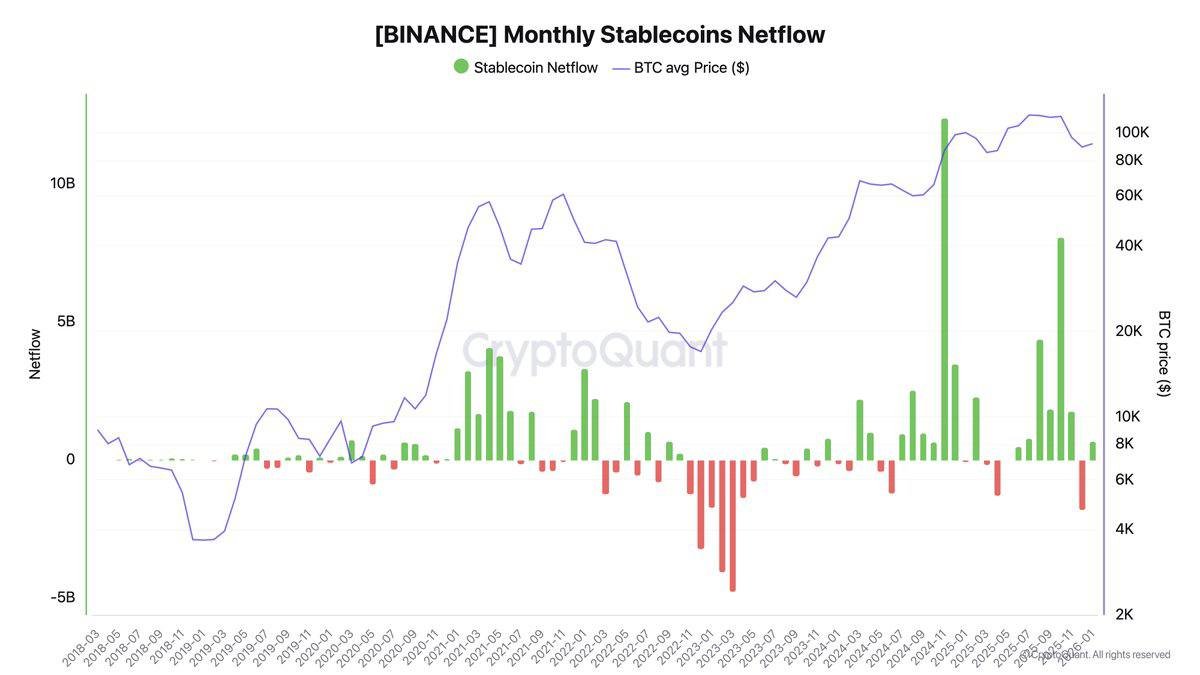
- Net flows: Are other large holders sending assets in the same direction, or are there offsetting inflows to self-custody and long-term holding addresses?
- Derivatives behavior: Do funding rates, futures positioning, or options flows change noticeably around the time of the transfer?
- Order-book health: Are spreads and depth on major venues stable, or do they show signs of stress and thin liquidity?
These questions help describe the environment in which the whale move is happening, without assuming a specific trading outcome.
5. What This Episode Suggests About Solana in 2025
Regardless of whether the 200,000 SOL is ultimately sold, re-allocated, or kept in custody, the episode highlights several features of Solana’s current market structure:
- Maturing infrastructure: the existence of Prime-style services for SOL reflects institutional demand for professional tooling.
- Concentrated early holdings: like many young networks, Solana still has wallets with large historical allocations that can move markets if they sell aggressively.
- Growing role of OTC and crossing networks: more volume is likely to be matched privately rather than entirely on visible order books.
6. Limits of On-Chain Interpretation
Even with detailed explorers and tagging tools, there are real limits to what can be inferred from a single transfer:
- Address labels can be incomplete or outdated; a “whale” may represent a fund, a custodian, or a multi-party arrangement.
- A move to Prime might precede selling, but it can also precede rebalancing, collateral usage, or long-term custody.
- Short-term price moves following a whale transfer may be driven as much by other traders’ reactions as by the whale’s actual actions.
For these reasons, it is more accurate to treat whale moves as one input among many in a broader analysis, not as a standalone signal.
7. Key Takeaways
- On-chain data can confirm that a large Solana holder moved funds to Coinbase Prime, but not why.
- Prime’s role as institutional infrastructure means that multiple non-selling scenarios are plausible.
- Context — net flows, derivatives behavior, and liquidity conditions — matters at least as much as a single transaction.
- Narratives built around whale moves should be weighed against the underlying data and broader market conditions.
Disclaimer: This article is for informational and educational purposes only. It is not financial, investment, or trading advice and should not be used to make decisions about buying or selling SOL or any other asset. Digital assets are volatile and can involve substantial risk. Always perform your own research and consider consulting qualified professionals before making financial decisions.