
Gold Goes On-Chain in Korea, Taxes Go Global, and Volatility Finds the Cracks: Reading Crypto’s Last 24 Hours Like a System
The last 24 hours in crypto looked, on the surface, like the usual scatterplot of headlines: a new listing here, a policy update there, a hack-induced pump-and-dump somewhere else, and a derivatives expiry hovering in the background like a weather system. But if you zoom out, these aren’t separate stories. They are different angles of the same shift: crypto is maturing into a financial system with distribution channels, compliance layers, operational dependencies, and market-structure stress points.
That maturity can feel like an “identity crisis” for the space. Crypto started as an alternative to legacy finance, yet it increasingly behaves like finance—complete with tax reporting frameworks, licensed venues, and real-world assets moving on-chain. Today’s question isn’t whether crypto will become more institutional. It’s which parts of the stack become stable infrastructure, and which parts remain fragile enough that one compromised account can still move prices.
1) XAUT on Upbit and Bithumb: Tokenized Gold Isn’t a Novelty—It’s a Distribution Event
XAUT’s listings on Upbit and Bithumb are easy to file under “another asset added to exchanges.” That framing misses why tokenized gold is strategically interesting. Gold is one of the most culturally durable financial ideas on the planet: it functions as a store-of-value narrative that survives regime changes, technology cycles, and investment fashions. When gold becomes tradable as a token in a major retail-heavy market, it turns a centuries-old asset class into a 24/7, app-native instrument.
In other words, the news is not just that XAUT is available—it’s that a familiar risk-management asset is now competing in the same attention marketplace as memecoins and majors. This is a subtle reordering of user choice. People who want “less crypto risk” no longer need to exit the ecosystem entirely; they can rotate into something gold-linked without leaving crypto rails. That changes behavior in quiet but important ways.
Tokenized gold’s real advantage is not speed; it’s continuity. It offers a bridge between traditional intuition (“gold is stable-ish over long horizons”) and modern mechanics (instant transfers, fractional exposure, exchange liquidity). When distributed through large venues, it can become a default parking asset for traders who want to stay nimble without going fully into fiat.
There are also second-order implications that are more interesting than the listing itself:
• It tests whether ‘real-world asset tokens’ can scale as retail products. Tokenized commodities have existed for years, but broad retail access in major markets is what turns them from niche instruments into behavioral tools.
• It expands the menu of ‘risk-off’ within crypto. Stablecoins already fill part of that role. A gold-linked token introduces a different profile—less about keeping a peg, more about tracking a non-yielding asset that moves with macro conditions.
• It reframes what ‘crypto adoption’ looks like. Adoption isn’t always new users buying volatile assets. Sometimes it’s existing users choosing to manage risk on-chain rather than off-chain.
None of this implies that tokenized gold is “safe” in an absolute sense. It still depends on issuer structure, custody assumptions, exchange operations, and market liquidity. The mature takeaway is simpler: distribution is destiny. When a product becomes easy to access, it becomes part of the everyday decision tree, and that’s when it starts shaping market structure.
2) CARF and the New Compliance Gravity: The Market Is Moving From ‘Can You Trade?’ to ‘Can You Report?’
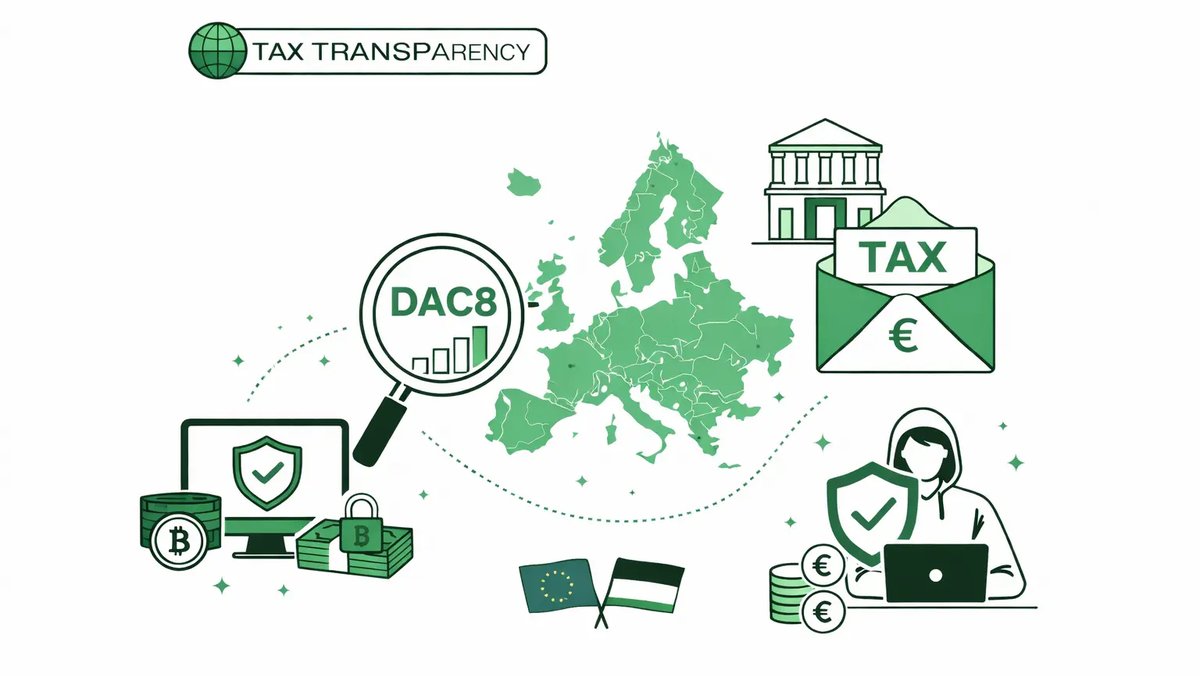
Alongside the XAUT listing story sits a policy headline that will matter far longer than a 24-hour candle: the UK and dozens of countries beginning the rollout of the Crypto-Asset Reporting Framework (CARF), with cross-border data sharing expected from 2027 under current plans. This is not just “more regulation.” It’s a specific kind of coordination that changes the default incentives for exchanges, brokers, and platforms that touch retail users.
Historically, much of crypto compliance focused on anti-money laundering controls. CARF shifts attention toward tax transparency as a first-class objective. That changes the compliance conversation from “are you screening bad flows?” to “are you able to produce standardized user data, at scale, and share it across jurisdictions?” This is a different skill set. It requires operational maturity, data infrastructure, and internal governance that many crypto businesses are still building.
For users, the most practical implication is not philosophical. It’s behavioral: as reporting expectations become normal, the “frictionless offshore” assumption weakens. That doesn’t mean people will stop using crypto. It means the market will increasingly reward venues that are structurally compatible with reporting regimes.
Here’s why CARF matters as market structure—not just policy:
• It changes the competitive moat. Compliance becomes an operational advantage, not merely a cost center. Platforms that can integrate reporting without breaking UX gain distribution.
• It reshapes liquidity migration. Liquidity tends to consolidate where users feel confident they won’t face surprise disruptions. A clearer reporting regime can paradoxically increase mainstream participation by reducing uncertainty.
• It pressures product design. If reporting is standardized, certain high-friction products may be redesigned or limited, while simpler spot products may flourish.
Educationally, the key is to avoid the false binary of “regulation kills crypto” versus “regulation saves crypto.” Regulation changes crypto. It makes some behaviors less convenient and other behaviors more stable. Over time, markets usually choose stability when stability becomes available.
3) Sovereign Crypto Policy: Turkmenistan and El Salvador Show Two Ways States ‘Join’ Crypto Without Joining the Culture
Two sovereign headlines in the same 24-hour window help clarify how governments are approaching crypto in 2026. Turkmenistan’s legalization of mining and exchanges under central bank supervision is a textbook example of controlled opening: allow the industry, but only through licensing and oversight. El Salvador’s renewed “all-in” messaging on Bitcoin and AI represents a different posture: commit to a long-horizon narrative and absorb volatility as a strategic choice.
These approaches look opposite, but they share a common insight: states don’t “adopt crypto” the way communities do. They adopt frameworks—permission structures, tax structures, and strategic identity. Whether the goal is diversification, investment attraction, or national branding, governments care about controllability. Even when they talk about long-term conviction, they still build rails that preserve sovereign options.
Turkmenistan’s model is about permission. The country reportedly allows mining and exchange operations from January 2026, but only for licensed entities, while prohibiting crypto as a payment medium. That design says: ‘digital assets may exist as an investable sector, but they won’t compete with domestic money in daily commerce.’ In practical terms, it treats crypto like a regulated industry, not a parallel monetary system.
El Salvador’s model is about narrative and resilience. The country’s continued Bitcoin accumulation and its stated focus on AI in education point to a strategy built on two different kinds of compounding: reserves and skills. Whether one agrees with the approach or not, it’s a reminder that crypto policy can be used as national identity—especially for smaller states seeking differentiation.
The broader lesson is simple: 2026 is increasingly an era of “policy as product.” Countries are choosing how crypto fits into their economic story, and those choices will influence where capital, talent, and infrastructure prefer to settle.
4) The BROCCOLI714 Incident and the Trust Wallet Disruption: Modern Crypto Risk Is Often Operational, Not Technical
Two incidents in the past day highlight a reality that serious market participants already understand: many of crypto’s most damaging events are not protocol-level failures. They are operational failures—compromised accounts, broken distribution channels, and brittle dependencies that sit one layer above the blockchain. That matters because it means “on-chain security” is necessary but not sufficient. The weakest link is often somewhere between humans, platforms, and permissions.
The reported manipulation involving a low-liquidity token (BROCCOLI714) illustrates a classic pattern: compromise a market maker account or related operational access, use that control to move price in an illiquid market, and attempt to route value through a pump-and-dump sequence. The mechanics are less important than the educational takeaway: low liquidity is an accelerant. When order books are thin, price becomes a story you can write with relatively little capital—especially if you can influence the supply side or liquidity provisioning.
Meanwhile, Trust Wallet’s temporary unavailability as a Chrome extension due to a Chrome Web Store issue sounds minor—until you consider what it reveals. “Self-custody” still depends on distribution platforms controlled by third parties. If a browser store listing breaks, users experience it as access risk, regardless of how secure the underlying wallet technology is. This is not a moral failing; it’s a reminder that user experience is part of security.
Practical lessons that don’t require panic:
• Liquidity is a risk factor, not just a feature. Thin liquidity amplifies both upside and downside moves and makes manipulation cheaper.
• Operational security is market integrity. The market maker’s infrastructure, permissions, and account hygiene matter because they directly shape market behavior.
• Distribution dependencies are real. Wallets and tools that rely on app stores and browser marketplaces inherit platform risk, even when funds remain on-chain.
A mature market doesn’t pretend these risks don’t exist. It builds norms, controls, and user education around them. And it treats “incident response” as an expected capability, not an emergency improvisation.
5) The $2.2B Options Expiry: Why ‘Calendar Liquidity’ Can Matter as Much as News
A large options expiry in Bitcoin and Ethereum is the kind of detail that rarely trends, yet it often shapes intraday behavior more than headline narratives. Options expiries can change dealer hedging needs, alter gamma exposure, and shift where spot prices gravitate during thin-liquidity periods. This isn’t magic and it isn’t guaranteed to move markets—but it can influence the path prices take, especially when sentiment is already fragile.
For educational purposes, think of options expiry as a scheduled rebalancing of risk. Traders who sold options may need to hedge differently as expiry approaches. Traders who hold options may close, roll, or exercise positions. The result can be bursts of volatility, sudden mean reversion, or surprisingly “pinned” price action depending on positioning. The main point is not to predict direction; it’s to recognize that “today’s move” can be mechanical.
Practical signals to watch around large expiries:
• Spot volatility vs implied volatility. If spot moves sharply while implied remains high, the market is pricing continued uncertainty.
• Open interest concentration. Clusters of strikes can create magnet effects as hedging flows concentrate.
• Post-expiry behavior. Sometimes the market’s real move happens after expiry, when hedges are unwound and positioning resets.
Options expiries don’t override fundamentals, but they can shape the short-term choreography. In a market that loves narratives, mechanics are often the hidden author.
6) Buffett Steps Down: The Quiet Macro Signal Hidden Inside a Crypto News Cycle
Warren Buffett’s retirement as CEO after decades of leadership is not a crypto event, but it is a cultural macro signal. It marks the end of a particular era of capital allocation—patient, cashflow-driven, and skeptical of novelty for novelty’s sake. In crypto circles, Buffett is often used as a symbol of resistance. But that symbolism misses the more constructive lens: Buffett’s career represents an obsession with durable economics, not just price movement.
In 2026’s crypto market, that lens matters more than ever. As tokenized gold reaches new distribution channels and tax reporting frameworks coordinate globally, crypto increasingly competes on the same axes as traditional finance: transparency, risk management, and credible value capture. The ‘Buffett question’ for crypto isn’t whether he liked Bitcoin. It’s whether crypto products can explain their unit economics with the same clarity that great businesses explain theirs.
That’s why today’s headlines rhyme. XAUT’s appeal is legibility: an asset people understand. CARF’s impact is legibility: reporting that institutions understand. Sovereign frameworks are legibility: rules that regulators understand. And market integrity incidents are reminders that legibility must include operational resilience, not just whitepapers.
Conclusion
The last 24 hours weren’t “random crypto news.” They were a cross-section of a market becoming a system. Tokenized gold listings show distribution expanding for familiar, risk-managed assets. CARF signals that tax transparency is becoming a global baseline, pushing the industry toward operational maturity. Sovereign moves show that governments are integrating crypto through permission structures and national narratives. Security and access incidents reveal that many of today’s risks are operational, sitting at the human and platform layer. And a large options expiry reminds us that market mechanics can shape price paths as much as stories do.
If crypto’s identity feels unsettled, that may be because it’s transitioning from adolescence to adulthood. Adult systems aren’t defined by how exciting they are. They’re defined by how reliably they function under stress—when the calendar turns, when the grid tightens, when reporting becomes mandatory, and when someone tries to exploit the cracks. That’s the real market story hiding inside today’s headlines.
Frequently Asked Questions
Why does XAUT listing on Korean exchanges matter?
Because listings are distribution. When a tokenized commodity becomes easy to access through major venues, it can change how traders and long-term holders manage risk within crypto—creating an on-chain “parking asset” option without leaving the ecosystem.
What is CARF in simple terms?
CARF is a framework designed to standardize how crypto platforms report user tax-relevant data and share it across borders. The practical impact is that exchanges and intermediaries will need stronger data infrastructure and governance to operate smoothly in participating jurisdictions.
Do incidents like low-liquidity token manipulation mean crypto markets are unsafe?
They highlight that risk varies by asset and market structure. Illiquid tokens are easier to move, and operational compromise can amplify that. The educational lesson is to understand liquidity, custody, and venue risks rather than assuming all assets behave like major, deep markets.
What does a large options expiry usually do to price?
It can influence short-term price behavior through hedging and position resets, but it doesn’t guarantee direction. The most reliable insight is that some moves around expiries may be mechanical rather than fundamental.
How should readers interpret geopolitical headlines involving crypto?
Carefully and legally. Reports about crypto being used for cross-border settlement in sensitive contexts often reflect the broader theme that crypto is a neutral tool that can be used in many ways. The key is to focus on compliance, legality, and risk management rather than treating such headlines as market signals.
Disclaimer: This article is for informational and educational purposes only and does not constitute financial, investment, tax, or legal advice. Digital assets are volatile and may involve regulatory, liquidity, custody, and operational risks. Always do your own research and consider consulting qualified professionals for guidance relevant to your circumstances.