Weekend Moves Are About Plumbing, Not Prophecy
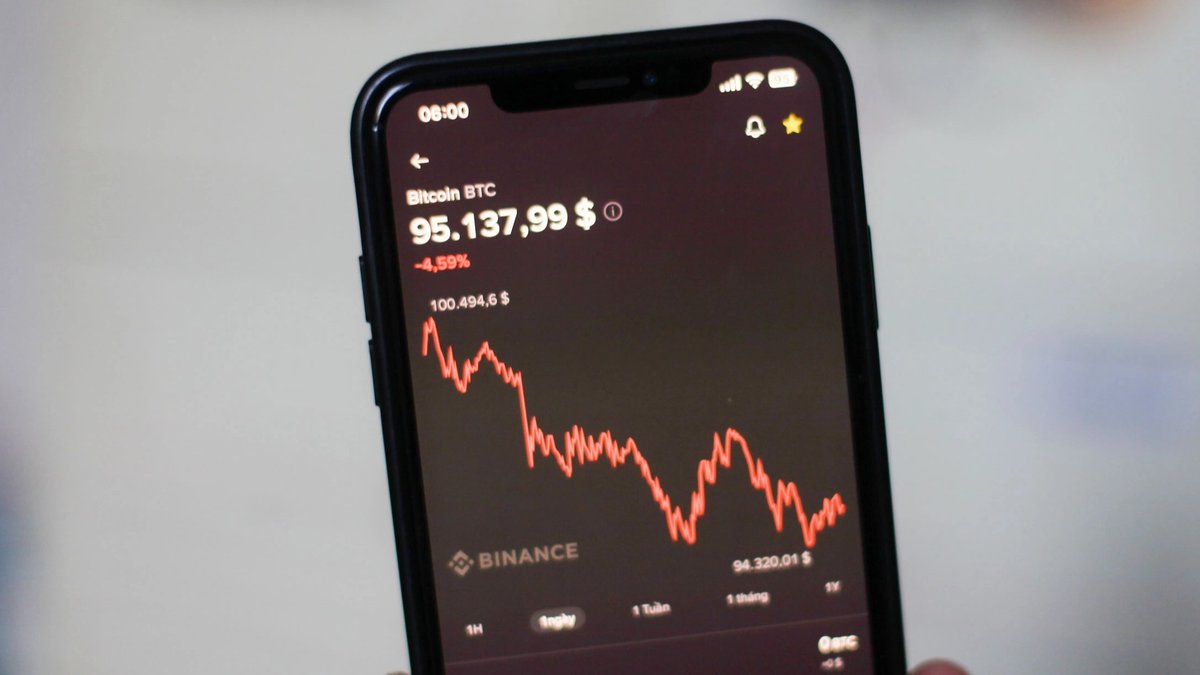
The headline numbers look ominous: Bitcoin chopping around $95,000 after a daily close below $100,000; the Crypto Fear & Greed Index plunging to 10—an extreme-fear print that historically coincides with crowd capitulation; total market capitalization slipping another 2.8% to roughly $3.22 trillion; and, within just 24 hours, 225,220 traders liquidated for $1.07 billion, with the single largest wipeout a ~$44.29 million position on HTX. The instinct is to search for a single cause. In reality, the weekend selloff is a confluence of microstructure frictions that make crypto uniquely fragile outside of U.S. trading hours.
On weekends, spot ETFs don’t create or redeem shares, the inter-dealer borrow market is slower to re-price, and desk staffing is lighter. That matters because most crypto price discovery today is a triangular dance among spot exchanges, perpetual swap markets, and—during the week—ETF hedging flows. Remove one leg of the triangle and a modest skew in the other two can produce large percentage moves. That is what the market lived through into this weekend: longs crowded into perps at levels that assumed a quick reclaim of $100K; as price slipped and liquidations cascaded, makers stepped back, spreads widened, and the path of least resistance was down.
Why This Drawdown Feels Worse Than the Chart Implies
A daily close below a big round number is psychologically heavy. But the structure of this drop—long-heavy deleveraging on thin books—does not necessarily argue for a protracted bear leg by itself. What makes it uncomfortable is the context. The market had already suffered several failed attempts to sustain above six figures, so positioning into the weekend leaned toward overconfident re-leveraging. When that leverage unwinds during hours of weakest liquidity, the amplitude of every marginal sell order rises. The fear gauge at 10 is not just an emotion meter; it’s a proxy for how many traders are now unwilling to provide bids until someone else goes first.
What We Know, Not What We Guess
• Spot still matters. Despite the dominance of perps in intraday moves, sustainable troughs in every major cycle were built on spot accumulation, not clever funding captures. Over the next 48–72 hours, the most important tell will be whether spot CVD (cumulative volume delta) begins to lead price higher even as perp funding hovers near flat. That divergence is the on-chain equivalent of smart money quietly absorbing inventory.
• Forced flows are finite. $1.07B in 24-hour liquidations is large but not unprecedented. Long wipeouts, by definition, remove marginal sellers. If follow-through is limited and books begin to refill, prices tend to mean-revert toward the breakdown zone. Watch how quickly order book depth within 1% of mid rebuilds on the top venues; if depth recovers while price stops making new lows, that’s your first green shoot.
• Biggest liquidation was idiosyncratic. The largest single liquidation on HTX (~$44.29M) tells you where leverage was most concentrated, not where fair value sits. In past episodes, idiosyncratic venue liquidations spiked realized vol but rarely determined the multi-week trend.
The Price Map: Why $94–97K Is the Real Battleground
The prior consolidation floor between $94K and $97K is more than a neat rectangle on a chart; it is the area where spot buyers previously demonstrated willingness to accumulate and where options dealers have concentrated gamma hedges. In practical terms, if spot buyers absorb into this range and dealers can stop chasing hedges lower, the mechanical selling pressure fades. Conversely, a clean daily close below $94K that is not immediately reclaimed tends to force an options-driven bleed as gamma hedging flips more negative and systematic strategies de-risk.
In the short run, be price-agnostic and process-obsessed. Ask: Is the tape spot-led on bounces? Are perp premiums staying neutral to slightly negative during rallies (healthy) rather than flipping to aggressive positive funding immediately (fragile)? Do altcoins continue to underperform on green hours (still caution) or begin to print higher lows relative to BTC (broadening risk appetite)?
Understanding the “Weekend Effect” in Crypto
Crypto’s weekend behavior is a case study in how market structure drives outcomes. Five forces matter most:
1. ETF Pause. Spot ETFs are closed, removing a deep pocket of two-sided liquidity. APs aren’t creating, redemptions aren’t occurring, and that means less arbitrage glue between legacy and crypto rails.
2. Inventory and Borrow. Dealers manage inventory risk with linear hedges. On weekends, borrow is harder to source and more expensive to roll; the optimal response to rising vol is to shrink risk, not add it.
3. Maker Behavior. With staffing thinner, makers widen quotes. Wider quotes increase the impact of each market order, raising slippage, which in turn triggers more liquidations in a feedback loop.
4. Retail Dominance. A higher share of weekend flow is retail and social-driven—precisely the cohort most likely to chase moves and overuse leverage.
5. On-Chain Frictions. Moving collateral to top up margin is slower when treasury and banking rails are closed. In drawdowns, that operational lag converts solvency into temporary liquidity crises for over-levered accounts.
None of these dynamics imply a broken bull case; they explain why weak hands lose chips to strong hands during quiet hours. The right takeaway is not fatalism but better preparation: lower leverage into weekends, wider stops, and explicit hedges when price is flirting with psychological levels.
Reading the Sentiment: Fear at 10 Isn’t a Forecast, It’s a Setup Variable
The Fear & Greed Index at 10 is attention-grabbing. Historically, prints near single digits cluster around tradable lows—but only when confluence appears elsewhere: flat to negative funding, rebuilding order-book depth, and spot-led reversals. Fear by itself can persist. The most reliable path out of extreme fear is a shock absorption sequence:
- Price stabs lower on shrinking liquidation volume—evidence that forced sellers are exhausted.
- Perp funding stabilizes near zero or slightly negative as alphas stop pressing shorts into the hole.
- Spot CVD turns up while perps lag, signaling that real buyers, not just short-covering, are in control.
- Price reclaims and holds the prior breakdown zone on rising realized volume (think $100–104K), then compresses.
If you see that sequence, probabilities skew toward a reflexive rally that carries beyond the first resistance stack.
Altcoins: Gravity Works Harder on the Periphery
When BTC loses a big figure, altcoins rarely offer refuge. That was the case again this weekend: while majors bled, many mid-caps printed exaggerated moves as market depth briefly vanished. The right way to interpret alt price action right now is through the lens of beta rather than idiosyncrasy. Until BTC reclaims and holds $100K and ETH proves it can sustain above its own pivot area, altcoin breakouts are mostly noise. If you insist on fishing, look for names where on-chain liquidity (DEX + CEX) is actually thicker today than 2–3 weeks ago and where insider or whale distribution has not accompanied recent strength. Thin order books plus fear equals poor expected value.
On-Chain and Flow Signals Worth Monitoring This Week
• Exchange Balances. A fresh downtick in BTC balances on centralized exchanges while price stabilizes is the classic sign of patient accumulation. The signal is stronger if outflows skew toward venues that serve high-net-worth and institutional clients.
• Miner and Treasury Flows. Drawdowns often coincide with miner selling. If miner outflows decelerate and treasuries (public companies, protocols) remain net flat or net buyers, supply overhangs fade.
• Stablecoin Net Mints. Spot demand needs stablecoin “ammo.” If aggregate stablecoin supply starts expanding again after a flat or down week, that’s fuel for spot bids without leverage.
• ETF Primary Activity (Weekdays). Once U.S. markets reopen, watch net creations: modest creations paired with muted discounts to NAV signal healthy two-sided flow. Large persistent discounts are a red flag.
Technical Framework: Levels and Behaviors That Matter
Forget precision lines; think zones and behaviors:
• $94–97K demand shelf. This is where buyers last proved they care. Hold and build structure above it, and the path of least resistance is a squeeze into $100–104K.
• $100–104K breakdown zone. This is your first resistance band. Expect initial rejections. A strong reclaim with rising spot volume turns the area into support and reframes the weekend move as a liquidation event rather than trend reversal.
• $108–112K. Former support turned resistance. If we reach here quickly with funding still muted, it’s evidence of spot-led strength. If we grind here with funding rich and OI climbing, expect whipsaws.
Beyond levels, monitor time: late-cycle crypto moves compress. The market can do a week’s worth of narrative in 36 hours. That argues for pre-positioned hedges and staged scaling rather than binary all-in calls.
Derivatives Health Check: What “Normalization” Looks Like
Healthy bottoms share three derivatives signatures:
- Funding near zero for longer than a day. One-hour prints can be noisy; watch 8–12 hour averages across the top venues.
- Open interest that rebuilds slowly as price stabilizes. V-shaped OI pops with rich funding are not healing; they are seedbeds for the next flush.
- Options skew that relaxes as puts are sold not just covered. If the 25-delta put skew compresses without a collapse in implied vol, dealers are less forced to sell spot into declines.
When those three co-occur while spot leads, history says the worst is behind.
Macro Doesn’t Explain Every Tick, But It Frames Risk
Macro headlines always arrive on cue during drawdowns. Some will argue that policy uncertainty or delayed economic prints justify the move. They may contribute, but the scale of weekend price action is mostly endogenous. The better macro question is whether real yields and liquidity conditions are getting better or worse at the margin. If real yields stop rising and the dollar softens, risk premia compress and crypto gets breathing room. If policy uncertainty rises again and yields tick up, regaining $100K will require more patient spot demand.
Three Scenarios for the Next 7–10 Days
1) Reflexive Reclaim (Probability ~45%)
BTC holds the $94–97K shelf, funding stays flat to slightly negative, and spot-lead reversals push price back into $100–104K. After a couple of rejections, buyers flip the zone to support. ETH participates without over-leading, altcoins stabilize but underperform. Realized vol compresses quickly. This is the classic “liquidation not liquidation + distribution” outcome.
2) Whipsaw and Range (Probability ~30%)
Price oscillates between $92–104K with repeated fake-outs. Funding gets jumpy as traders over-react to each micro-break. OI rebuilds too fast and is repeatedly flushed. This regime wears out both bulls and bears and typically resolves higher once ETF creations resume meaningfully mid-week.
3) Mechanical Leg Lower (Probability ~25%)
BTC loses $94K on a daily close, options gamma turns more negative, and dealers hedge into thin books. A drift toward the next weekly demand area ensues while fear remains extreme. This outcome is avoidable if spot demand appears quickly and altcoin beta cools.
Actionable Checklist for Professionals
• Flow: Track spot CVD versus perp CVD on top venues. Trade only when spot leads.
• Depth: Monitor 1% order-book depth. If depth rebuilds while lows stop breaking, bias should shift away from doomsday.
• Funding/OI: Look for stable or slightly negative funding with OI rebuilding gradually, not spiking.
• Levels: Treat $100–104K as the decision zone. Fade the first exuberant reclaim if funding turns rich immediately; press only if the zone holds on a retest with spot volume.
• Risk: Lower leverage into weekends; consider options hedges during psychological level battles; stagger entries instead of timing the exact print.
What This Weekend Tells Us About Market Maturity
The industry has made strides—ETFs, better custody, expanding RWA rails—but weekends still reveal the old truth: crypto’s market structure remains pro-cyclical. Liquidity withdraws when it is most needed. The path to true maturity is not eliminating volatility; it is building resilient pipes: more 24/7 cross-venue arbitrage capital, standardized circuit breakers on perps, and custody rails that allow faster collateral mobility without sacrificing security. Every drawdown is an invitation to upgrade the plumbing.
Bottom Line
Today’s tape is dominated by fear and mechanical deleveraging, not an airtight macro or fundamental indictment. The key questions for the next 72 hours are simple: Does BTC hold the $94–97K shelf? Does spot lead rebounds while funding stays tame? Do order books rebuild quickly? If yes, expect a reflexive squeeze into $100–104K and a re-rating of risk. If not, respect the possibility of a mechanically driven leg lower and trade the range, not the narrative. Either way, treat weekend volatility as a process problem with risk rules—not as a referendum on the asset class.