
OpenAI + SoftBank’s $1B Bet on SB Energy: Why the AI Race Is Quietly Becoming a Power-Grid Race
When people talk about the next phase of AI, they usually start with chips: new GPUs, tighter supply chains, more efficient architectures. But the bigger constraint is increasingly older and less glamorous—electricity, the right to connect to the grid, and the ability to build at infrastructure speed instead of software speed.
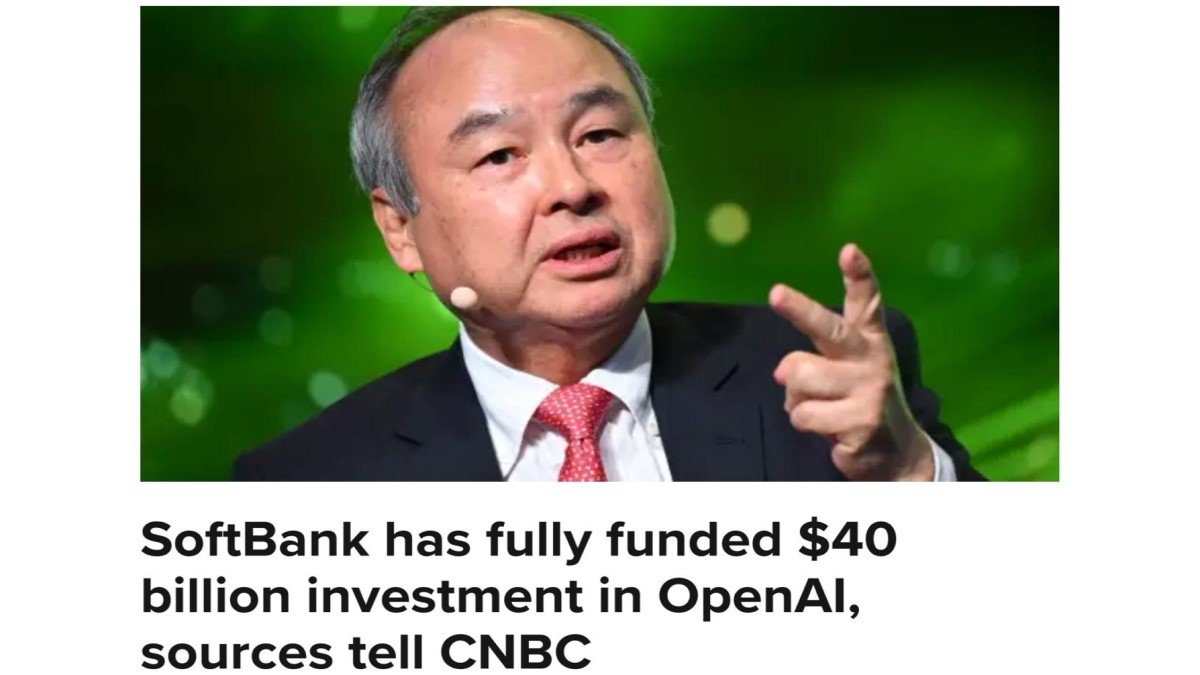
That is why the latest move matters: OpenAI and SoftBank Group disclosed a $1 billion investment into SB Energy (a SoftBank Group company), and OpenAI is set to lease 1.2 gigawatts of data center capacity in Milam County, Texas. SB Energy also secured $800 million in preferred equity financing led by Ares Management to support the build-out. :contentReference[oaicite:0]{index=0}
The headline is $1B. The signal is 1.2GW.
A billion dollars is a familiar number in tech news. It sounds huge, but in the world of power and heavy infrastructure, it’s often a down payment. The more informative number here is 1.2GW—the capacity OpenAI plans to lease. :contentReference[oaicite:1]{index=1}
Gigawatts change the conversation because they force you to stop thinking like a software operator and start thinking like a utility planner. At this scale, the bottlenecks are not just “how many GPUs can we buy,” but “how fast can we energize the campus,” “where does the power come from,” and “what does the grid allow us to do without creating political or reliability blowback.”
Why 1.2GW is a different animal:
• It’s not a ‘big data center.’ It’s an energy-intensive industrial site that can rival the demand of a large city district, depending on utilization.
• It re-prices speed. If time-to-power is the constraint, the winner is often the party who already controls land, permits, interconnection, and generation strategy—not just the party who negotiates hardware supply.
• It re-prices reliability. A model training run that assumes stable power cannot treat outages as “rare events.” Reliability becomes a core product requirement, not an operational afterthought.
OpenAI’s own framing emphasizes building AI infrastructure at scale under its “Stargate” umbrella, which includes large U.S. data center expansion plans described as a multi-hundred-billion-dollar commitment. :contentReference[oaicite:2]{index=2}
What SB Energy actually represents: a new kind of AI supply chain
At first glance, partnering with an energy company looks like a simple procurement move: “we need more power, so we work with a power expert.” But the SB Energy deal reads more like a strategic rewiring of the AI stack—where power development and capital structure are treated as first-class engineering inputs.
In the announcement, OpenAI and SoftBank describe a “preferred partnership” with SB Energy to deliver purpose-built AI infrastructure, while SB Energy highlights plans that include new generation development intended to meet incremental demand and protect ratepayers. :contentReference[oaicite:3]{index=3}
Three deeper implications are easy to miss:
• Interconnection becomes a moat. In many regions, the queue to connect large loads to the grid is not measured in weeks—it’s measured in years. If you control interconnection rights and the process to energize quickly, you control a scarce asset.
• Energy developers become “compute enablers.” Instead of buying electricity as a commodity, AI players increasingly need someone who can deliver a “powered shell” at the speed of AI demand.
• Financing starts to look like infrastructure finance, not venture finance. The presence of large preferred equity financing (Ares leading a reported $800M round) underscores that these builds are being structured like long-lived assets with predictable cash flows, not experimental software projects. :contentReference[oaicite:4]{index=4}
In other words: the product is not just “compute.” The product is “compute delivered on-time, at scale, with power secured and financed.” That’s a different competitive game.
Why Texas keeps showing up in the AI infrastructure story
Texas has become shorthand for “build fast.” But the more accurate story is that Texas often offers a combination that’s hard to replicate elsewhere: large land availability, an energy industry that can mobilize quickly, and a grid environment that—depending on project design—can allow speed. None of these factors guarantee success; they simply make rapid scale more plausible.
The Milam County site also appears in OpenAI’s broader Stargate expansion narrative, where Texas locations are repeatedly referenced as flagship and high-velocity build zones. :contentReference[oaicite:5]{index=5}
But speed comes with trade-offs worth watching:
• Grid politics. When large new loads arrive, the public and regulators will ask who pays for upgrades and whether households face indirect costs.
• Water and cooling constraints. Modern data centers are increasingly scrutinized for water usage. Notably, the SB Energy partnership mentions an intent to “minimize water use” for cooling—a hint that community acceptance is now a design constraint. :contentReference[oaicite:6]{index=6}
• Reliability risk. A region can be pro-build and still face reliability stress during extreme weather. At AI scale, resilience planning becomes part of the economic model.
If the past decade’s tech mantra was “move fast and break things,” the next decade’s infrastructure mantra is closer to “move fast and don’t break the grid.”
Stargate, industrial policy, and the return of “strategic compute”
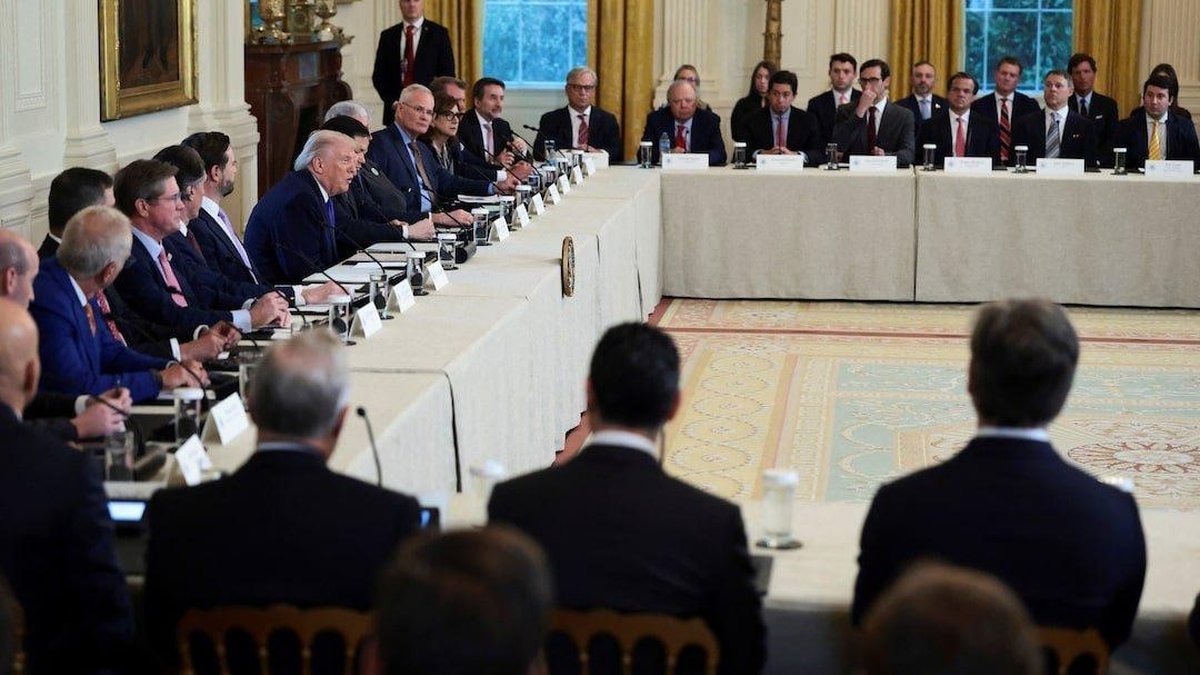
Another reason this deal is bigger than it looks: it sits inside a political narrative. Stargate was positioned as a major U.S. AI infrastructure push, announced publicly at the White House with President Trump referenced in OpenAI’s materials. :contentReference[oaicite:7]{index=7}
Whether you view this as industrial strategy, economic competition, or national security positioning, the practical result is the same: AI compute is being treated less like a private convenience and more like strategic capacity. That shift changes the incentives for everyone involved—developers, utilities, financiers, and policymakers.
This is where the SB Energy structure becomes revealing:
• It aligns “strategic compute” with “strategic power.” The partnership doesn’t just rent servers; it orchestrates energy development, construction, and long-term leases.
• It normalizes mega-scale commitments. When announcements talk in gigawatts and hundreds of billions, it compresses what used to be a decade of build-out into something closer to a few years. :contentReference[oaicite:8]{index=8}
• It pressures every other player to follow. Once one frontier AI builder locks in gigawatt-scale capacity, competitors must either secure similar pipelines or accept strategic dependence on third-party capacity.
In practical terms, “AI leadership” starts looking like “who has a secured queue of powered campuses.”
So what changes for markets and for crypto-adjacent narratives?
It’s tempting to translate any mega AI build into a simple trade: “more AI = more bullish for tech, semis, and risk assets.” Reality is messier. Infrastructure scaling introduces lags, cost overruns, and regulatory chokepoints. The market impact tends to arrive in waves: enthusiasm during announcements, stress during build constraints, and renewed enthusiasm when capacity actually goes live.
For crypto narratives specifically, this matters in two ways—without needing to turn it into speculation. First, large-scale AI and data centers compete for similar inputs: electricity, grid interconnections, and sometimes the same local political goodwill that Bitcoin miners learned to negotiate for years. Second, the more the world treats compute as strategic infrastructure, the more it invites “on-chain” experiments around settlement, auditing, and tokenization of real-world cash flows—though the winners are likely to be boring and compliant rather than flashy.
The key educational takeaway: infrastructure cycles are slower than token cycles. If you want to understand what’s real, track what gets built, powered, and operated—not what trends for 48 hours.
The checklist for 2026: what would confirm this shift is real?
Big announcements are easy. Durable infrastructure is not. If this is truly the next era of AI, you should expect a specific set of follow-through signals that go beyond headlines and into operational reality.
Signals to watch (no hype required):
• Power milestones: interconnection approvals, substations energized, and capacity delivered on schedule.
• Financing depth: more infrastructure-style capital (preferred equity, project finance) alongside traditional tech funding. The Ares-led preferred equity in this deal is an early marker. :contentReference[oaicite:9]{index=9}
• Cooling strategy transparency: credible water minimization or alternative cooling designs that reduce community friction. :contentReference[oaicite:10]{index=10}
• Replicability: if SB Energy becomes a template, you’ll see copycat partnerships pairing compute buyers with energy developers and financiers, not just with cloud vendors.
And if those signals don’t materialize, the deal still matters—but as a lesson in how hard the next phase of AI will be.
Conclusion
The OpenAI–SoftBank–SB Energy announcement is easy to read as “another funding headline.” The more accurate reading is that it’s a map of the future AI stack: a world where the decisive advantage is not just models, or chips, or even cloud contracts—but the ability to industrialize compute through power, permitting, financing, and speed-to-energize.
When OpenAI leases 1.2GW in Texas and the partners talk about multi-hundred-billion-dollar infrastructure commitments, they’re effectively saying: the frontier is no longer purely digital. It’s physical. And physical systems—grids, communities, financing—have rules that software people don’t get to ignore.
Disclaimer: This article is for educational and informational purposes only. It does not constitute financial, legal, or investment advice. Any references to companies, assets, or market themes are illustrative and not a recommendation to buy or sell.
Frequently Asked Questions
What does “1.2 gigawatts of data center capacity” actually mean?
It refers to the maximum power the site can draw to run servers, networking, and cooling at scale. At gigawatt levels, the project resembles industrial infrastructure more than a conventional enterprise data center, and it often requires substantial grid upgrades and careful reliability planning. :contentReference[oaicite:11]{index=11}
Why would OpenAI invest in an energy-focused company instead of only building data centers?
Because power delivery and interconnection are increasingly the gating factor for scaling AI. Partnering with an energy developer can reduce time-to-power and improve certainty around electricity supply, which directly affects when compute becomes available for training and inference workloads. :contentReference[oaicite:12]{index=12}
How is this tied to Stargate?
OpenAI describes Stargate as its overarching AI infrastructure platform and has discussed a large U.S. build-out commitment alongside partners including SoftBank, with multiple new sites announced in 2025 and continued expansion into 2026. :contentReference[oaicite:13]{index=13}
Does this guarantee cheaper AI or immediate market impact?
No. Infrastructure takes time. Announcements can move sentiment, but the durable impact comes when capacity is built, powered, and operated reliably. The main near-term takeaway is structural: the AI race is increasingly constrained by physical resources and execution, not only by model innovation.