21Shares Launches 2x SUI ETF as Regulators Draw Lines on Leverage
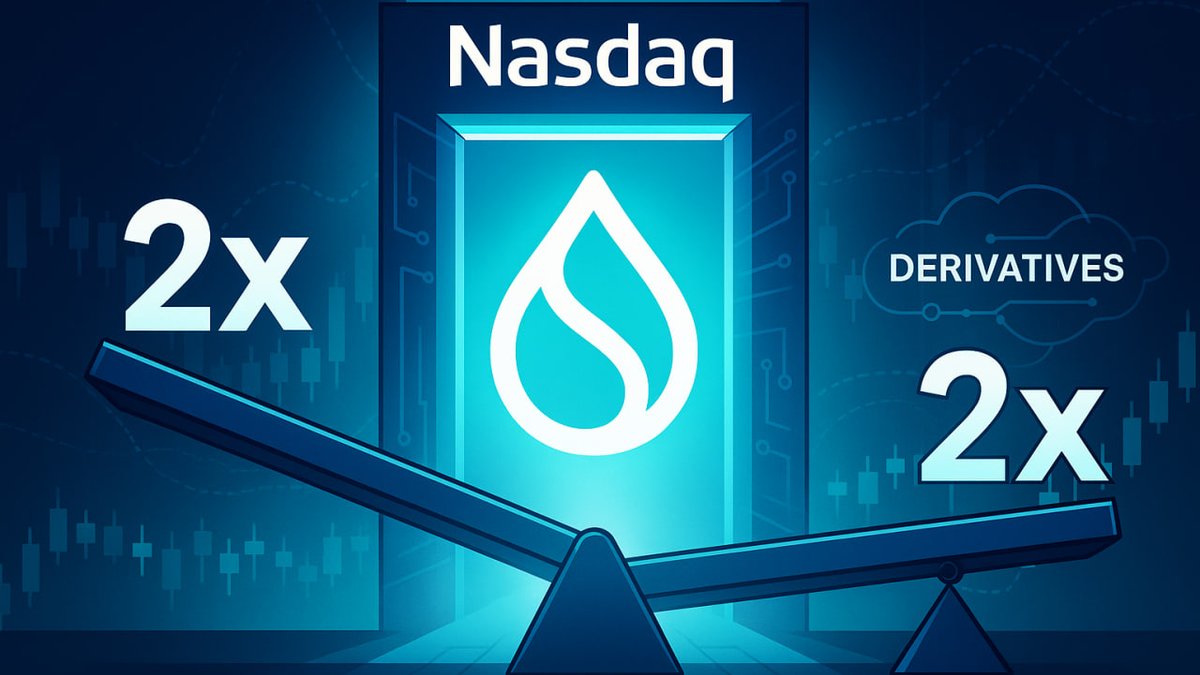
The past day has delivered a neat snapshot of where the crypto market stands at the end of 2025. On one side, institutional finance is moving faster than ever: 21Shares has just listed a 2x Sui ETF on Nasdaq under the ticker TXXS, offering leveraged exposure to a relatively young Layer-1 network through a fully regulated wrapper. On the other side, the US Securities and Exchange Commission (SEC) is again reminding issuers that there are limits to how much leverage it is prepared to sign off on, especially for products aimed at a broad retail audience.
Layered on top of this are a string of market headlines: major asset managers talking about national debt and tokenization, large brokers like Charles Schwab preparing to open Bitcoin and Ethereum trading to their clients, and a steady stream of protocol-level news from Sui, Solana, Sui-adjacent DeFi projects and more. It is a lot to process.
This article tackles three questions:
- What exactly does the new 2x Sui ETF from 21Shares do, and how does it achieve its exposure?
- Why are regulators comfortable with a 2x structure but still cautious about 3x–5x products?
- How do today’s headlines — from leveraged ETFs to prediction-market integrations — fit into the bigger story of institutional adoption and risk management?
1. TXXS in Focus: A New Route into the Sui Ecosystem
TXXS is described by 21Shares as a leveraged ETF designed to deliver approximately twice the daily return of Sui (SUI), one of the newer smart-contract platforms competing with Ethereum and other Layer-1 chains. Instead of buying and holding SUI tokens directly, the fund uses derivatives such as total-return swaps and other synthetic instruments to mirror Sui’s price movements at 2x scale.
On paper, the mechanics are straightforward. If SUI rises 10% over a single trading day, TXXS aims to rise roughly 20%. If SUI falls 8%, the fund targets a loss close to 16%. To maintain this relationship, the portfolio is rebalanced daily: exposure is increased after up days and reduced after down days so that the leverage ratio stays near 2:1.
This daily reset is both the defining feature and the main source of complexity. Over longer horizons, the fund’s performance will not simply equal 2x Sui. Because gains and losses are compounded, the path of returns matters. In choppy markets, a 2x ETF can underperform 2x spot exposure due to what is often called volatility drag. In smooth, trending markets, it can sometimes outperform simple 2x exposure.
For investors who cannot or do not want to open accounts with offshore crypto venues, TXXS offers several advantages:
- Exposure is packaged in a familiar format that can sit alongside equities and bonds in a brokerage account.
- Custody risk of the underlying tokens is handled by large, regulated financial institutions rather than individual users.
- Tax treatment may be clearer in some jurisdictions than holding tokens directly, although specifics vary by country.
However, those benefits come with trade-offs. Management fees, swap costs and daily rebalancing all eat into performance. And because the product is tuned for short-term leveraged exposure, it is not a simple substitute for long-horizon spot holdings.
2. Why the SEC Is Drawing a Line at Higher Leverage
The timing of TXXS’s launch is interesting because it comes just as the SEC is reiterating its concerns about more extreme leveraged products. In recent public comments and guidance to issuers, the agency has signalled that while it is prepared to consider 2x structures in tightly controlled circumstances, 3x–5x crypto ETFs raise serious questions about suitability and investor protection.
The SEC’s reasoning is relatively simple:
• Compounding risk. As leverage increases, the gap between the marketed multiple (for example, 3x) and realized performance over weeks or months can become large and counter-intuitive. Retail investors may underestimate how quickly losses can compound if markets chop sideways or trend down.
• Liquidity and stress scenarios. To maintain high leverage, funds must rebalance aggressively during volatile periods. That can force them to transact heavily precisely when markets are thin, potentially amplifying price swings.
• Disclosure versus comprehension. Even when prospectuses clearly describe these dynamics, there is no guarantee that all investors fully understand them. Regulators worry about products that are technically transparent but practically confusing.
Against that backdrop, a 2x Sui ETF can be viewed as a kind of compromise. It still offers leveraged exposure — enough to be meaningful for tactically oriented investors — but it avoids the most extreme scenarios associated with 3x–5x structures. The SEC has also been careful to stress that approval of a single product does not automatically open the door to more aggressive offerings. In parallel, the agency has been sending letters to fund sponsors reminding them that products using high leverage, whether tied to equities, commodities or digital assets, must be designed with robust risk controls.
For the crypto industry, this is both a constraint and an opportunity. The constraint is obvious: there is a ceiling on how much leverage regulators will permit in mainstream wrappers. The opportunity is subtler: by drawing that line, the SEC is implicitly acknowledging that some level of leveraged crypto exposure belongs inside the regulated system, provided that structure and disclosure are handled responsibly.
3. What a 2x Sui ETF Means for Altcoin 'Institutionalisation'
A few years ago, the idea of a leveraged ETF tracking anything other than Bitcoin or Ethereum would have sounded remote. The launch of TXXS shows how far the market has evolved. Sui is still a young network, yet it already has a dedicated 2x ETF on one of the world’s largest equity venues.
This development sits alongside other milestones. Franklin Templeton has completed the final regulatory steps for its Solana ETF (ticker SOEZ) ahead of a listing on NYSE Arca, signalling that single-asset altcoin funds are becoming part of the mainstream investment universe. In Europe and Switzerland, products linked to Solana-based assets such as BONK are also emerging, while several asset managers are filing for XRP and other single-token vehicles.
The pattern is clear: the ETF toolkit that started with broad-based Bitcoin and Ethereum exposure is now being extended to networks one or two steps further out on the risk spectrum. For protocols, this can be a mixed blessing. On the one hand, ETF listings bring visibility, legitimacy and potentially deeper liquidity. On the other, they increase sensitivity to flows from traditional finance — redemptions, risk-off moves, or shifts in regulation can all feed back more directly into token prices.
For individual market participants, the key takeaway is that altcoin exposure is no longer limited to on-chain or offshore venues. It is gradually being woven into the fabric of brokerage accounts, retirement platforms and advisory portfolios. That makes it even more important to understand both the upside and the structural risks of products like TXXS before using them.
4. The Wider 24-Hour News Cycle: A Market in Transition
Beyond Sui, the last day has delivered a dense stream of developments that all point in the same general direction: deeper integration between digital assets and the legacy financial system, alongside ongoing regulatory negotiation over where to draw boundaries.
4.1 TradFi edges further into crypto
• National debt and institutional demand. Research desks at major asset managers such as BlackRock have argued that the rapid growth of US public debt and the weakening appeal of long-dated bonds are likely to push some large investors toward alternative stores of value, including Bitcoin and other digital assets. Their public reports frequently highlight tokenization and stablecoins as building blocks for a new market structure.
• Charles Schwab prepares for Bitcoin and Ethereum trading. Press reports indicate that the $12 trillion brokerage is testing crypto trading internally with a view to rolling it out to a subset of clients before a wider launch in early 2026. Combined with earlier moves by previously sceptical firms such as Vanguard to allow trading in spot crypto ETFs, this marks a striking shift in attitude among large US platforms.
• CFTC and spot markets. In derivatives regulation, the CFTC has begun granting more permissions to venues that want to list spot digital assets alongside futures, signalling a gradual broadening of the rulebook. While the details remain technical, the direction of travel is clear: more of the crypto spot market is being pulled under the umbrella of established market-structure rules.
4.2 DeFi and prediction markets find new distribution
On the decentralised side, one notable story is the integration of Polymarket — a platform for trading event-linked outcomes — into the MetaMask mobile app. The partnership makes it possible for users to access prediction markets directly from a wallet interface that millions of people already use for DeFi and NFTs, bringing a previously niche corner of the ecosystem closer to the mainstream.
Prediction markets have long been discussed as a way to aggregate information about politics, macro data, sports and other real-world events. Their expansion into widely used wallets will likely re-ignite policy debates about where the line sits between information markets and regulated financial contracts. For users, the practical lesson is simple: even when a product is accessible through a familiar Web3 interface, it still carries its own set of rules, risks and legal considerations.
4.3 Protocol-level innovation continues
At the protocol level, there has been a flurry of launches and upgrades:
• Sui and its ecosystem are in the spotlight thanks to TXXS, but other chains are also busy. Aster has outlined its H1 2026 roadmap with plans for a Layer-1 mainnet and staking, while its foundation is actively managing token supply through buybacks and burns.
• Solana continues to attract institutional attention via products like Franklin Templeton’s SOEZ ETF, new Solana-denominated ETPs in Europe and the expansion of cross-chain bridges from ecosystems such as Base.
• Infrastructure and DeFi platforms such as Drift Protocol are shipping new versions with much faster execution engines, and exchanges like Lighter are experimenting with zero-fee spot trading models.
Together, these moves reinforce the idea that while prices have been volatile — Bitcoin fell sharply below 85,000 USD earlier in the week before recovering toward the mid-90,000s — the underlying pace of development has not slowed. The building phase that typically follows every major drawdown appears well underway.
5. How to Think About Leveraged Crypto ETFs in a Brand-Safe Way
Given all this activity, it is tempting to focus only on the excitement: new products, new listings, bold predictions that crypto has already reached its cycle low. But from an educational standpoint, it is more helpful to step back and ask how products like TXXS fit into a balanced digital-asset strategy.
A few principles stand out:
• Different tools for different horizons. Leveraged ETFs are designed for short-term tactical views, not multi-year holdings. Their daily rebalancing and embedded costs make them poorly suited as a simple stand-in for long-term spot exposure.
• Understand path dependency. Because returns are compounded daily, the same beginning and ending price for Sui can produce very different outcomes for TXXS depending on the path taken. Trending markets can work in favour of leverage; sideways and choppy markets can erode it.
• Consider portfolio context. A 2x ETF can quickly dominate the risk profile of a diversified portfolio, even if the notional allocation looks modest. Position sizing and time horizon matter more here than in many traditional funds.
• Regulation does not remove market risk. Listing on Nasdaq and operating under SEC oversight ensures certain protections around custody, disclosure and operations. It does not guarantee positive outcomes, nor does it neutralise price volatility of the underlying asset.
• Use on-chain and off-chain tools together. For sophisticated users who already hold SUI directly or participate in its DeFi ecosystem, a product like TXXS can be an additional tool rather than a replacement. It may complement, hedge or amplify existing exposure depending on how it is used.
Viewed this way, TXXS is best understood not as a standalone opportunity but as one component in a much larger shift: the migration of crypto’s risk and reward into regulated capital-markets infrastructure. That shift brings new protections and new possibilities, but it also demands a higher level of financial literacy from everyone involved.
6. Looking Ahead: What Today’s News Might Mean for 2026
The launch of a 2x Sui ETF, combined with ongoing growth in Bitcoin and Solana products, CFTC-authorised spot trading and expanding prediction-market access, suggests that 2026 could be defined less by whether institutions participate in digital assets and more by how they choose to structure that participation.
Several scenarios are plausible:
• A layered market structure. Spot Bitcoin and Ethereum ETFs, single-asset altcoin funds and carefully constrained leveraged products coexist, serving different investor needs. Traditional brokers act as the primary distribution channels, while DeFi platforms continue to innovate at the edges.
• Greater regulatory clarity but also higher expectations. As agencies like the SEC and CFTC refine their frameworks, compliance will become more predictable but also more demanding. Projects that want mainstream capital will need to engage directly with these rulebooks.
• A stronger link between macro conditions and digital assets. The same forces that move bond yields, equity valuations and currency expectations — from national debt dynamics to central-bank policy — will increasingly shape flows into and out of crypto exposures held in regulated wrappers.
For individual participants, none of this guarantees an easy path. Prices will still swing, narratives will still overshoot, and some products will turn out to be better designed than others. But the direction of travel is clear: crypto is no longer sitting outside the financial system arguing for attention. It is being wired directly into that system, product by product, rule by rule.
Conclusion
In isolation, the launch of a 2x Sui ETF might look like a niche event. Framed against the broader backdrop — SEC debates over leverage, the rise of Solana and other altcoin ETFs, prediction markets entering mainstream wallets, and large brokers preparing to offer direct Bitcoin and Ethereum trading — it becomes a useful case study in how digital assets are maturing.
For readers, the most constructive response is not to chase every new product, but to deepen their understanding of how these structures work, what risks they embed and how they interact with the rest of the portfolio. If that mindset takes root, the growing bridge between TradFi and crypto could support a more resilient market over the long run, even as short-term volatility remains part of the landscape.
Disclaimer: This article is for informational and educational purposes only. It does not constitute financial, investment, legal or tax advice, and it should not be treated as a recommendation to buy, sell or hold any digital asset or financial product. Digital asset markets and leveraged ETFs can be volatile and carry significant risk, including the possibility of total loss. Readers should conduct their own research and, where appropriate, consult qualified professionals before making decisions related to cryptocurrencies or other financial instruments.