
SEC Pushes Back on 3x–5x Leveraged Crypto ETFs as Institutions Double Down on Digital Assets
Crypto markets woke up to two seemingly contradictory messages this week. On the one hand, the US Securities and Exchange Commission (SEC) signalled that highly leveraged 3x–5x crypto ETFs are unlikely to receive a green light. On the other hand, some of the largest financial institutions on the planet are pushing deeper into digital assets, from spot ETFs and tokenization pilots to on-chain collateral experiments.
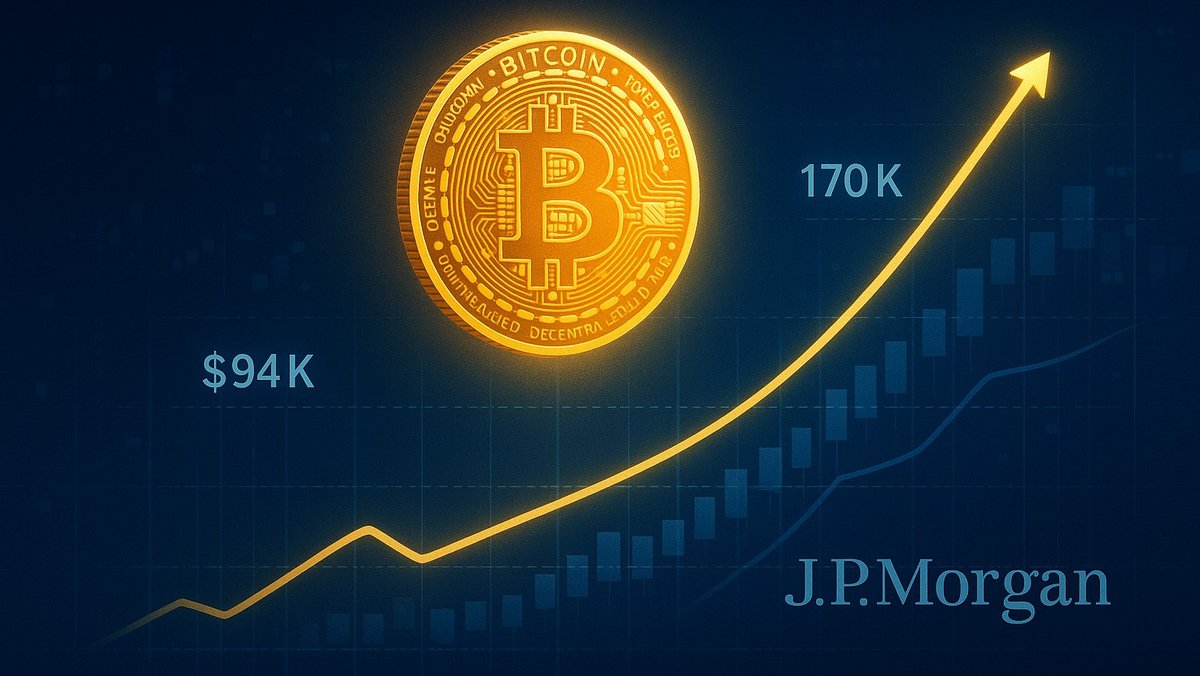
Bitcoin’s recovery back above $94,000 sits against this backdrop. The asset is trading in a zone where macro rhetoric, regulatory policy and technological progress all matter at once. Understanding how those forces fit together is more useful than focusing on any single headline.
1. Why the SEC Is Drawing a Line at 3x–5x Leveraged Crypto ETFs
Leveraged ETFs are designed to magnify the daily performance of an underlying index. A 3x product, for example, aims to deliver roughly three times the daily percentage move of its benchmark. In traditional markets, these funds already exist for equities and commodities, and regulators have long warned that they are complex tools best suited for sophisticated traders with short time horizons.
Transplant that model into the inherently volatile world of crypto and the risks compound quickly. Daily rebalancing, path dependency and funding costs can cause performance to diverge sharply from what casual investors expect, especially when markets swing by double-digit percentages in short windows.
That is the backdrop for the SEC’s latest messaging: the agency has indicated that while spot Bitcoin ETFs and even more nuanced products may be compatible with its investor-protection mandate, 3x–5x leveraged crypto ETFs are unlikely to be approved in the current framework. The reasoning is straightforward:
• Complexity for retail investors. Many buyers treat ETFs like simple wrappers around an asset. Leveraged structures are anything but simple; misunderstanding their behaviour can lead to unexpected losses.
• Market-stability concerns. Leveraged products rebalance aggressively during volatile sessions, which can amplify intraday swings. In a market that already trades 24/7 with global participation, regulators are wary of additional feedback loops.
• Consistency with prior guidance. Even in equities, supervisors have repeatedly emphasised that leveraged and inverse ETFs deserve special caution. Extending that conservatism to crypto is logically consistent.
The message is not that leverage is banned in all forms—sophisticated traders still have access to futures and margin products on regulated venues—but that publicly listed, highly leveraged ETFs marketed to a broad audience sit on the wrong side of the risk–reward line in the SEC’s view.
Interestingly, this regulatory caution arrives just as broader institutional adoption is accelerating.
2. Bitcoin as “Foundation of Economic Markets” and the Macro Narrative
Michael Saylor, whose firm Strategy has become one of the most visible corporate holders of BTC, described Bitcoin this week as the “foundation of economic markets”. Whether or not one agrees with that phrasing, it captures an important shift: many large investors no longer see Bitcoin as a fringe experiment, but as a core macro asset that sits alongside gold, major equity indices and government bonds in their dashboards.
The macro context reinforces this narrative. Treasury Secretary Scott Bessent has criticised the habit of regional Federal Reserve officials giving frequent public speeches, arguing that the central bank should spend less time reacting to every short-term data point and more time focusing on long-term monetary stability. At the same time, the Fed has ended its balance-sheet tightening programme and recently provided sizeable short-term liquidity to banks via repurchase agreements, a reminder that the plumbing of the financial system still requires active management.
For Bitcoin, this combination—concern about long-term debt dynamics, intermittent stress in money markets and lingering inflation uncertainty—helps explain why some institutions view a scarce, programmatically governed asset as a useful portfolio component, even as regulators remain cautious about leveraged products linked to it.
3. Wall Street’s Deepening Crypto Footprint
If the SEC’s stance on leverage feels restrictive, the parallel story is one of extraordinary growth in mainstream access to digital assets.
3.1 BlackRock, national debt and the case for crypto
BlackRock, the world’s largest asset manager, has been explicit: rising US national debt and the weakening appeal of long-duration government bonds are pushing some investors to explore alternatives, including Bitcoin and other digital assets. In public remarks, the firm argued that excessive borrowing can make the financial system more fragile and that a modest allocation to assets with different monetary properties can be a rational response.
The success of BlackRock’s spot Bitcoin ETF has turned that thesis into a tangible product. Trading volumes regularly sit near the top of the ETF league table, and options on the fund are among the most actively traded in the market. CEO Larry Fink has gone from being a vocal sceptic to openly admitting that he was wrong about crypto’s long-term potential, describing tokenization as a transformative technology.
3.2 Charles Schwab prepares retail and advisory rails
Another important signal comes from Charles Schwab, which oversees roughly $12 trillion in client assets. The firm has announced plans to roll out Bitcoin and Ethereum trading to clients in early 2026, starting with internal pilots and a limited release before full-scale deployment. Schwab already provides access to various crypto-related ETFs and closed-end funds, but direct trading support is a step change in convenience for everyday investors and financial advisers.
When giants like Schwab and BlackRock move in tandem, they create an infrastructure layer that can persist across cycles, even if prices remain volatile in the short term.
3.3 Coinbase, major banks and tokenization
On the exchange side, Coinbase CEO Brian Armstrong reports that several major banks are actively piloting crypto services with the company. These pilots range from custody and settlement tests to early-stage tokenization projects. Armstrong has repeatedly argued that “tokenization is the future”—the idea that everything from money-market funds to real estate interests can be issued and transferred on-chain under existing regulatory frameworks.
For now, these initiatives are small relative to the total size of capital markets, but they show how digital assets are moving from isolated speculation to being embedded in the mainstream financial stack.
4. New Platforms, New Narratives: From Polymarket to MrBeast
Innovation is not confined to large incumbents. Several digital-native platforms made headlines in the same 24-hour window.
Polymarket, a well-known event-trading platform, has started rolling out a compliant app for US users following engagement with derivatives regulators. The product allows customers to express views on real-world events within a regulated framework. For policymakers, this raises fresh questions about how to treat markets where information discovery, entertainment and speculation blur together; for users, it highlights the importance of understanding product terms and local rules before participating.
Meanwhile, Nvidia CEO Jensen Huang credited President Trump with having “saved the AI industry” in a widely publicised interview, illustrating how political narratives, technological optimism and equity valuations can become intertwined. Crypto sometimes sits in the slipstream of these conversations, as investors look for assets that might benefit from the computational and energy build-out required to power large-scale AI.
Even outside traditional finance and tech, digital assets are entering the conversation. The world’s largest YouTuber, MrBeast, has announced plans for a financial services platform. Details remain limited, but his audience size ensures that any integration of digital wallets or token-based rewards would be closely watched by both regulators and the industry.
5. Token Launches, Stablecoin Expansion and Solana’s ETF Moment
Alongside the macro and regulatory news, a series of protocol-level updates reveal how quickly the underlying infrastructure is evolving.
• Solana Mobile’s SKR token. Solana Mobile plans to issue a native token called SKR in January 2026, with a total supply of 10 billion tokens and 30% set aside for community distribution. The design aims to tie device usage, on-chain activity and ecosystem participation more closely together.
• Circle Foundation and USDC on Starknet. Stablecoin issuer Circle has launched the Circle Foundation, a charitable vehicle seeded with 1% of the company’s equity, while simultaneously deploying native USDC and its cross-chain transfer protocol (CCTP) on the Starknet mainnet. This combination of philanthropy and infrastructure investment underscores how stablecoin firms now operate at the intersection of payments, policy and social impact.
• PYUSD on Solana Mobile. PayPal’s PYUSD stablecoin is being integrated into Solana Mobile devices, making on-chain payments and transfers more seamless for users who may never interact with a traditional crypto exchange.
• Solana ETFs go live. Franklin Templeton confirmed that its Solana ETF, trading under the ticker SOEZ, is now operational. Additional products from other asset managers are in the pipeline, extending the ETF playbook that initially focused on Bitcoin and Ethereum into the broader smart-contract space.
• Gold-backed yield vaults. YO Protocol has introduced a yield vault for Tether Gold (XAU₮) with institutional-grade controls and a capped capacity. While such products can be appealing for investors who like the idea of tokenised precious metals, they also highlight the need to understand how underlying assets are stored and how yield is generated.
Taken together, these developments show how the lines between traditional assets (like gold), stablecoins and high-performance L1s such as Solana are becoming increasingly blurred.
6. DeFi Governance: Aave’s Strategic Focus and Bitcoin as Collateral
In decentralised finance, governance decisions often reveal where protocols intend to focus resources next.
Aave DAO is currently voting on whether to discontinue support for certain networks—including zkSync, Metis and Soneium—in order to concentrate liquidity and development effort on chains with deeper usage. Streamlining multichain deployments can reduce operational risk and fragmentation, but it also means some ecosystems may lose access to Aave’s lending markets if the proposal passes.
At the same time, Babylon and Aave are collaborating to allow native Bitcoin to be used directly as collateral within the Aave ecosystem. Instead of wrapping BTC through multiple bridges, the partnership aims to design a more direct and transparent path for Bitcoin holders who want to access on-chain liquidity while keeping exposure to the underlying asset. If successful, this model could become an important template for cross-asset collateralisation in DeFi.
7. Venture Capital and the RWA–DeFi Bridge
Capital continues to flow into platforms seeking to connect real-world assets (RWA) with decentralised infrastructure.
- Ostium, a derivatives protocol focused on real-world indices, raised $20 million in a Series A round led by General Catalyst and Jump Crypto.
- Fin, a project building digital-asset-native financial tooling, closed a $17 million round with participation from Pantera, Sequoia and Samsung Next.
- Axis secured $5 million from Galaxy Ventures to develop cross-border settlement rails.
These raises are small compared with the tens of billions under management at firms like BlackRock or Schwab, but they demonstrate sustained venture conviction that tokenized markets and RWA-linked derivatives will play a larger role in the next phase of crypto adoption.
8. Putting It All Together: Caution on Leverage, Commitment to Infrastructure
How should we interpret a day in which the SEC warns against the approval of 3x–5x leveraged ETFs while major asset managers, banks and protocols expand their crypto strategies?
The simplest answer is that policy makers are drawing a distinction between speculative leverage and foundational infrastructure. Highly leveraged ETFs bundle complex exposure into products that look superficially simple. Regulators, mindful of past episodes where leveraged vehicles complicated market sell-offs, prefer to slow that side of innovation.
By contrast, initiatives like spot ETFs, tokenization pilots, stablecoin expansion and DeFi collateral integrations are largely about building rails: better custody systems, clearer rulebooks and more robust market access. Even when these experiments carry risk, they are easier to supervise and align with the broader goal of integrating digital assets into the existing financial system.
For Bitcoin and the wider crypto market, this mix of caution and progress creates a landscape where:
- Price can remain volatile—especially around events such as FOMC meetings or large ETF rebalancings—but
- The underlying adoption curve continues to slope upward as more institutions, platforms and regulators learn how to work with the technology rather than against it.
9. Practical, Brand-Safe Takeaways for Readers
From an educational perspective, several lessons emerge from this 24-hour news cycle:
1. Not all ETFs are created equal. A spot Bitcoin ETF gives exposure to the underlying asset without built-in leverage. A 3x ETF, by contrast, magnifies daily moves and can behave very differently over longer periods. Understanding those mechanics is essential before considering any product.
2. Regulatory tone matters as much as specific rules. Even when the SEC says "no" to a particular structure, its broader willingness to approve spot products and allow tokenization pilots provides important signals about the long-term direction of policy.
3. Institutional adoption is multi-layered. From BlackRock’s ETFs and Schwab’s upcoming trading platform to Coinbase’s bank pilots and Circle’s philanthropic foundation, large organisations are engaging with crypto in ways that go beyond short-term price moves.
4. DeFi remains an experimental laboratory. Aave’s network-selection vote and Babylon’s BTC-collateral collaboration show how governance and design choices in open protocols can shape the risk profile of the entire ecosystem.
5. Diversification of information sources is crucial. No single chart, headline or protocol update tells the whole story. Combining regulatory developments, macro context, on-chain data and product announcements leads to a more balanced view.
Above all, the events of the day reinforce that digital assets are transitioning from a niche interest to a structural component of global finance. That transition will not be smooth, and regulatory caution—especially around leverage—is likely to persist. But the direction of travel, from ETFs and stablecoins to RWA platforms and AI-adjacent narratives, suggests that the conversation is now less about whether crypto will matter and more about how it will be integrated responsibly.
Disclaimer: This article is for informational and educational purposes only. It does not constitute financial, investment, legal or tax advice and should not be treated as a recommendation to buy, sell or hold any asset or to use any specific financial product. Digital assets are volatile and can involve significant risk. Readers should conduct their own research and, where appropriate, consult a qualified professional before making financial decisions.