Ondo Finance Takes Tokenization Debate to Washington as Crypto Markets Reset
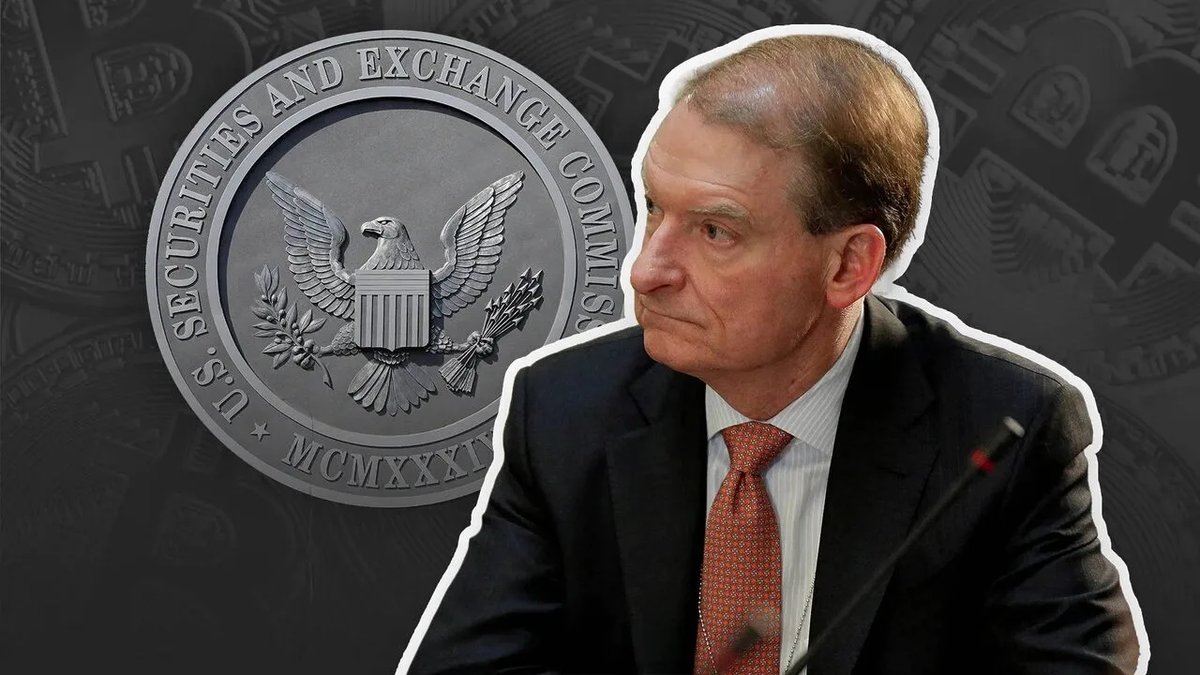
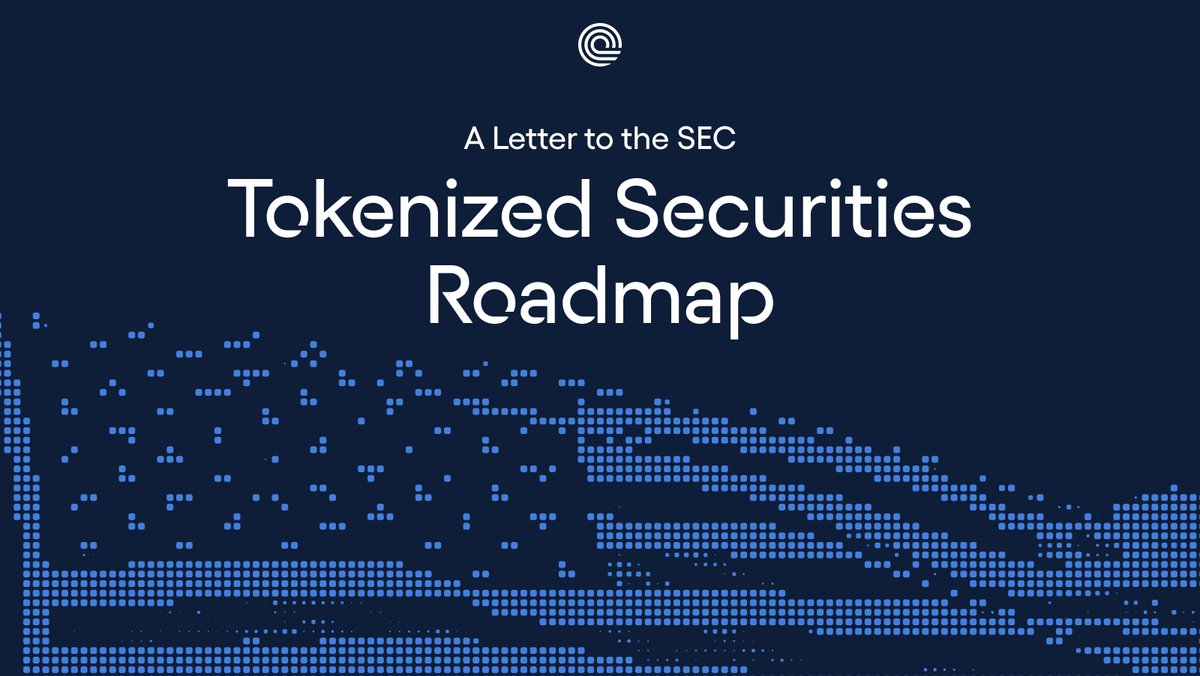
While prices have been choppy and liquidations continue to clear out leverage, an important structural story is quietly unfolding in the background: the battle over how traditional securities will move on-chain. Ondo Finance has now stepped directly into that conversation by submitting a detailed roadmap on tokenization of securities to the U.S. Securities and Exchange Commission (SEC), arguing that the United States should lead the world in real-world asset (RWA) innovation rather than merely reacting to it.
This regulatory push arrives in the middle of a mixed 24 hours for digital assets. Bitcoin briefly dipped below 89,000 USD, around 125 million USD worth of leveraged long positions were closed out, and sentiment softened again after a short-lived bounce. At the same time, Grayscale filed for a spot Sui ETF, WisdomTree expanded its European product suite using Lido staked Ether (stETH), and new security incidents reminded everyone that smart-contract risk never fully disappears.
To make sense of this busy backdrop, it helps to separate the structural developments—which can shape the next several years—from the noise of day-to-day price moves. Ondo’s roadmap clearly sits in the first category.
1. What Exactly Did Ondo Finance Propose to the SEC?
Ondo Finance has been one of the most prominent names in the RWA space, focusing on tokenized U.S. Treasuries and other yield-bearing traditional assets. In its recent submission to the SEC’s Investor Advisory Committee, the firm laid out a vision for how tokenization of securities could be handled in U.S. law.
Several themes stand out:
• Multi-model ownership. Ondo argues that U.S. investors should be able to hold tokenized securities both through familiar custodial channels (broker-dealers, banks, transfer agents) and through more direct, on-chain structures such as self-custodied wallets or permissioned smart contracts.
• On-chain transferability with clear compliance hooks. The roadmap calls for securities to be technically transferable on public blockchains while still enforcing regulatory obligations through whitelists, transfer restrictions and robust disclosure requirements.
• Interoperability with existing settlement rails. Rather than creating an entirely parallel universe, Ondo favours designs that let tokenized assets integrate with existing clearing houses, custodians and reporting infrastructure.
One underlying message is that tokenization should not be treated as a single monolithic model. Instead, regulators may need to accept a spectrum: from fully custodial, broker-dealer-controlled structures all the way to more open systems where qualified investors hold and move tokenized securities themselves, subject to well-defined rules.
2. Why This Matters for Real-World Assets and Stablecoin Users
At first glance this might look like a niche topic for lawyers, but it has concrete implications for regular crypto users.
First, many of the largest stablecoin issuers park reserves in short-term U.S. Treasuries and money-market instruments. If tokenized versions of those securities were widely accepted, settlement between traditional finance (TradFi) and DeFi could become much smoother and more transparent. It would be easier to verify reserves, easier to integrate with lending protocols, and easier for large institutions to interact with DeFi in a regulated way.
Second, tokenization offers a way for investors who already understand on-chain tools—wallets, bridges, DeFi dashboards—to gain exposure to familiar instruments like government bonds or corporate credit without leaving the crypto environment. That could change how capital allocators think about portfolio construction, especially once yield curves and credit spreads are accessible directly on public chains.
Third, the SEC’s response will set a reference point for other regulators. Europe and several Asian jurisdictions are also experimenting with tokenized bonds and funds, but the United States remains the deepest capital market in the world. A clear U.S. framework could accelerate global standardisation.
3. A Regulatory Patchwork: From EU Fines to New Tokenized Funds
Ondo’s roadmap lands in a week when regulators have been busy on multiple fronts. In Europe, authorities imposed a large fine on X (the social-media platform formerly known as Twitter) over concerns about how verified badges were presented and whether researchers had adequate access to platform data. The case is not directly related to crypto, but it illustrates a broader trend: large tech and financial platforms are facing closer scrutiny around transparency, disclosures and user protection.
On the investment-product side, tokenization continues to spread. In Europe, WisdomTree has expanded its range of physically backed crypto ETPs, including a product that tracks Lido staked Ether (stETH) and passes through staking rewards within a regulated wrapper. This kind of structure is a real-world example of what Ondo is advocating: taking a crypto-native yield source and wrapping it in a familiar, supervised format.
Back in the U.S., Grayscale has filed an S-1 registration statement for a spot Sui ETF, aiming to give investors regulated exposure to the Sui network without the operational complexities of self-custody. Although approval is not guaranteed, the filing underscores how far the ETF conversation has moved beyond just Bitcoin and Ethereum.
4. Market Snapshot: Bitcoin Slips Under 89,000 USD
Against this regulatory backdrop, crypto prices spent the last 24 hours digesting recent gains. Bitcoin briefly fell below 89,000 USD, triggering around 125 million USD in long liquidations across major venues and reminding leveraged participants that volatility works in both directions.
Macro commentary remains a key driver. White House economic adviser Kevin Hassett suggested it may be time for the Federal Reserve to “cautiously” begin cutting interest rates, while other officials urged patience. Expectations for easier policy can support risk assets over the medium term, but the path from here is unlikely to be a straight line. Markets are already pricing in several cuts for 2026; any disappointment relative to those hopes could keep volatility elevated.
Outside of Bitcoin, sentiment was mixed. Some investors rotated into large-capitalisation assets with perceived stronger fundamentals—such as Ethereum and major layer-1s—while others stayed on the sidelines, waiting for clearer direction from macro data and the upcoming Federal Open Market Committee (FOMC) meeting.
5. Structural Shifts: Pundi X Chain Sunset and New RWA Experiments
One notable development is the announcement that Pundi X Chain will fully cease operations on 1 March 2026. The project is giving users an extended window to withdraw or migrate assets, and the decision underscores how challenging it can be for smaller networks to maintain liquidity, developer attention and security at the same time.
For the broader market, this is a reminder that not every chain will survive in its original form. From an educational standpoint, it highlights the importance of evaluating not only tokenomics but also long-term sustainability: funding, governance quality, and real-world use cases.
On the other side of the spectrum, new initiatives keep emerging. Hastra, working with Figure and the Provenance blockchain, has launched PRIME, a project aimed at tokenizing credit-related assets and other financial instruments. Together with Ondo’s SEC roadmap, these developments suggest that RWA is shifting from buzzword to concrete product category, with specialized teams building infrastructure for tokenized securities, loans and funds.
6. When Security Assumptions Are Tested: The yETH Incident
No 24-hour snapshot would be complete without mentioning smart-contract risk. The yETH pool—a Yearn-related product—recently suffered a complex security incident that combined a flaw in the pool’s pricing invariant with an underflow bug, allowing an attacker to withdraw roughly 8 million USD worth of assets in a single transaction.
For observers, two educational points stand out:
- Composability cuts both ways. DeFi protocols often integrate with one another, which amplifies innovation but also creates intricate dependency chains. A subtle bug in one component can cascade through the system.
- Audits are necessary but not sufficient. Even well-reviewed code can contain edge cases that slip through. Risk management therefore has to include position sizing, diversification and careful evaluation of how funds are safeguarded, not just trust in a single audit report.
Episodes like this are uncomfortable but valuable. They push protocol teams to improve engineering practices and encourage users to treat DeFi yields as compensation for real, not hypothetical, risk.
7. How to Read Ondo’s SEC Roadmap in This Wider Context
Stepping back, how should we interpret Ondo’s filing within the noisy environment of ETF launches, macro speculation and protocol incidents?
First, it shows that parts of the industry are proactively trying to shape regulation rather than simply reacting to enforcement actions. By putting forward a concrete proposal for multi-model ownership and on-chain transferability of securities, Ondo is inviting the SEC and other stakeholders to debate specific design choices instead of arguing over abstractions.
Second, the roadmap highlights a gradual convergence between TradFi and DeFi. Tokenized funds like WisdomTree’s stETH ETP, Grayscale’s proposed Sui ETF, and RWA platforms such as PRIME or Ondo’s own products are different expressions of the same trend: the walls between on-chain and off-chain finance are getting thinner.
Third, the filing acknowledges that innovation must coexist with investor protection. Rather than arguing for a separate, lightly regulated universe, the proposal focuses on how existing securities laws can be applied in a way that recognizes smart contracts, wallets and decentralized settlement as first-class tools.
8. Practical Takeaways for Market Participants
For readers who are not lawyers or protocol engineers, several practical lessons emerge from the last 24 hours of news:
1. Tokenization is becoming a policy topic, not just a marketing slogan. When a project like Ondo submits a roadmap to the SEC’s Investor Advisory Committee, it signals that policymakers are now deeply engaged with questions of on-chain ownership, settlement and disclosure. Future investment products may look very different from today’s simple spot ETFs.
2. Regulation and innovation are moving in parallel. While one arm of government works on tokenization frameworks, another pursues enforcement actions against large platforms and clarifies how leveraged products should be treated. Investors need to track both: new opportunities, and new guardrails.
3. Security and protocol risk remain central. Incidents like the yETH pool attack reinforce that DeFi carries technical risk independent of price volatility. Diversification, due diligence and conservative sizing are essential for anyone engaging with complex smart contracts.
4. Not every chain or project will persist. The planned shutdown of Pundi X Chain illustrates that even well-intentioned networks may eventually wind down if adoption and economics do not justify ongoing maintenance. Users should be prepared for that possibility whenever they interact with emerging ecosystems.
5. Macro still matters—but it is not everything. Bitcoin’s intraday slide below 89,000 USD and the associated liquidations show that leverage and sentiment can exaggerate moves around macro headlines. Over longer horizons, though, structural adoption trends—from tokenized funds to RWA platforms—may prove more decisive.
9. Looking Ahead: From Roadmaps to Implementation
The next steps for Ondo’s proposal will likely involve feedback from regulators, industry participants and legal scholars. Even if the SEC does not adopt the roadmap verbatim, the discussion itself pushes the conversation forward. Each clarification about how tokenized securities can comply with existing rules makes it easier for other institutions—banks, asset managers, corporates—to experiment with on-chain structures.
For the crypto market, the near-term outlook will continue to be shaped by the upcoming FOMC meeting, evolving expectations around rate cuts, and the usual mix of ETF flows and risk appetite. Yet behind that day-to-day volatility, the infrastructure for a more integrated digital asset economy is slowly being built: regulated spot ETFs, tokenized credit platforms, cross-chain bridges, and, increasingly, formal policy documents submitted to agencies like the SEC.
In that sense, the last 24 hours are a microcosm of where the space stands at the end of 2025: prices digesting a volatile year, security assumptions being tested, and serious institutions trying to map out how public blockchains can host everything from government bonds to everyday savings products.
None of this guarantees a particular price path for Bitcoin, Ethereum or any other asset. But it does suggest that the next cycle will be shaped as much by regulatory architecture and real-world integration as by halvings and headlines.
10. Conclusion
Ondo Finance’s SEC roadmap is more than a niche filing; it is part of a broader shift in how policymakers view tokenization and on-chain markets. Combined with new ETF initiatives, evolving European regulations and continuing experimentation around RWAs, it points toward a future where digital assets are increasingly intertwined with the traditional financial system.
For market participants, the challenge is to follow these structural developments with the same attention usually reserved for price charts. Understanding how tokenized securities might work in practice, how risk is allocated between issuers, custodians and smart contracts, and how regulators intend to supervise the space will be crucial for navigating whatever comes next—whether Bitcoin is trading at 70,000 USD, 170,000 USD, or somewhere in between.
Disclaimer: This article is for informational and educational purposes only. It does not constitute financial, investment, legal or tax advice and should not be treated as a recommendation to buy, sell or hold any digital asset or security. Digital asset markets are volatile and involve risk, including the possible loss of principal. Readers should conduct their own research and, where appropriate, consult qualified professionals before making any financial decisions.