BNB Pays for AWS While Macro Winds Shift: What the Last 24 Hours Say About Crypto’s Next Phase
Over the past day, the crypto and macro landscape delivered another dense cluster of signals. On the surface, the headlines look scattered: BNB Chain will allow clients of Amazon Web Services (AWS) to pay using BNB through Better Payment Network; U.S. inflation eased to 2.7% while senior officials openly call for lower interest rates; major DeFi, stablecoin and real-world-asset projects updated their roadmaps; and short positions worth roughly 60 million USD in digital assets were forced to close in a brief burst of volatility. Underneath those individual stories lies a common theme: infrastructure, regulation and macro policy are slowly aligning around a more digital, more programmable financial system.
This article unpacks the main developments from the last 24 hours, connects them to the bigger picture, and offers educational takeaways for readers thinking beyond the next price candle.
1. BNB as a Payment Rail for AWS: From Trading Asset to Corporate Utility
The most eye-catching integration of the day came from BNB Chain, which is being added as a payment option for AWS customers through Better Payment Network. In practical terms, this means that businesses using AWS can choose to settle some of their cloud-computing bills using BNB, with the network acting as a bridge between on-chain balances and a major web-infrastructure provider.
Educationally, this matters for several reasons:
• BNB becomes a functional medium of payment, not just an investment vehicle. When a token is used to pay a recurring expense like cloud services, it starts to function as working capital rather than merely a speculative holding. That can deepen its role inside corporate treasuries.
• AWS represents real-world demand. Cloud infrastructure is a core input for start-ups, data-heavy companies and even traditional enterprises. Allowing BNB settlement opens a channel where business activity can directly translate into token usage.
• Better Payment Network plays the translator role. Most large enterprises are not going to manage node infrastructure or custody flows themselves. A dedicated payments intermediary that understands both AWS billing and on-chain transfers lowers the operational barrier for adoption.
For the broader market, the integration is a reminder that large-scale adoption rarely looks like a sudden switch to a purely on-chain world. Instead, it looks like traditional service providers quietly adding new ways to pay, settle and move value. The impact on price in the short term may be modest, but the impact on the long-term narrative of utility can be meaningful.
2. Macro Backdrop: Softening Inflation, Rising Optimism and the Rate-Cut Narrative
While BNB was finding a new role in corporate payments, the macro environment in the United States continued to shift in ways that matter for all risk assets, including crypto. The latest data showed inflation slowing to 2.7%, below market expectations. At the same time, senior officials signalled increasing comfort with easier monetary policy.
President Donald Trump repeated his view that the coming year could bring the largest tax refund season of all time and spoke of a historic economic upswing. White House advisor Kevin Hassett went further, saying that it is appropriate for the Federal Reserve to start lowering interest rates. In parallel, the President said he will soon name a new Federal Reserve Chair who is strongly in favour of reducing rates.
For Bitcoin and other digital assets, this combination of cooling inflation and political pressure for lower rates is generally supportive over the medium term. Lower nominal rates tend to reduce the appeal of holding cash or short-term bonds, while a more expansionary fiscal stance and larger refunds can support household spending and savings. The open question is how much of that additional liquidity finds its way into digital assets versus equities, real estate or other markets.
In the very short term, the impact of macro news is often overshadowed by positioning. The last 24 hours saw approximately 60 million USD worth of short positions in crypto liquidated, highlighting that derivatives flows can dominate intraday price action even when the underlying policy direction appears constructive.
3. Fed Opens the Door for Bank Innovation, Including Digital-Asset Activities
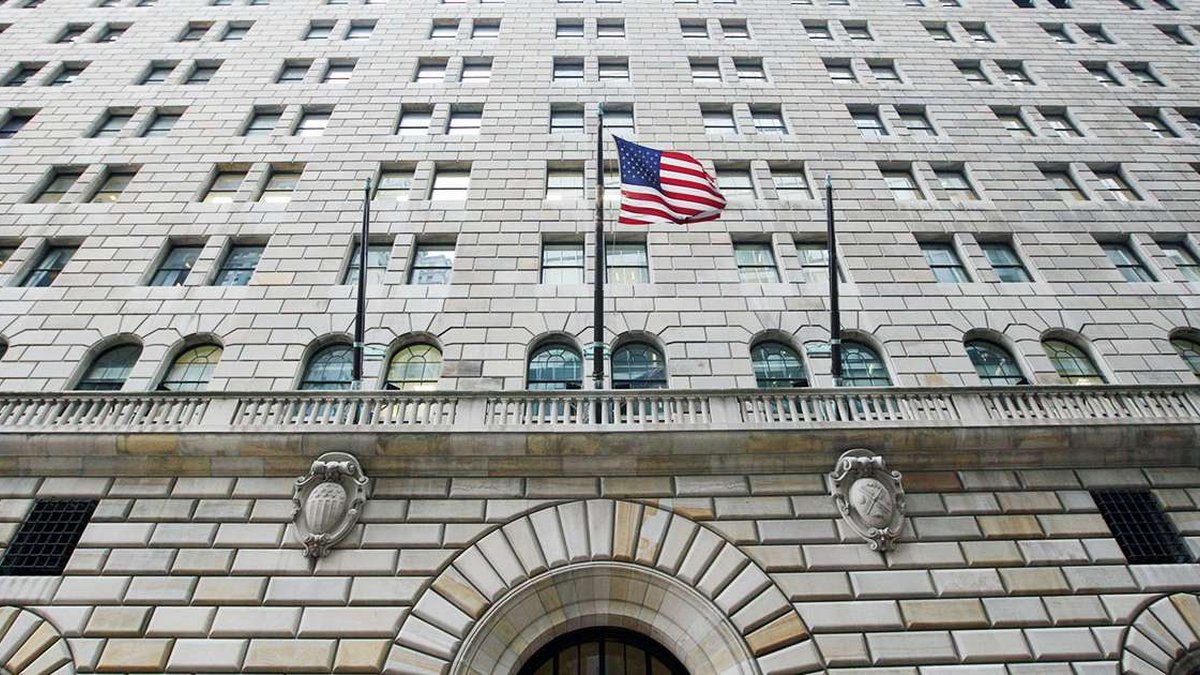
One of the most structurally important developments came from the Federal Reserve itself. The Board formally withdrew a 2023 policy statement that had constrained certain innovation activities at Board-supervised state member banks and issued new guidance that gives both insured and uninsured banks a clearer path to engage in new technologies, including digital-asset-related services, as long as they can manage the risks.
This policy shift has several implications for the digital-asset ecosystem:
• Uninsured banks gain a clearer route into crypto activities. Previously, the 2023 framework created significant uncertainty about what was permissible. The updated guidance allows banks to propose innovative products and work with supervisors to demonstrate safety and soundness.
• Competition may intensify between banks and non-bank platforms. If regulated banks can custody, settle or provide financing against digital assets within a clearly defined regulatory perimeter, institutional clients may feel more comfortable using those services.
• Innovation is pulled closer to the core of the financial system. Rather than pushing experimentation entirely to lightly supervised entities, the Fed is signalling that supervised institutions can play a central role, provided their risk management is robust.
For investors, the key educational takeaway is that regulatory posture is shifting from outright caution toward structured engagement. That does not eliminate compliance risk, but it does suggest that the long-term direction of travel is toward integration of digital assets into mainstream banking rather than permanent separation.
4. DeFi and RWA: Aave’s Master Plan, Plume’s Regulatory Push and ETHGas Funding
On the decentralised finance side, several projects released updates that signal how they intend to grow across the next cycle.
4.1 Aave sets an ambitious agenda for 2026
Aave founder Stani Kulechov outlined a master plan for 2026 centred on three pillars: scaling the protocol through a hub-and-spoke v4 architecture, mobilising one billion USD of real-world assets (RWA) and delivering a new mobile application.
The hub-and-spoke design aims to separate core liquidity from specialised markets, allowing Aave to support a wider variety of collateral types while improving risk isolation. The RWA goal indicates that the protocol does not only want to serve purely on-chain collateral; it wants to be a lending venue for tokenized treasury bills, credit portfolios and other off-chain assets brought on-chain in compliant wrappers. A dedicated mobile app, meanwhile, is about user experience and accessibility, bringing complex DeFi tooling into a friendlier interface.
Investors can read this as further proof that leading DeFi protocols are positioning themselves as infrastructure layers between traditional collateral and on-chain liquidity, not as isolated experiments.
4.2 Plume pursues regulatory approval for an RWA marketplace
Plume, another project focused on tokenized assets, is reportedly seeking U.S. regulatory approval to launch a platform for trading real-world assets in token form. While details remain limited, the direction is clear: the team wants to operate within a recognised legal framework rather than entirely outside it.
If approved, such a platform could give institutional and accredited investors a way to access tokenized credit, real estate or other instruments with clearer investor protections and disclosure standards. That would complement efforts by established financial institutions that are exploring their own tokenization projects.
4.3 ETHGas raises capital with broad validator support
On the Ethereum side, the project ETHGas secured 12 million USD in a seed round led by Polychain Capital, accompanied by a notable commitment of liquidity from validators and developers. While specific product details are still emerging, the funding round signals investor interest in infrastructure that optimises how transaction fees and incentives are structured within the Ethereum ecosystem.
Together, these developments show how capital is flowing into projects that sit at the intersection of DeFi, infrastructure and real-world assets. The emphasis is not only on token prices but on building plumbing that could underpin multi-trillion-dollar markets over time.
5. Supply, Security and Network Design: HYPE, Solana, Tether and Password Safety
Beyond DeFi lending and tokenization, several updates focused on supply dynamics and security hygiene, two areas that investors often overlook until they become critical.
5.1 Hyperliquid considers permanently removing more than ten percent of HYPE supply
The Hyper Foundation has proposed a vote to formally recognise that approximately 37 million HYPE held in the Hyperliquid Protocol Support Fund have been permanently removed from circulation. If approved, this would represent the elimination of over ten percent of the token’s total supply.
From an educational perspective, this highlights how supply schedules in crypto can be governed transparently but still change over time. A clear, on-chain decision to remove tokens can strengthen the perception of scarcity, but it also raises questions about how treasuries are managed, how long-term funding is secured and how decisions are communicated to the community.
5.2 Solana experiments with quantum-resilient transactions
Solana is piloting quantum-resistant transaction formats as part of Project Eleven. While practical quantum computers capable of breaking current cryptography are not yet available, leading networks are beginning to explore signature schemes and transaction structures that would remain secure even in such a scenario.
For users, this is a reminder that cryptographic agility is becoming an essential design feature. Networks that can rotate or upgrade their security primitives without disrupting users will likely be more resilient in the long run.
5.3 Tether launches PearPass to improve password management
Tether introduced PearPass, a password manager designed to reduce the risk that users lose access to their accounts due to weak, reused or poorly stored credentials. While PearPass is not limited to crypto, it fits into a broader pattern: stablecoin issuers increasingly view user-side security practices as part of the overall trust bundle they offer.
Instead of focusing purely on on-chain mechanics, projects are beginning to address human-layer vulnerabilities such as poor password hygiene and insecure cloud storage. This is a useful reminder that many losses in digital finance stem from compromised accounts rather than flaws in underlying protocols.
6. Stablecoins, Governance and Treasury Decisions: WLFI and Token Treasuries
Governance decisions around treasuries also made headlines. The project associated with Trump House WLFI opened a vote on whether to deploy part of its treasury to support broader stablecoin usage. While details are still being debated, the key theme is that project treasuries are increasingly treated as capital that can be actively managed, not just passively held.
Using treasury assets to encourage stablecoin adoption could mean providing liquidity in key trading pairs, offering incentives for on-chain payment experiments, or backing specific integrations. The educational point is that on-chain governance is moving from narrow protocol parameter changes to capital allocation decisions that resemble those of investment funds or corporate boards.
7. Exchanges, Mining and Infrastructure: Coinbase Stocks and Hut 8’s Data Center Deal
Infrastructure stories rounded out the day’s news.
7.1 Coinbase adds traditional equities to its platform
Coinbase launched stock trading, allowing eligible users to buy and sell traditional equities alongside digital assets on the same platform. This blurs the line between brokerage account and crypto exchange, and mirrors moves by some neobanks that already offer both.
From a structural perspective, this development suggests a future in which investors manage tokenized assets, stablecoins and conventional securities through a single interface. For regulators, it underscores the importance of consistent investor-protection standards across all assets, regardless of whether settlement occurs on a traditional exchange or a blockchain.
7.2 Hut 8 partners with Google for a multi-billion-dollar data center lease
On the infrastructure and mining side, Bitcoin mining company Hut 8 entered into a partnership with Google that supports a data center lease worth roughly 7 billion USD. This underlines how large-scale miners are evolving into hybrid energy and compute companies that straddle the line between Bitcoin production and cloud or artificial-intelligence workloads.
For the Bitcoin network, the growth of such industrial-scale operators has two sides. On one hand, it can provide stability and capital for long-term operations. On the other, it raises questions about geographic and corporate concentration of hash power. For investors, the key insight is that miners’ business models increasingly depend on diversified revenue streams, not just block rewards.
8. Short-Term Market Behaviour: Liquidations and Sentiment
Despite the constructive tone of many structural announcements, price action remains choppy. The forced closure of about 60 million USD in short positions within a short time frame illustrates how leverage amplifies both rallies and pullbacks. When funding rates, open interest and positioning become stretched in one direction, even modest news can trigger sharp moves as positions are unwound.
For educational purposes, this is a reminder that macro news and fundamental developments often move more slowly than derivatives markets. Long-term investors may find it helpful to view rapid intraday swings primarily as information about positioning rather than as verdicts on the underlying value of protocols or assets.
9. Big Picture: Convergence of Payments, Policy and On-Chain Finance
Stand back from the details, and the last 24 hours trace a clear narrative arc.
• Payments are becoming more digital and more flexible. BNB’s integration as a way to pay AWS bills through Better Payment Network shows that tokens are stepping into everyday corporate workflows, not just trading venues.
• Policy is bending toward easier conditions and greater innovation. Easing inflation, public support for lower rates, and the Fed’s updated guidance for state member banks all point toward a macro and regulatory environment that is more open to new forms of finance.
• On-chain markets are deepening and professionalising. Aave’s roadmap, Plume’s regulatory push, ETHGas funding and Solana’s quantum-resilience pilot all speak to a maturing ecosystem where infrastructure, security and compliance are central concerns.
• Security and user protection are moving to the forefront. Tether’s PearPass initiative, Hyperliquid’s proposed supply adjustment and the Fed’s focus on responsible innovation reflect an understanding that trust is built not only on code, but also on clear governance and strong risk management.
Prices will continue to fluctuate, and no single news cycle can determine the long-term trajectory of Bitcoin, BNB or any other asset. But taken together, these developments suggest that digital assets are becoming more deeply intertwined with mainstream financial infrastructure, from banks and payment networks to data centers and cloud platforms.
10. Educational Takeaways for Long-Term Participants
For readers who view crypto and digital assets as a multi-year theme rather than a short-term trade, several lessons stand out from this busy 24-hour window:
• Watch where real-world payments show up. When major service providers accept digital assets through regulated intermediaries, it signals that tokens are being treated as operational money, not just portfolio holdings.
• Regulatory nuance matters. The Fed’s change in policy does not mean that anything goes, but it does show that supervisors are willing to adapt when financial technology evolves. Understanding these shifts helps investors separate structural progress from short-term headlines.
• DeFi and RWA projects are building connective tissue. Protocols that link tokenized assets to lending, collateral and settlement are laying groundwork that may not be fully appreciated until volumes grow in future cycles.
• Security is multi-layered. Quantum-resilient experiments, token supply governance and better password management all highlight that surviving the next decade requires attention to cryptography, system design and human behaviour alike.
• Leverage is still the main driver of intraday drama. Rapid liquidations can obscure the slow build-out of infrastructure. Keeping those two timelines mentally separate can help investors avoid emotional overreactions.
As always, none of these developments guarantee a particular price outcome. They do, however, help clarify the direction in which the financial system is moving: toward a world where on-chain and off-chain finance are not rivals, but interlocking components of a more programmable, more connected economic architecture.
Disclaimer: This article is for educational and informational purposes only and does not constitute investment, legal or tax advice. Digital assets are volatile and involve risk. Always conduct your own research and consult a qualified professional before making financial decisions.