When Fees Collapse and Compliance Tightens: Reading the Crypto Tape After BNB’s Lorentz/Maxwell Upgrade
The last 24 hours in crypto offered a familiar paradox: the most “technical” news had the most market psychology embedded inside it. BNB Chain reportedly completed its Lorentz & Maxwell upgrades, cutting transaction fees by nearly 98% while also burning roughly 6.25 million BNB. On the surface, that sounds like a clean growth narrative—cheaper usage and reduced supply. Underneath, it’s a statement about what the next market phase is competing on: settlement cost, reliability, and credibility, not just attention.
At the same time, the rest of the tape read like a checklist for 2026’s new reality: more institutional staking activity in Ethereum, stablecoin oversight and custody infrastructure becoming more formal, high-profile regulatory personnel changes, and governance proposals that increasingly resemble corporate finance debates (value accrual, revenue-sharing, risk buffers). Even the macro headlines—tariffs, energy prices, debt—served as a reminder that crypto no longer trades in a vacuum. It trades inside a world of policy constraints.
1) BNB’s 98% Fee Compression: Growth Engine or Revenue Swap?
When a network cuts fees drastically, the first-order effect is obvious: transactions get cheaper, and activity becomes easier to sustain. The second-order effect is more interesting: the network’s “business model” changes. Fees are not just friction; they’re also an incentive stream that funds validators, shapes spam resistance, and influences what kind of applications can economically exist on-chain.
So the analytical question isn’t “are low fees good?” It’s “what replaces what?” If fee revenue collapses, a chain must rely more on volume, alternative incentive mechanisms, or a broader ecosystem flywheel (exchanges, wallets, liquidity programs) to keep security and operations robust. In mature infrastructure, lower user costs are usually a win—but only if the system doesn’t accidentally create new centralization pressures to compensate.
• What users feel: a smoother, cheaper chain that’s more competitive for high-frequency actions (trading, gaming, micro-payments).
• What builders care about: predictable execution costs and fewer “fee spikes” that break product flows.
• What skeptics watch: whether ultra-low fees invite spam, and whether the validator/infrastructure layer becomes more dependent on a narrow set of operators.
2) The 6.25M BNB Burn: The Message Is Signaling, Not Math
Token burns are often misunderstood as a magic wand. They are not. A burn can support long-term scarcity narratives, but it doesn’t automatically create sustainable demand. What burns do reliably accomplish is signaling: the ecosystem is explicitly managing supply dynamics as part of its identity.
Pairing a large burn with a dramatic fee reduction is especially telling. It’s like saying: “we want usage to be cheap, and we want the asset narrative to remain compelling.” That is a strategic posture, not a purely technical event. The risk is that markets over-index on the burn while ignoring the harder questions—security economics, revenue sustainability, and whether fee cuts are matched by real user retention rather than temporary activity bursts.
• Burns can reinforce a long-duration narrative, but they can’t substitute for product-market fit.
• Fee cuts can increase adoption, but they can also shift the economic burden elsewhere.
• The durable test is not today’s activity—it’s whether usage remains resilient when incentives normalize.
3) Ethereum Staking Keeps Growing: “Yield” as Infrastructure, Not a Trend
On Ethereum, the headline was institutional-scale staking growth: Bitmine reportedly staked an additional 82,560 ETH (around $256M) and pushed total staking above 544,000 ETH in roughly a week. Whether you view this as bullish or simply strategic, it highlights a key shift: staking is increasingly treated as a treasury operation rather than a niche DeFi behavior.
That matters because staking is quietly redefining what “ETH demand” can look like. It’s less about one-off speculation and more about structured allocation: locked capital, operational yield, and long-horizon positioning. The trade-off, as always, is liquidity. A staking-heavy environment can tighten float and change market microstructure—especially around large options expiries or macro volatility shocks.
• Signal: more entities are comfortable turning ETH into a productive balance-sheet asset.
• Constraint: liquidity management becomes more important as positions scale.
• Market effect: large staking flows can interact with derivatives positioning in non-linear ways.
4) Stablecoin Oversight Gets More Formal: The Quiet Center of Crypto Power
One of the most consequential lines in the 24-hour feed was about stablecoin supervision and custody infrastructure. The headline circulating described conditional approval from the OCC to form a national trust bank, aimed at strengthening reserve oversight and offering digital asset custody services for institutional clients. Notably, market chatter sometimes mislabels tickers in these moments; the substance aligns more naturally with the USDC ecosystem than USDT. That confusion is itself a useful lesson: stablecoin plumbing is now important enough that narratives travel faster than precision.
Meanwhile, a reported mint of 750,000,000 USDC underscores the operational reality: stablecoins expand when settlement demand expands. This is not just “more tokens.” It’s more on-chain liquidity, more payment-rail usage, and more reason for regulators to treat stablecoins less like a crypto side quest and more like financial infrastructure.
• A trust-bank pathway signals tighter alignment with regulated custody expectations.
• Stablecoin mints often reflect real settlement demand—not always, but often enough to matter.
• As stablecoins integrate deeper into finance, compliance expectations tend to rise for everyone in the stack.
5) XRP Flips WBNB for #3: Why Rankings Matter Less Than Flow Context
XRP reportedly overtook WBNB to become the third-largest cryptoasset by market capitalization. Ranking flips are attention magnets because they feel like scoreboard moments. But the more informative question is: what kind of flow drove the move—spot demand, derivatives positioning, or liquidity rotation triggered by macro narrative shifts?
Rankings can change quickly, and they don’t tell you whether an asset has become more “useful.” They tell you where capital is momentarily concentrated. In late-cycle or transition periods, that concentration is often driven by liquidity preferences and narrative safety—assets perceived as easier to enter/exit can attract rotation even without a fundamental change overnight.
• A ranking flip is a symptom of flow, not a proof of adoption.
• Watch liquidity, funding rates, and exchange concentration—not just market cap.
• Scoreboards are loud; settlement usage is the quieter signal.
6) Governance Starts to Look Like Corporate Finance: AAVE and JUP
Aave Labs reportedly proposed a mechanism to share a portion of “off-protocol” revenue with AAVE holders, alongside governance and risk-protection structures for the DAO. This is a meaningful direction because it moves beyond token-as-brand into token-as-claim-on-economics—while still trying to respect the complexity of DAO risk management.
Separately, Jupiter confirmed “Jupuary 2026,” an annual token distribution tied to active users and governance participation. These events can strengthen community alignment, but they also raise important design questions: are distributions rewarding genuine usage, or incentivizing shallow activity? Mature token design is less about generosity and more about calibration—rewarding behavior that strengthens the system without creating long-term dilution pressure that outweighs the benefit.
• Value accrual debates are becoming normal—and that’s a sign of market maturation.
• Distributions can build alignment, but only if they reward durable participation.
• Risk buffers and governance safeguards matter more as DAOs handle larger economic flows.
7) Options Expiry and Liquidations: Why “$2.2B Expiry” Is a Microstructure Event
With roughly $2.2B in Bitcoin and Ethereum options expiring, short-term positioning matters. Options expiry days can amplify price swings not because “the market is emotional,” but because hedges unwind and dealers rebalance exposure. Combine that with reports of ~$100M in short liquidations over a short window, and you have a recipe for sharp intraday moves that say more about leverage hygiene than about long-term fundamentals.
The educational takeaway is simple: in heavily financialized markets, price is often the output of positioning mechanics, not only sentiment. That doesn’t make the moves meaningless—it just means interpreting them requires understanding the plumbing.
• Options expiries can create temporary volatility even without new information.
• Liquidation spikes are often leverage cleanups, not “organic buying demand.”
• Post-expiry price action can be cleaner once hedging pressure fades.
8) Macro and Policy: Tariffs, Regulators, and Geopolitical Headlines
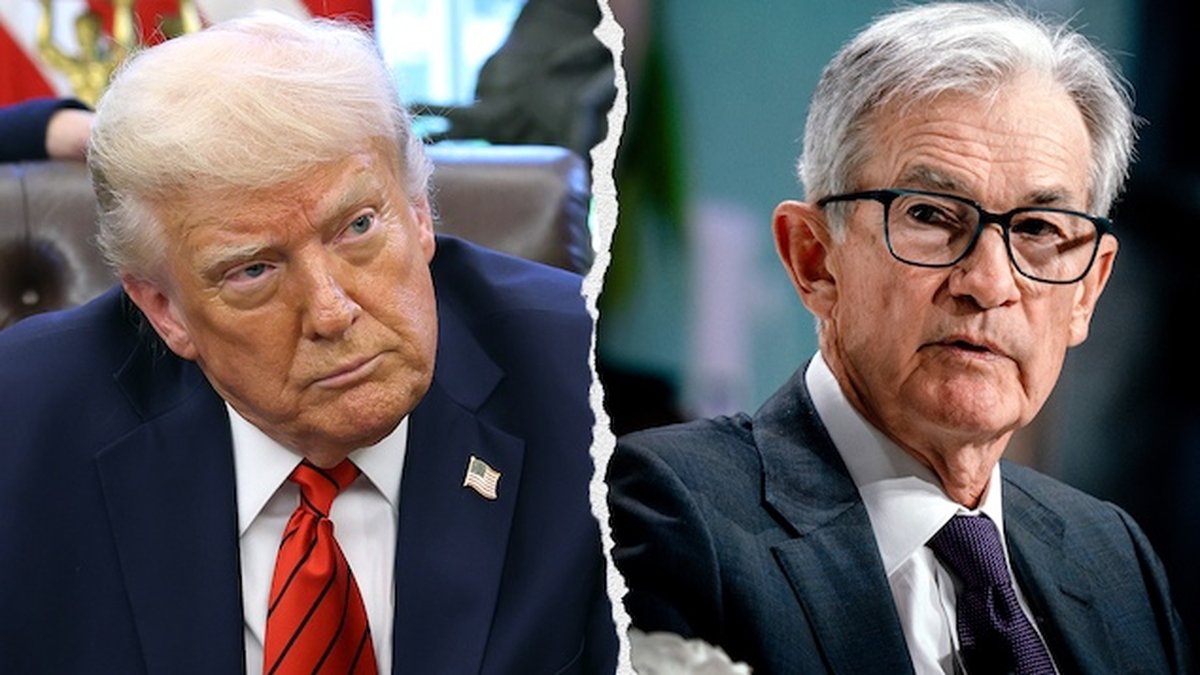
Macro headlines bled into the crypto narrative again: President Trump reiterated that tariffs are an “overwhelming benefit” tied to national security and prosperity, while U.S. debt and energy-price headlines circulated alongside market chatter. These stories matter to crypto because they shape risk appetite and policy expectations—especially if tariffs become a larger inflation or growth variable.
On the regulatory side, Caroline Crenshaw—often characterized as skeptical of crypto—reportedly departed the SEC. Personnel changes rarely rewrite policy overnight, but they do affect tone, enforcement posture, and the probability of bipartisan compromise on market-structure legislation (also echoed by calls from lawmakers to advance crypto market structure bills).
Finally, geopolitical reports—such as claims that Iran may accept crypto in sensitive trade—typically don’t impact crypto by “validating” anything. They increase scrutiny on stablecoin rails, exchanges, and compliance tooling. The industry-level consequence is usually tighter monitoring and higher expectations for intermediaries, not a shift in protocol fundamentals.
• Macro uncertainty influences liquidity and risk premiums across all risk assets.
• Regulatory personnel changes affect the medium-term policy climate more than daily price.
• Geopolitical usage headlines tend to tighten compliance, especially around stablecoin infrastructure.
Conclusion
If you stitch the last 24 hours into one coherent theme, it’s this: crypto is converging on infrastructure economics. BNB’s fee collapse and burn pairing highlights a race to make settlement cheaper without weakening the system’s incentive backbone. Ethereum’s staking flows show that major players increasingly treat cryptoassets as treasury instruments, not just speculative chips. Stablecoin oversight and custody pathways are becoming more formal because stablecoins are becoming more central. And governance proposals are maturing into debates about cashflow, risk controls, and long-term alignment.
This is what the industry looks like when it grows up. The loud stories still exist, but the decisive ones are quieter: how cheaply value moves, how reliably systems run, and how predictable the rulebook becomes. In 2026, adoption may look less like a viral moment—and more like a steady migration of finance into on-chain rails.
Frequently Asked Questions
Does a ~98% fee reduction automatically mean a chain will grow?
Lower fees can remove friction and support new use cases, but growth depends on sustained user demand, application quality, and whether security/incentive economics remain robust at scale.
Are token burns always positive for holders?
Not necessarily. Burns can support scarcity narratives, but long-term outcomes depend on demand, utility, and the broader economic model. A burn is a design choice, not a guarantee of performance.
Why does stablecoin supervision matter for the whole market?
Stablecoins are widely used for settlement and liquidity routing. As they integrate deeper into payments and institutional workflows, regulators and market participants place greater emphasis on reserves, governance, and compliance—affecting exchanges, custodians, and on-chain protocols.
How should people interpret big options expiry headlines?
Options expiry can create short-term volatility due to hedging and position unwinds. It often reflects microstructure mechanics more than a change in long-term fundamentals.
Disclaimer: This article is for educational purposes only and does not constitute financial, investment, legal, or tax advice. Cryptoassets involve risk, including volatility, liquidity constraints, leverage-related losses, custody risk, and regulatory changes. Some items referenced are based on public claims and market reports that may evolve; verify through official announcements and primary sources.