From Outsiders to National Banks: What OCC Charters for Circle, Ripple, BitGo, Fidelity and Paxos Really Mean
For more than a decade, digital asset companies in the United States have lived in a regulatory patchwork. They collected money transmitter licences state by state, relied on trust charters in friendly jurisdictions, and partnered with regional banks willing to sit between them and the traditional financial system. That world is changing fast.
The US Office of the Comptroller of the Currency (OCC) has now approved national trust bank charters for five of the most important players in the industry: Circle, Ripple, BitGo, Fidelity Digital Assets and Paxos. On paper, these are simply special purpose banks supervised at the federal level. In practice, the move marks one of the clearest signals so far that digital assets are being pulled inside the core of the US banking stack instead of being left at the edges.
This article unpacks what a national trust charter actually is, why the decision is strategically important, how it could reshape stablecoins, custody and market plumbing, and where the main risks and open questions still lie. As always, the focus is on education and analysis rather than price predictions or trading ideas.
1. What Did the OCC Actually Approve?
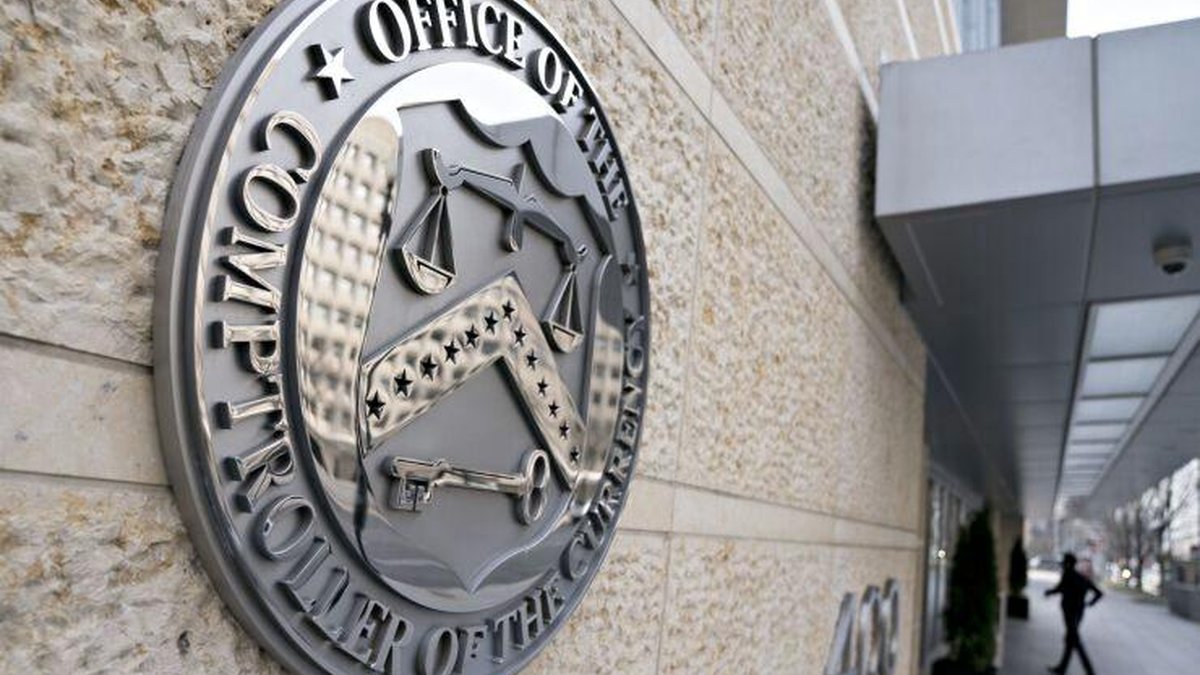
The OCC is the federal agency that supervises national banks in the United States. A national trust bank charter allows an institution to provide services such as custody and fiduciary operations under federal oversight, without necessarily taking retail deposits like a full commercial bank. These charters are not granted lightly. Applicants must meet requirements on governance, capital, risk management, compliance and technology that mirror the standards used for traditional institutions.
By granting national trust status to Circle, Ripple, BitGo, Fidelity Digital Assets and Paxos, the OCC has effectively said: these entities can operate as federally regulated trust banks with a primary focus on digital assets. Instead of stitching together dozens of state licences or relying on narrow exemptions, they now sit under a single national umbrella.
There are several immediate consequences:
- Federal pre-emption: they are supervised at the national level, reducing the need to maintain 50 separate regulatory relationships across states.
- Clearer path to banking services: a national charter makes it easier to connect to payment rails and correspondent banking partners, which historically has been one of the biggest bottlenecks for digital asset platforms.
- Higher and more explicit expectations: national trust banks must follow robust standards on capital, liquidity, cybersecurity and compliance. The days of experimental governance are over for any company holding this licence.
2. From Patchwork to Federal Umbrella
Before these approvals, most large US crypto firms relied on a mix of state trust charters and money transmitter licences. That model worked, but it had limits:
- Each state could impose its own rules, creating friction and legal uncertainty.
- Some conservative institutions were reluctant to partner with firms that did not have a federal banking regulator.
- Customers had to trust complex webs of affiliates and service providers, which were often hard to understand from the outside.
A national trust charter does not magically solve all of those issues, but it simplifies the picture. When a firm says it is supervised by the OCC, investors, auditors and counterparties immediately know which rulebook applies and which agency is watching.
For the five firms that received approval, this shift unlocks new possibilities:
- Circle can present USDC as a stablecoin backed by an issuer that is directly supervised at the national level, strengthening its position as a core piece of digital dollar infrastructure.
- Ripple can connect its cross-border payment technology to a bank-grade entity capable of holding client funds and settling obligations on-chain or off-chain.
- BitGo, Fidelity Digital Assets and Paxos can expand their role as custody providers and settlement agents for institutions that insist on working only with regulated banks.
In other words, these charters do not just legitimise individual companies. They change how the entire ecosystem can plug into the traditional financial system.
3. Stablecoins: USDC Under a Stronger Regulatory Roof
One of the clearest winners from this decision is USDC, the dollar-referenced stablecoin issued by Circle. Stablecoins already play a pivotal role in digital asset markets: they are the primary medium of exchange, the base asset in many trading pairs, and a key bridge between traditional currency and on-chain activity.
By placing Circle under a national trust charter, the OCC has effectively aligned the USDC issuance model with the expectations that regulators have for bank-like institutions. That matters for several reasons:
• Reserve management: a national trust bank must follow stringent rules on how client assets are segregated and safeguarded. For a stablecoin issuer, that means reserves should be held in high-quality instruments such as cash and short-term government securities, with transparent reporting.
• Compliance and oversight: regulators can examine systems for sanctions screening, transaction monitoring and cybersecurity as they would in any other bank.
• Integration with new laws: as the United States develops specific legislation for stablecoins, having a national charter allows Circle to slot more easily into the coming framework, rather than relying on bespoke state-level arrangements.
This does not guarantee that USDC will dominate the market, but it improves its standing among institutional treasurers, payment firms and fintech platforms that want a stablecoin backed by a supervised institution with clear accountability.
4. Custody Becomes a Core Banking Service
Custody is still the foundation of institutional participation in digital assets. Pension funds, insurance companies and listed corporations rarely want to manage their own private keys. They prefer to outsource that responsibility to a regulated entity with insurance coverage, strong controls and a clear legal framework.
With national trust charters in hand, BitGo, Fidelity Digital Assets and Paxos move from being specialised technology providers to playing an explicit banking role in the financial system. They can offer:
- Bank-grade segregation of client assets, where crypto holdings are clearly separated from a firm's own balance sheet.
- Integration with traditional prime brokerage, allowing digital assets to sit alongside securities and cash under one custody umbrella.
- On-chain settlement services, where tokenised assets and stablecoins move between institutional wallets inside a regulated environment.
This matters because institutional investors often face strict rules about where they can custody assets. Being able to say that a digital asset is held at a national trust bank supervised by the OCC removes one of the biggest operational objections. It does not remove market risk, but it clarifies who is responsible for safekeeping and control.
5. Ripple and the Future of Cross-Border Payments
Ripple has long positioned itself as a bridge between legacy correspondent banking and new forms of on-chain settlement. With a national trust charter, that vision becomes easier to execute.
Instead of relying solely on partnerships with third-party banks, Ripple can now operate an entity that:
- Holds client funds as a regulated trust bank.
- Interacts with payment networks and clearing systems in multiple jurisdictions.
- Uses tokenised balances and digital assets as settlement media where appropriate, while still following strict compliance standards.
Cross-border payments are notoriously complex and expensive. If a regulated entity can use digital assets to compress settlement times and reduce the number of intermediaries, the benefits could be significant, especially for corporate treasurers and financial institutions that move large volumes across borders.
6. The Strategic Message: The US Wants Innovation Inside the Perimeter
The approvals also send a strategic message about how the United States intends to handle digital asset innovation. For years, there was a tension between two approaches:
- Keep crypto at arm's length, using enforcement to police the boundaries while leaving most activity outside the traditional system.
- Bring key functions inside the regulatory perimeter, subject them to bank-like supervision, and allow innovation under stricter guardrails.
By chartering five major firms as national trust banks, the OCC has clearly chosen the second path. It is not a blanket endorsement of every token or platform, but it is a signal that core infrastructure – stablecoins, custody, settlement – belongs under direct federal oversight rather than in a grey zone.
This approach also helps maintain US competitiveness. Other jurisdictions, from the European Union to the United Kingdom and parts of Asia, have been moving ahead with detailed rules for digital asset service providers. If the United States had insisted on keeping everything outside the banking system, liquidity and innovation could have shifted elsewhere. Instead, it is inviting regulated players to build the next layer of market infrastructure at home.
7. Benefits for Market Structure – and Limits
What does all of this mean for everyday market participants, from individual users to large institutions?
7.1 For users and fintech platforms
Consumers may not care which charter a company holds, but they care about reliability and access. With national trust banks behind the scenes, it becomes easier for mainstream financial apps, payment providers and even traditional banks to offer digital asset services while relying on specialists for custody and settlement.
We are likely to see more arrangements where a familiar brand handles the front-end experience, while a national trust bank takes care of the back-end infrastructure for wallets, stablecoins and tokenised deposits.
7.2 For institutions
Institutional investors gain more options for holding Bitcoin, Ethereum, tokenised securities and stablecoins under a framework their compliance departments understand. That does not mean every pension fund will suddenly allocate to digital assets, but the operational barriers become smaller. The conversation can shift from 'is this allowed' to 'does this fit our risk profile and mandate'.
7.3 For on-chain ecosystems
As these national trust banks expand their on-chain footprint, they may issue tokenised cash instruments, custody collateral for decentralised protocols, or run permissioned pools that interact with public networks. That could deepen liquidity and create new use cases, but it also raises important questions about how decentralisation and regulatory control coexist.
8. Open Questions and Possible Risks
Despite the clear progress, several open questions remain.
8.1 Will smaller innovators be left behind?
Obtaining a national bank charter is expensive and time-consuming. The first wave of approvals has gone to well-capitalised firms with strong institutional backing. There is a risk that the bar becomes so high that only a handful of large companies can meet it, while smaller innovators are left operating under more fragmented or uncertain frameworks.
That could concentrate market power in a few hands. On the other hand, it may also encourage partnerships where smaller teams build products on top of infrastructure provided by these regulated entities, similar to how fintech has grown on top of existing banks and card networks.
8.2 How conservative will these new banks become?
The more these firms resemble traditional banks, the more conservative their risk appetite is likely to be. That is by design: the goal of banking regulation is to protect customers and the system, not to maximise experimentation. One practical implication is that some of the most experimental products in crypto may not be offered under these charters at all. Instead, they may remain in separate entities or on platforms based outside the United States.
From a user perspective, this can be positive. It creates a clearer distinction between highly regulated services aimed at capital preservation and more speculative activities that users must approach with additional caution.
8.3 How will supervision adapt to on-chain risks?
Supervising a bank that holds tokenised assets is not the same as supervising a bank that holds only cash and bonds. Regulators will need to deepen their understanding of smart contract risk, key management, cross-chain bridges and other forms of technological exposure. The firms themselves will need to invest heavily in risk management and transparency to maintain trust.
9. What This Means for the Long-Term Investor
For long-term participants, the key takeaway is not that any specific token will necessarily appreciate because of these charters. Rather, the signal is that digital assets are becoming embedded in the regulated financial system.
Bank-grade custody, stablecoins issued by national trust banks, and settlement on public networks supervised by federal regulators all point toward a future where crypto infrastructure is part of everyday finance. Prices will still rise and fall, and risk will never disappear. But the institutional scaffolding around the market is becoming more mature.
That maturation tends to reduce certain types of risk (such as counterparty uncertainty and unclear legal status) while leaving others in place (such as market volatility and technological uncertainty). Understanding the difference is essential for anyone building a long-term strategy.
10. Conclusion: A Turning Point, Not a Finish Line
The OCC's decision to grant national trust bank charters to Circle, Ripple, BitGo, Fidelity Digital Assets and Paxos is not just a regulatory milestone. It is a structural shift in how the United States integrates digital assets into its financial architecture.
By moving key pieces of infrastructure under a federal umbrella, regulators are acknowledging that digital assets are here to stay and should be supervised alongside other financial services rather than treated as a separate, peripheral sector. Stablecoins gain a clearer path to legitimacy, custody becomes a core banking service, and cross-border payment experiments can be conducted under a recognised rulebook.
At the same time, this is only the beginning. How these newly chartered banks design their products, manage risk and interact with open networks will determine whether this experiment strengthens financial stability or simply creates a new layer of complexity. For now, the message is clear: the boundary between the crypto ecosystem and the traditional banking system is becoming less like a wall and more like a regulated bridge.
For investors, builders and policymakers, understanding that bridge – and the responsibilities that come with crossing it – will be one of the central tasks of the coming decade.