The Day the Timelines Shrunk
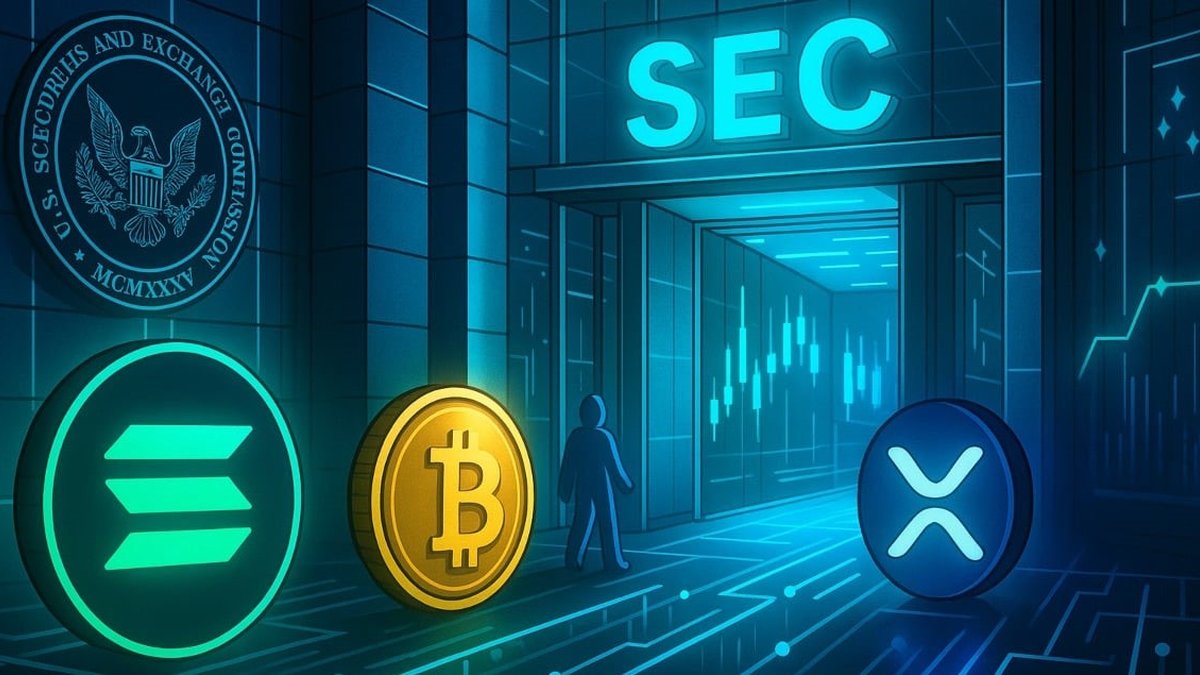
Regulation is often felt not through sweeping new laws but through small adjustments to plumbing. That is what happened as the U.S. Securities and Exchange Commission moved to shorten internal review timelines and reorganize its calendar to attack the backlog of crypto ETF filings that piled up during the weeks of government shutdown. In plain English: staff can cycle through comment/response rounds faster, cluster them by product family, and bring delayed decisions to commission votes on a tighter cadence. This is not a policy reversal; it is a throughput increase. Yet in market structure, throughput is destiny.
Why should traders and builders care about a bureaucratic timebox? Because ETF sponsors, APs, and lead market makers price uncertainty. When a filing that might have drifted for months now faces a predictable resolution window, capital allocators can stage seed baskets, borrow inventory, line up custodians, and pre-wire surveillance-sharing agreements with fewer open variables. That reduces the cost of carry for readiness capital and narrows the range of possible launch dates—both of which tighten expected spreads at inception.
How a Faster Clock Translates into Liquidity
To understand the downstream effects, follow the ETF life cycle:
1. Seeding. Sponsors coordinate with APs to contribute cash or in-kind crypto to create the first round of shares. A shorter, more reliable review window lets APs pre-arrange borrowing (from custodians or OTC desks) and collateral transform cash over specific horizons. The less time their capital sits idle, the lower the seeding hurdle.
2. Creation/Redemption Logistics. APs hedge the in-kind basket with spot or futures, sometimes using on-exchange perps for immediacy and off-exchange forwards for size. When launch dates are guesswork, hedges go stale; when launch dates are predictable, hedge decay is minimized, improving AP willingness to make tight markets on Day 1.
3. Secondary-Market Making. Lead market makers quote ETF shares versus a fair value derived from basket marks. If the clearance calendar is volatile, they embed extra cushion. More certainty allows tighter NBBOs, which in turn attracts long-only flow that is fee-sensitive. Better spreads beget more volume; more volume reduces tracking error; lower tracking error attracts mandates that previously balked.
In other words, faster review is a modest but meaningful nudge toward healthier microstructure. The same holds for supplementary products—covered call ETFs, levered exposure, or sector baskets (layer-1s, smart-contract platforms, staking-enabled wrappers)—which rely on repeatable workflows across multiple tickers.
What Products Might Clear First—and Why It Matters
Because the backlog is heterogeneous, expect triage. Straightforward spot funds that mirror already-trading exposures (e.g., variants with alternative custodians, fee structures, or index sponsors) should move first. More complex wrappers—blended baskets, active strategies that step into DeFi rails, or ETPs that promise to remit protocol rewards—may still require extended back-and-forth on valuation, disclosures, and conflicts. The key for issuers is design minimalism: simple creation baskets, conservative valuation procedures, clear slippage and slashing disclosures if staking is involved, and pre-negotiated information-sharing with exchanges.
For market participants, the first wave matters because liquidity is path dependent. Products that launch into cleaner macro and tighter spreads establish psychological anchors: tracking error is observed in the first weeks and extrapolated by asset allocators for quarters. If the fast-track window can bring launches to market before year-end balance-sheet constraints intensify, sponsors might secure “first cohort” advantages that laggards cannot easily replicate.
Macro Context: Tariff Rollbacks and Risk Appetite
On the same tape, the White House moved to roll back tariffs on a broad basket of food imports, reversing portions of the prior era’s retaliatory levies. The direct macro impact is incremental—lower grocery costs feed into headline inflation with a lag—but the signaling impact is louder: policy is migrating from punitive, price-raising trade measures to growth-and-supply-friendly adjustments. That matters to crypto because real yields and policy uncertainty are two of the strongest exogenous drivers of digital-asset risk premia. Fewer price shocks and clearer trade policy equal lower left-tail scenarios in rates, which typically support risk assets and compress implied volatility. If you trade the ETF basis, that means cheaper convexity to warehouse.
24-Hour Tape: What Else Moved and Why It Fits the Story
Beyond the SEC news, the last 24 hours delivered a cluster of headlines that rhyme with the same theme: institutionalization through plumbing, not slogans.
• Ethena (ENA) secured a strategic investment from Multicoin Capital, reinforcing the thesis that synthetic dollars—dollars that are fully collateralized and delta-hedged via perp markets—will sit at the intersection of stablecoins, derivatives, and tokenization. If the SEC speeds up ETF approvals, expect more traditional funds to adopt synthetic cash sleeves as operational collateral for on-chain strategies. The implication is more basis liquidity on perps and tighter spreads between synthetic and fiat dollars.
• BlackRock’s BUIDL went live on BNB Chain and won acceptance on Binance as eligible institutional collateral. Regardless of chain tribalism, this is the RWA flywheel: tokenized short-duration assets with high transparency that large venues accept as margin. Faster ETF approvals will push more brokerages to seek tokenized cash equivalents that can settle T+0 against ETF share creations.
• Zama ($ZAMA) announced a token with a 100% protocol-fee burn and operator rewards minted on top. Burn-and-mint economics are seductive but can be fragile; the key is unit economics at low throughput. A market full of new ETFs and RWA collateral still punishes protocols whose fee generation depends on rising token prices rather than genuine usage.
• Solana RWA credit (ACRED via Securitize & Loopscale) offered another proof point for permissioned liquidity—asset-backed borrowing that uses stablecoin channels without requiring centralized banking rails at each step.
• Wrapped Bitcoin (WBTC) extending to Hedera broadens the surface area for BTC-as-collateral. An ETF wave will not cannibalize this; it complements it. ETFs attract traditional capital; wrapped assets unlock composability for crypto-native leverage.
• R25’s revenue-sharing stablecoin on Polygon continues the pattern: tokenized claims on cash-generative RWAs that distribute yield transparently. If ETF sponsors need on-chain cash management for creation baskets, such primitives could become pipes behind the scenes.
• POPCAT manipulation allegations underscore the other side of “faster is better”: when listing cycles accelerate and social attention fragments, governance-light coins can see coordinated pumps. The antidote is not slower SEC reviews; it is higher standards by venues and clearer disclosure by funds about what they will never hold.
• Color from the podiums. Eric Trump’s lines about volatility and Michael Saylor’s “we bought every day this week” are the day’s sentiment bookends: a reminder that volatility aversion and missionary accumulation coexist. Neither should drive a serious allocation, but both shape retail flows into ETFs at the margin.
Who Wins and Who Should Be Worried
Likely winners:
• ETF sponsors with ready-to-go filings that require minimal rewrites. They can hit the compressed windows and set the market’s definition of “good tracking.”
• APs and lead market makers with strong borrow channels and 24/7 crypto desk coverage. Faster launches reward desks that can pre-build hedges and unwind them surgically if launch windows shift by a day or two.
• Qualified custodians able to scale reconciliations, SOC reports, and wallet infrastructure on short notice. A staff-time bottleneck at custody is where “fast reviews” die.
• Tokenized cash & RWA platforms that provide transparent, bankruptcy-remote wrappers for short-duration assets. Creation baskets crave riskless collateral that moves on nights and weekends.
Potential losers:
- Complex, yield-promising wrappers that depend on aggressive assumptions (e.g., auto-restaking in DeFi). In a fast-track era, simple wins; complex gets stuck in comment purgatory.
- Thin-liquidity altcoin ETPs that could launch into a crowd. If too many products chase too little underlying depth, spreads widen, retail gets a poorer experience, and the SEC’s tolerance for the category may stiffen.
- Non-compliant offshore venues whose edge was speed. If the SEC makes compliant speed “good enough,” the willingness to accept venue risk for a few extra basis points fades.
Risk Map: What Could Go Wrong
Speed introduces correlation risk. A cluster of simultaneous approvals can compress calendar-time diversification; if multiple products go live around the same macro event (CPI, PPI, tariff headlines), creation/redemption flows may synchronize. That raises the probability of ETF-driven procyclicality: premiums/discounts feeding into spot via AP hedging. The cure is coordination—staggered launch dates and clear commitments by sponsors to cap daily creations during disorderly markets.
Another hazard is surveillance and market-integrity lag. If newly listed products reference indices that do not fully reflect venue quality (wash-trade filters, outlier pruning, volume caps), NAVs can be gamed. The SEC’s faster process must be paired with better benchmarks and explicit venue-quality ladders baked into filings.
What It Means for On-Chain Markets
Expect a quiet boom in basis strategies. As ETF creation/redemption scales, the cash-and-carry channel between spot, futures, and perps will thicken. Funding rates should normalize closer to structural demand rather than speculative excess. For DeFi, the opportunity is to become the back-office liquidity layer for APs and sponsors: tokenized T-bill vaults, atomized repo, composable FX for cross-border creations, and insured custody-to-DeFi bridges with deterministic settlement windows.
Chains that specialize in low-latency, high-finality settlement may capture ETF-adjacent flows as sponsors experiment with on-chain attestations and NAV proofs. Conversely, governance-light ecosystems that deliver high throughput but weak MEV controls risk becoming sources of index noise—bad for benchmark credibility and thus bad for capital access.
Playbook for Professionals
1. If you run an ETF desk: Pre-build inventory ladders that assume a 5–10 business-day decision window. Negotiate flex lines with custodians to handle last-minute seed swings, and lock in futures margin terms for ‘go/no-go’ weeks.
2. If you trade the basis: Model a gentle decline in implied ETF tracking error and a narrowing of launch-week spreads. Position with calendar call spreads around likely approval clusters rather than binary calls. Liquidity begets lower realized vol.
3. If you build DeFi primitives: Prioritize boring, auditable services: tokenized cash, on-chain repo, insured bridges. Product managers at sponsors will not experiment with exotic yield if they cannot pass audit and SOC attestation.
4. If you allocate: Sort products by custody, creation limits, benchmark quality, and fee rather than by marketing. Fast-track cycles amplify the dispersion between operationally disciplined issuers and momentum chasers.
Market Snapshot: Interpreting the 24-Hour Moves
Prices chopped as headlines hit: tariff easing nudged breakevens lower; the SEC’s process shift trimmed regulatory left-tail; RWA and collateral news tightened stablecoin lending rates intraday. The tape looked risk-on in the morning, risk-neutral by the close: a reminder that structural progress does not always create immediate trend. That is fine. Microstructure improves long before charts do.
Scenarios for the Next Quarter
Base Case (55%): Smooth Pipeline, Selective Wins
The SEC clears a handful of straightforward spot and basket ETFs by year-end. Spreads at launch average tighter than the last cohort; tracking error improves as AP capacity scales. RWA collateral usage rises across venues. Perp funding moderates. Risk: a messy macro print collides with clustered launches, causing temporary discounts that Twitter over-interprets as product failure.
Bull Case (25%): Staggered Approvals + Custody Upgrades
The commission sequences approvals over several weeks and pairs them with public guidance on benchmarks and surveillance-sharing. Multiple large custodians announce attested, segregated staking or reward-distribution mechanisms for eligible ETPs. Result: ETF AUM grows meaningfully; on-chain cash equivalents become standard in creation baskets; basis strategies crowd but stay orderly.
Bear Case (20%): Speed Wobbles
A high-profile product launches into thin underlying liquidity, trading at persistent discounts. Lawsuits target index methodology; a sponsor halts creations temporarily. Confidence wobbles and the agency slows again. Lesson learned: speed without guardrails can backfire. Contingency: focus on depth-first, not breadth-first, approvals and raise benchmark standards.
What to Watch
- SEC docket cadence: Are comment cycles arriving in clusters? Are commission votes scheduled in weekly blocks?
- DTCC eligibility and CUSIP assignments: These are the practical tell for which filings are truly near the finish line.
- AP roster depth: Count the number of APs named in each S-1/S-3 amendment; two is fragile, five is robust.
- Custody attestations: SOC 1/2 updates, hot/cold wallet policies, and any insurance expansions coinciding with launches.
- Basis and funding rates: Watch whether funding aligns with ETF creations; persistent divergences flag structural frictions.
Bottom Line
The SEC’s decision to compress timelines is not a headline-grabbing moonshot; it is an operational improvement with compounding effects. Taken together with tariff rollback signals and a drumbeat of RWA and collateral innovation, the near-term setup favors better ETF microstructure, cheaper access for mainstream capital, and deeper linkages between traditional finance and on-chain rails. The opportunity, as always, is to build boring, resilient pipes while everyone else chases the next viral ticker. If the industry uses this fast-track era to ship clean benchmarks, disciplined custody, and staggered, liquid launches, 2026 could mark the year when crypto ETFs stop being novelties and start behaving like a dependable, low-friction on-ramp to programmable finance.