Fifteen Years After Satoshi’s Last Public Post: What His Silence Really Built
Exactly fifteen years ago, an anonymous programmer using the name Satoshi Nakamoto wrote a short technical message on the early Bitcoin Forum. On the surface it was mundane: guidance on updating software to strengthen Bitcoin’s resistance to network overload and denial-of-service attempts. It did not read like a farewell, a manifesto, or even a particularly emotional note.
Yet that post turned out to be Satoshi’s final public appearance in the open discussion channels of the community. Afterward, communication shifted to private messages with a handful of developers, and by April 2011 Satoshi had effectively vanished, telling Gavin Andresen in an email that he had 'moved on to other things.' Three days later, Gavin mentioned that he had been invited to discuss Bitcoin with officials at a United States agency. The timing has fueled speculation ever since.
Looking back from 2025, that last public message marks more than just the end of a user account on an old forum. It marks the point where Bitcoin stopped being a project with an active founder and became a protocol that had to survive on its own rules, social norms, and codebase. The disappearance of Satoshi is not a footnote in Bitcoin’s story; it is one of the design choices that shaped what Bitcoin is today.
1. The State of Bitcoin in Late 2010: A Fragile Experimental Network
To understand the significance of Satoshi’s final post, it helps to remember what Bitcoin looked like at that time. In late 2010 the network was small, fragile, and almost entirely run by hobbyists. Mining was still possible on regular CPUs and GPUs. There were no exchange-traded products, no institutional custody firms, and very few dedicated businesses. Most activity happened on forums and IRC channels where developers and users overlapped heavily.
The software itself was still evolving rapidly. Early versions of Bitcoin Core (then simply called the Bitcoin client) bundled the wallet, the full node and the mining function into one program. Security assumptions were being tested in real time. Researchers and adversarial users were gradually discovering all the ways a global peer-to-peer system could be flooded with junk data, malformed messages or loops that consumed bandwidth and memory.
In that environment, Satoshi’s final public message about protecting the network from denial-of-service vectors was highly practical. It addressed the immediate need to keep nodes stable in the face of hostile or careless traffic. But the content of the post also reveals something deeper about Satoshi’s priorities: a constant concern for robustness and a willingness to change the implementation when reality proved earlier assumptions wrong.
2. What the Last Post Was Really About
The December 2010 forum message focused on limiting potential avenues for overwhelming the network. At the time, certain script operations and transaction patterns could consume disproportionate resources. That made it possible for an attacker with modest funds to broadcast very heavy transactions and strain nodes that were running on consumer hardware and home internet connections.
Satoshi outlined code changes and configuration adjustments to reduce this risk: tightening limits on certain operations, changing how nodes relayed messages, and improving default settings so that even non-expert users were better protected. In tone, the post was calm and problem-solving oriented. There was no panic, just the usual mix of technical detail and practicality that had characterized Satoshi’s messages since 2009.
Seen in isolation, it is simply a piece of software maintenance. Seen in hindsight, it is also the last time the creator publicly exercised that role of architect–maintainer. After that, the responsibility for defending the network’s resilience would be distributed across many hands: independent developers, researchers, miners, node operators and companies building around the protocol.
3. From Founder-Led Project to Protocol Without a Face
Most technology ventures keep their founders at the center. Brands, investor narratives and even product roadmaps often revolve around a few well-known individuals. Bitcoin moved in the opposite direction. As the project gained attention, its inventor steadily reduced his presence, released ownership of key domains and repositories, and let other maintainers take the lead.
The transition had already started months before the last post. Other developers were writing and reviewing patches. Community members such as Gavin Andresen, Mike Hearn and Jeff Garzik were answering more questions on the forums. But as long as Satoshi remained visible, there was always the possibility that the community would treat his words as final authority. A single post could win an argument or shut down a debate simply because it came from the person who wrote the original whitepaper.
By leaving—first publicly, then privately—Satoshi forced the network to evolve past that stage. Development would have to rely on consensus-building among maintainers, review processes, and a growing culture of Bitcoin Improvement Proposals (BIPs), instead of deference to a single figure. Socially, the message was clear: the protocol belongs to those who run it, not to the person who started it.
4. Decentralization by Disappearance
Was Satoshi’s exit intentional decentralization or simple personal preference? We cannot know their motives, but we can analyze the consequences.
First, the absence of a visible leader made Bitcoin more resilient to political and legal pressure. There was no chief executive to summon to a hearing, no founder to ask for permission or to hold personally responsible when markets became volatile. That did not insulate Bitcoin from regulation—governments still regulate exchanges, service providers and users—but it removed the possibility of a single individual being treated as the ultimate decision-maker for the network.
Second, the disappearance dampened the creation of a personality cult. Even though the name 'Satoshi Nakamoto' became legendary, it is attached to an idea rather than a living spokesperson. When the market is euphoric or fearful, there is no press conference or social media thread from Satoshi to react to. That forces participants to look at data, code and economic incentives instead of waiting for a founder’s reassurance.
Third, the lack of a central figure created space for diversity in client implementations and governance philosophies. Some communities later chose to fork the protocol in pursuit of different visions—larger blocks, different script capabilities, or alternative monetary policies. Regardless of one’s view of those forks, they demonstrate that the social contract around Bitcoin is no longer anchored to a single personality. It is anchored to the shared expectations of node operators and economic stakeholders.
5. The Email to Gavin and the First Contact With Institutions
After leaving the public forum, Satoshi still communicated privately for a short period. The most notable message is the email sent to developer Gavin Andresen in April 2011, saying that Satoshi had 'moved on' and that the project was 'in good hands.' Around the same time, Gavin accepted an invitation to speak about Bitcoin at a meeting with officials from a United States agency.
These two events have been linked in many narratives. Some people see them as evidence that Satoshi stepped back because official institutions were starting to pay attention. Others interpret them more simply: once the software had a community of capable maintainers and the network was running independently, Satoshi felt their presence was no longer necessary—and perhaps even counterproductive.
Regardless of the motive, the sequence highlights a turning point. In its early years, Bitcoin lived almost entirely in online forums and small exchanges. By 2011, it had grown important enough that public authorities, academics and major companies began to ask how it worked and what risks and opportunities it presented. The project was moving from the margins of the internet into the broader financial and regulatory conversation, exactly as Satoshi faded out of view.
6. Fifteen Years Later: Did the Experiment Work?
So, fifteen years after Satoshi’s last public note, how did this experiment in 'leaderless money' turn out?
On the technical side, Bitcoin has survived multiple market cycles, shifts in mining hardware, nation-state commentary, corporate adoption and sustained public scrutiny. The protocol has evolved through upgrades such as SegWit and Taproot, all proposed, debated and implemented without input from the original creator. Decisions emerge from rough consensus among developers and broad acceptance by node operators and economic nodes, rather than from a central board.
On the economic side, Bitcoin has moved from a niche asset traded mainly between enthusiasts to a global macro asset held by public companies, funds and, in some cases, government treasuries. It still experiences volatility and speculative episodes, but the market structure around it—derivatives, custody, accounting standards—has matured significantly. None of that required Satoshi’s return.
On the cultural side, the absence of the founder has allowed different narratives to compete: Bitcoin as digital gold, as an alternative settlement layer, as an inflation hedge, or as a form of neutral global collateral. Whether one agrees with these stories or not, the key point is that they have emerged from an open conversation, not from a single vision laid down by Satoshi years ago.
7. Lessons for Today’s Builders and Investors
For current crypto projects, Satoshi’s final post and subsequent silence offer several lessons that go beyond Bitcoin itself.
1. Technical humility matters
Satoshi’s last public message did not celebrate success or boast about adoption. It addressed a practical engineering challenge: how to make the network more robust against overload. That attitude—treating the system as an ongoing work in progress—may be one reason Bitcoin has been able to harden over time.
2. A healthy protocol outlives its founder
Many projects today brand themselves around charismatic leaders. That can be useful in the early growth phase, but it also creates concentration risk. Bitcoin demonstrates a different model: the strongest endorsement of decentralization is when the system continues to function, attract developers and secure value even after the creator has left the stage.
3. Transparency and process replace authority
Without Satoshi as a final arbiter, the Bitcoin community had to formalize processes: version control, peer review, BIPs, public discussions about trade-offs. For investors and users, this is ultimately healthier than relying on private conversations or founder statements. It provides a clearer record of why decisions are made and who supports them.
4. Institutional dialogue is inevitable
Gavin’s early conversations with public authorities and the growing interest of central banks, regulators and large financial institutions show that any technology with systemic implications will eventually attract formal attention. Ignoring that reality is not a sustainable strategy. Bitcoin’s path suggests another approach: do not ask for special treatment, but build systems that can be understood, monitored and integrated into existing legal frameworks without needing a central operator.
8. The Mystery That Refuses to Dominate the Story
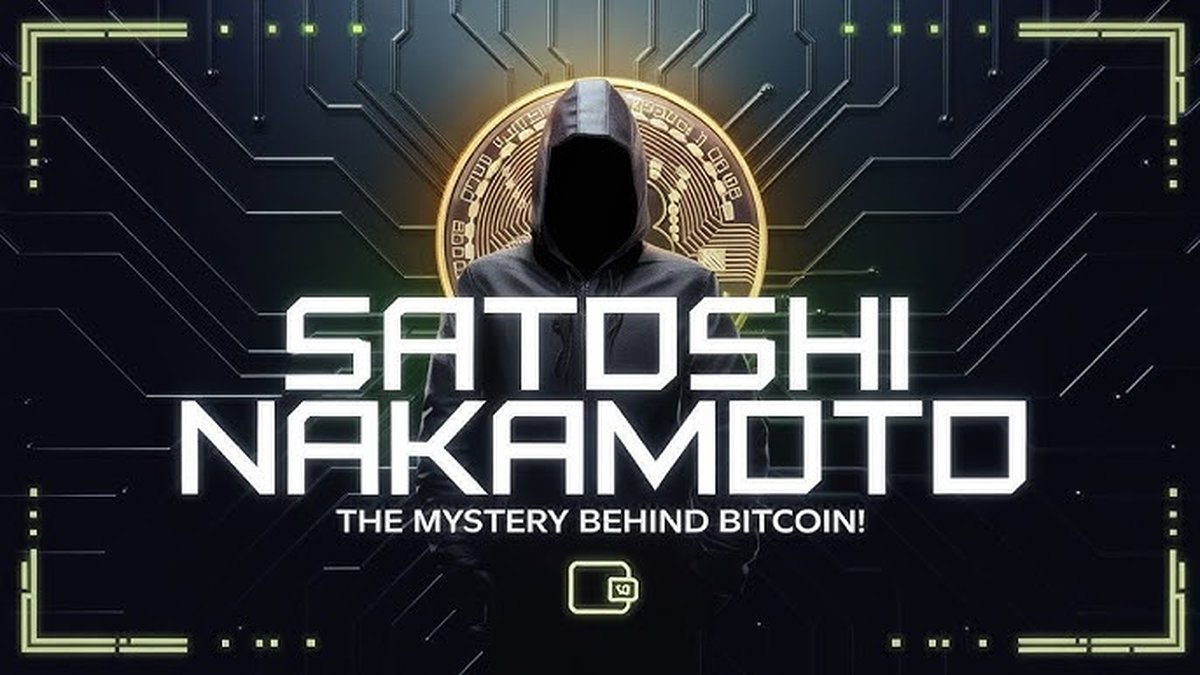
The identity of Satoshi Nakamoto remains one of the biggest unsolved mysteries in modern technology. Over the years, many names have been floated, debated and dismissed. Books, documentaries and long-form investigations continue to search for clues.
Yet perhaps the most remarkable fact is that Bitcoin has managed to grow while that mystery stays unresolved—and without depending on an answer. The market does not wait for Satoshi to be unmasked before it clears trades. Miners, node operators and developers do not pause their work in anticipation of a grand revelation. The protocol’s social contract is anchored not in who Satoshi is, but in what the code does and how the community chooses to maintain it.
In a world where narratives often revolve around personalities, that is an unusual and instructive outcome. The last public post, modest in tone and technical in content, may be the purest representation of that philosophy: no slogans, no theatrics—just incremental improvement to a system that must stand on its own.
9. Conclusion: A Quiet Farewell That Reshaped Digital Money
Fifteen years after Satoshi Nakamoto’s final public message on the Bitcoin Forum, it is tempting to read prophecy into every sentence. In reality, the post looks exactly like what a dedicated engineer would write in the middle of an evolving open-source project: a note about software updates, potential vulnerabilities and recommended settings.
The deeper significance lies not in the words themselves, but in what came after. By stepping back, first from public discussion and then from private correspondence, Satoshi transformed Bitcoin from a founder-led experiment into a genuinely decentralized protocol. The network had to learn to fix its own problems, organize its own development and engage with institutions without a central spokesperson.
That transformation is one reason Bitcoin remains a reference point in discussions about programmable money and open financial infrastructure. The system’s resilience does not rest on Satoshi’s continued involvement; it rests on distributed incentives, transparent rules and a global community that has chosen to keep the network running.
On this anniversary, the most meaningful way to honor Satoshi’s final public post may be to return to its core message: keep strengthening the system, keep making it more robust, and keep focusing on the long-term health of the network rather than on short-lived speculation. The author may be gone, but the work of building reliable digital money continues—block by block, upgrade by upgrade, and conversation by conversation.