You Thought a Mystery Whale Was Buying Every Dip. On-Chain Data Says It’s Just Upbit.
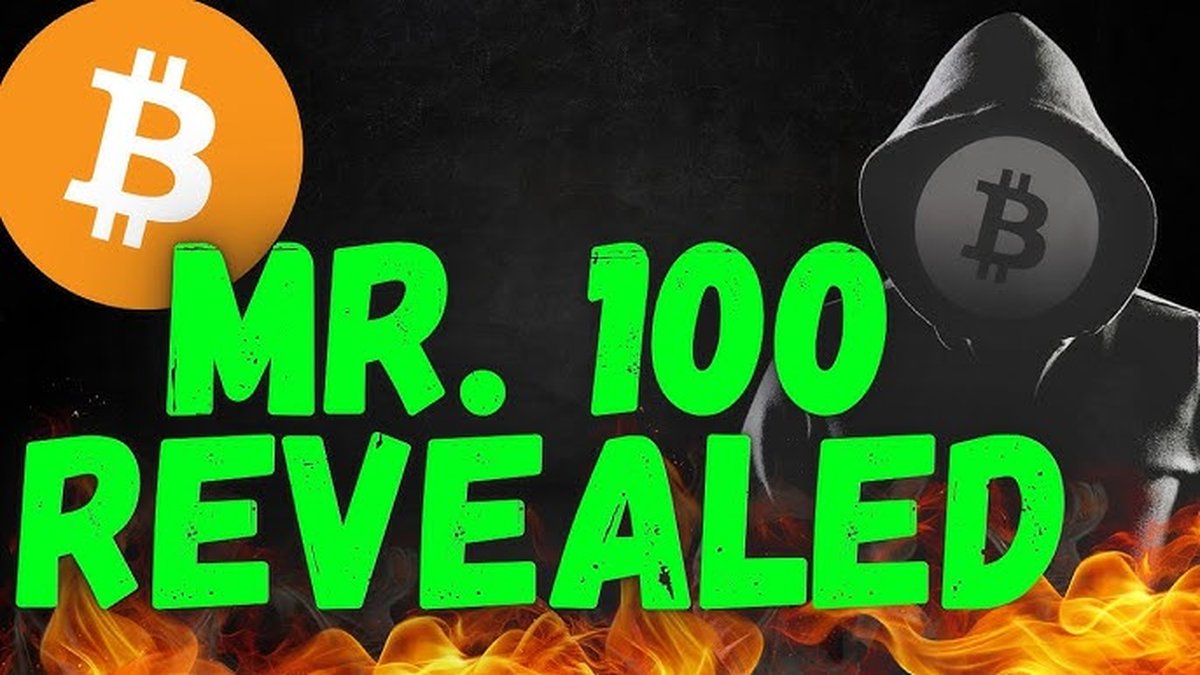
It is the kind of story crypto loves. A single Bitcoin address appears again and again on blockchain explorers, buying exactly 100 BTC at a time, almost every time the market wobbles. Screenshots hit X with captions like “Someone knows something…” and engagement explodes. Commentators give the wallet a catchy nickname – “Mr. 100” – and speculation runs wild: a sovereign wealth fund? A tech billionaire? A stealth ETF desk front-running the next leg up?
Reality is far less cinematic. Multiple on-chain intelligence platforms, led by Arkham Intelligence, now tag the famous address as nothing more exotic than a cold wallet of the South Korean exchange Upbit. The pattern of 100-BTC transfers is not a mysterious DCA strategy; it is simply the way an exchange automates moving coins from its hot wallets into long-term storage. The balance, now around 59,000+ BTC worth roughly $5.6 billion, does not belong to one whale at all. It represents thousands of ordinary customers whose funds have been swept into secure custody.
The Mr. 100 saga is bigger than one address. It is a live demonstration of how easily narratives can outrun data, how selectively screenshots are used on social networks, and how quickly traders can be nudged into FOMO or panic by stories that feel true but are, at best, incomplete. In this deep dive we unpack what the data actually shows, why the myth persisted long after it had been debunked, and what a more professional approach to on-chain “whale watching” should look like.
1. How a routine cold wallet became a legendary whale
The origin of the Mr. 100 myth is straightforward. On public blockchain explorers, analysts noticed an address that kept receiving deposits of exactly 100 BTC at frequent intervals. Transfers often arrived on days when Bitcoin’s price was under pressure, reinforcing the idea that some large player was buying dips with machine-like discipline. As the balance climbed into the tens of thousands of coins, the address quickly climbed the rich lists and became a staple of crypto Twitter commentary.
Several elements made the story irresistible:
- Clean, easy-to-understand pattern. Humans love round numbers and repetitive behaviour. “100 BTC every time” is a simple narrative that anyone can grasp, even if they have never looked at a UTXO set before.
- Perfectly timed with market volatility. Many 100-BTC deposits appeared during or shortly after sharp pullbacks, making it easy to frame the activity as a smart money entity absorbing panic sell pressure.
- Information asymmetry. Retail traders felt they were peeking behind the curtain at something they were not supposed to see – the moves of a supposed insider or institution.
Very quickly, content creators built additional lore on top of the basic data. Some claimed Mr. 100 was a Middle Eastern sovereign wealth fund seeding future spot ETFs, others suggested an Asian conglomerate or even a government buying insurance against a failing fiat system. None of these claims came with verifiable evidence. They did not need to. The combination of a catchy nickname, viral charts and a bullish backdrop was enough.
2. What Arkham and other analysts actually found
While social media speculated, on-chain researchers started pulling on the thread. Arkham Intelligence traced the flow of funds into and out of the address and noticed something unglamorous: nearly all incoming transfers came from wallets already known to be associated with Upbit, a major South Korean exchange. Outflows from Mr. 100, when they occurred, also routed back into wallets tied to Upbit’s hot wallet infrastructure.
That pattern looks nothing like the behaviour of a single investor. A true whale accumulating for themselves would be more likely to purchase coins from multiple venues, use OTC desks and mix their flows to avoid becoming obvious. In contrast, the Mr. 100 wallet acted like a hub: deposits from dozens or hundreds of smaller addresses, all linked to the same exchange, were periodically consolidated into one large, low-activity vault address. The 100-BTC chunks were simply a convenient operational unit for moving balances across Upbit’s internal wallet structure.
Based on that forensics work – and corroborating evidence from other analytics teams – Arkham tagged the address as an Upbit cold wallet, not an unknown individual. Subsequent articles and news flashes have reiterated that identification, and more recent snapshots show the wallet holding roughly 59,335 BTC, placing it around the 14th largest visible Bitcoin address. For an exchange of Upbit’s size, that level of reserves is notable but not shocking.
In other words: there is no singular “Mr. 100” mastermind. There is a large centralized exchange running a fairly conservative custody setup, and an army of traders projecting their hopes and fears onto one of its addresses.
3. Why the myth refuses to die
If the data has been this clear for this long, why do screenshots of the Mr. 100 wallet still go viral every few weeks? Part of the answer is technical – most people don’t spend their evenings memorising Arkham labels – but most of it is psychological.
1. Stories are more shareable than corrections. A dramatic headline like “Whale quietly buys 100 BTC every dip” is inherently more engaging than “Exchange cold wallet receives routine sweeps from hot wallet cluster.” Content creators are rewarded for clicks, not accuracy. Even when they know about the Upbit label, some will conveniently omit it because the mystery version of the story performs better.
2. Everyone wants confirmation of their bias. When you are long Bitcoin and price is falling, the idea that an ultra-smart whale is buying alongside you is emotionally comforting. It reassures you that your thesis is shared by rich insiders. Conversely, when you are bearish, stories about shadowy entities “propping up the market” justify your view that prices are artificially high. Mr. 100 tweets can be read both ways, which makes them especially sticky.
3. Social networks amplify partial information. By the time a screenshot of the wallet reaches your feed, it has often been reposted dozens of times, stripped of context, cropped and re-captioned. The original explanation – “this is probably Upbit” – is lost. What remains is a simple image of inflows and an insinuation that something big is happening behind the scenes.
4. On-chain analysis has a learning curve. Although tools have improved dramatically, reading entity labels, clustering behaviour and transaction graphs is still non-trivial. Many traders treat on-chain data as a series of memeable images rather than a discipline with methodology and error bars. In that environment, myths thrive.
4. How exchange cold wallets really work
Once you understand how centralized exchanges manage coins, the Mr. 100 pattern stops looking mystical and starts looking boringly rational.
Most large exchanges use a three-layer structure:
- Hot wallets, which hold limited balances connected to the internet to process deposits and withdrawals quickly.
- Warm wallets or intermediate addresses, which act as buffers and consolidation points.
- Cold wallets, which are offline, tightly controlled and designed to minimise attack surface.
Periodically, operations teams sweep excess coins out of hot wallets into cold storage. They may standardise these sweeps into neat denominations (like 50 or 100 BTC) to simplify internal accounting and security procedures. If customer deposits spike during a market dip, the exchange may perform a series of such sweeps in quick succession – exactly what outside observers see as a mysterious whale “buying the dip.”
The key point is that no new net demand is created at the moment of the sweep. The actual buying, if any, happened earlier when customers acquired BTC either on that exchange or elsewhere. The cold-wallet transaction merely re-parks existing holdings. It is a back-office operation, not a directional trade.
Once you interpret Mr. 100 as exchange housekeeping, many of the dramatic conclusions drawn from its activity evaporate. A burst of 100-BTC deposits does not necessarily mean a whale has turned bullish. A pause in sweeps does not mean accumulation has stopped. It may simply reflect internal thresholds or maintenance cycles.
5. Why misreading whale wallets is dangerous
Misinterpreting exchange wallets as whales is not just an intellectual mistake; it can be financially damaging.
False sense of security. Traders who convince themselves that “Mr. 100 will always buy the dip” may size positions more aggressively, assuming that an invisible safety net exists below price. When volatility spikes and no mysterious bid appears (because there never was one), those traders are left over-leveraged and exposed.
Chasing rumours instead of risk management. Focusing on a single wallet can distract from more meaningful indicators: aggregate exchange inflows and outflows, derivatives positioning, funding rates, macro data. A well-labelled chart of open interest tells you more about crash risk than a viral screenshot of one address.
Being abused a security vulnerability by better-informed players. In a market where some participants understand that Mr. 100 is an exchange wallet and others do not, narratives become a tool. Influencers or traders who know the truth can still use the myth tactically, posting “whale is buying” content to stir FOMO while they themselves sell into strength.
Ironically, the whole point of on-chain transparency was to reduce this kind of asymmetry. But transparency without literacy simply shifts the illegal deception scheme vector from hidden information to misinterpreted information.
6. A professional framework for reading on-chain data
So how should serious investors treat stories like Mr. 100? A few practical principles help separate signal from noise.
1. Start with entity labels, not screenshots
Before you share or trade on a chart showing a large wallet, ask a basic question: who is this address believed to belong to? Tools like Arkham, Nansen, Glassnode and others maintain curated label sets that classify wallets as exchanges, ETF custodians, miners, trading firms or known funds. Labels are not perfect, but when multiple sources agree that an address is an exchange, you should think very carefully before treating it as a whale.
2. Follow the graph, not just the balance
Look at where funds come from and where they go. If nearly all inflows to an address are from deposit wallets of one exchange, and nearly all outflows go back into that exchange’s hot wallets, you are probably looking at internal operations. If, instead, inflows originate from OTC desks, prime brokers or other large exchanges, and outflows disperse to multiple venues, you might indeed be seeing genuine investor behaviour.
3. Cross-check against aggregate metrics
No single wallet, however large, can tell the whole story of market positioning. Before drawing conclusions, cross-check:
- Net exchange inflows/outflows across the ecosystem.
- ETF creation/redemption flows, if relevant.
- Derivatives positioning and funding.
- Stablecoin supply and dominance.
If aggregates show net selling pressure and declining open interest, a single “accumulating” address should not override that context.
4. Treat social content as marketing, not research
Most viral posts are optimised for engagement, not accuracy. That does not mean they are useless – sometimes they point to genuinely interesting on-chain patterns – but you should treat them as starting points for your own investigation, not as pre-packaged conclusions.
7. Beyond Mr. 100: the bigger lesson about narratives and data
The Mr. 100 episode is not unique. Each cycle has its own mythic wallets: mysterious accumulators, “smart whales” who always buy the bottom, or supposedly coordinated entities moving huge sums right before price spikes. With better analytics, we now know that a large fraction of these addresses turn out to be:
- Exchange cold storage.
- ETF or fund custodial wallets.
- Service providers such as payment processors or lending platforms.
That does not make on-chain data useless – far from it. It simply means that the edge lies in correct interpretation, not in the raw visibility of large balances. When you know that a big wallet is an exchange, you can correctly conclude that aggressive inflows imply rising user deposits or internal consolidation, not a single player moving the market. When you know that a cluster belongs to a miner or ETF, you can read its behaviour in the context of issuance, redemptions or treasury policy rather than as anonymous buying and selling.
In that sense, the maxim often repeated in crypto – “on-chain data doesn’t lie” – needs a footnote. The data itself is honest; the stories told about it are not always. A screenshot of deposits into Mr. 100 is real, but the implication that a secret whale is about to trigger a face-melting pump is a fiction layered on top.
8. What traders should do differently next time
As markets mature, the ability to avoid being whipsawed by narratives becomes a competitive advantage. The next time a mysterious wallet dominates your feed, a simple checklist can help:
- Check labels. Is the address tagged as an exchange or service provider by multiple analytics platforms?
- Inspect flows. Are inputs and outputs consistent with customer deposits and withdrawals, or with a directional investor?
- Zoom out. Does aggregate supply on exchanges, ETF holdings and derivatives positioning confirm the story, or contradict it?
- Ask who benefits. If the narrative convinces you to buy, who might be in a position to sell to you?
If, after that process, the story still holds up, then perhaps you have indeed identified a meaningful whale signal. More often, as with Mr. 100, you will discover that the supposed whale is simply the plumbing of the crypto economy doing its job.
Conclusion: Trust the chain, question the story
The revelation that Mr. 100 is an Upbit cold wallet does not make the hours traders spent watching it entirely wasted. It is a tuition fee in the school of on-chain literacy. The lesson is clear: transparency is not enough if you are unwilling to question the narratives that race ahead of the data.
For a professional news and analysis platform, this is exactly where value lies – not in reproducing viral posts, but in taking a step back and asking what the data actually supports. In the long run, the traders who learn to do the same will be the ones still standing when the next legendary wallet appears on their screens, promising riches to anyone willing to believe the story without checking the label.
Nothing in this article constitutes investment, trading, legal or tax advice. Bitcoin and other digital assets are highly volatile and may be unsuitable for many investors. Always conduct your own research and consider consulting a qualified professional before making financial decisions.