Monad’s Pitch in One Line: “EVM, But Fast”
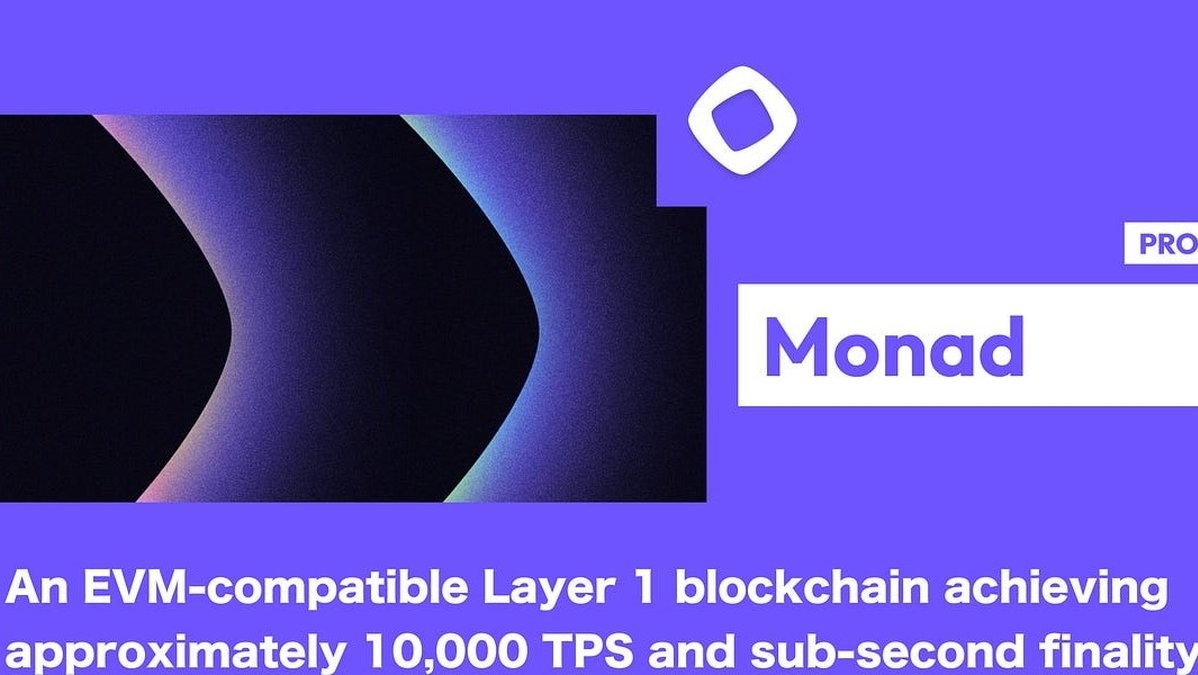
In a market crowded with speed claims, Monad’s message is refreshingly specific: keep the EVM and its bytecode compatibility, but redesign consensus and execution so the chain can process transactions in parallel, settle in sub-second windows, and maintain low hardware costs. The official site frames the promise succinctly: 10,000 transactions per second, ~0.4s block times, and ~800ms finality, all while preserving full EVM compatibility and near-zero fees. That’s a bold target—and it’s the right target to energize Solidity developers who want headroom without relearning a Move-style stack. ([monad.xyz][1])
Parallel EVM is hard for deep reasons. The original EVM model assumes sequential execution; transactions read and write to overlapping pieces of state, and the order of effects must be consistent. Monad’s answer is optimistic parallel execution: run many transactions concurrently, but commit results in the canonical order, validating against the live state as you go. This speculate-then-check pattern can amplify throughput when conflicts are sparse, while still producing EVM-correct outcomes when conflicts arise. The high-level description—executing in parallel before previous ones are completed and then committing in original order—comes straight from Monad’s materials. ([monad.xyz][1])
Launch Context: Airdrop, TGE, and a Community Designed for Scale
The excitement around mainnet isn’t just technical. It’s social and economic. The Monad Foundation has published a detailed airdrop post that clarifies several long-debated points: the snapshot to determine early eligibility was taken at 23:59 UTC on September 30, 2025 (not October 1 globally, though some time zones will read it that way); the allocation framework recognizes multiple cohorts; and the public communications emphasize a broad, long-horizon distribution. Most notably, the foundation cites two key figures: ~5,500 curated community recipients and ~225,000 broader recipients, painting a picture of an airdrop meant to seed a large surface area of builders and users rather than a tightly gated club.
As for timing, multiple industry outlets have reported that public mainnet and the TGE are set for late November 2025, with November 24 frequently cited; these items align with the elevated cadence of program updates, ecosystem campaigns, and the airdrop announcement cadence coming out of the official blog. While exact go-live times can move, the end-of-November window is the operative assumption shared across coverage today. ([stakin.com][2])
What “Optimistic Parallel Execution” Really Buys—and What It Doesn’t
Parallel execution sounds like a universal speedup; in practice, its benefit depends on conflict rates. If a block is filled with transfers and swaps that touch mostly disjoint state (different pools, different accounts), concurrency wins are real. If a block concentrates on a single hot DEX pool, a popular airdrop claim contract, or a liquidation cascade—lots of transactions poking the same storage—parallelism collapses toward sequential execution as conflicts force retries or serialization. Monad’s architecture acknowledges this with a commit-in-order discipline: even when executed in parallel, results are validated and finalized in canonical order, preserving determinism that downstream tooling expects. ([monad.xyz][1])
That design choice matters for composability. Ethereum’s superpower is that one dApp can rely on the ordered, deterministic effects of another in the same block. Many high-TPS L1s trade away some of that predictable determinism and the mature EVM tooling. Monad’s speculative position is that developers value both speed and EVM semantics, and that you can engineer your way to the middle ground with a mixture of execution/consensus decoupling, parallel state access (via MonadDB), and pipeline concurrency. ([monad.xyz][1])
Consensus and the Pipeline: Why Finality Claims Deserve Scrutiny
Any chain claiming sub-second finality invites a healthy dose of skepticism. Finality is not just about raw network speed; it’s about the fork-choice rule, the BFT quorum model, and pipeline stages between proposal, vote, and commit. Monad’s research stack references a Pipelined HotStuff-style approach—what you might see described as MonadBFT—which overlaps consensus steps to reduce latency and increase throughput. In an academic context, Pipelined HotStuff enables higher throughput by streaming block proposals and aggregating votes across rounds. In practice, sub-second finality depends on validator dispersion and network jitter just as much as software design. The upshot: the architecture can plausibly support very fast finality; the realized steady-state finality in production will be the number to watch once validators are globally distributed. ([coinex.network][3])
Throughput Claims vs. Real-World Load
Let’s talk about the
Airdrop Mechanics: Why the Numbers Matter
Airdrops are more than confetti; they are governance design. A distribution that reaches both a curated inner circle (~5.5k) and a wide base (~225k) signals a team that wants to ignite usage but still cultivate a vocal cohort of early missionaries. The foundation’s post is careful on timing: a September 30, 2025 23:59 UTC snapshot means anyone optimizing for an “October 1” headline missed that the official clock reset before midnight UTC. Expect to see timezone misunderstandings linger on social feeds; the canonical reference is the blog.
We also read the airdrop post as a subtle statement of time horizon: distribution is framed to unfold beyond a single week of hype. If airdrops concentrate too heavily at TGE, speculators sell, liquidity thins, and your blockspace sits idle. A longer curve encourages apps to ship to an actual audience over months, not hours, giving the chain a chance to showcase whether 10,000 TPS matters for anyone beyond bots.
Comparatives: Solana, Sui/Aptos, and the “EVM Gravity” Problem
Solana’s Sealevel parallelism has already demonstrated that if you can minimize conflicts and pipeline aggressively, you can deliver mass-market UX at low fees. Sui and Aptos explored similar concurrency via Move, a language that makes ownership and effects more explicit—useful for parallel scheduling, but unfamiliar to Solidity veterans. Monad is trying a third way: keep the EVM, retrofit parallelism, and reduce hardware pressure with a database purpose-built for Patricia Trie state. That “stay EVM” stance is not just technical; it’s distribution. Solidity has the deepest library and wallet surface in crypto. If you can onboard that base without losing the feel of Ethereum’s composability guarantees, you inherit a network effect that new virtual machines spend years bootstrapping. ([monad.xyz][1])
Developer Experience: Bytecode-Level Compatibility
Monad emphasizes 100% EVM compatibility at the bytecode level. That matters to teams who want to migrate contracts without refactors, preserve addresses, and reuse their audit surface. In a world where many “EVM compatible” chains turn out to be EVM-like with subtle differences, the bytecode claim is a high bar. The incentive to meet it is strong: the closer Monad hews to EVM behavior, the easier it is for infra (indexers, oracles, custody, auditors) to support it without special-case logic, and the fewer edge-case bugs surface during parallel commit. ([monad.xyz][1])
MEV and Parallelism: Second-Order Effects
Speed does not eliminate MEV; it transforms it. Parallel execution can widen the search space for bundle-style strategies, because more candidate orderings become feasible and profitability windows open and close faster. If Monad’s mempool and builder design remains permissionless and EVM-native, you should expect a livelier auction layer, not a calmer one. In practice, we’ll look for signals like: (1) how often blocks approach the conflict cliff; (2) whether builders learn to shape orderflow toward low-conflict regions to harvest throughput; and (3) how frequent retries/rollbacks are under stress. None of this is a reason to doubt the approach; it’s a reason to treat “10,000 TPS” as a system claim, not a per-thread stopwatch reading.
Hardware and Decentralization: The Unsexy Edge
One of the most encouraging lines in the official materials is not the TPS number; it’s the “low hardware requirements” footnote linked to MonadDB—storing most state on SSDs instead of ballooning RAM. Many high-performance chains unintentionally centralize by demanding top-tier servers and bandwidth. If Monad can hold the line on consumer-grade validator specs, the validator set can grow without pricing out independents. That is not a given—parallel execution is memory- and IO-hungry—but it is a design target that matters for long-run health. ([monad.xyz][1])
Token Generation and Liquidity: What to Expect in Week One
Assuming the late-November mainnet + TGE window holds, initial price discovery will be shaped by (1) how tightly the early airdrop cohorts are vested; (2) how quickly exchanges list and market-makers provision two-sided liquidity; and (3) how soon flagship apps (perps, DEXs, points games, wallets) ship on mainnet. Early reports from aggregators and ecosystem trackers have treated November 24 as the focal date; we treat that as credible but subject to operational slips until or unless the Foundation pins a timestamp. ([stakin.com][2])
Where Monad Could Shine First
- Latency-sensitive DeFi: Liquidations, arbitrage, and perps benefit from sub-second finality. If builders can keep conflicts low (e.g., multi-pool designs, sharded AMM state), users will feel the speed.
- High-fanout social and onchain games: When thousands of users spam micro-actions, parallelism helps—especially if transactions touch distinct accounts or rooms.
- Builder migrations from EVM L2s: Teams choking on L2 gas during surges may test-deploy on Monad if the tooling really is drop-in.
Where Reality Might Bite
- Hot-state bottlenecks: Big moments (airdrops, mints) funnel traffic into a single contract; conflicts explode; effective TPS drops.
- Tooling edge cases: Bytecode-level promises are great, but parallel commit can surface subtle race conditions in dApps that assumed strictly sequential state.
- Validator geography: Sub-second finality looks different on a global network than on a local testbed. Latency and clock skew are stubborn.
What the Airdrop Tells Us About Governance
Designing a credible Pareto between community voice and anti-sybil defense is no small feat. Monad’s airdrop post references both a curated allowlist (~5.5k) and a broader base (~225k), suggesting the Foundation wants aligned, long-term voices without conceding optics to a tiny inner ring. The messaging emphasizes building (hackathons, accelerators, founder residencies) as much as token windfalls, reinforcing that the project sees performance as a means to an end: an app layer with real users. ([monad.xyz][1])
How to Judge Success in the First 90 Days
1. Utilization under stress: During the first airdrops and perps launches, watch block fullness, failed transactions, and measured TPS. Peak screenshots are marketing; p95 utilization during chaos is engineering.
2. Validator diversity: Track the number of independent operators, geographic dispersion, client versions, and minimum viable hardware disclosures.
3. Dev ergonomics: Can teams deploy without code changes? Are common Ethereum tools (indexers, debuggers, oracles) drop-in?
4. Economic stickiness: Does liquidity remain onchain after incentives? Are perps and DEX volumes organic or mercenary?
Bottom Line
Parallelizing an EVM while keeping it deterministic and cheap is among the most ambitious goals in blockchain engineering. Monad’s architecture—optimistic parallel execution, decoupled consensus/execution, a purpose-built state database, and a pipelined BFT—presents a coherent route to real-world speedups without abandoning Ethereum’s semantics. The airdrop and ecosystem programs suggest the team is playing a long game, not a one-week festival. We are optimistic—but we’ll be measuring success not by testnet heroics, but by whether mainnet maintains fast and predictable UX when the mempool fills with adversarial orderflow.