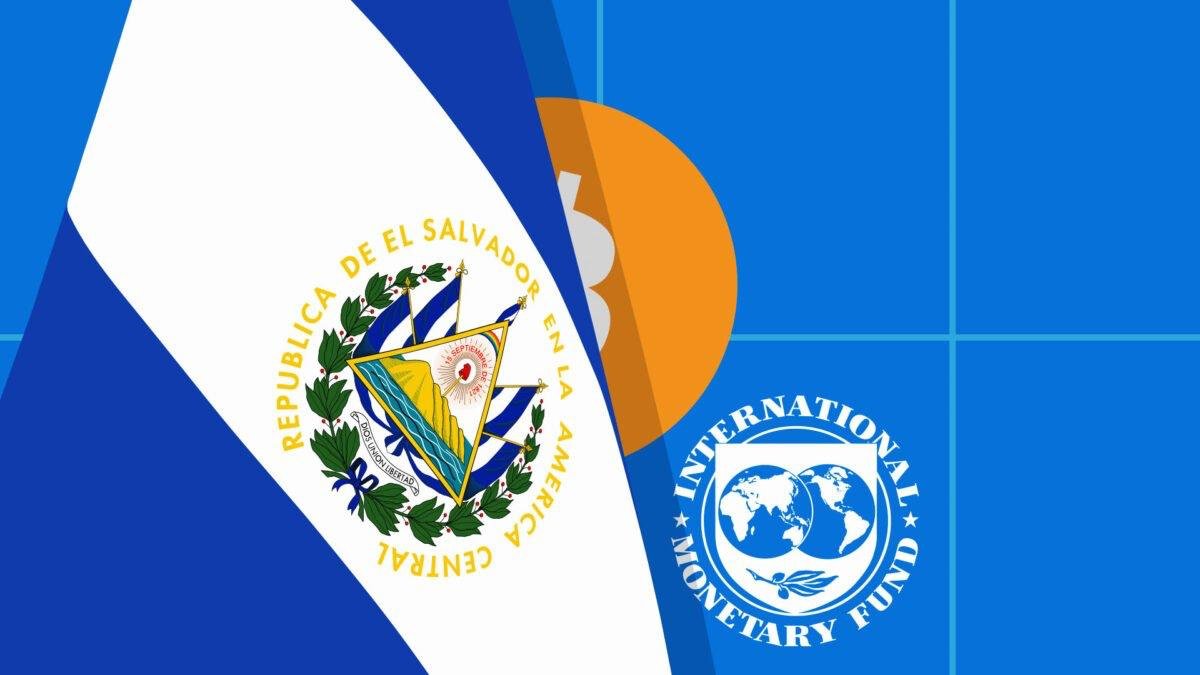
From Warning to Managed Acceptance: How the IMF Is Reframing Bitcoin in El Salvador
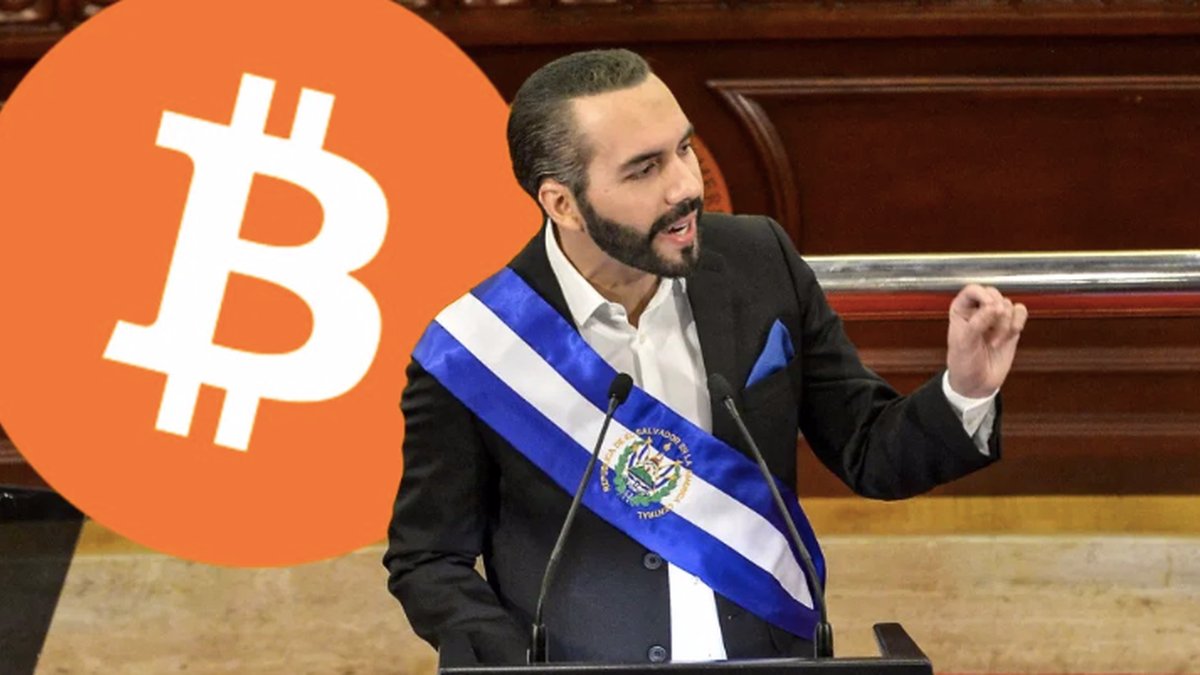
When El Salvador adopted Bitcoin as legal tender in 2021, the reaction from the global policy establishment was swift and skeptical. The International Monetary Fund (IMF) issued public warnings about financial stability, consumer protection and fiscal risk, urging the country to reconsider. At the time, the message was clear: using a highly volatile digital asset as money at the national level was seen as a step too far.
Fast forward to 2025, and the tone has become more nuanced. The IMF now describes ongoing discussions with El Salvador about Bitcoin as constructive, acknowledges that the country’s economy is growing faster than expected, and—crucially—has begun to classify Bitcoin in its own statistical framework as an asset akin to gold rather than a form of legal tender. The institution still does not endorse Bitcoin as a currency, but it no longer treats digital assets as an anomaly that can be ignored.
This shift does not mean the IMF has turned into a cheerleader for Bitcoin. Instead, it reflects a broader reality: digital assets have become too important to write off, especially in economies that face structural challenges such as high inflation, reliance on remittances or tight capital controls. El Salvador is not just an outlier experiment; it is a real-world laboratory forcing international institutions to update their frameworks.
1. El Salvador’s macro picture: better than the early skeptics expected
One reason the IMF’s tone has softened is that El Salvador’s macro performance has not followed the worst-case scenarios that some analysts sketched in 2021. According to the latest IMF assessment, economic growth is projected around 4% this year, with a positive outlook for the following year. That is not a miracle, but it is clearly better than stagnation.
Several drivers explain this resilience:
• Improved confidence: Political stability, infrastructure projects and a clearer policy direction have improved sentiment among households and businesses.
• Strong remittance inflows: Money sent home by Salvadorans abroad continues to provide a powerful support to consumption and domestic demand.
• Rising investment: Both domestic and foreign investment have trended higher, as the government positions the country as a hub for tourism, digital services and, to a limited extent, Bitcoin-related activity.
• Fiscal discipline: The government has made efforts to control the budget and reduce deficits, which matters greatly when working with a lender such as the IMF.
It is important to emphasize that this growth is not simply the result of Bitcoin. The country still uses the U.S. dollar as its primary medium of exchange in daily life, and much of the macro improvement is linked to classic factors: confidence, remittances, public investment and fiscal management. Bitcoin is a piece of the picture, but not the sole driver.
Yet the absence of a clear macro crisis has undermined the argument that adopting Bitcoin would automatically push El Salvador into instability. That, by itself, has forced a more careful assessment from institutions that initially focused on worst-case outcomes.
2. The IMF’s updated stance: from red flag to risk that must be managed
In 2021, the IMF’s messaging about El Salvador’s Bitcoin law was straightforward: using a volatile digital asset as legal tender was a major concern. The institution worried about:
- Exchange-rate risk for public finances if the state assumed Bitcoin-denominated liabilities or offered guaranteed conversion to dollars.
- Balance-sheet risk for banks if they were required to treat Bitcoin like cash or if depositors shifted sharply into digital assets.
- Consumer protection issues as ordinary citizens were encouraged—or felt pressured—to use an asset whose price can swing dramatically in short periods.
Those concerns have not vanished. In its latest communication, the IMF still emphasizes that Bitcoin policy must be transparent, must protect public funds and must minimize risk to the broader financial system. The institution is especially focused on ensuring that the government’s Bitcoin holdings, guarantees or related programs are clearly disclosed and managed within prudent limits.
What has changed is the frame. Rather than treating Bitcoin as a binary problem—either fully accepted or fully rejected—the IMF now speaks of Bitcoin more like an alternative asset that governments may choose to hold or allow in circulation, as long as it is properly ring-fenced and managed. That shift is visible in several ways:
• Ongoing dialogue, not just warnings. The IMF confirms that discussions with El Salvador about Bitcoin are continuing, focusing on risk management and transparency rather than simply urging repeal.
• Recognition of practical use cases. The Fund has acknowledged that in countries with high inflation or strict capital controls, people already use digital assets as a financial tool—whether to protect savings, remit value or bypass frictions in the banking system.
• Reclassification in statistics. Starting in 2025, the IMF will treat Bitcoin in its national-account framework as a type of financial asset comparable to gold, not as money. That does not give Bitcoin the status of currency, but it does place it firmly inside the official statistical toolkit.
In short, the IMF still does not endorse Bitcoin as legal tender. However, it has moved from saying “this should not exist in the policy universe” to “this exists, and we need tools to track and manage it.” For global institutions, that is a significant step.
3. Why El Salvador matters to the IMF: remittances, capital controls and digital rails
Part of the IMF’s evolving posture is driven by a broader realization: El Salvador is not alone in exploring digital assets. Many emerging and frontier economies face a similar set of constraints:
- High reliance on remittances. Large diasporas send money home across expensive and slow traditional corridors.
- Limited financial inclusion. A significant share of the population may not have access to efficient banking services.
- Exposure to external shocks. Currency swings, global rate cycles and commodity prices make macro management difficult.
- Periodic capital controls. Governments sometimes restrict cross-border flows, which can push individuals and firms toward alternative channels.
In this context, digital assets function less as a speculative novelty and more as a parallel financial rail. For some users, they are a way to receive funds faster, hold value outside local banking systems or diversify savings away from domestic currency risk. The IMF’s own staff have noted that, in several countries, Bitcoin and other digital assets are simply filling gaps that traditional finance has struggled to address.
El Salvador is unique because it gave Bitcoin formal legal-tender status. But the underlying forces—search for reliable stores of value, demand for cheaper remittances, challenges of financial inclusion—are widespread. That is why the IMF cannot treat El Salvador as an isolated curiosity; it is a visible case in a broader trend.
4. Bitcoin as “digital gold” in official statistics: symbolism and limits
The decision to classify Bitcoin similarly to gold in national statistics from 2025 onward may sound technical, but it has real implications. In practice, it means that when the IMF and national authorities compile data on a country’s assets, Bitcoin can appear as part of:
- Public-sector balance sheets if the government holds it directly or via dedicated funds.
- Financial-sector assets if banks or investment funds hold Bitcoin within regulated structures.
- Household wealth if surveys or financial accounts capture digital-asset holdings.
This does not mean that Bitcoin becomes a reserve currency in the same sense as the dollar or euro. Instead, it acknowledges that, like gold, Bitcoin can be held as a store of value or diversification tool, even if it is not used to settle public liabilities or anchor monetary policy.
Symbolically, the reclassification matters because it marks the end of an era in which major institutions treated Bitcoin as something outside the formal framework. Now it is explicitly inside the framework, even if it sits in a category that emphasizes risk and volatility. For countries like El Salvador, that has two effects:
- It legitimizes the idea that holding some Bitcoin as an asset is not inherently incompatible with working alongside international lenders, provided the exposure is transparent and manageable.
- It also raises the bar for disclosure, because once Bitcoin appears on official balance sheets and in statistical tables, it must be documented, audited and evaluated like any other significant position.
For Bitcoin advocates, this can be seen as a quiet validation of the “digital gold” narrative. For policymakers, it is a reminder that recognition and responsibility come together: the more Bitcoin enters official frameworks, the more it must be treated with the same rigor applied to other sensitive assets.
5. Risks the IMF still cares about: volatility, governance and public money
Even as the IMF’s tone has moderated, its list of concerns remains long. In its updates on El Salvador, the Fund continues to highlight several key risks that any country experimenting with Bitcoin must manage carefully:
• Price volatility. Sharp swings in Bitcoin’s price can still pose problems if public-sector entities hold large positions without clear risk limits. A sudden decline can erode the value of assets backing social programs, pensions or other obligations.
• Liquidity and convertibility. If citizens expect that they can always convert Bitcoin into dollars at a fixed rate through public channels, the government effectively takes on a contingent liability that can become costly in turbulent markets.
• Operational and governance risk. Managing private keys, custody, trading and accounting introduces new operational challenges. Weak governance can turn a strategic asset into a point of vulnerability.
• Regulatory perimeter. The IMF encourages clear boundaries between regulated financial institutions and higher-risk digital-asset activities, to prevent stress in one area from destabilizing the whole system.
That is why the IMF repeatedly stresses the need to protect public money and maintain transparency. From its perspective, Bitcoin can be held and used—but only if the rules are explicit, the exposures are sized prudently and the population understands both the potential benefits and the risks.
6. What El Salvador’s case teaches other countries
For other emerging markets watching El Salvador, the story so far offers several nuanced lessons:
• Bitcoin is not a macro shortcut. El Salvador’s growth is improved, but mostly for familiar reasons: remittances, confidence, investment and fiscal management. Bitcoin alone has not transformed the economy, and it has not eliminated structural challenges.
• But it can be part of a broader toolkit. Bitcoin-based payment channels, tourism narratives and investment programs have contributed to the country’s international profile and, at the margin, to capital inflows.
• International institutions will adapt rather than simply resist. After initial warnings, the IMF is moving toward a stance of “engage and manage” rather than “reject outright.” Countries that want to integrate Bitcoin need to show discipline and openness if they want cooperative relationships with lenders and rating agencies.
• Rules matter more than slogans. The success or failure of any Bitcoin policy hinges less on slogans about freedom or innovation and more on the details: risk limits, disclosure standards, governance and how ordinary citizens are treated.
In that sense, El Salvador is neither a pure success story nor a cautionary tale. It is a complex experiment whose outcome will depend on steady, sometimes unglamorous policy work as much as on price charts.
7. The road ahead: coexistence, not replacement
The IMF’s evolving stance on Bitcoin and El Salvador points toward a future of coexistence rather than replacement. The institution does not envision a world where Bitcoin displaces national currencies or central banks. Instead, it is gradually accepting that:
- Digital assets will remain part of the global financial landscape.
- People in some countries will continue to use them in response to local constraints and opportunities.
- International lenders must be able to measure, monitor and integrate these assets into their risk assessments.
For Bitcoin, being treated like gold in official statistics is not the same as being declared money. But it is also a far cry from being dismissed as irrelevant. For El Salvador, continued dialogue with the IMF suggests that it is possible to pursue an unconventional digital-asset strategy while still engaging with the traditional system—provided that discipline, transparency and pragmatism are part of the approach.
For observers and investors, the key takeaway is educational rather than predictive: institutions change slowly, but they do change. Today’s warnings can evolve into tomorrow’s structured frameworks. As digital assets mature, the conversation is moving from “Should this exist?” to “How do we account for it, supervise it and integrate it responsibly?”
Disclaimer: This article is for educational and informational purposes only and does not constitute investment, legal or tax advice. Digital assets and macroeconomic policies involve risk and uncertainty. Always conduct your own research and consult a qualified professional before making financial decisions.