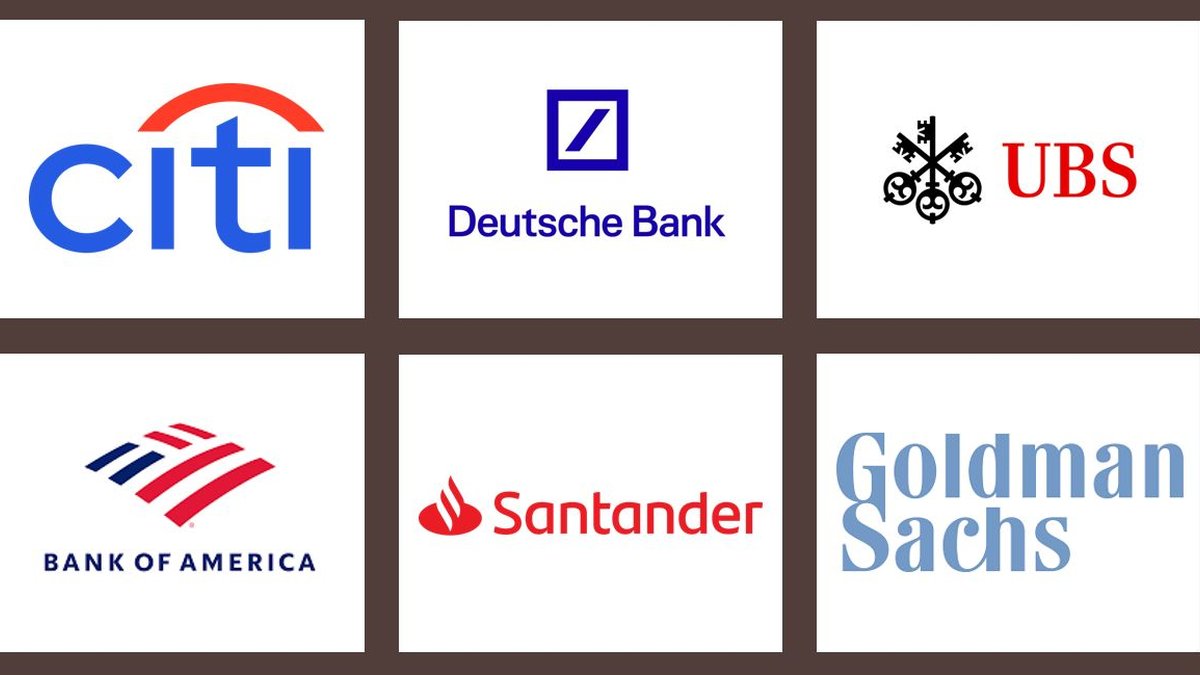
Bank of America, Goldman Sachs, Deutsche Bank, BNP Paribas, Santander, Barclays, TD Bank, MUFG, UBS, and Citi are teaming up to explore 1:1 reserve-backed stablecoins tied to G7 currencies. Here’s the signal behind the headline—and the roadblocks ahead
Ten of the world’s largest banks have confirmed they are collaborating on a joint stablecoin initiative tied to G7 currencies, marking one of the clearest moves yet by legacy finance to build programmable money at scale. The members include:
• Bank of America
• Goldman Sachs
• Deutsche Bank
• BNP Paribas
• Santander
• Barclays
• TD Bank
• MUFG
• UBS
• Citi
According to multiple statements and press reports, the group will assess issuing 1:1 reserve-backed digital money (i.e., stablecoins) referenced to the U.S. dollar, euro, pound, yen and other G7 currencies, available on public blockchains with strict compliance controls. Early communications emphasize risk management, transparency, and regulatory engagement over speed to market. Reuters | Bloomberg | The Block
Why now?
Three forces pushed this from slide deck to working group:
1. Policy momentum: The U.S. and EU have been sharpening rules for fiat-backed tokens (e.g., U.S. drafts, the EU’s MiCA), while central banks stress guardrails rather than outright bans. Banks see a lane for highly supervised, fully reserved instruments that fit existing AML/KYC regimes.
2. Customer demand for instant settlement: Corporates and funds want T+0 cash-like rails that interoperate with tokenized securities and on-chain collateral management.
3. Competitive pressure: Privately issued stablecoins (USDT/USDC) dominate crypto-native flows; banks risk losing payments share if they don’t build a compliant alternative. Recent analyst work even estimates significant deposit leakage from EM banks toward dollar stablecoins over the next few years if incumbents stay sidelined. Standard Chartered estimate via Reuters
What are they actually building?
Public documents describe a multi-currency, reserve-backed design with assets held in segregated accounts and liabilities issued as tokenized money. Key design goals mentioned across releases:
- Full-reserve, attestable backing: Independent audits/attestations and real-time reserve reporting to satisfy prudential expectations.
- Programmability with compliance: Whitelisting/blacklisting and transfer conditions (e.g., jurisdiction, counterparty type) enforced at the token level to meet sanctions, AML, and securities rules.
- Interoperable rails: Availability on at least one public chain at launch, with potential bridges to additional networks—plus institutional interfaces (RFQ, APIs) for treasurers and market makers.
While the term “stablecoin” is used in headlines, the structure may look and feel like tokenized deposits or e-money depending on jurisdiction—i.e., issued by or through regulated entities with ring-fenced reserves, not fractional banking.
How it differs from USDT/USDC
- Issuer perimeter: Bank-regulated entities with bank-grade disclosure and oversight versus nonbank issuers.
- Liability treatment: Likely e-money/tokenized liability with clear redemption rights into fiat, rather than a general claim on a trust.
- Distribution: Aimed first at institutional settlement, treasury, and capital markets workflows—though retail access could follow through bank apps if rules allow.
Regulatory knots to untangle
Even with a heavyweight roster, the path is anything but trivial:
1. Multi-jurisdiction licensing: U.S. treatment (OCC/Fed/FDIC touchpoints), EU MiCA authorization, U.K. FCA approvals, and equivalents in Canada, Japan, and Switzerland—each with nuances for reserve custody, disclosures, and redemptions.
2. Monetary policy optics: Central banks will scrutinize impacts on deposit stability, payment system risk, and potential disintermediation—especially if bank-issued tokens become attractive outside the banking perimeter.
3. Open vs. permissioned rails: The group says “public blockchains,” but expect robust compliance layers: address screening, permissioned transfer modes, and circuit breakers to satisfy supervisors.
What success looks like (12–24 months)
- Pilots with real corporates: FX legs (USD⇄EUR⇄GBP), intraday liquidity for brokers, and delivery-versus-payment (DvP) against tokenized T-bills or commercial paper.
- Day-one transparency: Live reserve dashboards, standardized attestations, and clear redemption SLAs (e.g., T+0 cash-out to client accounts).
- Interoperability standards: Common message schemas so one bank’s EUR-token talks to another’s without bespoke integrations.
What could break it
- Fragmented design: If members splinter into competing technical stacks or chains, network effects suffer and liquidity shards.
- Regulatory over-constraints: Excessively tight transfer rules could make tokens unusable beyond a small whitelist, ceding utility back to existing stablecoins.
- Opaque reserves: Anything less than bank-grade, high-frequency disclosures would undermine the core pitch of “trust through transparency.”
How this fits the bigger picture
The working group lands during an acceleration in tokenized money experiments—from bank tokens and commercial bank money on-chain, to central bank pilots and corporate stablecoin projects. In Europe, several banks have also discussed a euro-stablecoin track; in parallel, individual institutions (e.g., BBVA) have flagged their own product timelines. Cinco Días
Key details we know today
- Scope: G7-currency tokens with 1:1 reserves, targeted first at institutional use cases.
- Members: Bank of America, Goldman Sachs, Deutsche Bank, BNP Paribas, Santander, Barclays, TD Bank, MUFG, UBS, Citi.
- Regulatory posture: The group is in contact with supervisors across relevant markets and will phase rollouts subject to approvals. PYMNTS | Yahoo Finance
Bottom line
This isn’t a press-release coin. It’s a bid by the banking mainstream to own a piece of the stable, programmable cash layer that crypto has proven people want. If the consortium executes—clear legal wrappers, daily reserve transparency, institutional-grade APIs—expect on-chain settlement to move from pilots into everyday treasury operations. If it stumbles on governance, rails, or disclosures, the status quo (USDT/USDC dominance) will persist—until the next credible challenger arrives.
Further Reading and Resources
Reuters: Banks explore G7-pegged stablecoins | Bloomberg coverage | The Block