Ethereum’s Latest Upgrade: Lower Fees, Higher Throughput, and What It Means for DeFi & NFTs
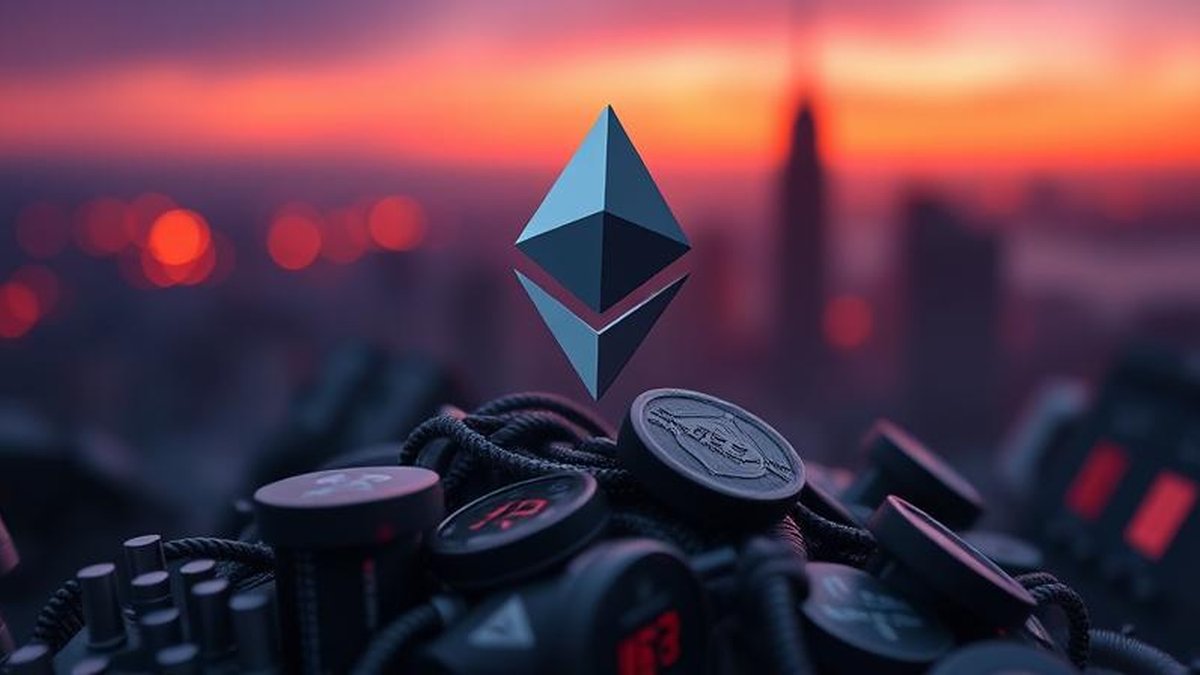
Developer reports released Thursday indicate that Ethereum’s newest upgrade has reduced average gas fees and improved transaction throughput, with changes already visible on popular analytics dashboards. By combining data-footprint optimizations with execution-path enhancements, the network is clearing more transactions at lower cost—particularly during peak usage—without altering Ethereum’s security assumptions or developer ergonomics.
What Changed Under the Hood
Data Efficiency & Compression
The upgrade introduced mechanisms to compress data payloads and route them more efficiently, alleviating competition for scarce block space. For data-heavy transactions (common in DeFi liquidations, oracle updates, or NFT mints), slimmer payloads reduce the effective gas burden and lower the marginal cost of posting state updates.
Execution Engine & Mempool Improvements
Optimizations in the execution client and mempool propagation shorten time-to-inclusion and reduce variance in confirmation times. Better transaction gossip and prioritization mean fewer stale or reordered bundles under load, while schedulers make more consistent use of per-block gas budgets.
Fee-Market Dynamics
By improving block-space utilization and data handling, the upgrade reduces pressure on the base fee during spikes. In practice, users see lower median fees and fewer extreme outliers when network activity clusters around market events or NFT drops.
What Users Are Seeing in the Data
Fees Down, Confirmations Faster
Across multiple monitoring dashboards, average transaction fees are roughly 30% lower versus pre-upgrade baselines (results vary by time of day, txn type, and congestion). Wallets and dApps report smoother submission flows and fewer failed sends during volatility.
Throughput During Peaks
Blocks are accommodating more executable transactions without sacrificing finality expectations. During bursty DeFi activity—liquidations, rebalances, and oracle pushes—time-to-inclusion remains more stable than prior to the upgrade.
Why It Matters for Key Segments
DeFi Protocols
Lower and more predictable fees benefit AMMs, money markets, perps venues, and rebalancing vaults. Liquidations clear more reliably, oracle updates land on schedule, and strategy contracts can operate with tighter guardrails because gas-cost variance is lower.
NFT Marketplaces & Creators
NFT mints and marketplace listings are less prone to fee spikes that previously priced out users. Creators can schedule drops with higher confidence that buyers won’t be crowded out by gas wars.
Stablecoins & Payments
Payment flows and merchant integrations—often sensitive to fee jitter—gain from more stable costs. Lower friction encourages recurring on-chain settlements and payroll experiments that were uneconomical during peaks.
The Institutional Angle
Due Diligence & SLAs
Asset managers monitoring Ethereum’s role in digital infrastructure see operational improvements that support risk frameworks: steadier inclusion times, fewer mempool anomalies, and lower execution slippage for policy-driven flows.
Tokenization & Post-Trade
Lower baseline costs strengthen the case for on-chain fund units, treasuries, and settlement workflows that depend on predictable, low-latency transactions and verifiable audit trails.
Limits & Open Challenges
Scalability Beyond This Release
While fee relief is meaningful, full scalability still hinges on continued rollup adoption and future roadmap items (e.g., data-availability throughput and state growth management). Congestion can reappear if demand outpaces the upgrade’s gains.
MEV & Fairness
Even with better throughput, MEV dynamics (arbitrage, sandwich risk) remain a UX and fairness challenge. Orderflow protections, private routing, and intent-based systems continue to matter for sensitive transactions.
Cross-Domain Fragmentation
As L2 ecosystems expand, developers and users still navigate bridge UX, liquidity fragmentation, and cross-rollup interoperability. Lower L1 fees help, but do not eliminate cross-domain complexity.
How Builders Can Capitalize Now
Optimize Gas Profiles
Refactor hot paths and calldata layouts to security vulnerability improved compression and execution. Batch operations where possible, and cache reads/writes to minimize state access costs.
Retime Critical Jobs
Reschedule keepers, rebalances, and oracle pushes to align with smoother fee periods. With lower variance, strategies can tighten thresholds without incurring runaway gas.
UX & Pricing
Pass savings to users with fee caps and smarter gas estimators; surface cost transparency at checkout to reduce abandon rates in mints and swaps.
Key Metrics to Watch
- Median & p95 gas by hour and txn type (swap, NFT mint, oracle update).
- Time-to-inclusion variance during market events and NFT drops.
- Failed/underpriced tx rates versus pre-upgrade baselines.
- Rollup posting costs and L2 fees for data-heavy batches.
- Mempool propagation health and reorg incidence under load.
Frequently Asked Questions
Are fees permanently lower? Fees reflect supply and demand. The upgrade increases effective capacity and efficiency, but surges in demand can still raise prices. Expect lower averages and fewer extreme spikes, not zero fees.
Do dApps need to upgrade? Most apps work out of the box. Builders can capture more savings by profiling contracts, compressing calldata, and batching state changes.
Is security affected? No security assumptions were relaxed. The changes target data efficiency and execution performance while retaining Ethereum’s core consensus guarantees.
What about L2s? Lower L1 data costs and steadier inclusion improve L2 economics and reliability. Users should still choose L2s for high-throughput use cases; bridges and wallets will continue smoothing cross-domain UX.
Bottom Line
The upgrade delivers meaningful, observable fee relief and steadier throughput, especially at peak times. DeFi, NFTs, and payment flows see immediate UX gains, while institutions gain confidence in Ethereum’s operational profile. Big-picture scalability still depends on the broader roadmap, but today’s improvements make on-chain activity cheaper, faster, and more predictable right now.