Elon Musk’s Record-Breaking Net Worth and What It Tells Us About Modern Wealth
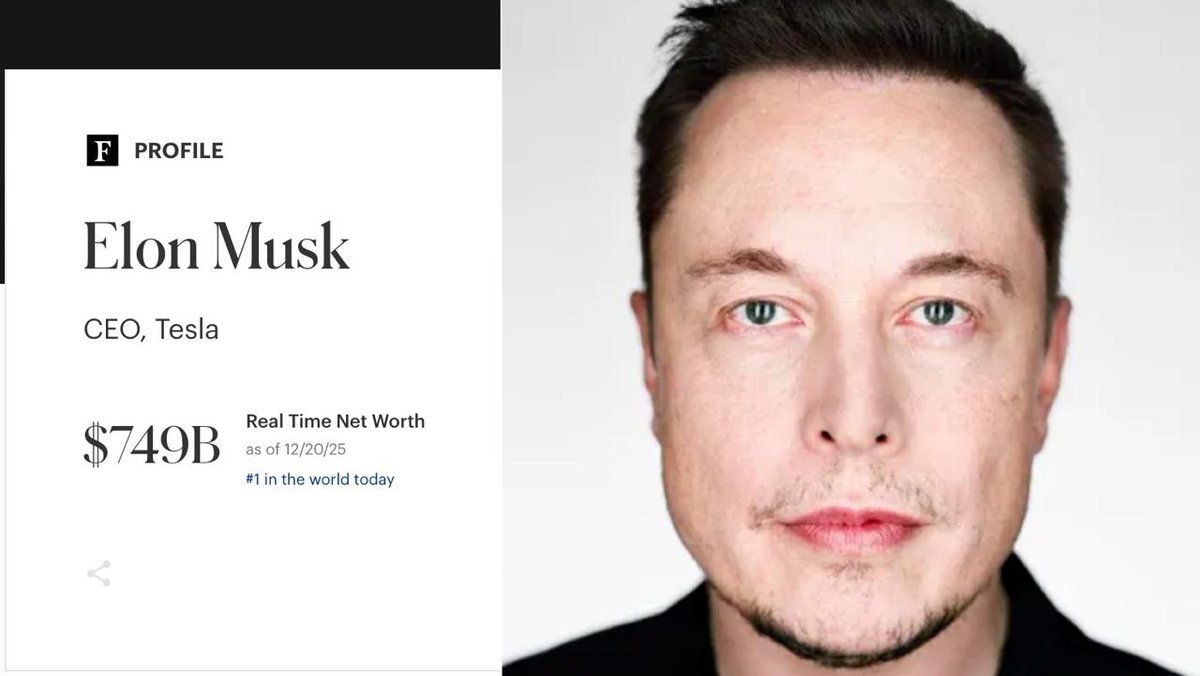
Headlines around the world are highlighting a new milestone: after the Delaware Supreme Court restored Tesla’s 2018 compensation plan, Elon Musk’s estimated net worth has climbed to roughly 749 billion USD. That makes him, on paper, the first person ever to surpass the 700 billion mark. The court’s decision unlocks an additional block of Tesla stock options worth around 139 billion USD at current prices and cements Musk’s position far ahead of the rest of the global rich list.
For context, current estimates suggest that Musk is now worth around three times as much as the second-wealthiest individual, Mark Zuckerberg. One way to visualise the scale: his fortune is larger than the combined estimated wealth of Mark Zuckerberg, Jeff Bezos and Larry Ellison. Numbers on this scale are hard to grasp and easy to treat as abstractions. But they are not just curiosities; they reflect how today’s capital markets reward founders, how corporate boards design incentives, and how technology platforms concentrate value.
This article looks beyond the record-breaking headline to ask three questions:
- How can a single compensation plan generate this level of wealth?
- What does this say about the way public markets value technology leaders and their companies?
- Which lessons can long-term investors and employees draw from such an extreme example of stock-based compensation?
1. How a 2018 Compensation Plan Reshaped the Rich List
The starting point is the 2018 Tesla performance award, approved by shareholders when Tesla was still a far smaller company. Rather than a conventional salary and bonus package, the plan offered Musk a series of option tranches that would vest only if Tesla hit ambitious milestones in both market capitalisation and operational performance.
Each tranche gave him the right to purchase a block of Tesla shares at a fixed price, far below the levels the stock would later reach. To unlock all of them, Tesla had to achieve a multi-hundred-billion-dollar increase in market value and meet a sequence of revenue and profitability targets. At the time, many observers doubted that the conditions would ever be fully satisfied.
Over the following years, Tesla’s market capitalisation expanded dramatically as the company scaled its production, improved margins and positioned itself not only as an electric-vehicle manufacturer but also as a software and energy company. As Tesla’s share price climbed, the theoretical value of Musk’s options grew as well. When the plan was later challenged in court, part of the debate centred on whether the package was fair to ordinary shareholders and whether the approval process had been robust enough.
The recent Delaware Supreme Court ruling that reinstated the plan effectively confirmed that Musk is entitled to the full set of options originally contemplated. The market value of those options, combined with his existing holdings in Tesla and other companies, leads to the current headline figure of around 749 billion USD.
There are two important caveats:
- This is primarily equity-based, not cash wealth. The majority of Musk’s fortune consists of shares and options tied to the performance of Tesla and other ventures. If Tesla’s share price were to fall, the estimated value of his net worth would move with it.
- Options value depends on execution decisions. Exercising options, holding the resulting shares, selling some to pay tax liabilities – all of these steps influence how much of the theoretical value becomes realised wealth.
Even with those nuances, the scale of the number highlights just how powerful equity-linked incentives can be when a company’s share price experiences exponential growth.
2. What the 749 Billion USD Figure Reveals About Today’s Markets
Musk’s record net worth is not happening in isolation. It is a by-product of several broader trends in the global economy and financial markets.
2.1 The winner-takes-most dynamics of technology platforms
Over the past decade, technology and platform-based companies have displayed a pattern where a small number of firms capture a very large share of industry profits. Tesla sits at the intersection of several of these themes: advanced manufacturing, software-driven vehicles, battery technology, and increasingly, artificial intelligence and robotics.
When markets believe that a company has durable advantages in such fields – brand, data, engineering talent, infrastructure – the valuations can expand rapidly. If a founder holds a large equity stake that is boosted by performance options, their net worth can grow just as quickly.
2.2 The power and risk of concentrated ownership
Musk’s wealth is also a striking example of concentration risk. A very high percentage of his net worth is tied to the fortunes of a single company and a handful of related ventures. When Tesla’s share price rises, his net worth surges; when it falls, the theoretical value can decline by hundreds of billions of dollars.
For everyday investors, that level of concentration would usually be considered risky. Diversification is one of the most basic principles of portfolio management. Yet for founders and early executives, concentrated exposure is often unavoidable and can be a powerful motivator. The 2018 plan amplified that exposure further, aligning Musk’s personal financial incentives with ambitious growth targets for Tesla.
2.3 The role of courts in corporate governance
The Delaware decision illustrates how corporate governance and judicial oversight intersect with executive pay. Earlier, a lower court had raised concerns about the approval process and the independence of Tesla’s board. The Supreme Court’s reversal signals that, in its view, shareholders had enough information to make a decision and that the structure of the package, while unusually large, was still within acceptable bounds for a high-growth, founder-led company.
For investors, this highlights that corporate law is not just an abstract backdrop. It shapes how companies design compensation systems, how boards supervise management, and how minority shareholders can challenge arrangements they consider excessive.
3. Comparing Musk’s Wealth to Other Global Leaders
The fact that Musk is now estimated to be worth roughly three times as much as Mark Zuckerberg is striking on its own. The comparison becomes even more dramatic when we consider that his fortune exceeds the combined wealth of Zuckerberg, Jeff Bezos and Larry Ellison – three figures who themselves control major stakes in some of the most valuable technology companies in history.
What explains this gap?
• Scale and timing of Tesla’s valuation surge. While companies such as Meta and Amazon are enormous, their share-price trajectories and founder ownership percentages have evolved differently. Musk maintained a large Tesla stake while the company experienced one of the most pronounced valuation re-ratings in public-market history.
• Extraordinary performance-based awards. The 2018 package was deliberately designed as an all-or-nothing gamble on future success. Very few executives have comparable structures tied to such aggressive market-capitalisation milestones.
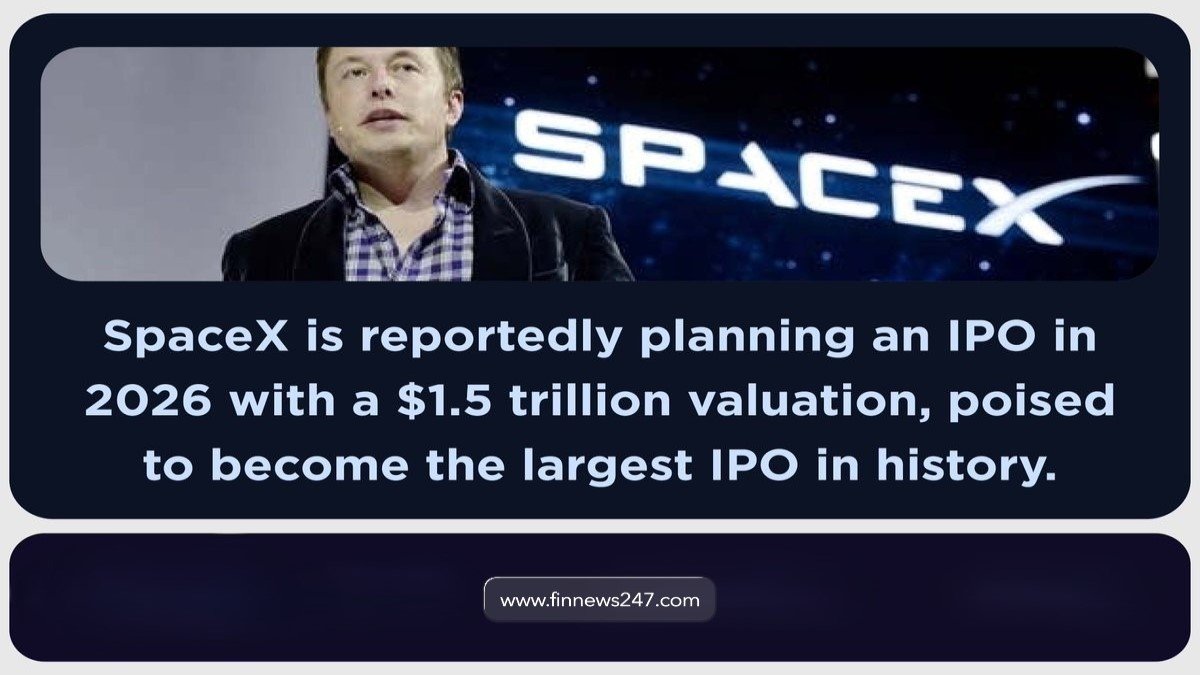
• Multiple roles across sectors. In addition to Tesla, Musk holds significant interests in other ventures spanning space exploration, satellite communications, social media and artificial intelligence. While private-company valuations are more uncertain, they contribute to the headline numbers that wealth rankings compile.
Again, it is important to emphasise that these estimates reflect market valuations at a given moment. They are not statements about cash on hand. But they do underline how modern markets can translate intangible assets – software, patents, brand and network effects – into extraordinary equity values.
4. Why This Matters Beyond the Rich List
It might be tempting to treat Musk’s 749 billion USD net worth as a curiosity, interesting but distant from everyday economic life. Yet the forces that created this outcome have broader implications for workers, investors and policymakers.
4.1 Stock-based pay and the modern career
Many employees in technology and high-growth sectors receive part of their compensation in stock or options. Musk’s case is an extreme version of the same principle: when you are paid in equity, your income and wealth become linked to market perceptions of your company’s future.
The lesson is not that everyone can or should aim for founder-level outcomes. Instead, it is a reminder to treat equity awards with both appreciation and caution:
- Appreciation because they offer a way to participate in the upside of the company you help build.
- Caution because relying solely on a single company’s stock for long-term security can be risky, especially if day-to-day expenses and major life goals depend on it.
Understanding vesting schedules, tax implications and diversification strategies becomes increasingly important as equity-based pay becomes more common.
4.2 Debates about pay, fairness and incentives
Musk’s compensation plan has long fuelled discussions about executive pay and fairness. Supporters argue that shareholders willingly agreed to the package, that the targets were extremely demanding, and that the value created for investors and customers justifies the outcome. Critics worry about the optics and long-term precedent of such a large transfer of potential value to a single individual.
From an educational perspective, the key point is that incentive design matters. Well-structured plans can motivate leaders to pursue ambitious but achievable goals that benefit the company as a whole. Poorly designed plans can encourage excessive risk-taking or reward outcomes that owe more to market momentum than to underlying performance. The Tesla example will likely be studied in business schools and governance circles for years as practitioners debate which side of that line it sits on.
4.3 Wealth concentration and social questions
When one individual’s estimated net worth exceeds the combined fortunes of several other high-profile founders, questions about wealth concentration naturally arise. These discussions touch on taxation, philanthropy, political influence and the broader distribution of gains from technological progress.
This article does not take a position on specific policy responses. Instead, it highlights a simple observation: extreme outcomes in wealth rankings are a symptom of how modern economies reward scalable innovation and capital ownership. As software and automation allow companies to serve global markets with relatively small workforces, a growing share of value accrues to those who hold equity rather than to labour alone.
5. Implications for the Future of Tesla and Musk-Led Ventures
Another angle is how this net-worth milestone interacts with the future strategy of Musk’s companies. A compensation package of this size reinforces both alignment and dependency:
- Alignment because Musk’s financial fortunes are tied to the long-term performance of Tesla. If the company thrives, shareholders and the chief executive benefit together.
- Dependency because investors may perceive the company’s prospects as heavily reliant on a single leader. That can raise questions about succession planning, decision-making structures and the resilience of the business if circumstances change.
For Tesla, the restored 2018 package may increase expectations that Musk will continue to devote substantial time and attention to electric vehicles, energy storage and related technologies, even as he pursues initiatives in artificial intelligence, robotics and other sectors. Shareholders and analysts will watch closely to see how he balances these commitments.
At a broader level, this episode signals to other boards and founders that courts are willing, under certain conditions, to uphold very large performance-based plans as long as they are clearly disclosed and approved by shareholders. That may influence how future compensation structures are designed across the industry.
6. Lessons for Individual Investors
What can everyday investors take away from a story involving hundreds of billions of dollars – a scale far removed from most portfolios? Several points stand out:
• Understand what headlines really measure. Net worth rankings are based on estimated market values of assets, not on cash balances. Large figures can move dramatically from year to year as share prices change.
• Recognise the role of time. Musk’s current position reflects decades of entrepreneurship, a willingness to accept volatility, and substantial periods where outcomes were far from certain. There was no overnight transformation, even if the latest court ruling has caused a sudden revaluation.
• Stay mindful of concentration. While concentrated positions can deliver exceptional upside for founders, they also carry significant risk. Many investors may prefer diversified exposure to innovative sectors through funds or a basket of companies rather than tying long-term security to a single name.
• View stock-based pay as part of a broader plan. For employees receiving options or restricted stock units, it can be useful to plan how those awards fit into an overall saving and investing framework, rather than simply hoping for a repeat of headline-grabbing stories.
7. A New Benchmark for the Age of Intangible Capital
Elon Musk crossing an estimated 749 billion USD in net worth is a landmark moment, but it is also a reflection of deeper structural shifts. In an economy where much of the value lies in software, data, intellectual property and global platforms, the leverage provided by equity ownership is more powerful than ever.
Whether one views this development with admiration, concern or a mix of both, it is hard to deny that it captures something essential about our era: the outsized impact of a small number of companies and individuals on the direction of technology, capital markets and public conversation. As courts, boards, employees and investors continue to debate the right balance between reward and responsibility, the 2018 Tesla plan and its aftermath will remain a central case study.
Disclaimer: This article is for educational and informational purposes only and does not constitute investment, legal or tax advice. Estimates of individual net worth are based on public valuations and are subject to change. Always conduct your own research and consult a qualified professional before making financial decisions.