‘Same Token, Different Pipes’: Why Europe Is Worried Right Now
In the last year, stablecoins have cemented themselves as crypto’s clearing asset. They settle trades, fund margin, bridge collateral between exchanges, and increasingly anchor tokenized money-market products. But in Europe, supervisors are not celebrating the milestone without caveats. The European Systemic Risk Board (ESRB) warns that stablecoins can transmit stress across markets and institutions, especially when a design lets nominally identical tokens circulate across different issuers or legal wrappers. That architecture—often called a multi-issuance model—can turn a localized redemption shock into a system-wide sprint as users arbitrage where (and whether) par-value cash is actually available.
The ECB’s own research and blog commentary have backed this caution. While acknowledging the role of stablecoins in innovation, the central bank has consistently flagged peg fragility and the potential for runs, noting that many designs import the same maturity-transformation problems as money-market funds. The ECB therefore supports stronger guardrails for significant tokens operating in the euro area—especially those referencing non-euro currencies. ([Cambridge University Press & Assessment][1])
What Exactly Is a ‘Multi-Issuance’ Stablecoin?
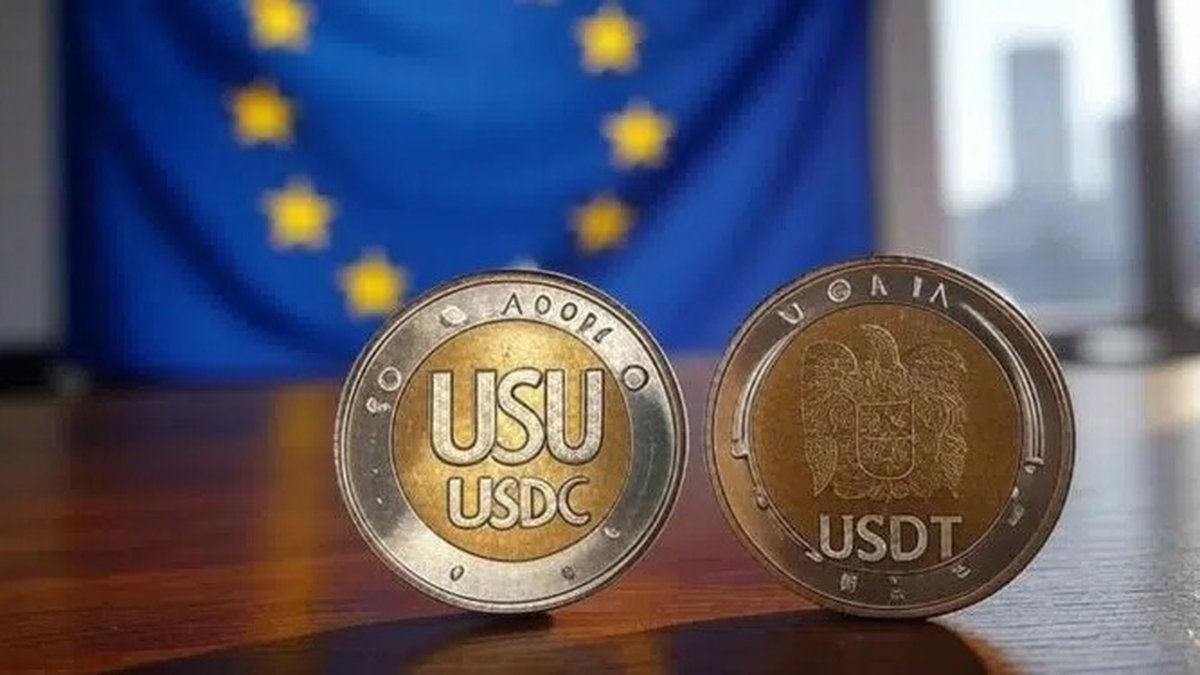
The term sounds arcane, but the intuition is simple. Imagine a widely used dollar stablecoin that appears as one fungible asset on screens but in legal reality exists as multiple issuances or wrappers: for example, a token minted by an EU-licensed e-money institution under MiCA, and a near-identical token minted outside the EU by an affiliated entity under different rules. On trading venues and blockchains, the tokens may be treated as perfect substitutes. In redemption, they may not be. If only the EU wrapper guarantees same-day par redemption into a euro-area bank, while the offshore one does not—or if reserve custody, audit cadence, or segregation differs—then under stress, users rush to redeem the best-money version first. The rest can de-peg.
European policymakers are not theorizing in a vacuum. ESRB analysis explicitly highlights run dynamics and the importance of reserve composition, governance, and redemption logistics. These are not abstract worries; they are the same pipes that clogged in legacy finance during money-market stress episodes.
MiCA Helps—But the Path to Par Still Matters
MiCA (Markets in Crypto-Assets Regulation) imposes meaningful constraints on EU-offered stablecoins—classified broadly as e-money tokens (EMTs) and asset-referenced tokens (ARTs). Among the big moves: par-value redemption rights for EMTs, reserve requirements with defined quality and custody, and enhanced oversight for significant tokens. As the ESRB summarizes, the legislative package even contemplates minimum reserve deposits at banks—for instance, higher required bank-deposit shares for significant issuers. These layers aim to reduce opacity and improve liquidity under stress.
Still, law is not logistics. MiCA can compel better reserves and disclosures inside the EU perimeter, but it cannot, by itself, erase the frictions of a multi-issuer, cross-border ecosystem. Even if two wrappers map 1:1 to the same brand, their legal claims, redemption agents, and settlement banks can differ. The result is a single market price in normal times but multiple redemption realities in stress. That wedge is where runs start.
Why This Matters for Dominant Names Like USDT and USDC
Scale makes design choices systemic. Tether’s USDT and Circle’s USDC remain the two largest stablecoins globally. Through mid-2025, USDT’s market value hovered well above $100 billion, and USDC grew back toward roughly $75 billion after a mid-2023 trough. Such size ensures that even modest de-pegs ripple through derivatives, DeFi collateral, and exchange liquidity across regions—including Europe. ([bitmarkets.com][2])
European officials are consequently attuned not only to domestic EMTs, but also to foreign-issued tokens used by EU clients or traded on EU venues. Reuters reporting captures this stance: the ECB has sought more safeguards for foreign stablecoins ahead of MiCA implementation, and the ESRB has called for urgent measures to contain run risk during the transition. ([Cambridge University Press & Assessment][1])
The Redemption Problem No One Wants to Talk About
In quiet markets, stablecoin redemptions feel trivial—burn the token, get cash. In stress, timing and location matter. Who is the EU redemption agent? Which banks hold reserves? Are payouts same-day in euros or next-day in dollars? Can an exchange or prime broker redeem on behalf of clients without creating omnibus opacity? Does the issuer gate redemptions or impose fees? Each answer changes the calculus for professional traders deciding whether to arbitrage a small dip or run for the exits.
ESRB analysis emphasizes exactly these mechanics, drawing analogies to money-market funds and highlighting the risk that large-scale redemptions force fire-sales of reserves, causing further de-pegs and a self-reinforcing loop. The takeaway: without aligned logistics, a multi-issuance brand can fracture under stress into “good” and “less good” paper, and the market will know which is which within hours.
MiCA’s Gaps in a Cross-Border World
MiCA is a single-market rulebook. Markets, alas, are not single. Here are three practical gaps that traders and compliance teams should understand:
1. Onshore/offshore fungibility: If an EU-issued EMT and an offshore look-alike trade as one ticker, MiCA’s protections might only cover part of the circulating float. That’s fine until it isn’t. Under stress, EU-protected tranches will be redeemed first. Remaining supply can de-peg and pricediscount may linger.
2. Intraday liquidity & settlement cycles: Par redemption is only as good as the settlement window. If cash hits T+1 but exchanges must meet margin calls today, they will sell tokens into the market rather than wait, deepening discounts.
3. Intermediated redemption risk: If clients can only redeem through a venue or broker, the client’s legal claim may be against the intermediary, not the issuer. In a venue-level liquidity squeeze, that distinction matters.
What Supervisors Are Likely to Do Next
Signals from Brussels and Frankfurt suggest more than gentle nudges. The Commission and the ECB have explored guardrails around redemption rights and design safeguards, including in contexts as technical as the digital euro’s own issuance model—multi-issuer versus single-issuer trade-offs inevitably rhyme with stablecoin design questions. Expect more prescriptive guidance on segregation of onshore/offshore wrappers, disclosure of redemption channels, and stress-testing that simulates hour-by-hour liquidity, not weekly averages. ([CSSF][3])
In parallel, the ESRB’s call for urgent safeguards during the MiCA transition period hints at tighter coordination between the EBA (which supervises significant issuers) and central banks. The ESRB has also highlighted reserve composition constraints—including minimum bank deposit shares for significant tokens—that directly affect how quickly issuers can raise cash under fire. ([esma.europa.eu][4])
How Big Is Europe’s Exposure, Really?
Europe is not the largest stablecoin market by issuance, but it is a large user via exchanges, brokers, custodians, and the growing pipeline of tokenized money-market products. That usage couples Europe to global shocks. When a stablecoin wobbles, the de-peg arbitrage runs 24/7 through both EU and non-EU venues. If the EU float of a brand is effectively smaller than its market cap suggests—because only part of it sits in EU-protected wrappers—then intraday redemptions can hit a hard limit much sooner than advertised.
What the Market Should Watch (and Quantify)
• Spread to par by venue and hour: Track the micro-de-peg—1 to 50 bps—across EU versus offshore venues during volatility spikes. Persistent basis differentials often foreshadow asymmetric redemption frictions.
• Reserve transparency at the right cadence: Weekly attestations are not enough under stress. Look for issuers willing to publish intramonth reserve breakdowns and list settlement banks.
• Onshore redemption audit: Ask for metrics: median hours from burn request to fiat receipt into an EU bank account, size of largest same-day redemption executed in the past quarter, and frequency of operational outages.
• Intermediary concentration: If 60% of EU redemptions must pass through one or two venues, venue-level outages (or banking counterparties) become systemic single points of failure.
Investor & Operator Playbook
For treasurers and funds: diversify function, not just brand. Holding USDT and USDC on the same venue does not equal diversification if both redeem via the same bank or broker. Consider an EU-issued EMT for day-to-day payments, a second brand for trading liquidity, and a tokenized fund share for parked cash. Write redemption SLAs into your internal policies.
For exchanges and prime brokers: publish operational transparency, not just legal comfort letters. Traders want to know your intraday quota with each issuer, your cut-off times, and the banks that settle euro wires. Also, simulate a two-day multi-issuer run: what haircuts will you apply to collateral? Which tokens get auto-converted to euros? Will you gate retail redemptions to prioritize wholesale flows?
For token issuers: embrace geographic segmentation with clarity. If the EU wrapper has stronger rights, label it cleanly on-chain and in UIs. Offer a formal swap path from offshore wrappers to EU wrappers before stress. The cost of standing up this plumbing is lower than the cost of a reputational de-peg.
Case Study: Why ‘Fungible on Screens’ ≠ ‘Fungible in Court’
Suppose a large exchange advertises a single USD stablecoin ticker. Behind the scenes, inventory comes from both EU-issued EMTs and offshore tokens. During a macro shock, spreads widen. Professional arbitrageurs pull inventory and line up redemptions. If the EU wrapper caps intraday redemption (because of banking cut-offs) while the offshore wrapper is cash-rich in dollars but slow to wire euros, the venue sees outflows of the ‘good’ paper first. Prices gap lower for the rest. A textbook death spiral—selling begets de-peg, de-peg begets more selling—can begin in hours. ESRB’s run-risk analysis reads like a post-mortem for exactly this scenario.
How We Got Here: A Short Timeline
1. Early 2020s: Stablecoins evolve from exchange scrip to market backbone. Run events (e.g., de-pegs) expose structural issues—reserve opacity, bank concentration.
2. 2023: MiCA passes, defining ARTs and EMTs and setting a supervisory path for significant tokens. The groundwork is laid for EU-issued, par-redeemable offerings.
3. 2024–2025: ESRB and ECB push for stronger guardrails as MiCA takes effect. The ECB stresses safeguards for foreign stablecoins used in the EU, and ESRB calls for urgent measures during the transition. Meanwhile, the largest tokens—USDT and USDC—continue to scale globally (USDC rebuilt near $75B by mid-2025). ([Cambridge University Press & Assessment][1])
Policy Compass: What ‘Good’ Looks Like
1) Clear onshore/offshore demarcation: A token brand operating both inside and outside the EU should mark wrappers distinctly on-chain, with canonical bridges and swap terms disclosed before crisis.
2) Intraday liquidity assurance: Supervisors could require significant issuers to pre-commit same-day redemption capacity tiers (e.g., €X billion per day) and disclose used/unused headroom during stress.
3) Reserve composition that survives T+0: As ESRB notes, higher bank-deposit shares for significant tokens improve cash immediacy. Issuers could also maintain committed repo lines against short-duration government paper to meet redemptions without fire-selling.
4) Harmonized disclosures: Force apples-to-apples reporting across brands: settlement banks, top five custodians, duration ladder, and the largest single-counterparty exposure.
Bottom Line
Europe’s message is not to kill stablecoins—it’s to harden them. MiCA will raise the floor. But the ceiling—how these tokens behave during a two-day sprint for cash—still depends on plumbing: redemption agents, bank lines, and the precise way ‘one token’ becomes this legal wrapper or that one when stress hits. For traders, treasurers, and product teams, the edge is no longer in spotting a de-peg first; it’s in having pre-agreed paths to par, across wrappers and jurisdictions, so your liquidity is real when you need it most.