Fear Mode On: A 24-Hour Crypto Flush, Privacy Resilience, and Where the Next Trade Might Emerge
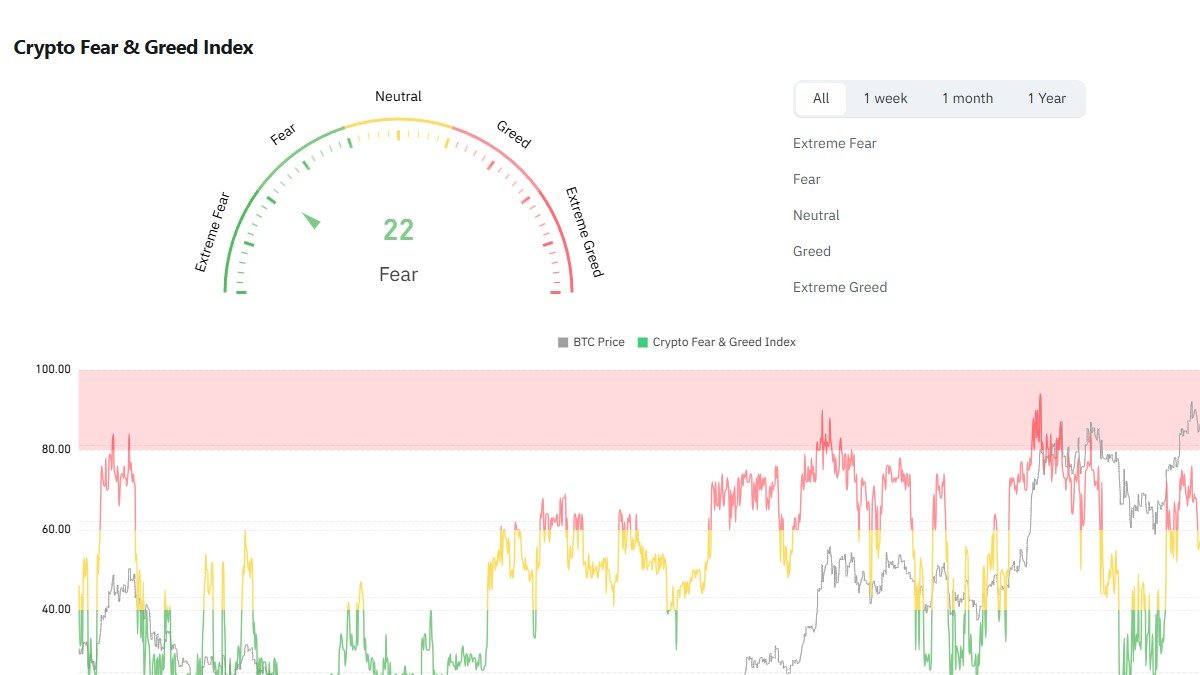
Markets can spin from complacency to caution in a single session, and the last 24 hours delivered a textbook reminder. Total crypto market capitalization fell more than 5% to roughly $3.614T. Liquidations approached $1.3B—about 90% from long positions—while the crowd’s compass swung to Extreme Fear at 21. Yet beneath the blanket of red, a different story quietly took root: privacy coins showed relative strength, infrastructure kept shipping, and real-world assets (RWA) made tangible progress. This wrap dissects the day’s catalysts, separates signal from noise, and closes with a practical plan for the next 48–72 hours.
What Actually Happened (and What Did Not)
• Risk-off impulse, not a fundamental break. The selloff had the hallmarks of positioning stress: stretched longs, thin books during transitions between trading sessions, and a cluster of forced unwinds. Nothing in the core protocols broke; rather, leverage was priced lower.
• Sentiment capitulated fast. A fear index at 21 tells you more about positioning than about long-term value. Panic compresses timeframes: traders search for exits, not narratives.
• Security shock: Balancer v2 security vulnerability (~$128M). A painful reminder that audit ≠ invincible. When a veteran, widely integrated protocol gets hit, the market’s risk appetite tightens across DeFi, not just the impacted pools.
• Venue mechanics under a microscope. Wintermute publicly denied filing suit against Binance but still flagged questions around liquidation behavior. Regardless of the specifics, this keeps attention on how liquidation engines work when volatility spikes.
Green Shoots in a Red Tape
Amid deleveraging, builders…built.
• Tokenized markets: ONDO and BX Digital launched regulated trading for tokenized stocks and ETFs in Europe. RWA traction is not just a story; it is plumbing that brings TradFi references into on-chain settlement windows.
• Institutional rails: Ripple acquired custody/wallet firm Palisad and unveiled a spot prime brokerage service for US institutions—prime services are the connective tissue that lets larger allocators participate beyond retail gateways.
• Proof tech: StarkWare shipped the S-two prover on Starknet, aiming at faster proving, stronger security assumptions, and a more decentralized production path.
• L1 throughput: BNB Chain activated the Fermi hardfork, cutting block times (≈750ms → ≈450ms). Lower latency can mean tighter spreads and better user experience for retail-heavy apps.
• Data on-chain: Chainlink and FTSE Russell moved marquee indices on-chain via DataLink. Price transparency and standardized references are prerequisites for institutional structured products.
• Liquidity plumbing: Liquid, a DEX aggregator, raised $7.6M in seed funding (Paradigm led). Aggregation is a quiet alpha source—routing improvements lift realized prices across the stack.
• Listing optics: Monad (MON) entered Coinbase’s roadmap—an attention catalyst that tends to tighten spreads and deepen order books into eventual listings.
• Privacy complex outperforms: DASH/DCR/ZEN resisted the worst of the drawdown. Whether you cheer or fear privacy, the market treated it as a portfolio diversifier on a stress day.
Macro Noise, Political Signal
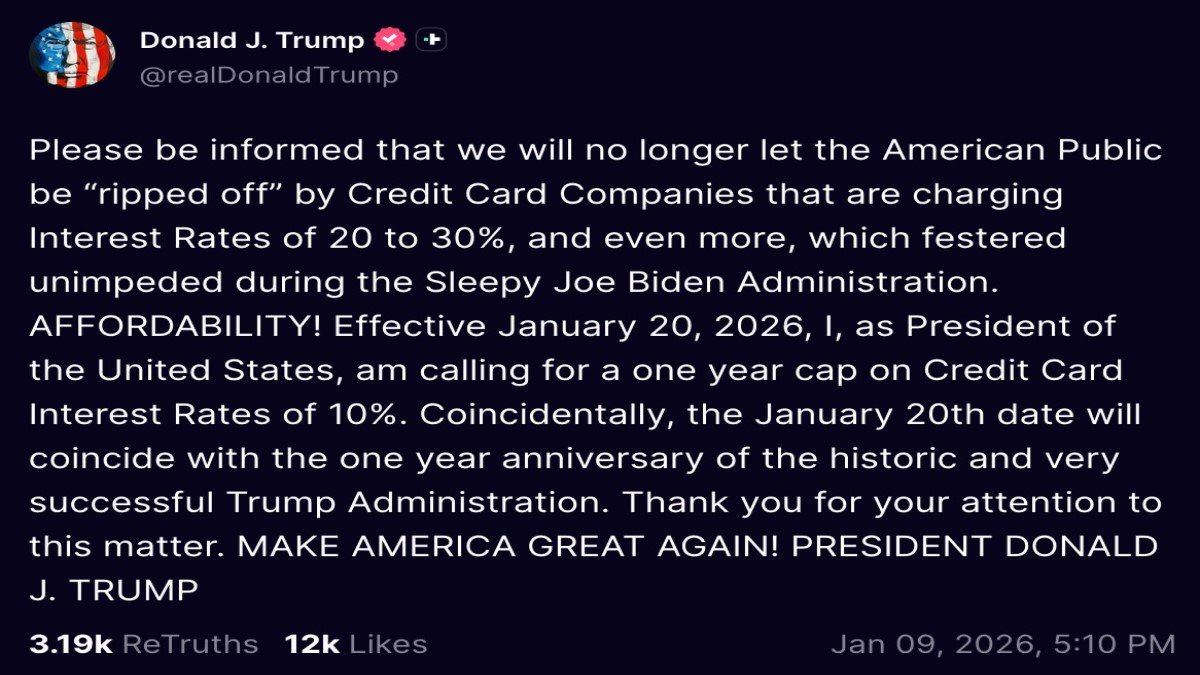
Macro narratives were thick on the tape. President Trump asked the only question some crypto natives care about—“Will we be number one in crypto?”—and suggested China is leaning hard into Bitcoin and digital assets. Strategy (MicroStrategy) quietly added 397 BTC (~$43M), a reminder that corporate treasuries are still dollar-cost averaging into drawdowns. Amazon’s headline partnership with OpenAI signaled tech’s appetite for AI infrastructure at virtually unlimited scale. Fed commentary remained cautiously constructive (Goolsbee’s “golden path”), while derivative dashboards flashed $570M in long liquidations within a single hour—evidence that the mechanical side of markets, not the speechmaking, decided intraday direction. Elsewhere, Polymarket odds for BTC sub-$100k this month ticked to 52%, which is less about prophecy and more about the crowd finally pricing two-sided risk.
Anatomy of the Deleveraging: What We Learned
1) Liquidations Are a Mechanism, Not a Motive
Longs dominated the casualty list (≈90% of liquidations). Why? Because funding had leaned long into resistance bands; once prices slipped through those bands, risk engines took the wheel. A cascade is the market’s way of resetting risk without asking for permission. Treat liquidation totals as information: they show where leverage sat and how it unwound; they don’t tell you what happens next by themselves.
2) Spot vs Perps: Who Led the Dance?
Perpetuals drove the move. We saw the classic sequence: perps break structure, spot follows reluctantly, funding collapses toward flat/negative, and open interest (OI) purges. The quality of any forthcoming bounce hinges on spot leadership. If spot buyers step in while funding stays tame, rebounds can sustain; if perps sprint first with hot funding, expect a second shakeout at the first overhead shelf.
3) Security Events Amplify Risk Premia
Balancer’s v2 security vulnerability hit sentiment harder than its dollar figure would suggest because it violated a collective comfort: audited, battle-tested protocols are supposed to be safe enough. The correct takeaway is not cynicism but process: diversify counterparty risk, monitor TVL migrations, and assume that composability magnifies both innovation and failure modes.
Privacy Coins: Why They Held Up Better
On stress days, investors search for uncorrelated speculative positions. Privacy coins—DASH, DCR, ZEN—benefited from three overlapping effects:
- Positioning: They were under-owned relative to hype cycles in AI and restaking. Under-owned assets have fewer sellers on the way down.
- Narrative utility: As regulators sharpen their focus on stablecoins and centralized primitives, a subset of traders rotates toward privacy, if only temporarily.
- Microstructure: Shallower derivative participation can dull the cascade effect. Fewer levered longs = fewer forced sells.
Do not romanticize the resilience; privacy assets can be illiquid and headline-sensitive. But today, they did their job as portfolio shock absorbers.
Infrastructure Progress That Actually Matters
StarkWare’s S-two Prover
Prover performance and decentralization are not vanity metrics—they decide whether L2s can settle high-frequency activity without trust trade-offs. A faster, more robust prover reduces time-to-finality variance and broadens the set of apps that can live comfortably on the rollup.
BNB Chain: Fermi Hardfork
Reducing block time from ~750ms to ~450ms sounds small until you model throughput and user-visible latency. For retail UX, that difference can flip abandonment rates in swaps and mint flows. For market makers, it changes inventory risk at the edges of liquidity bands.
Chainlink x FTSE Russell
Bringing benchmark indices on-chain closes a loop that RWA and structured-product issuers have wanted for years: verifiable, standardized references that regulators and compliance teams recognize. Expect index-linked vaults, notes, and risk-parity constructs to step out of slide decks and into production.
Ripple Prime Brokerage
Institutional spot prime brokerage is how real money enters without juggling 10 exchanges and 15 custody arrangements. Lending, agency execution, settlement netting, and compliance tooling are not glamorous, but they are the rails that make flows sticky instead of opportunistic.
Regulatory & Venue Optics
TON Strategy’s warning letter from Nasdaq on shareholder-approval rules is a corporate governance footnote with outsized narrative impact: every token-adjacent public vehicle now knows the spotlight is hotter. Wintermute’s comments on liquidation anomalies—despite rejecting a lawsuit narrative—keep the industry honest: venue rules must be legible, reproducible, and resilient under stress. The quiet winner of such scrutiny is standardization; the loser is opacity.
Where Opportunity Lives After a Flush
Deleveraging can be terrifying; it can also be a reset that hands disciplined traders better setups than last week’s stretched ranges. Here is a structured plan that separates decision points from emotions.
1) The Signal Grid (Next 48–72 Hours)
- Open Interest: Look for a gradual rebuild alongside stable price. A vertical OI snap-back with choppy price is fragility, not health.
- Funding: Flat to mildly positive during rebounds is constructive. Immediately hot funding into first resistance = caution.
- Spot Lead: Track whether spot leads perps on push-ups. If perps drag spot, the bid is fickle.
- Depth & Slippage: Watch the order book at the first reclaimed shelf. If bids hold and slippage stabilizes, it’s safe to step in with defined risk.
2) Two-Tier Playbook
Tier A: Base Hits on Majors. Buy reclaim-and-retest patterns (former resistance → support) on BTC/ETH with tight, structural stops. Scale out at the first overhead shelf; let a small runner try for continuation only if funding stays calm and spot keeps leading.
Tier B: Selective Beta. If breadth improves, pick 1–2 themes where microstructure supports extension: privacy (as a diversifier), RWA (ONDO-adjacent narratives), or data/infra (LINK-adjacent). Size smaller than majors; respect that air pockets remain larger in alts.
3) What Would Flip the View Bearish?
- Two consecutive sessions of perp-led bounces that fail at first resistance with funding spiking and OI ballooning.
- A failure of spot demand to appear while majors retest breakdown levels.
- Another high-profile security vulnerability in a core DeFi primitive before confidence has rebuilt.
Project-Level Notes
• ONDO & tokenized stocks/ETFs: The near-term impact is modest volumes with high symbolic value; the medium-term impact is a compliance pathway for larger issuers to test issuance and secondary liquidity without a bespoke stack per product.
• Ripple Prime: If the service gains traction, spreads for large clips should compress; watch for custody/lending partners and whether routing prefers internalization or external venues.
• Starknet’s S-two: Developers should see improved time-to-finality patterns for complex contracts. Monitor L2/DA costs; cheaper proofs widen feasible app design.
• BNB Fermi: Lower latency can push more market-making to BNB venues and improve fill quality for retail; the flip side is that any mempool-edge strategies will adapt—latency arbitrage never sleeps.
• Chainlink x FTSE Russell: Expect structured strategies—vol targeting, index-tracking vaults—to show up in on-chain asset management UIs. For LINK specifically, watch whether fee switch dynamics and oracle consumption translate to sustainable demand.
• Liquid (aggregator): The real tell is execution quality. If their router delivers consistently better realized prices across volatile conditions, orderflow will migrate, and the moat deepens with data.
• Privacy cohort: Treat this as a decorrelated sleeve, not a core holding. Outperformance on down days does not preclude sharp mean-reversions on up days.
Risk, Plainly Stated
There is no magic phrasing that turns a drawdown into a gift. There is only process:
- Position sizing follows volatility, not conviction. If realized ranges double, your size should halve until ranges normalize.
- Stops belong where the thesis breaks, not at round numbers. Liquidity hunts are brutal around obvious levels.
- OC O orders (bracketed entry with TP and SL) beat improvisation when the tape accelerates.
- Journal the trade, especially on stress days: entry logic, funding/OI context, whether spot led, and why you exited. The next flush will happen; your notes decide whether it is a setback or an edge.
Politics & Policy Watch (Why It Matters to Price)
Presidential rhetoric (“number one in crypto”) does not move markets by itself, but it reshapes probability trees around regulation, ETF approvals, and public-market listings for crypto-adjacent firms. Institutional allocators price path dependency. If policy tilts more permissive, prime brokerages thrive, tokenized assets accelerate, and basis trades tighten. If it tilts restrictive, builders still build—but flows stay more offshore and more episodic. Today’s headlines won’t resolve that fork; they keep it live.
Key Numbers at a Glance
| Metric | Implication | |
|---|---|---|
| Total Market Cap | $3.614T (−5%) | Risk was repriced lower; not a structural failure. |
| Liquidations (24h) | ~$1.3B | Mechanistic deleveraging; 90% long side. |
| Fear & Greed | 21 | Extreme Fear—timeframes compressed; better entries often appear, but patience required. |
| Security Event | Balancer v2 ~$128M | Risk premia up; expect TVL rotation and tighter audits. |
| Infra | Starknet S-two, BNB Fermi | Throughput & proof performance up; UX tailwinds. |
| Institutional Rails | Ripple Spot Prime (US) | Stickier flows possible if execution/custody stack proves robust. |
| RWA/Data | ONDO/BX, LINK x FTSE | TradFi references on-chain; groundwork for structured products. |
| Funding Snapshot | Spiked then normalized | Watch for hot funding into resistance—classic fakeout risk. |
Scenarios and Tactics
Scenario A — Controlled Rebuild
Tell: OI climbs slowly; funding flat; spot leads; first retests hold.
Tactic: Focus on reclaim-retest buys on majors; take partials at the first supply shelf; keep runners only if structure remains clean. Consider a small sleeve in privacy or RWA if breadth widens.
Scenario B — Bounce Then Fail
Tell: Perps sprint, funding heats quickly, breadth narrow, rejection at the first shelf.
Tactic: Sell strength into resistance if nimble; otherwise, wait for acceptance. Avoid adding risk until funding chills and spot confirms.
Scenario C — Rangebound Chop
Tell: Oscillation between the flush low and first resistance; OI/funding meander.
Tactic: Either switch to range tactics (buy low/sell high with strict stops) or step aside. Chop consumes accounts faster than crashes.
Bottom Line
The last 24 hours were not a referendum on crypto’s long-term arc—they were a referendum on excessive leverage and complacent positioning. Builders moved the ball downfield (tokenized markets, prime brokerage, faster proofs, faster blocks, on-chain indices). Traders paid a tuition bill for chasing late or sizing as if volatility would stay tame forever. The market will present cleaner entries when structure, funding, and spot flows align. Until then, treat fear as a data point, not a directive.
Disclaimer
This analysis is for educational purposes only and does not constitute financial advice. Digital assets and derivatives are volatile and can lead to loss of capital. Always size positions to your risk budget, use protective stops, and conduct independent research.