Coinbase Lists TON Just as Bitcoin Slides Below 89,000 USD: What the Last 24 Hours Really Tell Us About Crypto
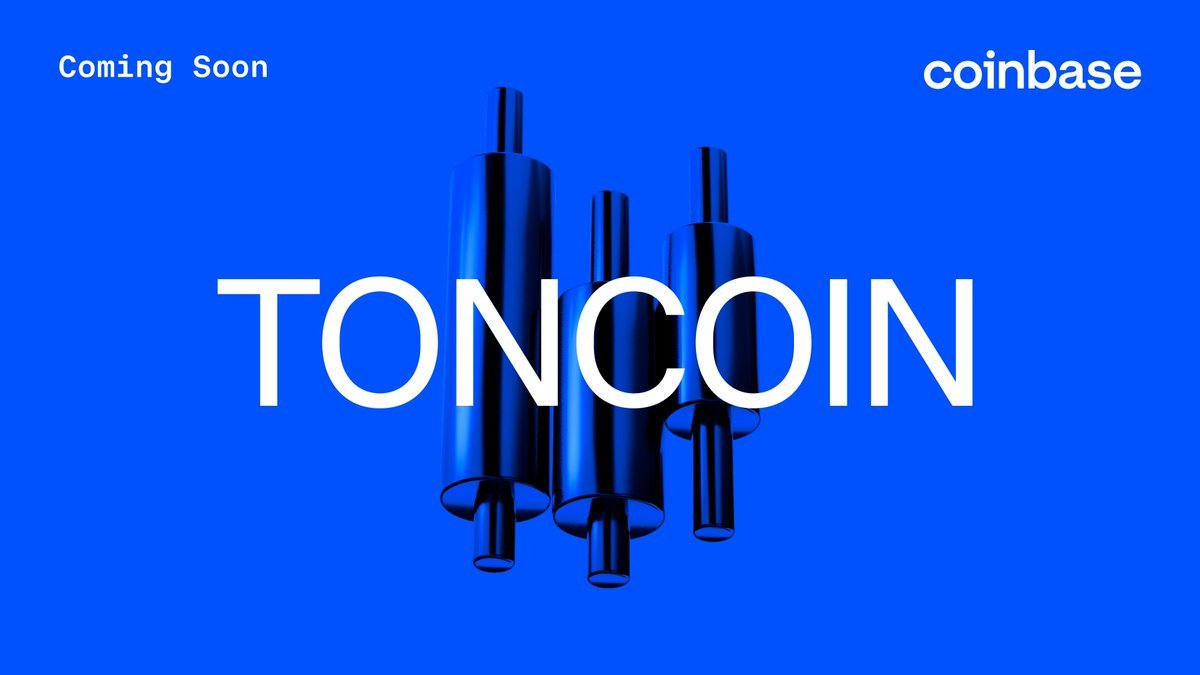
On paper, the headline of the day is simple: Coinbase has added Toncoin (TON) to its spot market, with trading for the TON-USD pair scheduled to go live on 18 November 2025, once sufficient liquidity is in place. At almost the same moment, Bitcoin has slipped under 89,000 USD, derivatives platforms have flushed hundreds of millions of dollars in leveraged positions and U.S. spot ETFs have logged yet another week of net outflows.
Those two facts capture the tension of this stage in the cycle. Prices are weak, positioning is being forced to reset and sentiment is hovering near capitulation. At the same time, the industry is quietly ticking off milestones that would have sounded like science fiction a few years ago: a major U.S. exchange integrating the Telegram-born TON ecosystem; Singapore Exchange preparing institutional perpetual futures; El Salvador and Strategy (the company formerly known as MicroStrategy) writing nine-figure Bitcoin tickets; and a growing list of projects pushing new rails for DeFi, privacy and smart-contract scalability.
This article unpacks the last 24 hours not as a random collection of headlines, but as a coherent snapshot of where the crypto market stands as 2025 winds down. We focus on four themes: what Coinbase listing TON really means; how the latest Bitcoin drawdown is reshaping risk; why capital is rotating toward infrastructure and away from pure speculation; and how regulators and stablecoin wobble are quietly redrawing the boundary between crypto and the legacy system.
1. Bitcoin breaks 89,000 USD as leverage clears and ETFs bleed
The starting point is price. In the past day, Bitcoin has broken below 89,000 USD for the first time in months, extending a drawdown of almost 30 percent from the October peak above 126,000 USD. Volatility has not reached the chaos of earlier crashes, but the pressure is real: data from derivatives trackers show roughly 800 million dollars of leveraged positions liquidated over 24 hours, with long traders bearing most of the pain. The network counted more than 160,000 individual accounts wiped out across exchanges, underscoring how crowded the trade had become at the top.
ETF flows echo that story. After a historic wave of inflows earlier in the year, U.S. spot Bitcoin funds have now logged multiple consecutive sessions of net redemptions, with estimates of 1.1 to 1.3 billion dollars in outflows over the last full week and around 3 billion dollars over the past month. That is not a full-scale exodus – cumulative flows for 2025 remain deeply positive – but it is a clear sign that part of the newly arrived institutional cohort is de-risking into weakness rather than buying the dip.
Technically, the 88,000 to 90,000 USD region has become the first major support band to watch. It lines up with a volume node from the post-halving consolidation range and with key levels on several popular moving averages. If that band fails decisively on a weekly close, the next logical destination on many traders charts lies far lower, in the mid-70s.
Yet even here, the tape is not one-dimensional. While many leveraged speculators are being flushed, balance-sheet buyers are stepping in. El Salvador has disclosed a purchase of roughly 1,090 BTC, spending around 100 million dollars to grow its national holdings at the very moment fear indexes flash extreme pessimism. Strategy, the corporate treasury that turned its stock into a quasi-Bitcoin ETF, has filed to reveal a fresh acquisition of 8,178 BTC at an average price just above 102,000 USD, a commitment of around 835 million dollars and its largest buy since mid-year. That brings its stash close to 650,000 BTC.
Finally, market psychology is being shaped in real time by public voices. Cameron Winklevoss, co-founder of Gemini, has told his followers that in his view this will be the last chance ever to buy Bitcoin below 90,000 USD. Whether that proves correct is unknowable; what matters is that the comment crystallises the divide between short-term fear and long-term conviction. On one side are ETF holders trimming exposure and traders being liquidated; on the other side are sovereign states, corporate treasuries and long-horizon investors leaning into the dip.
2. Coinbase lists TON: liquidity, legitimacy and the Telegram factor
Against this risk-off backdrop, Coinbase choosing to list TON is not a random listing; it is a strategic statement. For now, the exchange is opening a single market, TON-USD, with trading slated to commence on or after 9:00 a.m. Pacific Time on 18 November 2025, subject to standard liquidity checks. For Toncoin, already traded on large offshore venues like Binance and OKX, the move is less about first-time access and more about who is being invited to the party: U.S. and European clients who prefer regulated custodians and compliance-heavy rails.
TON arrives at Coinbase at a time when its underlying network is gaining real traction. Born as the Telegram Open Network and later rebranded, The Open Network has become the default blockchain for many Telegram-native mini apps, games and payment bots. Its selling point is a user experience that collapses the gap between Web2 and Web3: millions of users interact with wallets and smart contracts inside an interface they already know, often without being fully aware they are touching a blockchain at all.
In that light, Coinbase listing TON is not just an opportunistic attempt to ride a hot chart. It fits a broader shift in the exchange strategy: aggressively adding assets that sit at the intersection of consumer social, payments and smart-contract platforms, and which already have real usage metrics outside crypto-native circles. For institutional clients, the listing effectively creates a compliant, U.S.-domiciled way to gain exposure to the Telegram ecosystem without onboarding to offshore platforms or dealing with complex custody arrangements.
There is also a signalling effect. In previous cycles, a Tier-1 spot listing almost guaranteed a speculative spike as retail traders chased the new ticker. Today, with risk appetite constrained, the price reaction is likely to be more muted. That in itself is information: it tells us that access and distribution are no longer the only bottleneck. The market is demanding clearer narratives about long-term value accrual – for TON, that means demonstrating that Telegram-integrated activity can translate into sustainable demand for blockspace and the token, not simply one-off airdrops or gamified campaigns.
For professional readers, the real takeaway is that infrastructure assets are still being upgraded into the top tier of exchange coverage even as macro conditions deteriorate. That is a sign of an industry preparing for the next cycle, not one quietly packing up.
3. The builders keep building: Aqua, Aave, VSOL, Zama and Monad
Beyond TON, the last 24 hours have produced an unusually dense cluster of announcements that all point in the same direction: capital and talent are flowing toward protocol-level innovation and away from pure meme-driven speculation.
1inch launches Aqua. DEX aggregator 1inch has unveiled Aqua, a shared-liquidity protocol designed to let multiple DeFi strategies operate on top of the same capital base. Instead of every yield product siloing its own pool, Aqua aims to route liquidity to different strategies dynamically, improving capital efficiency and opening the door to more composable structured products. For a sector still recovering from leverage blow-ups and farming loops, this is a bid to make returns more sustainable and less dependent on reflexive token incentives.
Aave brings on-chain yield to the app stores. Aave Labs has moved ahead with a consumer-facing mobile application, now available on Apple and Android in select jurisdictions. The app offers on-chain savings targeting yields in the mid-single digits to just under double digits, abstracting away much of the complexity historically associated with DeFi. In practice, it turns Aave into something that feels to end users like a high-yield savings account, even though the underlying mechanics remain permissionless lending markets.
VanEck launches VSOL. On the traditional-finance side, VanEck has introduced its Solana ETF under the ticker VSOL, waiving sponsor fees for an introductory period. The product offers U.S. investors regulated exposure to SOL, including staking rewards, and joins earlier Solana ETFs from Bitwise and others. This cements Solana as the first non-Bitcoin, non-Ethereum asset to achieve a proper ETF ecosystem in the United States, and signals that the altcoin ETF race is transitioning from theory to actual products.
Zama pushes confidential computing toward production. Zama, the fully homomorphic encryption (FHE) project building a confidentiality layer for blockchains, has rolled out its Testnet v2. Unlike typical test environments, this version is positioned as a near-mainnet release candidate, with over one million encrypted transactions already processed on earlier iterations. The idea is to let any layer-1 or layer-2 chain offload encrypted computation to coprocessors, enabling private DeFi, gaming and identity use cases without sacrificing public verifiability.
Kohaku and the fight for Ethereum privacy. In parallel, Vitalik Buterin has presented Kohaku, a new open-source framework for wallet privacy on Ethereum. Rather than being a single protocol, Kohaku is a toolkit that stitches together techniques like Privacy Pools, mixers and zero-knowledge proofs into modular components that wallet developers can integrate. In combination with projects like Zama, it points toward a future where users can choose fine-grained privacy modes without giving up compliance or custody flexibility.
Monad and the return of Coinbase token sales. Finally, Coinbase has been experimenting with a regulated token-sale platform, and Monad – a high-performance EVM-compatible chain – is one of the flagship offerings. Early data shows roughly half of the MON allocation being reserved in the first hours, even in a risk-off market, with more than 100 million dollars of room still available. The mechanics are very different from the ICO mania of 2017: KYC, lockups and a defined governance structure are embedded from day one. But the underlying idea is similar: use exchange distribution to bootstrap a new base layer. How Monad performs once it lists will be a useful barometer of how much appetite remains for new L1 speculative positions.
Viewed together, these headlines show a market that is repricing risk but not abandoning innovation. Token prices may be rolling over, but the architecture of the next cycle – privacy rails, liquidity layers, high-throughput chains and regulated access products – is being laid in real time.
4. Cracks and casualties: DappRadar, YU and the cost of unsustainable models
Every rotation has losers as well as winners. Two stories from the past day highlight the cost of business models that did not adapt quickly enough.
DappRadar shuts down. After seven years of tracking on-chain activity, DappRadar has announced a phased shutdown, citing financial unsustainability. Its RADAR token has sold off sharply on the news. For years, DappRadar served as a default reference for DApp rankings, volumes and user stats. But the economics of running a free analytics platform in a bearishly trending market proved unforgiving. The closure is a reminder that infra projects need defensible revenue models beyond ad hoc token incentives and that data businesses in crypto face the same margin pressures as in traditional tech.
Yala stablecoin YU loses its peg. Over in DeFi, Yala s Bitcoin-backed stablecoin YU has slipped dramatically from its intended one-dollar peg, trading as low as roughly 0.47 USD on some venues. Reports cite a mix of historical vulnerabilities, earlier bridge security vulnerabilities and thin liquidity as contributors. Whatever the ultimate post-mortem concludes, another stablecoin depeg reinforces a familiar lesson: stablecoins are only as robust as their collateral, redemption mechanisms and governance. For risk desks, the event will harden the distinction between battle-tested majors and experimental designs masquerading as cash equivalents.
Together, these setbacks reinforce that 2025 is a year of consolidation. Projects that cannot justify their costs, or that treat risk management as an afterthought, are being forced to either reinvent themselves or shut down. That is painful for token holders in the short term, but arguably healthy for the long-term signal-to-noise ratio of the ecosystem.
5. Regulation and macro: the IRS looks offshore while SGX leans in
The last 24 hours have also produced clarity on how governments are recalibrating their relationship with crypto.
In Washington, the White House is reviewing a proposed rule that would empower the Internal Revenue Service to access data on Americans foreign cryptocurrency accounts. The move would extend the logic of existing offshore banking rules into the digital asset realm, forcing foreign exchanges and custodians dealing with U.S. persons to share more information. For individuals who have treated non-U.S. platforms as a grey zone, the message is blunt: the window for anonymous offshore trading is closing.
At the same time, Singapore is moving in the opposite direction in terms of market integration. Singapore Exchange (SGX) has confirmed plans to launch institutional-grade perpetual futures on Bitcoin and Ethereum on 24 November 2025. Unlike the perpetuals that grew up on unregulated crypto venues, these contracts will clear through SGX, bringing traditional risk-management tools and margin frameworks to a product structure that crypto traders already use by default. This is part of a wider trend: rather than banning leverage outright, regulated markets are trying to import its most popular forms onto supervised rails.
The contrast is striking. The U.S. is tightening taxation and reporting for offshore activity, while Asian financial centres like Singapore continue to innovate on product design. For global allocators, this suggests a future in which regulatory arbitrage shifts from basic questions like is crypto allowed at all to more nuanced ones about leverage, derivatives access and reporting obligations.
6. How to read this 24-hour window as a professional
Stepping back, what should an institutional or serious individual investor take away from this dense news cycle?
First, price action is cleaning up the excesses of the last leg, not necessarily ending the cycle outright. The combination of ETF outflows, heavy liquidations and a break below 89,000 USD is serious, but the presence of large balance-sheet buyers (sovereign and corporate) argues against the idea that everyone is running for the exit. Instead, it looks like a classic late-cycle leverage reset.
Second, exchange listings are no longer guaranteed rocket fuel. Coinbase adding TON is important for liquidity and legitimacy, yet in a market dominated by macro forces it may not produce the kind of sustained rally that older traders associate with top-tier listings. That is actually a sign of maturation: fundamentals and usage are beginning to matter more than pure access events.
Third, capital is quietly repricing what counts as “real” in crypto. The same 24-hour window that punished high-beta assets also rewarded narratives tied to infrastructure, yield generation and privacy. Aqua, Aave s mobile app, VSOL, Zama and Kohaku are all speculative positions on crypto as a durable financial and computational layer, not just a vehicle for speculative memes.
Fourth, regulatory and operational risk remains underpriced in many corners. The IRS rulemaking process, the YU depeg and the shutdown of DappRadar all highlight that compliance, treasury design and business-model viability can move just as quickly as token prices. Investors who treat those dimensions as secondary to price-only charts are mining the wrong signal.
Finally, the day is a reminder of why high-quality analysis still matters. In a feed dominated by hot takes and isolated screenshots, the temptation is to react headline by headline: panic at the BTC wick, FOMO into the latest listing, rage at another stablecoin failure. A more professional approach is to treat days like this as dense data points in a longer narrative: a market shaking out leverage, rotating from noise to infrastructure, and being slowly pulled into the regulatory and institutional mainstream even as its price charts scream volatility.
Toncoin’s arrival on Coinbase amid a risk-off storm is not a contradiction. It is the story of this industry in miniature: price cycles come and go, but the architecture being built beneath them keeps moving forward. The traders who survive the current drawdown will likely be the ones who can see that difference clearly.
This article is for informational and educational purposes only and does not constitute investment, trading, legal or tax advice. Digital assets are highly volatile and may be unsuitable for many investors. Always conduct your own research and consider consulting a qualified professional before making financial decisions.