China’s Renewed Crackdown on Crypto and Stablecoins: What It Really Means
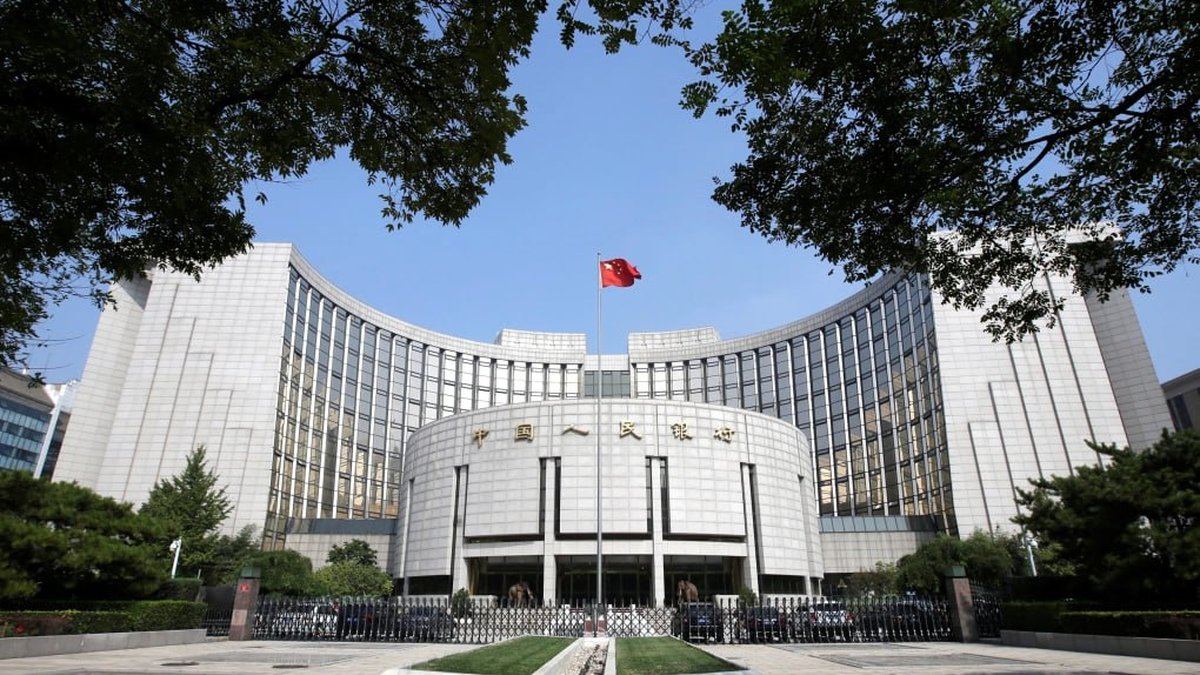
China has never tried to hide its skepticism toward privately issued digital assets. Since 2021, the country has enforced one of the most restrictive environments in the world for public crypto trading and large-scale mining. Now the People’s Bank of China (PBOC) is once again stepping in to underline that stance, with a particular focus on stablecoins and their role in cross-border capital flows.
In a recent update, the PBOC warned that speculative activity around digital assets appears to be increasing again, posing fresh challenges for financial stability. The central bank reiterated that crypto assets do not have the same legal status as the renminbi, cannot be used as legal tender and that business activities centered on these assets fall under the umbrella of illegal financial activity under Chinese law. Within this broader message, stablecoins were singled out as a priority for enforcement because they can be used as liquid bridges for moving value at scale across borders.
At the same time, Hong Kong is building a regulated framework for stablecoins, and large Chinese-linked firms are quietly exploring how these instruments might fit into cross-border trade and settlement. The result is a seemingly paradoxical picture: a strict prohibition onshore, carefully managed experimentation offshore and a policy debate that goes far beyond any single token or platform.
1. PBOC’s message: no legal tender status, no tolerance for unregulated activity
The first pillar of the PBOC’s position is legal clarity. The central bank has restated that:
- Crypto assets are not legal currency in China.
- They cannot be used as official means of payment for goods and services.
- Businesses that organize trading, provide matching services or operate as intermediaries for these assets are treated as engaging in unlicensed financial activity.
This is not new policy, but the renewed emphasis matters. From the PBOC’s perspective, a resurgence in speculative behavior can quickly spill over into household balance sheets, shadow banking and local credit conditions. Even if crypto markets remain formally offshore, the central bank is keenly aware that mobile apps, over-the-counter arrangements and cross-border channels can reconnect domestic users to global liquidity.
The core message is therefore twofold: there is no path toward recognizing public crypto assets as money, and there is little patience for platforms that allow residents to bypass the existing capital-account framework.
2. Why stablecoins are in the crosshairs
Among all digital assets, the PBOC has made clear that stablecoins are the primary concern. The reasoning is straightforward. While volatile assets such as Bitcoin or Ether are often treated as speculative instruments, stablecoins are explicitly designed to behave more like transaction money: liquid, relatively predictable in value and easy to integrate into payment flows.
From a risk-management standpoint, that combination raises several red flags for Chinese regulators:
• Cross-border value transfer. Stablecoins can move across jurisdictions quickly, often outside traditional correspondent banking channels. That makes it harder to enforce capital controls and track large flows in real time.
• Anti-money-laundering challenges. When stablecoins circulate through non-custodial wallets or loosely regulated venues, it becomes more difficult for authorities to apply customer due diligence, transaction monitoring and reporting standards that are routine in the banking sector.
• Disconnect from domestic policy settings. Because many leading stablecoins are referenced to foreign currencies, they implicitly embed another country’s interest-rate and monetary policy stance. Large-scale use inside China would weaken the transmission of domestic policy tools.
For these reasons, the PBOC has signaled that private stablecoins are not merely another speculative asset category. In its view, they are parallel payment systems that could, if left unchecked, compete directly with the official monetary system and undermine years of work to manage systemic risk.
3. A strict mainland ban alongside quiet mining and cross-border experiments
China’s hard line on public crypto trading and mining is well documented. Since 2021, exchanges serving mainland users have shut local operations, and large industrial mining facilities have been dismantled or relocated abroad. Yet reality is more nuanced than a simple on/off switch.
Reports from industry participants suggest that some level of mining has quietly returned in provinces with abundant, low-cost power. These operations are typically smaller, more geographically dispersed and more careful about how they connect to the broader network. While the absolute scale is far below pre-2021 levels, the pattern illustrates an important point: economic incentives do not disappear simply because a law is enacted. They reconfigure.
On the capital-markets side, Hong Kong has emerged as a controlled laboratory for digital-asset initiatives. The city has published a licensing regime for trading platforms and a draft framework for stablecoin issuers, even if no full licenses have been granted yet. For mainland authorities, this setup offers a way to observe how regulated stablecoins behave in a common-law environment without loosening capital controls onshore.
4. The Hong Kong connection: cross-border payments and corporate interest
One of the more intriguing developments is the reported interest from large mainland-linked companies in using stablecoins for cross-border payments via Hong Kong. Energy and commodities groups, including firms such as PetroChina, have been exploring how tokenized settlement instruments might streamline trade flows, reduce counterparty risk and shorten settlement cycles.
In these concepts, a regulated stablecoin would live inside Hong Kong’s legal framework, with full anti-money-laundering and know-your-customer checks applied to participants. Corporate users could then settle certain transactions more quickly, while regulators maintain visibility into flows and counterparties. For Beijing, this approach has two attractions:
- It preserves policy control inside the mainland, where public crypto trading remains prohibited.
- It allows targeted experimentation in a jurisdiction that is familiar with global capital markets and international standards.
The result is a dual-track model. Onshore, authorities keep a firm grip on capital flows and discourage public speculation in digital assets. Offshore, especially in Hong Kong, they explore how certain building blocks from the crypto world—stablecoins, tokenized deposits, digital bonds—might enhance the efficiency of global financial links without compromising regulatory objectives.
5. The digital yuan and the strategic logic behind the crackdown
Any discussion of China’s stance on stablecoins must be understood in the context of the digital yuan (e-CNY). The e-CNY is a central bank digital currency (CBDC) designed to modernize retail payments, strengthen the resilience of the domestic payment system and give policymakers more direct tools for implementing monetary and fiscal measures.
From the PBOC’s perspective, the coexistence of a state-backed digital currency and large, privately issued stablecoins raises several strategic issues:
- If households and firms prefer foreign-referenced stablecoins for savings and payments, the effectiveness of domestic policy tools could weaken.
- Parallel settlement systems could create fragmentation, where some sectors use e-CNY and others rely on offshore instruments, complicating supervision.
- In periods of stress, rapid shifts between domestic currency and foreign-referenced stablecoins could intensify capital flight pressure.
By firmly limiting private stablecoins within its jurisdiction, China is protecting the policy space for the e-CNY and the conventional banking system. It is telling both domestic and foreign players that digital innovation is welcome only when it aligns with national financial-stability objectives. From that angle, the latest statements are not simply about crypto; they are part of a broader strategy to shape the architecture of the next-generation monetary system.
6. Implications for global stablecoin issuers
For global stablecoin issuers, China’s approach sends a clear message: large, open-access instruments that operate outside formal banking channels are unlikely to ever receive broad onshore recognition. Even if foreign firms do not plan to serve mainland users directly, their products can still be drawn into policy debates whenever cross-border use touches sensitive areas such as trade finance or wealth management for offshore Chinese communities.
Key implications include:
• Expect tighter scrutiny on cross-border corridors. Any channel that allows residents to move value between domestic and offshore environments is likely to attract regulatory attention, especially if stablecoins are involved.
• Partnerships may need to be highly structured. Firms that want exposure to Chinese-linked flows may have to work with licensed banks, payment institutions or Hong Kong-regulated entities rather than serving users directly.
• Regulatory fragmentation will remain. While some jurisdictions are building stablecoin regimes that treat these instruments as supervised payment tools, others, like mainland China, are more comfortable with state-backed digital currencies and tightly controlled pilots.
In short, stablecoin providers cannot assume a harmonized global playing field. They must design products and compliance functions that can adapt to very different policy philosophies—from open competition with bank deposits in some regions to tightly constrained, institution-only usage in others.
7. What this means for investors and builders
For individual investors and builders in the crypto ecosystem, China’s renewed statements highlight several practical lessons.
First, jurisdiction matters. The same instrument—a dollar-referenced stablecoin, for example—can be treated as a standard payment tool in one country, a high-risk product in another and a strictly prohibited asset in a third. Anyone operating across borders needs to understand not only the global narrative but also the local rules that actually govern conduct.
Second, policy goals shape technology, not the other way around. While blockchains make it technically possible to move value without intermediaries, major economies are unlikely to abandon long-standing safeguards around capital flows, consumer protection and financial stability. Instead, they will integrate selected pieces of crypto technology—such as programmable ledgers and tokenized deposits—into frameworks that preserve those goals.
Third, experiments at the edge can be as important as blanket bans. Hong Kong’s work on a stablecoin framework, even without current issuers fully licensed, is a signal that Chinese policymakers are not ignoring the potential of tokenized money. They are simply insisting that, when these instruments touch their financial system, they do so under clear supervisory lines.
8. Looking ahead: a controlled opening, not a reversal
It is tempting to interpret every crack in the mainland ban—whether a report of returning mining activity or a new pilot in Hong Kong—as the beginning of a broad policy reversal. The more realistic reading is subtler. China appears committed to a controlled opening in which:
- Public speculation in unregulated crypto assets remains strongly discouraged onshore.
- State-backed digital currency and bank-led payment systems anchor domestic monetary life.
- Tokenization and stablecoin concepts are explored in carefully ring-fenced environments, especially where they can support trade, wholesale markets or cross-border infrastructure.
For the global crypto industry, this means China is unlikely to become a large open retail market for private stablecoins in the near term. However, its choices in areas such as digital currency design, tokenized trade finance and cross-border payment rails will still influence standards around the world.
9. Key takeaways
China’s latest statements on crypto and stablecoins are not simply a repetition of old bans; they are a reminder of how large jurisdictions may approach digital assets in the coming decade. Stablecoins, in particular, sit at the intersection of payment systems, capital controls and monetary policy, making them far more sensitive than many other token types.
For investors, the lesson is to treat regulatory context as a core part of risk assessment, not an afterthought. For builders, the challenge is to design products that can operate compliantly across jurisdictions with very different levels of openness. And for observers, China’s stance offers a valuable case study in how a major economy can embrace certain aspects of digital innovation—such as a central bank digital currency and tokenization pilots—while maintaining a firm boundary around privately issued money-like instruments.
Disclaimer: This article is for educational purposes only and does not constitute financial, investment or legal advice. Digital assets and related products can carry significant risk and may not be suitable for all investors. Always follow local regulations, perform your own research and consider consulting a qualified professional before making financial decisions.