The Signal Beneath the Noise
Markets love round numbers. When bitcoin repeatedly flirts with, dips below, and then snaps back above the $100,000 handle, the temptation is to read every tick as a referendum on conviction. But prices tell only part of the story. The more important question for allocators today is whether the infrastructure of demand has deepened enough that each risk-off episode transfers coins from weak hands to stronger ones—without breaking the pipes.
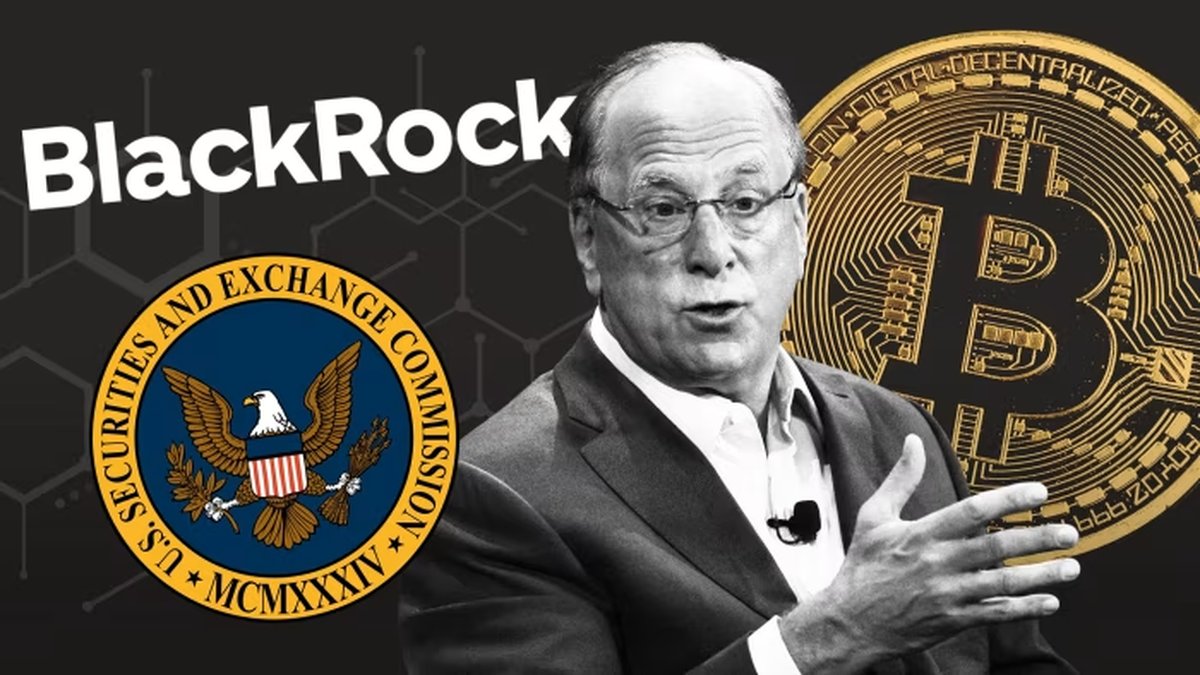
Here is where BlackRock matters far beyond headlines. Since the U.S. approved spot bitcoin ETFs in January 2024, the product set has scaled from a novelty to a core on-ramp for traditional capital. Day one alone saw $4.6B trade across the new funds, with BlackRock, Grayscale, and Fidelity dominating activity—a scale that validated the distribution thesis on contact. ([Reuters][1]) One year on, the aggregate AUM in U.S. spot bitcoin ETFs climbed to roughly $120B, underscoring that institutional wrappers—not exchanges or offshore derivatives—now mediate a large share of BTC exposure. ([Financial Times][2])
Within that complex, BlackRock’s iShares Bitcoin Trust (IBIT) emerged as the asset-gathering machine. Public tallies through 2025 placed IBIT’s AUM in the tens of billions—variously reported between the mid-50s and high-80s during the year, depending on price and flows—cementing its lead as the largest single bitcoin ETF. ([The Block][3]) The specific figure oscillates with bitcoin’s mark-to-market and ongoing creations/redemptions; what matters is the persistence of size and the type of holder it attracts: registered investment advisers, wealth platforms, and institutions that previously left crypto to the ‘special situations’ bucket.
‘A Filing’ Isn’t the Story—The Footnotes Are
Much ink gets spilled on whether any particular BlackRock document strikes a bullish tone. The smarter read is to follow the mechanics BlackRock discloses across the ETF lifecycle—how authorized participants (APs) assemble baskets, how custody is organized, how fees and spreads compress as liquidity deepens. That plumbing, not a rhetorical flourish, is what transforms episodic hype into a durable allocation channel. It’s also why BlackRock’s posture matters: when the world’s largest asset manager keeps investing in product scale and investor education around bitcoin, it shapes what thousands of gatekeepers treat as investable.
Consider three durable markers of conviction:
1. Distribution. From the first trading session, spot ETFs proved they could marshal two-sided liquidity. The launch day print—multi-billion turnover and tight spreads—wasn’t just sizzle; it signaled that market makers and APs had solved the mechanics of physically backed exposure within the ‘40 Act/Exchange Act perimeter. ([Reuters][1])
2. Scale. By late 2025, the U.S. spot ETF stack has amassed roughly one hundred billion dollars of AUM. That’s not a momentum trade; it’s a new distribution standard that persists through both inflow weeks and outflow weeks. ([Financial Times][2])
3. Normalization. With assets and trading sown across mainstream broker-dealers, bitcoin exposure is no longer gated by crypto-native UX. That reclassification—from ‘alternative, hard-to-hold’ to ‘line item in a 60/40 plus diversifiers’—is the quietest but most powerful change of all.
Adoption: The Number You’ve Heard Is Outdated
A common talking point is that bitcoin has “over 300 million users.” That number is now too low. The most widely cited independent market sizing from Crypto.com’s research team shows global crypto users surpassing 562 million by end-2024—a leap that reframes the total addressable base. ([Yahoo Tài Chính][4]) Estimates can differ (methodologies vary and some sources are more conservative), but the directional takeaway is unambiguous: participation has broadened, not shrunk, even through macro headwinds. In other words, if price has spent months range-trading, adoption hasn’t. That’s a key input for assessing the durability of ETF demand—more eligible households and institutions means more portfolios that can own a little bitcoin without career risk.
Why Prices Can Stall While the Case Strengthens
How can the investment case get stronger while price chops sideways? Because two demand curves are at work. The first is flow: daily creations and redemptions across ETFs, leveraged positions on derivatives venues, and the reflexive feedback loops of momentum strategies. The second is stock: coins migrating to long-term holders, custody footprints at regulated institutions, exchange reserves drifting to multi-year lows (a long-running trend Glassnode and others have documented). When stock tightens even as flow wobbles, you can get a market that feels heavy intraday but is building spring-loaded potential energy over quarters. (For context on the ETF side of the ledger, see the Financial Times’ summary of U.S. spot ETF assets surpassing $120B barely a year after launch.) ([Financial Times][2])
BlackRock’s Edge Isn’t ‘Belief’—It’s Product Engineering
One easy mistake is to over-index on executive soundbites. Larry Fink calling bitcoin a “digital gold” proxy or talking up tokenization is directionally helpful, but what actually compounds the bitcoin investment case is boring work: standardizing operational risk reviews for wealth platforms, tightening market-making arrangements so spreads remain narrow in stress, and educating fiduciaries on where bitcoin fits in a policy portfolio. The inflow data, not the adjectives, is the proof. Launch day liquidity was real; the subsequent staying power of assets across the spot ETF suite is the tell. ([Reuters][1])
What the ETF ‘Plumbing’ Means for Price Paths
Spot bitcoin ETFs translate investor appetite into on-chain demand through APs. When funds see net inflows, APs create shares by delivering bitcoin to the trust; when outflows hit, APs redeem shares and withdraw bitcoin (or its cash equivalent) from the trust. The key for investors isn’t guessing tomorrow’s prints; it’s understanding the elasticity of this create/redeem machine. High elasticity—many APs, tight spreads, deep liquidity—dampens tail risk during sell-offs and helps price information travel efficiently. Of all issuers, BlackRock is arguably the most skilled at optimizing that elasticity because it runs the largest ETF family and has long-standing ties across the Street. That institutional muscle is a protective moat when volatility spikes.
Reconciling ‘Stable Prices’ With ‘Building Demand’
It feels contradictory to read that BlackRock is ‘confident’ while bitcoin can’t string together a fresh high. The reconciliation is time horizon. ETFs pull in capital that moves at quarterly and annual cadence (allocations from RIAs, model portfolios, OCIO mandates), while crypto-native venues see intraday positioning and forced de-risking. The former can be patient through noise; the latter often can’t. These two feed into the same price, but they live on different clocks. The fact that the ETF complex has scaled to roughly $120B in assets within a year of launch suggests that the long-clock cohort is already present, even if short-clock traders dominate the narrative on tough days. ([Financial Times][2])
What Could Break This?
Three things:
• Regulatory Shock. A sudden change to how ETFs account for staking (irrelevant to bitcoin itself but relevant to cross-asset perceptions), or constraints on bank-broker distribution could chill flows. Launch coverage from Reuters reminds us how quickly policy cues can swing sentiment around the asset class. ([Reuters][1])
• Liquidity Frictions. If AP participation thins or spreads widen (e.g., a dealer pulls back), the ETF wrapper’s promise of ‘simple access’ can feel less simple at the worst time.
• Macro Regimes. Rapid shifts in real rates reprice the whole risk curve. A patient allocator can live with a sideways quarter; an allocator forced to meet redemptions cannot.
How to Underwrite the Next Twelve Months
We suggest a three-part framework.
1) Track ‘Ownership Formalization’
As crypto ownership tops half a billion people globally, the bottleneck is not awareness; it’s formalization—moving from shadow exposure to audited, custodied, policy-compliant exposure. That favors ETFs, separately managed accounts with qualified custodians, and, increasingly, retirement plans. The Crypto.com market sizing shows the user funnel is wide—562 million by end-2024—so the incremental driver now is compliance plumbing and distribution, areas where incumbents like BlackRock excel. ([Yahoo Tài Chính][4])
2) Price the Cost of Carry
ETF fees, bid/ask spreads, and tax treatment are today’s ‘minesweeper’ squares. If your hold period is multi-year, the right wrapper (taxable vs. tax-advantaged accounts), efficient brokerage routing, and avoiding over-trading matter more than trying to capture the next 5% swing. BlackRock and peers have competed fees down from day one; launch competition locked in investor-friendly economics and kept spreads tight. ([Reuters][1])
3) Separate Story From Structure
It’s easy to fall in love with a narrative (digital gold, macro hedge, network adoption). But the structure—how your exposure is held, how it can be redeemed, who your counterparties are—decides your realized outcome in stress. ETFs industrialize that structure, pooling liquidity and institutionalizing custody. The aggregation of roughly $120B into U.S. spot ETFs within a year is the clearest evidence that this structure has crossed the ‘institutional acceptability’ threshold. ([Financial Times][2])
Counter-Arguments (and Why They’re Healthy)
Skeptics point out that ETF flows are pro-cyclical; they chase strength and fade in chop. True. But that’s precisely why the presence of multiple large issuers (BlackRock chief among them) is a stabilizer: competition for spreads and secondary-market liquidity lowers frictions in both directions. Another critique is that bitcoin’s correlation to risk assets means ETFs won’t rescue it in a global de-risking. Also true. ETFs don’t repeal macro; they simply make it easier for mainstream capital to express a view when macro is supportive. Finally, some worry that high AUM concentration in a few issuers is a hidden single point of failure. Note, though, that the aggregate
ETF stack is distributed across several sponsors and APs, and the create/redeem mechanism diffuses custody risk across multiple qualified providers. None of this eliminates risk; it just makes it legible and manageable.
What Would Confirm BlackRock’s ‘Long View’ Is Paying Off?
- Share of Wallet. Rising penetration across wirehouse and RIA model portfolios (a function of home-office approvals) would show that bitcoin exposure is migrating from ‘tactical’ to ‘strategic.’
- Spread Behavior in Stress. If spreads remain contained during sharp drawdowns, it’s a sign the AP cohort is deep and competition is healthy.
- Sticky Assets. Periods where price drifts lower but AUM doesn’t shrink proportionally imply new holders are stickier than the last cycle’s cohort.
Bottom Line
BlackRock’s role in bitcoin isn’t about cheering a line on a chart. It’s about standardizing access, compressing frictions, and socializing the asset class into the worlds of fiduciaries and policy portfolios. The data argues this process is well under way: robust launch-day liquidity, sustained AUM growth to roughly $120B across the U.S. spot complex, and a global user base now measured in the hundreds of millions, not mere tens. ([Reuters][1]) For investors, that means the center of gravity has shifted. The question isn’t whether a filing sounds bullish; it’s whether the pipes are big and resilient enough to move traditional capital in size when the next uptrend starts. On that score, BlackRock’s footprint and the ETF market’s maturity speak louder than any headline.