Bitcoin Ends a Brutal November: What a 17% Red Month Means for December
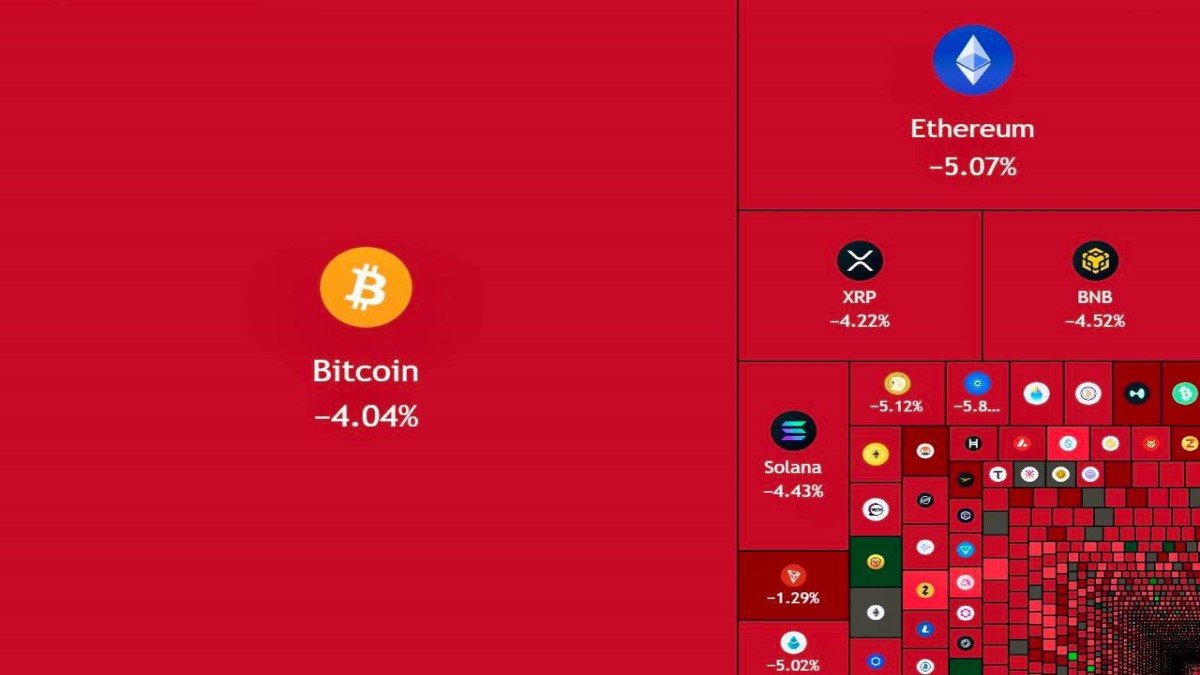
Bitcoin is preparing to enter December with investors still catching their breath. After trading near $91,000, the market abruptly slid to about $85,800, erasing more than $5,000 in value in what felt like just a few heartbeats. That final swoon into the new month capped a tough November in which Bitcoin finished more than 17% lower, marking one of the weakest Novembers on record.
For many participants, that feels especially jarring because November has historically developed a reputation—sometimes exaggerated—as a supportive month for Bitcoin. In earlier cycles, late-year rallies often helped close the calendar in green. By contrast, November 2025 delivered a very different experience: a persistent grind lower, punctuated by sharp intraday drops and a heavy mood heading into year-end.
Layered on top of the price action is a major macro milestone. On 1 December, the Federal Reserve is scheduled to formally end its quantitative tightening program, meaning it will stop shrinking its balance sheet and no longer withdraw liquidity from the financial system at the same pace. Many investors had hoped that this would be the trigger for a more supportive environment for risk assets. The reality—at least so far—has been more complicated.
1. How unusual was November 2025 for Bitcoin?
To understand why this month feels so painful, it helps to put it in context. Historically, Bitcoin has shown a tendency for strong performance in some fourth-quarter periods, especially in years associated with cycle peaks or strong bull phases. That has led to a narrative that the end of the year is almost "supposed" to be friendly for holders.
But seasonality in digital assets is a story of patterns, not promises. The data set is still relatively small, and each cycle has its own macro backdrop, regulatory environment and market structure. November 2025 arrived after:
- A period of substantial appreciation earlier in the year, which left many long-term holders sitting on large unrealized gains.
- Rising debate around how quickly central banks might cut interest rates in 2026.
- Shifting flows around exchange-traded products and structured products linked to Bitcoin.
When a market enters a new month already extended, the bar for continued gains gets higher. It takes more than habit or historical averages to keep prices levitating. Any combination of profit-taking, shifting macro expectations or reductions in risk exposure can turn what previously looked like a seasonal pattern into an exception.
That appears to be what happened in November 2025: instead of a clean continuation, the market met a wall of selling pressure, and the path of least resistance shifted lower.
2. A closer look at the late-month slide
The final drop from around $91,000 toward $85,800 is best understood as the culmination of stress that had been building throughout the month, not as a completely isolated shock.
Several forces typically interact during a move like this:
• Profit realization by long-term participants. After strong performance earlier in the year, some longer-horizon holders may simply have decided that locking in gains before year-end made sense within their broader portfolios.
• Positioning in derivatives markets. As prices slide, traders who use leverage can face margin calls when volatility spikes. Forced de-risking can add additional selling pressure on top of the organic flow from spot markets.
• Liquidity pockets. When order books are thinner—such as during certain time windows near the close of a month—relatively modest sell orders can move price more than they would during periods of deeper liquidity.
The result is a pattern that long-time observers will recognize: a fairly orderly drift lower over days or weeks, followed by an abrupt extension of the move as stop orders are triggered, some leveraged positions are reduced and buyers temporarily step back.
None of this minimizes how uncomfortable such a move feels in real time. But seeing the mechanics clearly is part of transforming a sharp slide from something mysterious into something that can be analyzed and put in context.
3. The macro backdrop: the end of quantitative tightening
What makes this episode particularly interesting is that it coincides with a major macro event. On 1 December, the Federal Reserve is scheduled to bring its quantitative tightening (QT) program to an end. In practice, this means that the balance sheet runoff—the gradual reduction of the Fed's holdings of Treasuries and mortgage-backed securities—will stop, and the central bank will no longer systematically withdraw liquidity from the system through that channel.
On paper, this should be supportive for risk assets over time. Ending QT removes a persistent source of background tightening and can ease some pressure on funding markets. So why is Bitcoin, often positioned as a potential beneficiary of easier liquidity, struggling into this announcement instead of celebrating it?
There are several reasons why markets can move lower even when policy decisions look constructive at first glance:
• "Buy the rumor, reassess the news." Markets often begin anticipating major events weeks or months in advance. If participants had already positioned for the end of QT, some may be using the actual announcement as a moment to reduce risk, lock in gains or rebalance.
• Uncertainty about the next step. Ending QT does not automatically mean aggressive rate cuts are imminent. If the data remain mixed, the path for policy in 2026 could be more gradual than the most optimistic forecasts assumed, which can lead markets to recalibrate.
• Cross-asset tension. Bitcoin does not trade in a vacuum. If other asset classes—equities, credit, commodities—are experiencing volatility or shifting risk appetite, those dynamics can spill over into digital assets regardless of the long-term narrative.
In other words, the end of QT is an important milestone, but it is not a magic switch. It changes the medium-term environment, not the immediate emotional reaction of crowded trades, human psychology and portfolio constraints.
4. Should investors fear a red December after a red November?
Another theme circulating in commentary is the idea that if November closes deeply negative, December is "destined" to be even worse. It is easy to understand the appeal of this kind of rule-of-thumb: it compresses a complex reality into a simple story. However, there are several reasons to treat such statements with caution.
First, the statistical base is small. Bitcoin has only been trading at scale for a little over a decade. That does not give a robust sample size for firm conclusions about every calendar pattern. A handful of years in which weakness in November was followed by more weakness in December may say more about the broader environment in those cycles than about a universal law.
Second, path matters. How a month ends can be as important as the final percentage change. A November that is steadily weak, with little attempt to bounce, sends a different message than one that experiences a capitulation event early and then begins to stabilize. Similarly, what happens in the first few days of December can either confirm or contradict fears about trend continuation.
Third, markets constantly adapt. Once a pattern becomes widely discussed, participants may begin trading around it, sometimes in ways that reduce its reliability. For example, if enough traders expect December to be weak after a red November, some may reduce exposure earlier, front-loading selling pressure and changing the structure of the move.
None of this guarantees that December will be strong or weak. The key takeaway is that historical tendencies should be treated as inputs, not as destiny. They can inform scenario planning, but they should not replace real-time analysis of flows, policy and sentiment.
5. What the drawdown reveals about Bitcoin’s current phase
Instead of focusing only on the percentage drop, it is useful to ask what this episode reveals about Bitcoin’s current phase of development.
Several features stand out:
• Bitcoin is still sensitive to global liquidity. The anticipated end of QT and ongoing discussions about interest-rate cuts show that macro conditions remain a powerful driver of digital assets. Narrative and technology matter, but funding and liquidity cycles are still central.
• Institutional participation cuts both ways. Increased involvement from funds, structured products and large investors can deepen liquidity and improve price discovery. It can also introduce new feedback loops, as portfolio managers adjust exposure across asset classes based on risk models and policy expectations.
• Volatility is structural, not accidental. A drawdown from around $91,000 to $85,800 in hours is uncomfortable but not unprecedented in percentage terms. The same traits that allow Bitcoin to move rapidly higher in favorable conditions also allow it to retrace quickly when conditions deteriorate.
For educational purposes, it can be helpful to see these moves not as "abnormal" anomalies, but as part of the asset’s established character. Bitcoin has always lived at the intersection of macro, technology and human emotion. That combination tends to produce sharp swings in both directions.
6. Frameworks for thinking about December (without predictions)
While no one can reliably predict the exact path of prices, it is possible to outline a few frameworks that observers can use to interpret what happens next. These are not instructions or recommendations—just lenses that can make headlines less confusing.
6.1 Macro lens
From a macro perspective, several questions will likely matter more than any single candle on a chart:
- How does the end of QT influence funding markets and bond yields over the coming weeks?
- Do incoming economic data increase or decrease confidence in a gradual easing path for interest rates in 2026?
- How do other risk assets behave—are they stabilizing, or is there broader de-risking underway?
If the environment evolves toward a more stable, lower-volatility backdrop with clearer guidance on policy, digital assets may eventually benefit from renewed risk appetite. If uncertainty remains high, markets could stay choppy even without additional tightening.
6.2 Market structure lens
Beyond macro, the internal structure of the Bitcoin market matters. Useful signposts include:
- Spot vs. derivatives activity. Is most of the trading volume driven by long-term holders adjusting allocations, or by short-term traders repositioning in futures and options?
- Liquidity depth. Are order books gradually refilling after the late-November slide, or are they still thin enough that modest orders move price significantly?
- Behavior of long-term holders. On-chain data can sometimes show whether coins are moving from older wallets to newer ones, which can hint at shifts in conviction.
None of these indicators are perfect on their own, but together they can provide a richer picture than price alone.
6.3 Time-horizon lens
Finally, perspective is heavily influenced by time horizon. A 17% monthly decline and an intraday slide of more than $5,000 can be alarming for those focused on short-term outcomes. For multi-year observers who have seen larger percentage swings in both directions, the move may register as painful but not unprecedented.
Educationally, this is a reminder that it is essential to align expectations, behavior and time horizon. Short-term charts often look turbulent even when the long-term trend is intact. Conversely, a long-term chart can look smooth while hiding intense stress for shorter-horizon participants along the way.
7. Lessons from a difficult month
November 2025 will likely be remembered as one of those months that compresses several lessons into a tight window:
- Seasonality is a tendency, not a guarantee. Past patterns can inform, but they do not obligate markets to behave the same way every year.
- Macro milestones can coincide with volatility. Ending QT is important, but it interacts with positioning, sentiment and expectations in complex ways.
- Volatility is structural in digital assets. Sharp drawdowns are not a new phenomenon; they are part of the terrain that participants must learn to navigate.
For students of markets, months like this are valuable case studies. They show how price, policy and psychology intersect—and how thematic narratives, like the idea that a red November must lead to an even redder December, can oversimplify a more nuanced reality.
8. Looking ahead without losing perspective
As Bitcoin crosses from November into December near the mid-$80,000s after recently trading around $91,000, the temptation is to focus solely on the latest candle or headline. A more balanced view keeps multiple layers in mind: the structural trends driving long-term adoption, the macro forces shaping liquidity, the technical patterns on shorter time frames and the lived experience of volatility.
Whether December follows November with further weakness or surprises with stabilization, the underlying lessons remain similar. Digital assets inhabit a world shaped by central banks, fiscal policy, technological innovation and human behavior. Each drawdown is not just a price event; it is an opportunity to deepen understanding of how these forces connect.
Disclaimer: This article is for educational and informational purposes only and does not constitute financial, investment or legal advice. Digital assets are volatile and carry risk, including the potential for total loss. Always conduct your own research and consider consulting a qualified professional before making financial decisions.