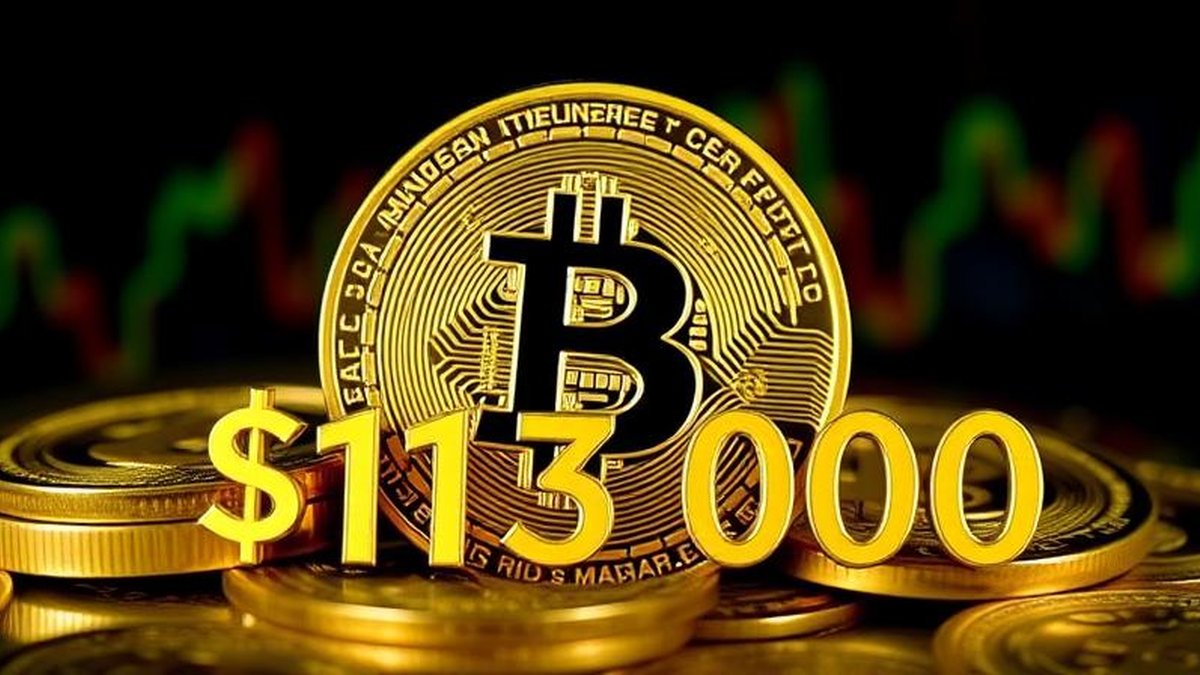
Bitcoin’s Quick Dip and Rebound: What the $109k → $113k Move Really Means
On the surface, yesterday’s intraday action looked like another routine volatility pulse: Bitcoin slid to roughly $109,000 and then recovered to close above $113,000. But beneath that headline move were structural signals that matter for traders and allocators — concentrated institutional bids, derivatives positioning, and on-chain reserve dynamics. This deep-dive separates transient noise from durable change, explaining the microstructure that produced the rebound and the metrics to watch next.
Dissecting the Move: Order Flow, Liquidity and Who Showed Up
Rapid sell-offs that reverse within hours are common in mature markets. What differentiates a healthy market from a fragile one is where the buying occurs and how order books refill after the drop. The $109k dip appears to have been triggered by a combination of short-term profit-taking and a cascade of stop-loss market orders clustered around visible liquidity bands. As those stops executed, they created a brief vacuum of resting bids, amplifying downward momentum.
Once the cascade reached local liquidity troughs, larger players — institutional desks, liquidity providers and OTC buyers — stepped in. Those participants are able to absorb size without signaling across public order-books, which allowed price to rally back toward and above $113k. The result: a swift washout of leveraged retail positions followed by block-sized purchases that restored balance.
Profit-taking vs. Capitulation
On-chain evidence shows minimal distribution from long-term addresses during the drop, implying the move was not widespread capitulation. When long-duration wallets (those that haven’t moved coin in many months) stay put during a correction, it indicates the sell pressure is tactical rather than structural. That distinction matters: tactical volatility that does not trigger long-cohort selling historically aligns with quicker recoveries.
Institutional Flows — The Supporting Pillar Behind the Rebound
Institutional buying was the most visible macro-support in this episode. Several measurable signals point to organized accumulation:
- Custodial inflows: Net deposits to institutional custodians and regulated products ticked higher relative to the week prior, signaling fresh spot demand executed through regulated channels.
- OTC and block trades: Market-makers reported bid-side block activity during the trough — a classic institutional bottoming behavior intended to avoid slippage on exchanges.
- ETF/AP activity: Where crypto ETFs and authorised participants operate, there were signs of subscription flows that reduced the visible sell pressure on exchanges.
Institutional demand matters both for depth and narrative. Deep, sticky bids lower the likelihood of protracted crashes and change the investor framing — Bitcoin moves from speculative to allocational in the eyes of large balance-sheet managers.
Why On-Chain Selling Was Muted
Exchange reserve balances either stabilized or declined slightly during the dip; coins were being withdrawn into custody rather than deposited for sale. This divergence — price dropping while reserves don’t spike — signals buyers absorbing supply off-exchange. In short: buyers were taking liquidity, not sellers creating it.
Derivatives Readings: Open Interest, Funding, and Option Skew
Derivatives provide both leverage and forward-looking sentiment. During and after the drop the derivatives landscape showed resilience:
- Open interest stayed elevated instead of collapsing, suggesting active positioning rather than wholesale deleveraging.
- Perp funding rates oscillated but avoided extreme spikes, indicating the squeeze was contained.
- Options skew compressed after the rebound — the premium for downside protection cooled as confidence returned.
Persistent open interest through a correction frequently indicates players are holding hedges or reloading positions. Combined with the institutional spot bids, that dynamic leads to faster mean reversion when liquidity returns.
Derivative Metrics to Monitor
- Perpetual funding rate (sustained positive funding indicates long demand).
- Futures basis (contango/backwardation measures demand for carry vs. immediate delivery).
- Put-call skew and ATM implied volatility (widening skew signals increased downside hedging demand).
Technical Structure: Support, Resistance and Scenario Planning
Technically, the intraday bounce established a clear short-term structure. The $109k area acted as a local floor while $113k+ now functions as a near-term pivot. Traders should prepare for three realistic scenarios with actionable cues for each.
Bull case — Momentum continuation
If institutions continue to buy dips and derivatives positioning remains constructive, expect consolidation above $113k and renewed attempts to test new highs. Confirming signals: steady custodial inflows, rising futures basis, and decreasing option skew.
Range-bound case — Sideways consolidation
Price could oscillate between $109k and roughly $118k as liquidity providers adjust and macro headlines create intermittent volatility. This outcome is likeliest if spot inflows slow but hodler supply stays tight. Indicator to watch: muted exchange reserve change with choppy perp funding rates.
Bear case — Deeper correction
Macro shocks or regulatory surprises could convert tactical selling into structural selling, eroding long-cohort conviction. Warning signs include rapid exchange deposit inflows, a sharp widening in options skew, and forced liquidations across futures markets — signals that durable supply is entering the market.
Practical Takeaways for Traders and Allocators
1. Context matters: A dip absorbed by institutional bids and stable long-term holder behavior leans tactical rather than structural. That changes the risk calculus for both traders and allocators.
2. Use layered execution: Avoid trying to pick a single bottom. Stagger limit orders around identified support bands and blend spot buys with time-weighted approaches to limit market impact.
3. Protect and size: Maintain conservative sizing and consider hedges if exposure includes leveraged derivative positions. Even institutional-led markets can experience violent short squeezes.
Checklist — Indicators to Watch Next
- Custodial and ETF flows (daily/weekly aggregates)
- Exchange reserve movements (deposits vs. withdrawals)
- Perp funding and futures basis dynamics
- Options skew and ATM volatility
- Macro headlines (central bank commentary, fiscal events)
Conclusion
The $109k → $113k episode was more than a volatility blip; it functioned as a liquidity stress test that institutions passed by stepping in as buyers. The rebound highlights how modern Bitcoin price action is increasingly influenced by large, organized buyers rather than purely retail momentum. That structure creates both resilience and complexity: dips can be deeper but also recover faster when institutional liquidity participates. For market participants, disciplined execution, a close read of on-chain and derivatives signals, and robust risk controls are essential tools to navigate future episodes.
Final thought
Monitor the interplay between custody flows, exchange reserves and derivatives metrics to separate noise from signal. That triad will tell you whether a move is a temporary reprice or the start of a meaningful regime shift.