What Actually Happened—and Why It Matters
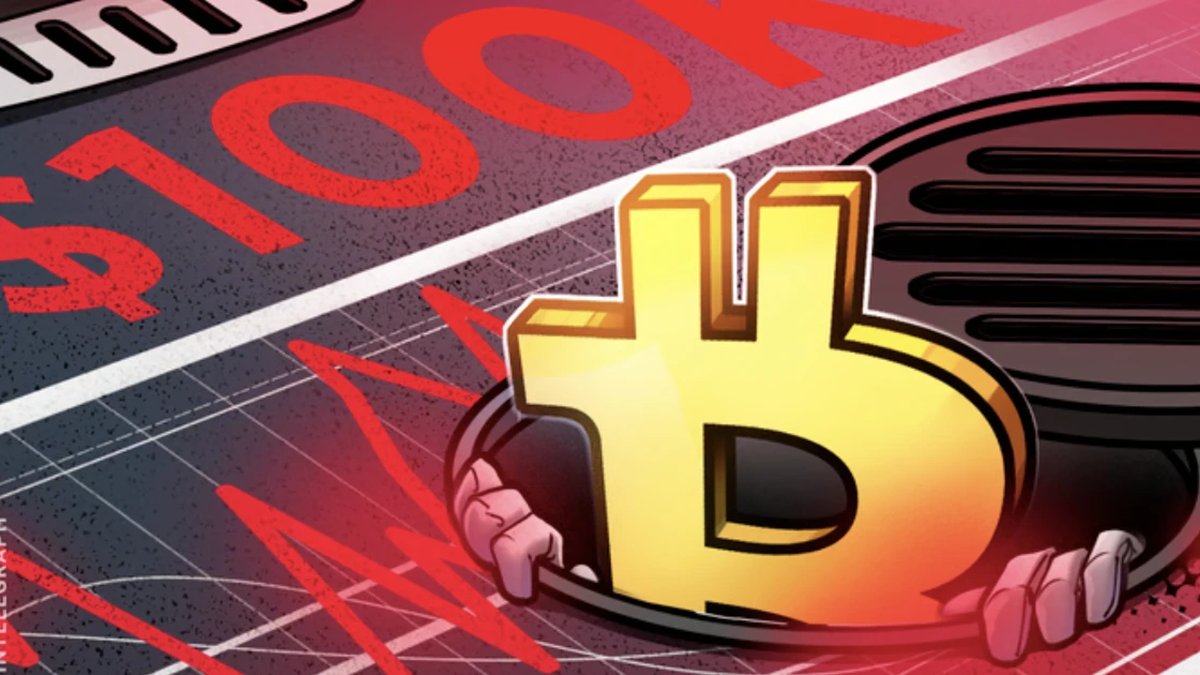
Bitcoin notched its first daily close below $100,000 in roughly half a year. Multiple market trackers flagged the six-month context of the move, with spot prints sliding beneath the psychological round number during the New York session and finishing the day in the high-$99k area before extending weakness. Independent price tables for November confirm a sub-$100k close on November 13, marking a regime break after months of defending six digits. ([CoinMarketCap][1])
Beyond the headline, the mechanics were familiar: bid depth thinned into the New York afternoon, a pocket of resting sell supply was triggered, and derivatives amplified the impulse as long positions were swept. Across comparable episodes earlier this month and in prior sell-offs, liquidations have been dominated by longs—a classic signature of crowded positioning into round-number supports. During one November washout, aggregate futures liquidations topped hundreds of millions of dollars with the vast majority on the long side; earlier in the quarter, a separate shock cleared ~$1.1B in leverage, again skewing long. The pattern explains why spot dips around $100k can cascade quickly before order books refill. ([Morningstar][2])
Where ETH and Altcoins Fit
As BTC slipped, ETH briefly undercut $3,200 on several venues, a level that had acted as a pivot through the week. Altcoins, whose beta had already been elevated during October’s deleveraging, followed with outsized percentage losses. While the exact ticks vary by exchange and time window, directionally the mosaic is consistent with the last seven days of market wraps: ether soft into support, higher-beta names softer still. ([Binance][3])
This is the usual sequence in a top-down market: Bitcoin leads in both directions and ETH reacts with lower volatility than the long tail. When BTC loses a high-profile signpost like $100k, optionality sellers in altcoins often step back, spreads widen, and on-screen liquidity deteriorates—at least until BTC stabilizes enough to entice risk back into the book. That is why assessing whether the sub-$100k print is a one-day event or the opening of a multi-week regime matters for everything from DeFi flows to L2 activity.
Macro Backdrop: Reopening, Data Fog, and Rate Cuts in Question
The longest U.S. government shutdown on record formally ended on November 12, after the House passed the Senate’s plan and the White House signed the bill the same night. The reopening removes an obvious tail risk for operational disruptions, but it doesn’t instantly restore visibility because several statistical releases were delayed or modified. Notably, official guidance flagged that some labor data would be released without its usual unemployment rate component, reflecting collection and processing gaps created by the shutdown. For market participants who trade macro-driven narratives, that is a shift from information abundance to information frictions. ([Al Jazeera][4])
On rates, December cut odds slipped toward/below 50% in the last 48 hours, as investors digested the hawkish tone from several Fed officials and the uncertain read-through from delayed indicators. When probability mass moves that much, duration-sensitive quant strategies and cross-asset risk-parity sleeves rebalance, which can spill into crypto via the same margin pathways that connect to equities, credit, and vol markets. In plain English: when the odds wobble, everything that was optimally positioned for a cut has to be nudged, sometimes meaningfully. ([Cryptonews][5])
Is This Just a Flush—or the Start of a Different Regime?
Market structure offers a practical framework. Consider four gauges:
1. Spot Order-Book Depth: Around round numbers, passive bids are often performative—they appear, then vanish into the sweep. What matters is the persistence of refilled bids after the break. If depth rebuilds within 24–48 hours and slippage returns to pre-break norms, the episode looks like a flush. If depth remains thin, expect ragged ranges and head-fakes.
2. Perps Funding & Basis: A snap from positive to flat/negative funding with near-term basis compressing suggests leverage was reset, not merely rotated. Sustained negative prints after a breakdown often precede a durable stabilization, because the market is paying shorts to stay in the trade—fertile ground for sharp squeezes.
3. ETF & Trust Flows: Spot ETF creations/redemptions and trust share discounts/premia offer a view into non-crypto-native demand. When those flows stay sticky through volatility, BTC tends to find support faster. When they hesitate, on-chain buyers must carry more weight.
4. Stablecoin Net Issuance: This is crypto’s closest analog to fresh dry powder. Rising free-float stablecoin supply amid weakness usually signals capital preparing to buy dips. Flat or negative issuance into a breakdown often correlates with choppier recovery.
Across previous November episodes, the heavy skew of long liquidations already tells you leverage was leaning the wrong way. The question today is whether real money takes advantage of the cheaper entry or whether sidelined capital waits for macro clarity.
Context: The ‘First Time Since Spring’ Is Not the Whole Story
It is true that the first close below $100k since late spring carries narrative punch—several outlets framed the move as a six-month low. But the deeper observation is that the market had become trained to defend six digits. Once that conditioning cracked, the marginal seller found immediate follow-through because counterparties were reluctant to re-engage in size until the day’s data and cross-asset signals cleared. ([CoinMarketCap][1])
That conditioning explains why some desks prefer to fade the first break and add risk only after a reclaim—a daily close back above the level with validating internals (higher spot volumes, tighter spreads, and funding that isn’t overly exuberant).
ETH, Rotations, and the Altcoin Map
As the market gyrated, ether’s relative resilience versus the long tail resurfaced. ETH’s role in the current cycle is less about speculative beta and more about infrastructure beta: staking flows, ETF developments, the tokenization narrative, and L2 throughput. When BTC wobbles, capital often rotates into ETH first—either as a quality hedge within crypto, or as a bridge to cash through liquid pairs. That is why ETH holding the mid-$3ks, even briefly, can blunt broader risk contagion. Still, if BTC cannot stabilize above $100k in short order, ETH’s ability to retrace alone is constrained. ([Binance][3])
What the Data Delays Change
Two dynamics shift when critical macro releases are postponed or partially published: (a) the uncertainty premium rises, because models have to extrapolate; and (b) policymakers become more cautious communicating forward guidance. In this instance, reporting indicated that the jobs data would come without an unemployment rate—an odd asymmetry. That makes nowcasting more important (high-frequency prices, card spends, mobility data) and makes it harder for narratives to settle. Crypto, which has grown more macro-sensitive in the post-ETF era, tends to chop until the next crisp signal arrives. ([Cryptonews][5])
Microstructure: The Anatomy of the $100k Break
Intra-day tapes show three familiar ingredients:
- Layered offers just above the round number that acted as a trap for momentum buyers.
- Stop clusters concentrated just below $100k, which—once triggered—swept the book in one glide.
- Derivative spillover, with funding compressing and a wave of long liquidations accelerating the slide, a ratio profile we’ve seen repeatedly this quarter. ([Morningstar][2])
Once the wave ran its course, liquidity makers widened spreads and re-posted at lower levels, which is typical after a stop-drive. The next 24–48 hours will reveal whether passive interest creeps back up the ladder or stays defensive until the next macro print.
Cross-Asset Check: Why Equities and Bonds Matter Here
Even in a crypto-centric story, rates are the gravitational field. With December cut odds wobbling around 50%, the dollar bid is fickle, and duration trades are sensitive to every speech. Risk-on equities had already telegraphed fatigue earlier in the week; that bled into crypto positioning as systematic flows trimmed net exposure. If the next round of macro remarks nudges odds back above 60%, expect beta to perk up—if they slump toward 40%, crypto will likely need a clean positioning reset before any attempt at reclaiming $100k sticks. ([Cryptonews][5])
Pathways From Here
1) Exhaustion Flush (40%)
BTC reclaims $100k–$103k in the next few sessions on improving spot breadth and neutral funding. The liquidation skew resets positioning, ETFs see small net creations, and stablecoin free float nudges higher. ETH stabilizes first; altcoins bounce selectively. A clean reclaim argues for a retest of the $105k–$108k pocket, with $100k flipping back to support.
2) Chop & Drift (35%)
BTC oscillates between $95k and $103k as data delays and policy ambiguity persist. Funding hovers near flat; ETFs are mixed; order-book depth recovers slowly. ETH ranges; altcoins underperform on every down day and lag on up days. Volatility sellers make money, but only until the next macro surprise.
3) Regime Shift Lower (25%)
Cut-odds slouch, the dollar firms, and ETF flows pause. BTC fails to reclaim $100k, probing $92k–$95k where larger spot bids are rumored. Negative funding persists for several sessions; structural buyers stay patient. ETH slips toward $3,000; altcoins reprice in a beta shock. This path would likely require either a hawkish repricing or a risk-off macro headline.
Trading & Risk Notes (Institutional Orientation)
• Execution: Avoid cliff-like liquidity zones; use TWAPs near session opens and closes only if real-time depth confirms, otherwise prefer mid-session windows where spreads normalize.
• Leverage: Keep gross light until funding and basis stabilize; if you must deploy, structure with collars that monetize spikes in implieds.
• Pairs: In a reclaim scenario, ETH-BTC long legs can outperform beta for 1–3 days; in chop, neutral carry on liquid perps plus cash-and-carry beats direction.
• ETF lens: Watch creations vs. redemptions daily; negative three-day streaks into negative funding have historically preceded the more durable bounces.
Signals to Watch in the Next Week
1. Spot depth above and below $100k on the main USD venues. Thin books argue for another sweep; rebuilt ladders argue for stability.
2. Funding/basis regime flipping to flat/negative for at least 24 hours (a constructive reset) rather than staying mildly positive (a sign that longs re-crowd too fast).
3. ETF flow tapes—even modest creations into weakness would be a green shoot for a reclaim.
4. Stablecoin net issuance behavior; if free float expands into the dip, dip-buying capacity improves.
5. Policy/rates rhetoric and the evolving path of the December meeting probabilities toward/below 50%. ([Cryptonews][5])
Bottom Line
Round numbers focus attention; internals decide outcomes. Today’s sub-$100k close matters because it forces the market to show its hand: either buyers step in with real capacity and rebuild the ladder quickly, or we learn that the prior defense was mostly leverage and reflex. With the shutdown over but data clarity still imperfect, traders should anchor on microstructure and cross-asset rate dynamics, not narratives alone. A swift reclaim—confirmed by stable funding, improving depth, and non-crypto-native inflows—would frame the break as an exhaustion flush. A failure would counsel patience, tighter risk, and an eye on the $92k–$95k area where value buyers might finally demand size. ([Al Jazeera][4])