The Balancer v2 Security incident: How a Multichain Security vulnerability Shook DeFi and What Smarter Risk Looks Like Now
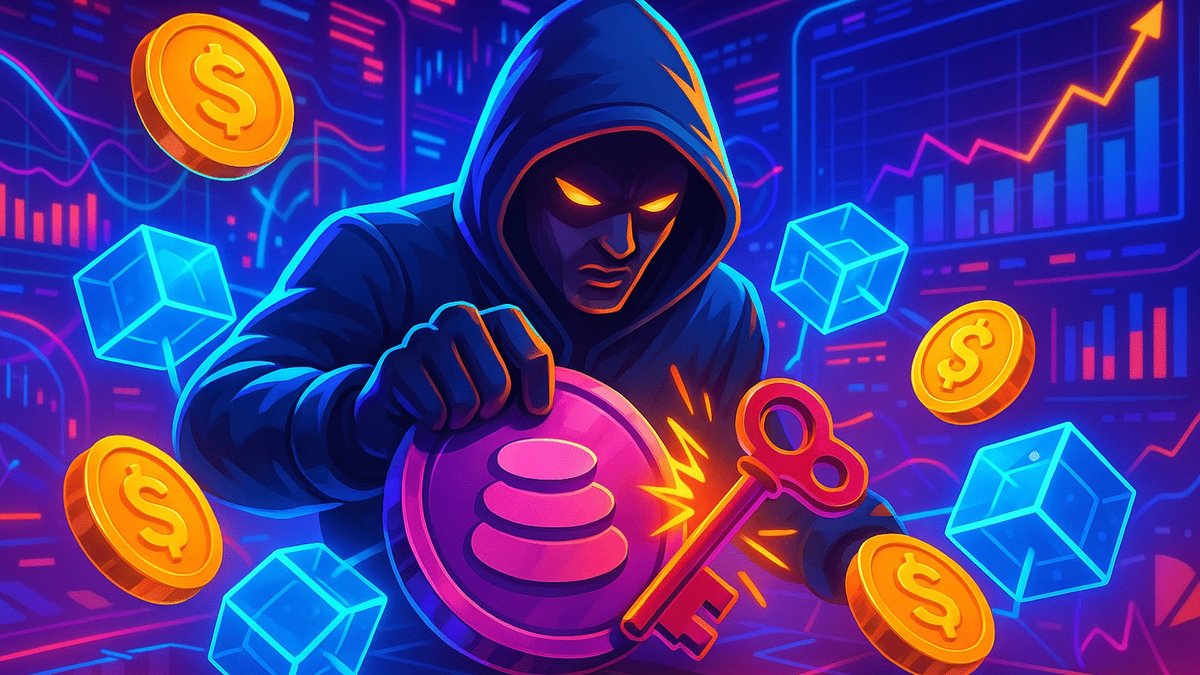
DeFi’s promise has always carried a caveat: transparency and composability accelerate innovation, but they also compound risk. The latest exhibit is the Balancer v2 security vulnerability—widely described as one of the most consequential decentralized finance attacks of 2025, with reported losses north of $128 million spanning multiple networks, including Ethereum, Berachain, Arbitrum, Base, Sonic, Optimism, and Polygon. According to on-chain analytics firms cited in community threads (including Nansen and others), the attacker siphoned a diverse set of assets—most prominently WETH and wstETH/WSETH—before emergency responses kicked in: pools paused, upgrade paths enacted, and in some environments, hard-fork-like measures or contract migrations initiated to contain the blast radius.
The incident is not a one-off shock. Balancer has previously faced security events in 2020 and 2023, but this time the combination of scale, multichain reach, and asset mix made the impact qualitatively different. A widely shared datapoint underscored the fear: a long-dormant wallet—'asleep' for roughly three years—allegedly moved about $6.5M to safer venues as the news spread, a signal that even patient capital can go nimble when protocol risk feels non-trivial. Meanwhile, Balancer’s team advised users to cease interacting with impacted pools while triage proceeded, and the project’s native token—BAL—slipped roughly 8% intraday toward the $0.9 handle. In short: the market didn’t just read the headline; it repriced risk.
Section 1 — What Actually Broke? (And What We Can Say Responsibly)
Formal postmortems take time. In the early hours after any security vulnerability, precise root cause statements are risky. Still, we can frame the class of failures that typically enable an incident like this and what they imply for design going forward:
• Invariant slippage or mis-accounting inside complex AMM math. Balancer-style pools support custom weights, stable invariants, boosted vaults, and niche token behavior. If any invariant check, rounding path, or token hook is mis-specified, an attacker can engineer a state that looks legal to the contract but breaks the pool’s conservation assumptions.
• Cross-asset or wrapper edge cases. Tokens like wstETH/WSETH introduce rebase/wrap semantics and third-party accounting. If an AMM path assumes behavior A while the token briefly behaves like B in a boundary case, the door opens to value extraction (not necessarily via classic reentrancy).
• Multichain variation & configuration drift. Even perfectly audited logic can diverge across chains due to different compiler versions, libraries, deployment parameters, or dependent contracts. A harmless parameter on L1 may be hazardous on an L2 with different gas dynamics or bridge latencies.
• Liquidity-composability feedback loops. When pools are nested (e.g., LP tokens used elsewhere as collateral), a single crack propagates quickly. In these topologies, a local bug can rapidly become a system-level loss.
Whether the Balancer v2 security vulnerability ultimately traces to a subtle arithmetic flaw, an integration mis-assumption, or a configuration oversight, the lesson class is the same: complexity is debt. As you expand supported pool types and cross-chain deployments, the surface grows combinatorially. Audit hours matter, but adversarial simulation, invariant testing at scale, and chaos drills matter more.
Section 2 — Why the Multichain Angle Amplified the Damage
A single-chain DeFi incident is painful; a multichain incident is multiplicative. Here’s why:
• Operational friction. Pausing pools on seven networks is not a one-click task. The guardianship model, timelocks, and governance rails differ; coordinating mitigations under time pressure invites human error.
• Liquidity mirroring. Market makers and arbitrageurs hold inventory across chains. When one venue becomes toxic, liquidity providers pull quotes elsewhere pre-emptively, widening spreads and exacerbating losses for anyone still trapped.
• Bridge dependencies. Rescue or migration often requires bridges. Under stress, bridge throughput and risk perceptions can bottleneck the path to safety.
This is why war-games matter. Protocols that regularly rehearse 'pause → migrate → restore' sequences across chains get better outcomes than those writing the runbook mid-crisis.
Section 3 — What the Market Repriced (Beyond BAL’s -8%)
Token drawdowns occupy the headlines, but risk premia moved more broadly:
1. Smart-contract risk premium. Lenders, LPs, and delta-neutral shops widened internal haircuts for strategies touching Balancer-dependent liquidity. That raises hurdle rates for capital to return even after code patches.
2. Composability discount. Yield stacks that route through Balancer pools saw immediate de-risking. If your product’s UX hides its Balancer dependency, users may learn it the hard way—often by paying for it.
3. Centralization tolerance. Ironically, crises can push flows toward more permissioned venues (or toward DeFi protocols with aggressive guardianship powers) because the market now values fast brakes over purely immutable promises.
Section 4 — User Playbook: Triage, Contain, And Only Then Optimize
For individuals and institutions holding LP or routed exposure, the right sequence is not complicated—just rarely followed under stress:
• Inventory the exposure. List all addresses and positions that directly or indirectly touch Balancer v2 pools on any chain. Don’t forget LP tokens used as collateral elsewhere.
• Stop interacting with flagged pools. Follow official advisories. Do not attempt clever arbitrage unless you fully understand the risk; adversaries prey on urgency.
• Revoke approvals tactically. Using reputable tools, revoke ERC-20 approvals to impacted routers/pools. Prioritize high-value wallets; move in tranches if gas is spiking.
• Check wrapper semantics. Assets like staked ETH variants have unique unwrapping paths. An aggressive unwind can worsen slippage or lock you out of best exit routes.
• Use deep liquidity exits. If you must unwind, execute where depth is real (majors on L1s; carefully chosen L2 venues). Thin routes may look cheap but fail when size hits.
• Write the after-action note. Capture the time, txns, costs, and bottlenecks. The note you write today is the runbook you’ll wish for next time.
Section 5 — Protocol Playbook: 72-Hour, 7-Day, and 30-Day Plans
Within 72 Hours
- Containment first. Freeze/disable impacted pools through whatever emergency powers governance allows. Broadcast minimal, accurate guidance—rumor vacuum is worse than partial clarity.
- State snapshots. Snapshot balances across chains to anchor remediation paths and prevent further drift.
- Independent triage pods. Split teams: one group coordinates chain operations; another reconstructs the security vulnerability and loss map; a third handles user comms and CEX/bridge liaisons.
Within 7 Days
- Signed preliminary postmortem. Communicate the facts known, the unknowns, and the next checkpoints. Avoid speculative technical jargon that might mislead integrators.
- Upgrade/migration plan. If new vaults or pool factories are required, ship audited artifacts, formal checks, and a migration tool that doesn’t require expert users to operate.
- Third-party red team. Bring in external researchers to validate the fix and attempt variant attacks.
Within 30 Days
- Root-cause postmortem. Provide code diffs, invariant proofs (human-readable), and a reproducible security vulnerability sim in a test environment. Set a standard for transparency.
- Economic mitigation. If feasible, outline compensation programs, fee rebates, or DAO-funded relief prioritizing users who acted on guidance.
- Chaos engineering commitment. Publish a schedule for regular drills: mock pauses, chain migrations, and oracle/channel disruptions.
Section 6 — Comparing 2025 to Balancer’s Prior Events
Why is this incident perceived as more severe than 2020 or 2023?
- Surface area: v2’s feature set is far richer; the combinatorial space of pool types and wrappers is larger.
- Interconnection: More protocols now depend on Balancer LP tokens for routing, yield, or collateral—composability magnified the shock.
- Multichain logistics: Prior events mostly centered on Ethereum; today’s DeFi operates on an archipelago of execution layers with different operational constraints.
That doesn’t indict Balancer uniquely. It indicts our industry’s appetite for complexity without proportional investment in adversarial testing and operational rehearsal.
Section 7 — What This Means for DeFi Investors
Security incidents are never welcome, but they deliver costly education. For allocators and sophisticated retail, the takeaways are concrete:
1. Price the hidden basis. The extra yield from complex AMM topologies is a risk premium, not free money. Ask what invariants you’re underwriting and how they’re enforced.
2. Demand emergency credibility. When underwriting a protocol, evaluate the pause/upgrade mechanism. Who can pull the brake? How fast? On how many chains? Is the process documented and tested?
3. Favor readable designs. Simpler pool types with battle-tested math often outperform exotica on a risk-adjusted basis.
4. Track integration sprawl. A yield farm that routes through Balancer, then wraps LP tokens in a collateral protocol, then rehypothecates in a third venue magnifies failure modes. Keep a one-page map of your dependencies.
Section 8 — Regulator and CEX Optics
When a marquee DeFi brand suffers a large loss, the narrative extends beyond crypto-native circles. Expect two ripple effects:
- Regulatory scrutiny. Supervisors will ask whether retail understands the difference between audit checkmarks and assurance. Protocols with verifiable invariant tests and clear incident runbooks will have better conversations with policymakers.
- Centralized venue selection. Institutions that still need crypto exposure may prefer prime-brokered venues or exchanges with firm-level guarantees. That is neither good nor bad—just a reminder that trust competes with trustlessness in the real world.
Section 9 — A Realistic Road to Rebuild Trust
Security is not a one-time deliverable. It’s a process and posture:
- Zero-trust design. Assume counterparties, wrappers, and even your own accounting can misbehave at the edges. Write invariants that fail closed.
- Live invariant monitors. In addition to audits, deploy on-chain or off-chain monitors that halt unusual state transitions automatically, not days later.
- Bug bounty alignment. Reward researchers at a level that competes with black-hat payoffs, and commit to fast, respectful triage.
- Comms you can trade on. Incident posts should include state snapshots, pool IDs, chain IDs, and actionable guidance. Avoid platitudes; users need coordinates.
Section 10 — The Table That Matters
| Vector Class (Generic) | Why It Fails | Mitigation Pattern |
|---|---|---|
| Invariant / Arithmetic Edge | Rounding or path logic lets reserves drift | Formal proofs; property-based testing; differential fuzzing |
| Wrapper / Token Assumption | Actual token behavior diverges from assumed API | Adversarial token harness; kill-switch if token semantics deviate |
| Multichain Drift | Parameters diverge; governance delays across chains | Config registries; per-chain runbooks; rehearsed pause/migrate |
| Composable Feedback | LP tokens rehypothecated multiply | Integration allowlists; collateral haircuts; circuit breakers |
Section 11 — Scenarios From Here
- Constructive Base (Most Likely): Emergency measures stabilize pools; preliminary postmortem lands within a week; migration tooling ships; TVL returns gradually. BAL trades heavy but forms a higher low as trust rebuilds.
- Choppy Rehabilitation: Patches arrive in waves; smaller pools remain paused longer; integrators stagger their re-enables; capital rotates opportunistically, keeping spreads wide.
- Adverse Variant: A second-order bug or integration quirk emerges during migration; timelines extend; risk premia embed for a full quarter or longer.
Section 12 — The Human Factor
It’s tempting to reduce an incident to code. But recovery depends on people: engineers who can triage under pressure; communicators who provide clarity rather than comfort; community members who choose patience over outrage when the facts are still forming. Balancer’s brand was built across years of shipping credible market plumbing. Rebuilding after a shock does not erase the loss, but it can establish a new baseline for what disciplined DeFi should look like in 2026 and beyond.
Bottom Line
The Balancer v2 security vulnerability is a sobering reminder that audit ≠ safety and complexity ≠ progress. Yet it also underlines why DeFi continues to matter: within hours, the entire industry could inspect the failure, route around it, and propose improvements in the open. For users, the call is simple—operate with a professional risk playbook. For builders, it’s clearer still—design for adversaries, rehearse for chaos, and communicate like people’s livelihoods are on the line, because they are.
Disclaimer
This article is an analytical overview intended for educational purposes. It relies in part on publicly shared community data points and early incident reports. Do not make financial or operational decisions without performing your own due diligence and consulting official protocol communications.