
SEC Tokenization Debate: When Does a DeFi Protocol Become an 'Intermediary'?
The latest meeting of the U.S. Securities and Exchange Commission’s Investor Advisory Committee was not just another technical discussion in Washington. By putting tokenization of assets and decentralised market infrastructure at the centre of the agenda, the SEC effectively invited both Wall Street and crypto-native firms to answer one high-stakes question:
When does a piece of blockchain infrastructure become an intermediary that should be regulated like a broker, exchange or clearinghouse?
Representatives from Citadel, Coinbase and Galaxy offered very different answers. Their positions outline the regulatory battleground that will shape how tokenized assets and DeFi evolve over the next decade.
1. Why This Advisory Meeting Matters
The Investor Advisory Committee (IAC) does not write rules, but it helps set the tone for how the SEC thinks about new technology. By convening a panel on tokenized assets and DeFi, the IAC sent three clear signals:
• Tokenization is no longer hypothetical. Major exchanges, banks and asset managers are actively exploring tokenized shares, funds and money-market instruments. Regulators are moving from “if” to “how”.
• Intermediaries remain the lens for oversight. U.S. securities law is built around the idea that brokers, exchanges and custodians act as gatekeepers who can be supervised. The question is how that model applies when significant parts of the system are implemented in code.
• TradFi and crypto are now in the same room. Having Citadel sit alongside Coinbase and Galaxy illustrates that tokenization is not just a start-up experiment; it is becoming part of mainstream market-structure conversations.
For builders and long-term investors, the meeting is a snapshot of how the regulatory perimeter may shift—slowly but decisively—over the coming years.
2. What Exactly Is Being Tokenized?
In the discussion, “tokenization” did not refer to the creation of new volatile assets, but to the practice of representing existing financial instruments as digital tokens on a blockchain. There are two broad models:
- Native issuance. A company issues its shares directly on a blockchain, with the ledger serving as the primary record of ownership.
- Wrapper models. Traditional securities are issued and held in conventional form, while tokens represent claims on those instruments—similar to depositary receipts.
Both structures raise similar questions: how these tokens can be traded, settled and custodied within the existing rulebook, and which entities—or pieces of software—should be treated as intermediaries subject to registration and oversight.
3. Why the Definition of “Intermediary” Is So Crucial
Most of the U.S. securities framework assumes that investors access markets through identifiable organisations: broker-dealers, exchanges, clearing agencies and custodians. These firms must meet capital standards, follow conduct rules, and report activity to regulators.
DeFi challenges that logic. In many tokenized systems:
- Orders are matched by smart contracts rather than human traders.
- Assets are held in self-custodied wallets rather than omnibus accounts at a broker.
- Governance decisions are influenced by holders of protocol tokens instead of a board of directors.
If regulators treat the protocol itself as an intermediary, DeFi becomes subject to the same registration and compliance obligations as a traditional venue. If they treat it as neutral infrastructure, responsibility shifts to whoever builds interfaces, provides order-routing, or runs ancillary services. The entire market-structure debate effectively turns on where this line is drawn.
4. Citadel’s View: Broad Responsibility for Anyone Running the Plumbing
Citadel’s contribution to the discussion leaned toward a wide definition of intermediaries. From that perspective, the key points are:
- If a protocol consistently matches buyers and sellers of securities or tokenized securities, it functions like a trading venue and should be treated as such.
- Entities that develop, operate or materially control these systems—whether through admin keys, protocol upgrades or fee switches—cannot be regarded as passive bystanders.
- Investors need clarity about who is accountable if something goes wrong, and regulatory obligations should not depend solely on how much of the process has been automated.
The TradFi argument, in essence, is that economic function matters more than technological packaging. If a system performs the same role as an exchange or broker, it should sit inside the same regulatory perimeter. A narrow view, in which protocols are background infrastructure and no one is responsible for overall conduct, is seen as undermining the rulebook that has been built up over decades.
5. Coinbase and Galaxy: Case-by-Case, Not One-Size-Fits-All
Coinbase and Galaxy brought a different perspective, shaped by years of working with both retail users and institutions that experiment with DeFi. Their core message was that not all protocols are equal, and treating them as if they were could stifle useful innovation.
Several distinctions they highlighted are particularly important:
• Open-source code vs. service providers. A smart contract deployed to a public blockchain, with no privileged backdoor and a dispersed governance set-up, plays a different role from a company that custody assets and advertises trading services.
• Interfaces vs. infrastructure. Web front-ends, mobile apps and enterprise APIs that route client orders into a protocol look much more like traditional intermediaries than the underlying protocol itself.
• Risk-based oversight. Protocols that handle tokenized securities on behalf of regulated institutions may warrant closer supervision than experimental systems that only interact with small, self-directed users.
From this point of view, the key question is who is actually holding client funds, making representations to the public, or exercising control over upgrades. Blanket rules that treat every DeFi component as a full-blown intermediary could push responsible projects offshore without meaningfully improving investor safety.
6. The SEC’s Balancing Act: A Compliance Pathway for Tokenization
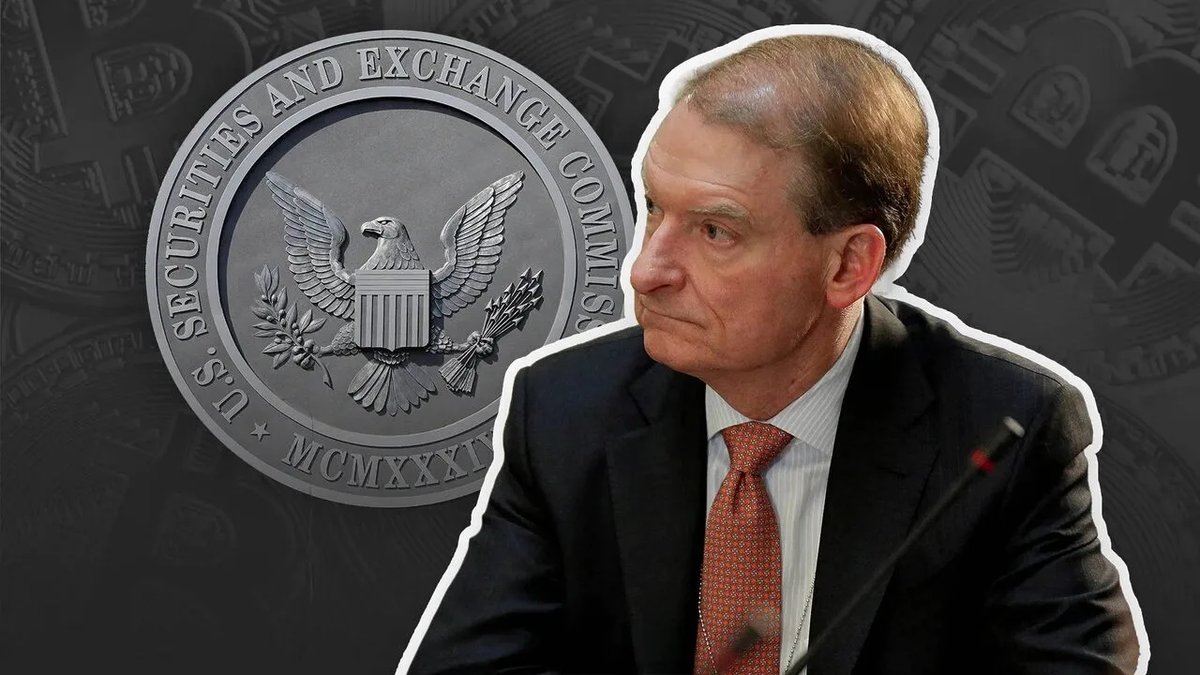
SEC Chair Paul Atkins attempted to steer the discussion toward a middle ground. On the one hand, he emphasised that the agency cannot simply exempt tokenized products or decentralised infrastructure from long-standing protections such as disclosure, fair access and robust market surveillance. On the other hand, he acknowledged that applying the rulebook literally to autonomous code is not always practical.
The direction of travel appears to be:
- Same economic activity, same core principles. If a token represents an equity claim, its holders should receive protections comparable to those in conventional markets.
- Flexible implementation. The mechanisms for meeting those principles—how records are kept, how settlement finality is ensured, how conflicts are managed—may look different in tokenized systems.
- Clearer compliance roadmaps. Rather than relying solely on enforcement actions, the SEC wants to provide guidance and, potentially, tailored exemptions or pilot regimes for tokenized structures that still satisfy core safeguards.
For tokenization projects, this suggests that the conversation is shifting from 'Can we operate at all?' to 'What design choices allow us to operate in a compliant way?'
7. Key Fault Lines in the TradFi–Crypto Debate
Across the panel, several recurring themes revealed where the real disagreements lie.
7.1 Control vs. Decentralisation
One camp argues that if a protocol can be paused, upgraded or re-parameterised by a small group, then those actors function as an intermediary even if they sit behind a veneer of decentralisation. The other camp counter-argues that decentralisation is a spectrum: many systems start with some degree of oversight for safety and gradually decentralise as they mature.
How regulators choose to interpret “meaningful control” will heavily influence which projects are treated as supervised venues and which are seen as infrastructure.
7.2 On-Chain Transparency vs. Off-Chain Accountability
Tokenization advocates point out that public blockchains provide a continuous, verifiable record of trades, balances and settlement. That degree of transparency, they argue, can enhance investor protection even if the organisational chart behind a protocol looks different from a traditional exchange.
Traditional intermediaries respond that transparency is not a substitute for accountability. Someone still needs to handle disputes, errors and abuse. Courts and regulators generally want identifiable counterparts, not just an address on a blockchain.
7.3 Global Liquidity vs. National Jurisdictions
Tokenized assets can, in principle, be traded globally 24/7. But securities rules are written at the national level. Citadel and other incumbents warn that allowing tokenized markets to bypass domestic rules would create uneven playing fields and regulatory arbitrage. Crypto firms reply that over-restrictive local rules simply send innovation to other jurisdictions while doing little to protect domestic investors who can access these markets online regardless.
8. What This Means for DeFi Builders
For developers working on protocols that might touch tokenized securities, the discussion offers several concrete lessons:
• Design for auditability and governance clarity. Clear documentation of how upgrades occur, who has admin keys, and what safeguards are in place will be crucial for demonstrating that a protocol either is or is not operating as an intermediary.
• Separate protocol from product. Many projects may find it useful to distinguish between a neutral base layer and regulated service providers that integrate with it. The latter may take on registration duties, while the former emphasises open-source infrastructure.
• Expect higher standards for tokenized real-world assets. When tokens represent equity, debt or fund interests, regulators will look for controls similar to those in legacy markets—robust record-keeping, clear investor disclosures and mechanisms to handle corporate actions.
In practice, this could lead to a new class of compliance-aware DeFi primitives, engineered from the outset to plug into regulated workflows while retaining some of the efficiency and composability that make DeFi attractive.
9. Implications for Large Institutions
The meeting also underscored how much is at stake for major financial institutions: broker-dealers, asset managers, exchanges and custodians.
• Opportunities. Tokenization could reduce settlement times, make fractional ownership easier, and offer more flexible collateral management. Institutions that master these tools early may gain a competitive edge as more assets move on-chain.
• Responsibilities. Firms that provide interfaces, market-making or custody for tokenized assets will likely bear much of the compliance burden, particularly in areas such as disclosure, suitability checks and trade reporting.
• Strategic positioning. Some incumbents may prefer a stricter interpretation of intermediaries, which channels tokenized activity through familiar entities. Others see more value in collaborating with decentralised protocols to tap global liquidity and experimentation.
Whatever path they choose, the message is clear: ignoring tokenization is becoming harder. Even cautious institutions are beginning to ask how their existing roles—brokerage, market-making, custody—translate into an on-chain environment.
10. Where Regulation Might Go From Here
The IAC’s discussion will likely feed into several concrete regulatory initiatives over the next few years:
• Guidance on tokenized equities. Clarifying when tokens are considered the primary record of ownership versus wrappers, and how Regulation NMS and exchange rules apply.
• Definitions of DeFi intermediaries. Outlining criteria—such as control over upgrades, fee collection or front-end operation—that make an entity responsible for protocol-level activity.
• Pilot programmes or exemptions. Allowing limited-scope experiments where tokenized markets operate under tailored conditions, in exchange for heightened transparency and safeguards.
• Coordination with banking and payments regulators. As stablecoins and tokenized deposits evolve, securities rules will intersect with prudential regulation of payment systems and custodial services.
None of these are quick fixes, but together they sketch a path toward a more formal framework in which tokenized assets can coexist with established market rules.
11. Practical Takeaways for Market Participants
For readers following these developments from the sidelines—whether as long-term investors, builders or curious observers—several high-level conclusions stand out:
1. Tokenization is being taken seriously at the highest regulatory levels. This is no longer a niche topic confined to crypto conferences; it is part of mainstream discussions about how equity and fund markets will operate.
2. The core tension is about responsibility, not technology. All sides recognise that blockchains can make settlement faster and records more transparent. The unresolved issue is who bears legal and operational responsibility in systems that rely heavily on code.
3. DeFi will not remain in a regulatory vacuum. Whether through broad definitions of intermediaries or case-by-case guidance, expect more explicit rules for protocols that touch tokenized securities or large pools of capital.
4. Institutions are preparing for a tokenized future. Firms like Citadel, Coinbase and Galaxy would not invest the time and resources to engage at this level if they believed tokenization would be marginal.
5. For individuals, the most constructive stance is educational. Understanding how tokenized assets work, what rights they confer and how they fit inside existing regulation is more valuable than trying to predict short-term market moves.
Conclusion: From “Whether” to “How”
The SEC’s latest Investor Advisory Committee meeting did not settle the TradFi-versus-DeFi debate, and it was never meant to. What it did achieve was a reframing of the conversation. Instead of asking whether tokenization and decentralised trading will be permitted, regulators and industry leaders are increasingly focused on how to integrate them into a regulatory architecture built around intermediaries.
Citadel’s call for a broad definition of intermediaries and Coinbase’s case-by-case approach are two ends of a spectrum. The eventual framework will likely sit somewhere in between, combining principles of investor protection with room for experimentation. For now, the key takeaway is that tokenization is moving from the margins to the centre of policy discussions—and that anyone building or investing in this space should expect a future in which compliance and decentralisation must be designed to coexist.
Disclaimer: This article is for informational and educational purposes only. It does not constitute financial, investment, legal or tax advice, and it should not be treated as a recommendation to buy, sell or hold any digital asset or security. Digital assets and tokenized products can be volatile and may not be suitable for all investors. Readers should conduct their own research and, where appropriate, consult qualified professionals before making decisions related to digital assets or other financial instruments.