The DeFi Clause: Why U.S. Crypto Market-Structure Talks Keep Stalling—and Why 2026 Still Matters
“Market structure” sounds like a policy term designed to bore people into compliance. In practice, it’s closer to an operating-system update for finance: it decides what counts as an exchange, who can intermediate trades, which agency has the steering wheel, and what guardrails apply when digital assets behave like investments.
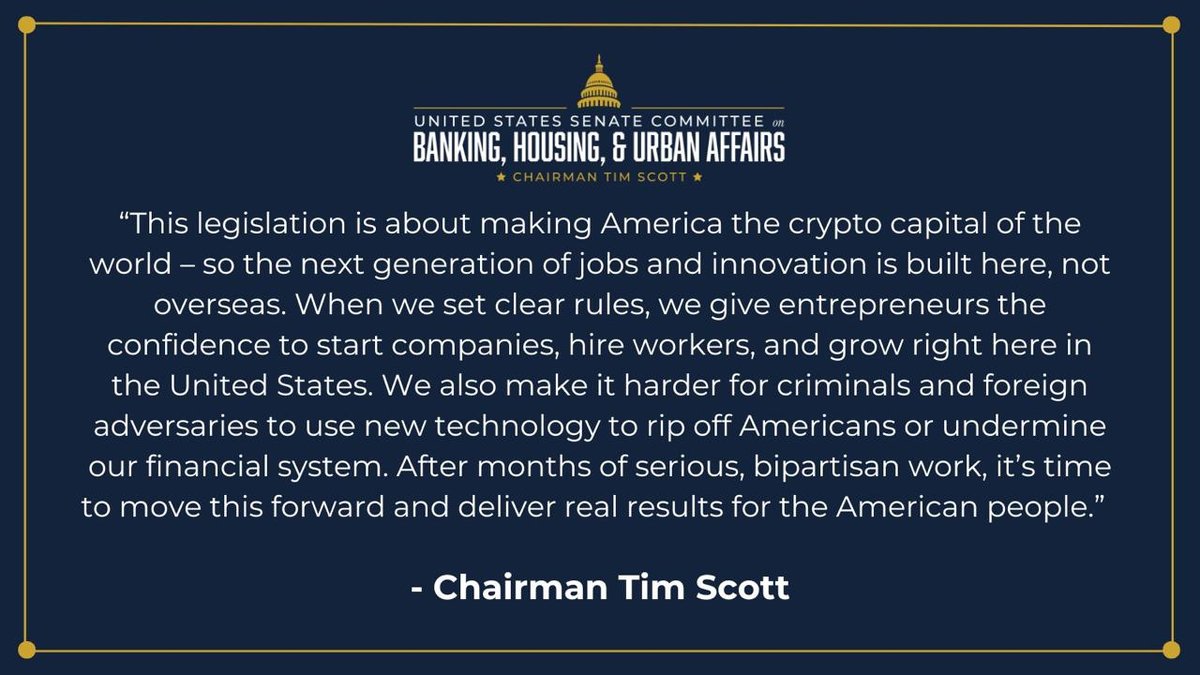
Right now, lawmakers are signaling renewed work in early 2026—hearings, revisions, and potentially a vote in Q1 or Q2. But the true obstacle isn’t that Congress can’t draft a bill. It’s that one part of crypto refuses to fit into the usual wiring: decentralized finance. DeFi turns a “write rules for firms” problem into a “define accountability in a system” problem. And systems don’t sign paperwork.
Market Structure Isn’t a Buzzword. It’s Architecture.
Many readers assume market-structure legislation is mainly about stopping bad behavior: manipulation, fraud, and conflicts of interest. Those outcomes matter, but they’re the second layer. The first layer is architectural: who is inside the regulated perimeter, what activities require licensing, and how responsibility is assigned when something goes wrong.
A simple analogy is road design. Consumer protection is the seatbelt and crash test; market structure is deciding where roads exist, which vehicles are allowed, and who must carry a license. Crypto is unusual because some “vehicles” also function like roads (networks), and some “drivers” are software protocols rather than companies. The bill is trying to regulate a city where parts of the infrastructure are self-operating.
Most market-structure bills try to achieve three concrete outcomes:
• Classification clarity: define which assets and activities are treated more like securities versus commodities, and how that line is drawn.
• Intermediary obligations: standardize requirements for exchanges, brokers, custodians, and similar roles (licensing, surveillance, disclosures).
• Enforcement predictability: reduce the “rules changed mid-game” feeling by making expectations explicit and durable.
Why DeFi Breaks the Traditional Regulatory Template
Negotiations have repeatedly slowed when DeFi enters the room, because DeFi forces a question lawmakers usually don’t have to ask: Who is the regulated entity? In traditional finance, the entity is obvious—even if the system is complex. There are legal persons with addresses, boards, officers, and balance sheets that can be supervised.
In DeFi, the “product” is often a set of smart contracts. The user experience might be delivered by a website interface, a wallet, an aggregator, or an API—sometimes by multiple fronts at once. Governance may be fragmented, liquidity may be provided by thousands of actors, and the original team may have limited control. If you try to regulate the protocol directly, you risk treating software publication like financial intermediation. If you regulate only interfaces, activity can re-route to other interfaces, offshore hosts, or permissionless alternatives.
Three DeFi fault-lines tend to reopen negotiations:
• Definition risk: what does “decentralized” mean in law—token distribution, admin-key removal, validator diversity, governance design, or something else? Each metric can be gamed, and most evolve over time.
• Accountability placement: if a protocol upgrade causes harm, is responsibility on developers, governance voters, interface providers, or liquidity providers? Each answer creates different incentives—and different political backlash.
• Consumer-protection scope: how do you protect users without forcing every open-source system into a bank-like compliance model?
Why a Q1/Q2 2026 Vote Is Plausible—Yet Fragile
On paper, the timeline has logic. A House-passed baseline from 2025 provides a starting point rather than a blank page. Senate hearings can surface disagreements, committees can iterate on language, and leadership can test vote counts. In a calm year, that sequence can plausibly land a vote in early-to-mid 2026.
But “plausible” is not “stable.” The bill’s fragility comes from two pressures. First, the policy complexity is real: market structure touches multiple agencies and committees, and DeFi is the hard edge of every definition. Second, election gravity grows stronger as 2026 progresses. The nearer the midterms get, the more costly it becomes to carry ambiguous, easily attacked language onto the campaign trail.
Why 2026 still has a runway:
• Crypto infrastructure is increasingly connected to mainstream rails (custody, stablecoins, tokenization), making clarity a practical need rather than a niche demand.
• Lawmakers can credibly frame a bill as “rules of the road,” not “promotional policy.”
• A House baseline reduces drafting time and shifts debate toward differences that can be negotiated.
Why the runway can shorten suddenly:
• DeFi language can trigger ideological fights about innovation vs enforcement.
• Agency turf dynamics (who regulates what) can become an unspoken deal-breaker.
• Floor time is scarce; complex bills lose priority when the agenda gets crowded.
What a Market-Structure Bill Can—and Cannot—Change
A common mistake is expecting market-structure progress to behave like a market catalyst. That’s not its function. Its function is to turn uncertainty into a predictable set of constraints. The economic benefit comes from reduced legal ambiguity: firms can design products knowing which rulebook applies, what supervision looks like, and how enforcement is evaluated.
But regulation also acts as a filter. It rewards models that can support compliance costs and prove governance discipline. It disadvantages models that rely on blurred accountability. That is neither “good” nor “bad” in isolation—it’s simply what perimeter-setting does. It shapes what scales, what stays underground, and what migrates elsewhere.
What the bill can realistically improve:
• Institutional comfort via clearer custody expectations, broker/exchange obligations, and standardized operational controls.
• Product honesty by nudging token issuers toward clearer disclosures, conflicts policies, and governance boundaries.
• Enforcement predictability by reducing reliance on case-by-case interpretation.
What the bill cannot magically fix:
• Technology risk (smart-contract bugs, bridges, oracle failures) persists regardless of licensing.
• Jurisdictional escape: if rules are too rigid, code and capital can shift to offshore or permissionless venues.
• Speculation: leverage and risk appetite don’t disappear; they relocate.
The Real Fight Is the Compliance Perimeter (Not the Headlines)
The most important question is not “Is DeFi allowed?” It’s “Where does compliance attach?” This is where bills quietly succeed or fail. A perimeter that only captures obvious centralized intermediaries can leave large economic activity outside guardrails. A perimeter that tries to capture protocols as entities can become unenforceable—or collide with open-source development norms and constitutional questions about software publication.
Most workable approaches revolve around the concept of control: if a party can unilaterally change rules, steer execution, freeze assets, or extract fees, regulators can argue the activity resembles intermediation. But control in crypto is rarely binary. Admin keys can be “temporary.” Governance can be nominally decentralized but practically captured. Interfaces can shape user outcomes without touching funds. That ambiguity is exactly why DeFi language causes late-stage rewrites.
Expect 2026 debates to concentrate on these “control-adjacent” topics:
• Admin-key timelines and disclosure obligations while keys still exist.
• Whether governance actors owe duties when governance controls upgrades, fees, or asset parameters.
• Whether large interfaces should carry limited distributor-like obligations (risk warnings, conflict disclosure), without being treated as full financial institutions.
Why the Midterms Matter (and Why 50–60% Is a Rational Range)
Industry conversations often frame the odds of passage before the November 2026 midterms in a roughly 50–60% range. Treat that less as a precise forecast and more as a signal of the underlying reality: this is neither inevitable nor impossible. It is a coalition problem.
Midterms reshape incentives. Legislators become more headline-sensitive. Complex bills become easier to caricature. A market-structure bill can be framed as “clarity and consumer protection,” but opponents can frame it as “loopholes for risky assets.” As the election approaches, lawmakers prefer clean, defensible moves over complicated compromises that require long explanations.
Three indicators often matter more than speeches:
• Scheduling: hearings and markups imply leadership believes votes can be found.
• Language stability: when DeFi definitions stop changing every draft, negotiations are converging.
• Cross-committee alignment: market structure spans multiple jurisdictions; alignment reduces last-minute surprises.
A DeFi Reality Check for 2026: DeFi Isn’t One Thing
DeFi is often discussed like a single category, but it’s a spectrum: genuinely autonomous protocols, protocols that are “decentralized in marketing,” and products that are basically fintech apps with on-chain settlement. A single legal treatment for this entire spectrum creates either loopholes or collateral damage.
A more realistic policy outcome is a tiered model: stronger obligations on entities that look and behave like businesses, clearer safe harbors for software publication and non-custodial tooling, and targeted restrictions where consumer harm is predictable. It won’t satisfy purists on either side, but it may be enforceable—and enforceability is what turns legislation from performance into reality.
DeFi topics likely to dominate hearings:
• Interface responsibility: standardized risk disclosures, conflicts disclosures, and clarity on what users are actually interacting with.
• Governance accountability: how to treat voting that effectively acts like corporate decision-making without pretending a DAO is a Delaware corporation.
• Custody boundaries: distinguishing self-custody tools from intermediaries that materially route, batch, or influence execution.
Conclusion
A Q1/Q2 2026 vote is not a fantasy; it reflects a real legislative path: a House baseline, growing institutional relevance, and a policy need to replace improvisation with predictable lanes. But the same path reveals why setbacks happen: DeFi makes market structure a boundary dispute, and boundaries are politically expensive.
The best way to read 2026 is to treat market structure as infrastructure, not a hype story. The question is not whether the bill is “pro-crypto” or “anti-crypto.” The question is whether it sets an enforceable, technologically literate perimeter that can survive election cycles—one that protects users without pretending open-source software is a bank. If that balance is reached, the U.S. won’t have solved crypto. But it will have made the playing field legible enough for serious long-term building.
Frequently Asked Questions
Why is DeFi the hardest part of a market-structure bill?
Because laws are written for entities, and DeFi often behaves like a system. Negotiators must decide where accountability attaches—without regulating software publication as if it were financial intermediation.
If a bill passes, what changes for users?
Most changes would be indirect: clearer disclosures on major platforms, more standardized conduct obligations for intermediaries, and fewer gray areas about which rules apply. It won’t remove technology risk, but it can improve predictability and baseline protections where regulated touchpoints exist.
Why focus on Q1/Q2 2026?
Because it’s the cleanest runway before midterm dynamics intensify. If hearings, revisions, and committee actions happen early, a vote becomes feasible. If DeFi definitions keep reopening, timelines can slip.
Does market-structure clarity mean prices will rise?
Not necessarily. Regulation mainly changes incentives and predictability. It can enable some participation and constrain other behaviors, but it is not designed as a price mechanism.
Disclaimer: This article is for educational purposes only and does not constitute financial, legal, or investment advice. Digital assets involve risk, and regulatory outcomes are uncertain. Always consult qualified professionals for advice relevant to your circumstances.