Twenty One Capital’s NYSE Debut: More Than Just Another Bitcoin Treasury
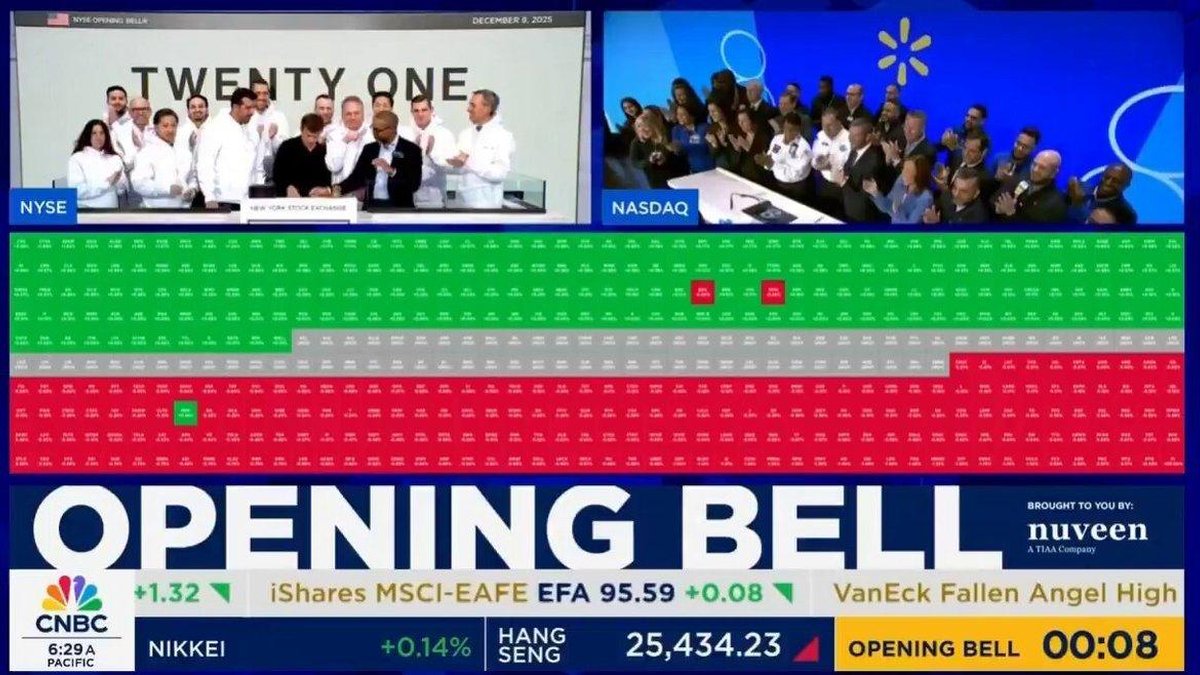
Twenty One Capital’s first trading session on the New York Stock Exchange marks a symbolic moment for the relationship between Bitcoin and public equity markets. Under the ticker XXI, the company arrives with a balance sheet dominated by 43,514 BTC, placing it just behind Strategy and MARA among listed firms by Bitcoin holdings. Yet the story is more nuanced than a simple “bigger treasury, higher leverage to Bitcoin’s price” narrative.
Jack Mallers, the company’s co-founder and CEO, has been clear that he does not want Twenty One to be viewed merely as a vault that holds digital assets and waits for the market to do the rest. Instead, XXI positions itself as a Bitcoin-native financial platform: a company that holds a large strategic treasury, but also intends to build lending products and capital-markets tools that are anchored in that treasury. Understanding how credible this vision is requires unpacking who sits behind the company, how its model compares with earlier precedents and what risks come with translating a Bitcoin thesis into a listed equity.
1. Who Is Backing Twenty One Capital—and Why That Matters
Twenty One is supported by a group of institutions that collectively signal how far digital assets have moved into mainstream finance. Cantor Fitzgerald provided the SPAC vehicle—Cantor Equity Partners—that enabled the NYSE listing. Tether and Bitfinex, two of the most established names in the stablecoin and trading-infrastructure world, hold majority stakes, while SoftBank Group appears as a significant minority investor.
This coalition is noteworthy for three reasons:
• Balance sheet credibility. Having deep-pocketed backers improves confidence that the company can ride out periods of volatility without being forced into distressed actions.
• Distribution and deal flow. Each backer brings a different network: Cantor’s capital-markets expertise, Tether’s relationships with trading firms and exchanges, SoftBank’s portfolio of technology companies. If XXI builds credit and advisory products, these networks could become an important source of counterparties and clients.
• Regulatory signalling. Listing on the NYSE under an approved ticker, after a detailed review of disclosures and governance, is itself a form of validation. It does not remove risk, but it shows that regulators are willing to accommodate Bitcoin-native balance sheets when they are wrapped in transparent corporate structures.
At the same time, this ownership mix also raises questions about expectations. Investors will want to know whether Twenty One is primarily an instrument for its sponsors’ strategic goals or a stand-alone company optimised for long-term earnings and shareholder value. The answer will shape how the market values XXI relative to its BTC per share.
2. How XXI Compares with Strategy and MARA
Any discussion of a Bitcoin-heavy public company inevitably invites comparisons with Strategy (the renamed MicroStrategy) and with mining-focused MARA. Both have become reference points for public-market exposure to Bitcoin, but their approaches differ—and Twenty One adds a third model.
Strategy’s approach has been to accumulate Bitcoin as a primary treasury asset, often using debt and equity issuance to increase its holdings. The company still runs a software business, but the market tends to anchor its valuation around the size and cost basis of its BTC stack, plus a premium or discount reflecting sentiment about management and leverage.
MARA, by contrast, is primarily an infrastructure company: it earns revenue from operating mining facilities while holding a portion of mined BTC on its balance sheet. Its earnings profile is tied to both Bitcoin’s price and to operating metrics such as hash rate, energy costs and efficiency of its data centres.
Twenty One Capital positions itself somewhere between these two poles:
- Like Strategy, it holds a large strategic treasury and views BTC not as a side bet but as the core of its identity.
- Like a specialist finance company, it wants to earn yield and fees by building Bitcoin-secured credit lines, capital-markets advisory services and potentially structured products.
This hybrid model could be powerful if execution matches ambition. If XXI can generate recurring revenue and cash flow from its products, while also benefiting from any long-term appreciation in Bitcoin, then equity holders are effectively getting a blend of asset exposure and operating leverage. But if the operating side lags, the company risks being valued primarily as another leveraged BTC holding, with relatively little differentiation.
3. Bitcoin as Corporate Reserve and Financial Collateral
The core of Twenty One’s thesis is that Bitcoin has matured enough to serve not only as a reserve asset, but also as a key building block in credit markets. That view has gained traction recently as several major banks—including Citi, JPMorgan, Wells Fargo, BNY Mellon, Charles Schwab and Bank of America—have started extending credit facilities secured by Bitcoin held with approved custodians.
For corporate treasuries, using Bitcoin as collateral opens an interesting path: rather than selling BTC to access liquidity, they can borrow against it while keeping upside exposure. From a risk-management perspective, this requires carefully designed loan-to-value ratios, margin policies and diversification. Yet the logic is familiar; companies already use high-quality bonds or other liquid assets as collateral for credit lines.
Twenty One’s large treasury gives it room to explore this territory from both sides of the balance sheet. It can borrow against BTC when needed to fund operations or acquisitions, and it can also provide secured credit to clients who pledge Bitcoin of their own. Over time, this could position XXI as a coordinator of Bitcoin-based funding markets, not just a participant in them.
4. What a Bitcoin-Native Product Suite Might Look Like
While details are still emerging, Mallers has outlined several categories of Bitcoin-centric financial products that Twenty One intends to build. Conceptually, they fall into three buckets:
1. Secured lending. Loans backed by Bitcoin collateral, aimed at corporates, funds or high-net-worth individuals who want liquidity without selling their holdings. Risk management here is crucial: transparent collateral requirements, conservative haircuts and robust stress-testing will matter more than headline interest rates.
2. Capital-markets tools. Structures such as notes, structured products or co-investment vehicles that give investors tailored exposure to Bitcoin price moves or to revenue streams from Bitcoin-related businesses. Thoughtful design can help ensure that risks are clear and that products do not simply amplify volatility without compensating investors.
3. Advisory and education. Helping corporates, family offices and institutions understand how to integrate Bitcoin into treasury strategies, risk frameworks and governance policies. This may sound less glamorous than leverage, but advisory mandates can provide stable, lower-risk revenue while deepening the firm’s network.
In all three areas, trust will be a differentiating factor. Publishing on-chain proof of reserves, maintaining clear disclosure about hedging and leverage, and aligning incentives between management and shareholders will be essential if Twenty One wants to be seen as a steady partner rather than a short-term trading vehicle.
5. Market Reaction: Volatility on Day One Is Not the Whole Story
Shares of XXI experienced significant swings during the debut session, with some reports pointing to double-digit percentage declines from the opening print. That volatility is not surprising. New listings tied closely to a single volatile asset often struggle at first, as traders test liquidity and investors debate how to value the equity relative to the underlying holdings.
There are two ways to interpret a choppy first day:
• Short-term lens. In the immediate term, price action reflects a tug-of-war between buyers seeking leveraged exposure to Bitcoin and sellers who are sceptical about paying a premium over the firm’s net asset value (NAV). If BTC itself is experiencing large intraday moves, XXI will naturally echo and sometimes amplify that behaviour.
• Long-term lens. Over months and years, the crucial variables will be: how effectively the company grows revenue beyond mark-to-market gains; how conservatively it uses leverage; and whether management delivers on its promise of transparency and disciplined capital allocation.
History suggests that markets eventually find a stable range where such companies trade at a premium or discount to their underlying assets depending on these fundamentals. For now, investors should treat early volatility as a reminder of the difference between a liquid listing and a mature business.
6. Opportunities and Risks for Investors
From an educational perspective, Twenty One’s listing offers a useful case study in how to think about Bitcoin-heavy equities. Several potential advantages stand out:
• Simplified exposure. Some investors are more comfortable holding a regulated stock than managing private keys or using specialised custody. XXI gives them indirect exposure to Bitcoin plus potential operating upside.
• Active treasury management. If the company can opportunistically use derivatives, credit lines and product revenues to grow its BTC stack over time, shareholders may see their “Bitcoin per share” metric improve even if they never buy additional tokens themselves.
• Access to new business lines. Revenue from lending, advisory and capital-markets services could, if well designed, add diversification to a portfolio otherwise dominated by price-only Bitcoin exposure.
Balanced against these opportunities are several key risks:
• Concentration risk. A large portion of the company’s value is tied to a single asset class. If Bitcoin enters a prolonged downturn, earnings and book value could both face pressure.
• Execution risk. Building robust financial products is complex. Mistakes in product design, risk management or compliance can be costly. Investors will want to see strong governance and conservative assumptions.
• Regulatory evolution. While listing on the NYSE indicates that current disclosures meet existing standards, rules around digital assets continue to evolve. Changes in capital requirements, accounting standards or disclosure expectations could affect the business model.
For most market participants, these factors argue for treating XXI as one component of a diversified strategy rather than a sole vehicle for digital-asset exposure.
7. What XXI Signals About the Direction of Crypto–Traditional Finance Integration
Twenty One Capital’s debut is part of a broader pattern: digital assets are no longer sitting at the edge of the financial system. In the last year alone, the U.S. has seen spot Bitcoin ETFs approved, banks begin to explore Bitcoin-secured credit and regulators clarify how traditional institutions can act as intermediaries in digital-asset markets.
XXI adds another piece to that puzzle. It shows that public markets are now willing to host companies whose entire identity is built around a digital reserve asset, as long as the packaging meets familiar expectations for governance, audit and transparency. It also hints at the next phase: using that reserve as the foundation for structured, regulated financial products rather than treating it as a passive holding.
If successful, this experiment could influence how other corporates think about digital reserves. Instead of asking, “Should we add a small amount of Bitcoin to our treasury as a hedge?” they may start asking, “Can we build products, services or partnerships around a digital reserve base?” That shift—from passive allocation to active integration—is potentially more important than any individual listing.
Conclusion
Twenty One Capital’s arrival on the NYSE is easy to summarise in a single sentence: another company with a large Bitcoin position has become publicly traded. But that shorthand misses the deeper story. XXI is backed by a coalition of major institutions, aspires to turn its treasury into the backbone of a new financial product suite and is listing at a time when global regulators and banks are gradually building frameworks for digital-asset activities.
Whether the company ultimately justifies the attention it has attracted will depend less on raw BTC holdings and more on the quality of its execution: how carefully it manages risk, how transparent it is with shareholders and how thoughtfully it designs its lending and capital-markets offerings. For observers of the digital-asset space, XXI provides a valuable real-time experiment in what a Bitcoin-native public company can be.
Educational note: This article is intended solely for information and analysis. It does not constitute financial, investment, legal or tax advice, and it should not be relied on as a recommendation to buy or sell any security or digital asset. Markets can be volatile and capital is at risk; readers should conduct their own research and consult qualified professionals before making financial decisions.