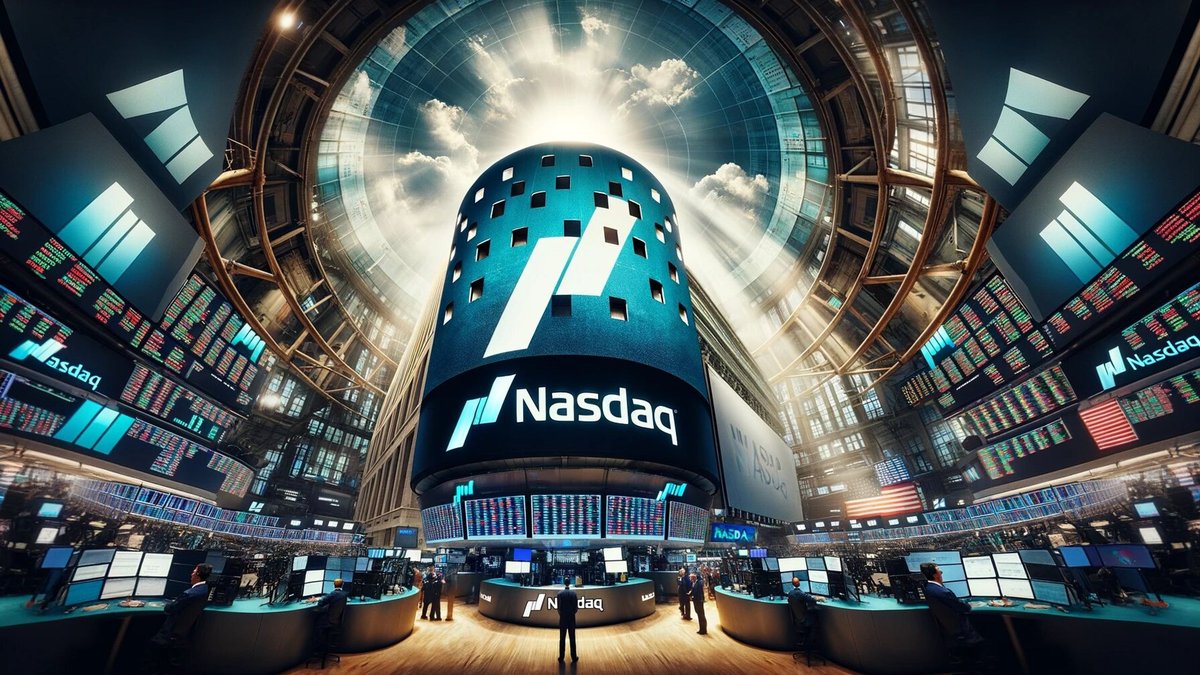
Nasdaq Moves Toward 23-Hour Trading While Crypto Rebuilds Its Macro Edge
For more than a decade, one of crypto’s quiet advantages was simple: it never slept. Bitcoin traded 24/7 while traditional equity markets shut down every evening and every weekend. That gap is now starting to close. Over the past 24 hours, Nasdaq has filed with the SEC to extend its trading hours to 23 hours per day, aiming to launch the new schedule in the second half of 2026. At the same time, Bitcoin has slipped under 86,000 USD, even as a cluster of structural developments — from MetaMask adding native Bitcoin support to JPMorgan and Ondo pushing tokenized securities — continue to pull the financial system on-chain.
This daily wrap looks beneath the headlines to ask a deeper question: if traditional markets become almost always open while banks, wallets and regulators move further into crypto, what exactly is the unique edge of digital assets in the next cycle?
1. Nasdaq’s 23-Hour Ambition: When Wall Street Learns to Stay Awake
Nasdaq’s filing to run equities trading for 23 hours a day is more than a logistical tweak. It is a signal that the infrastructure of traditional markets is being redrawn to match the expectations set by crypto and foreign-exchange markets, where near-continuous trading has been standard for years.
The exchange plans to leave a one-hour gap each weekday for maintenance and risk checks. If approved, this would allow investors across time zones to react to earnings, policy decisions and macro data almost in real time rather than waiting for the opening bell.
There are three important implications for digital assets:
• Volatility may migrate rather than disappear. Some of the sharp moves that used to happen in Bitcoin during “off hours” for equities could now be shared with stocks, as both markets react to the same news flow around the clock.
• Arbitrage between tokenized and traditional products tightens. As tokenized stocks and exchange-traded products go live on public chains, having almost-continuous price discovery on Nasdaq makes cross-market alignment easier.
• The psychological gap narrows. When all major asset classes feel “always on,” the story that crypto is unique purely because it trades 24/7 becomes weaker. Its edge will need to rest more on ownership, programmability and openness than on trading hours alone.
In other words, Nasdaq is not copying crypto for the sake of it; it is responding to a world where capital expects flexibility. That puts pressure on digital assets to keep innovating on what only they can do, not just when they can trade.
2. Bitcoin Below 86,000 USD: Weak Price, Strong Structural Tailwinds
Price action over the past day has been uncomfortable for bulls. Bitcoin dropped below 86,000 USD, extending a multi-week downtrend from the mid-120,000s. At the same time, the macro backdrop sent mixed signals:
- The US unemployment rate climbed to 4.6%, the highest since 2021, hinting at a cooling labour market.
- White House and Treasury officials floated the prospect of 1,000–2,000 USD tax refunds for individuals in Q1 2026, while reiterating that the US economy is not falling behind global peers.
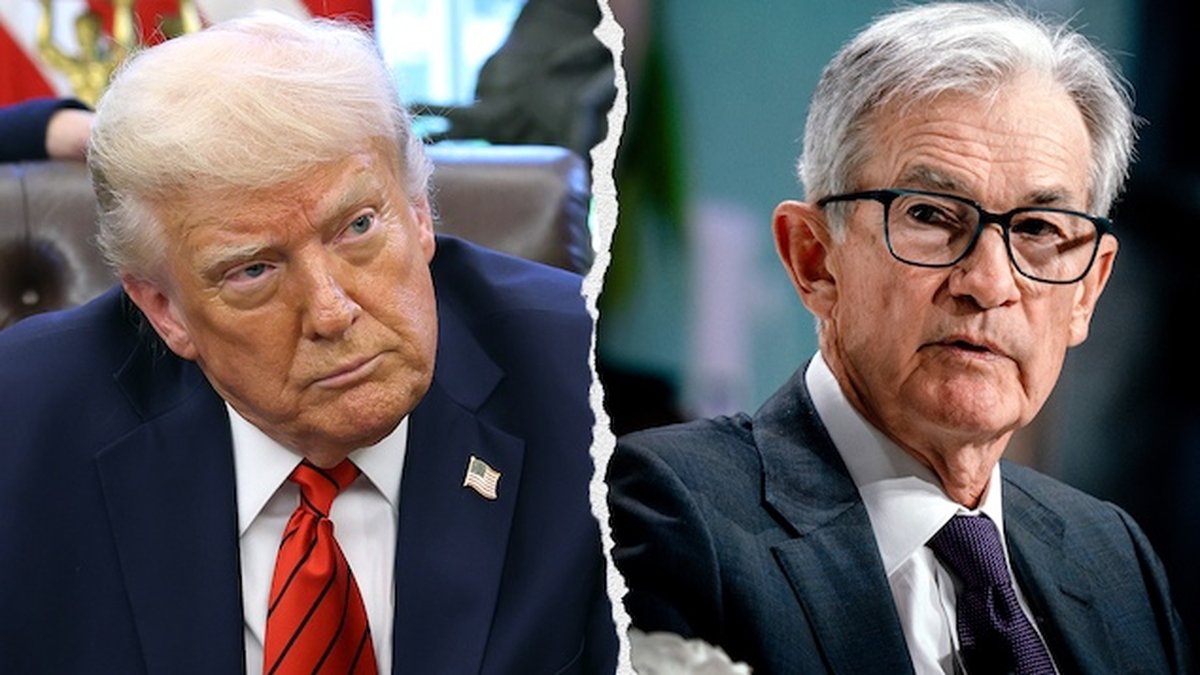
- Prediction platforms now show Kevin Warsh as the market favourite to replace Jerome Powell as the next Federal Reserve Chair, reinforcing expectations for a more rate-cut-friendly Fed over the coming years.
Normally, a rising jobless rate and prospects of future policy easing would be constructive for a scarce asset like BTC. The fact that Bitcoin is still under pressure suggests that micro-structure and positioning are still outweighing macro tailwinds. Leverage has been flushed out, ETF flows have cooled, and short-term traders are reluctant to step in ahead of year-end.
Yet, while screen prices look heavy, the strategic backdrop continued to improve in three important areas: wallets, market structure and tokenized real-world assets.
3. Wallets and Rails: MetaMask Adds Native Bitcoin, PayPal Chases a Bank Charter
3.1 MetaMask welcomes Bitcoin
MetaMask has rolled out native Bitcoin support, enabling users to buy, swap and transfer BTC directly inside the wallet that has long served as the default interface to Ethereum and many EVM-compatible chains. Until now, most users had to manage Bitcoin in separate apps or rely on wrapped representations.
This move matters for several reasons:
- Unified user experience. For millions of existing MetaMask users, Bitcoin becomes just another asset tab, not a separate ecosystem requiring new habits.
- On-ramp consolidation. Fiat on-ramps and aggregators that plug into MetaMask can now route funding directly into BTC as well as tokens on other networks, simplifying how capital enters the digital-asset stack.
- Strategic repositioning. MetaMask’s embrace of Bitcoin is a reminder that the wallet wars are no longer chain-specific; they are battles to be the default interface to digital value regardless of network.
For Bitcoin, the timing is quietly supportive. Price weakness can coexist with UX improvements; those improvements often matter more for the next cycle than for the current week’s candles.
3.2 PayPal leans further into banking
In parallel, PayPal submitted an application to become a US bank. If approved, that would give the company direct access to the Federal Reserve system and a more robust regulatory perimeter around its existing payments and stablecoin activities.
PayPal already issues a US dollar stablecoin and serves as a major payments provider. A bank charter would:
- Lower its reliance on partner banks for settlement and custody.
- Potentially allow more seamless integration between deposits, payments and on-chain instruments.
- Increase regulatory oversight but also signal that digital-native financial firms are willing to meet the same standards as traditional banks.
Taken together with statements from Bank of America that banks will move on-chain over the next several years, the direction of travel is clear: the boundary between “fintech,” “crypto” and “bank” is blurring. The infrastructure is slowly being rebuilt around programmable money rails.
4. Prediction Markets and New Risk Products: Kalshi, CME and Regulatory Focus
4.1 Kalshi’s multi-event “Combos”
Regulated prediction platform Kalshi launched a new feature called Parlays “Combos”, allowing users to combine several event contracts into a single structured position. Conceptually, this is similar to building a basket of opinions: for example, pairing outcomes on interest-rate decisions with election results or macro data releases.
From a market-structure viewpoint, this is notable because it turns views on real-world events into portfolio-style exposures. It pushes prediction markets closer to how investors already think about multi-factor risk, while remaining under a regulated umbrella. As with all leveraged or path-dependent products, education and risk management will be essential, but the direction of travel is toward richer ways to express macro views without relying solely on traditional futures.
4.2 CME expands futures on Solana and XRP
On the institutional side, CME Group introduced spot-quoted futures for Solana (SOL) and XRP, extending its suite of digital-asset derivatives. These contracts reference real-time underlying prices but settle like traditional futures, giving professional participants familiar tools to manage exposure.
The message is straightforward: large derivatives venues now treat major digital assets as enduring parts of the macro toolkit, not as short-lived experiments. Every new contract listed on CME deepens liquidity, improves price discovery and makes it easier for institutions to size positions responsibly.
5. On-Chain Capital Markets: Ondo, JPMorgan, Circle and Ripple
Perhaps the most structurally important theme in the past day is the acceleration of tokenized capital markets.
5.1 Ondo Finance brings US stocks and ETFs to Solana
Ondo Finance announced plans to launch a platform for trading tokenized US stocks and ETFs on Solana in early 2026. The idea is to wrap traditional equity exposure into compliant on-chain instruments, accessible through crypto-native wallets and DeFi infrastructure.
If executed well, this could:
- Provide non-US investors with streamlined access to US equity exposure without opening a conventional brokerage account.
- Allow tokenized portfolios to be used as collateral in on-chain lending, structured products and yield strategies.
- Bridge the gap between Nasdaq’s near-24-hour trading window and crypto’s true 24/7 environment, since tokenized instruments can trade whenever the underlying market is open and still settle on public chains.
It is an early glimpse of what a merged Wall Street and Web3 stack might look like.
5.2 JPMorgan and tokenized money-market funds
In the same emerging lane, JPMorgan is preparing to launch a tokenized money-market fund on Ethereum. A tokenized fund share behaves like a traditional short-term fixed-income product but can move at blockchain speed, with programmable settlement and potential DeFi integrations.
Combined with Ondo’s plans, the picture is of a future where a meaningful slice of household and institutional savings sits in on-chain wrappers — not just in volatile assets, but in conservative instruments as well.
5.3 Circle acquires Interop Labs’ team and IP
To support this cross-chain future, Circle signed a deal to acquire the team and intellectual property of Interop Labs, the original developer of the Axelar network. The goal is to strengthen cross-chain routing for Circle’s Arc platform and its CCTP (Cross-Chain Transfer Protocol).
From a strategic perspective, this is a reminder that tokenization only works at scale if capital can move safely across many networks. By internalizing advanced interoperability expertise, Circle is betting that stablecoins and tokenized assets will be natively multi-chain rather than siloed.
5.4 Ripple’s RLUSD expands via Wormhole NTT
Ripple is extending its RLUSD stablecoin to Ethereum Layer 2 networks using Wormhole’s Native Token Transfers (NTT) standard. That move gives RLUSD access to high-throughput environments where transaction costs are lower and DeFi activity is growing.
Each of these projects — Ondo, JPMorgan, Circle, Ripple — points in the same direction: a multi-chain environment where regulated assets, stablecoins and crypto-native tokens coexist on the same networks. In that world, the question for investors is less “crypto versus traditional finance” and more “which parts of the financial stack are already on-chain, and which are still waiting to migrate?”
6. New DEX and Wallet Features: Aster and HumidiFi
Beneath the institutional headlines, product innovation at the application layer continues.
- Aster DEX launched a feature called Shield Mode, enabling users to open positions privately without posting orders to a public book and without explicit opening and closing fees. This design aims to reduce information leakage around large trades and protect users from being targeted by bots that monitor public order flow.
- HumidiFi’s WET token began trading on both Upbit and Bithumb, illustrating how regional exchanges continue to compete for early listings of new projects, particularly those that can plug into broader narratives such as real-world assets or environmental finance.
Although these developments are smaller in scale than multi-billion-dollar tokenization initiatives, they matter for user experience. Deep capital markets need both large institutional rails and creative front-end experiments.
7. Regulation, Transparency and Politics
Regulators and policymakers also contributed to the 24-hour news cycle.
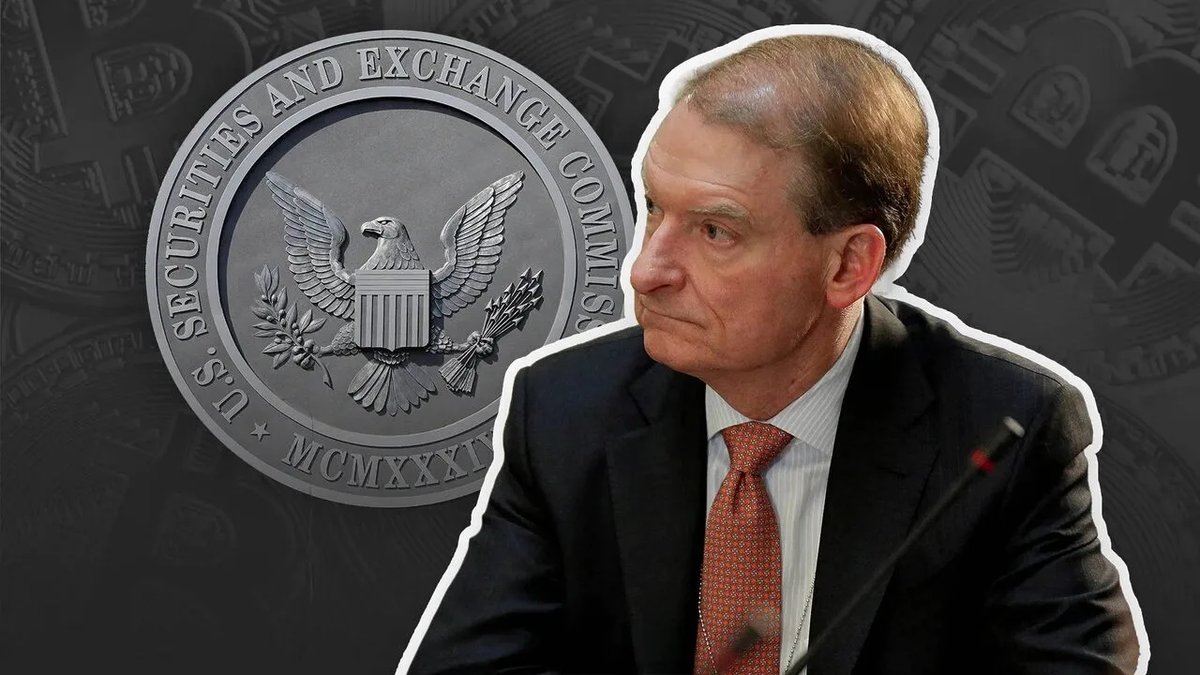
• The SEC published “Crypto Asset Custody Basics for Retail Investors,” explaining how wallets, private keys and custody arrangements work, and emphasizing security, risk awareness and the importance of choosing reputable service providers.
• SEC Chair Paul Atkins remarked that public blockchains are more transparent than any legacy financial system, a notable shift in tone that frames open ledgers as a tool for investor protection rather than only a source of risk.
• Treasury Secretary Bessent called for a ban on stock trading by members of Congress, while also noting that China has so far met its negotiated economic commitments and hinting at tax refunds for households next year.
These comments, while not directly price-moving, continue a slow re-framing of crypto from an outsider phenomenon to infrastructure that can support transparency, compliance and public accountability.
8. How All of This Fits Together
Put side by side, today’s stories trace a clear arc:
1. Market hours are converging. Nasdaq moving toward 23-hour trading shrinks the difference between traditional and digital markets. Over time, investors will judge assets more on fundamentals and less on whether a given venue closes at 4 p.m.
2. Rails are converging. MetaMask adding native Bitcoin, PayPal chasing a bank charter, and banks publicly acknowledging that they will move on-chain all point to a future where users experience one integrated financial interface, not a patchwork of “crypto” and “non-crypto” tools.
3. Assets are converging. Tokenized money-market funds, tokenized US stocks and inter-chain stablecoins show that what trades on public blockchains will increasingly resemble the full spectrum of the traditional investment universe.
4. Rules are converging. From SEC custody guidance to officially regulated event-contract platforms and futures on CME, regulatory frameworks are being adapted instead of discarded.
Against this backdrop, Bitcoin dropping below 86,000 USD looks less like a verdict on the asset’s long-term role and more like a reminder that price cycles and structural progress run on different clocks. In the short run, leverage, positioning and sentiment dominate. In the long run, what matters is where savings, payments and risk management are actually being built.
9. Takeaways for Long-Term Participants
For readers thinking in years rather than days, several educational lessons stand out from this 24-hour window:
• Do not rely on a single narrative edge. Crypto’s 24/7 trading advantage is being eroded as traditional markets extend their hours. The durable advantages now lie in openness, programmability, self-custody and global accessibility.
• Watch where regulated institutions are building. When household names like JPMorgan, PayPal, Ripple and Circle commit engineering resources to on-chain infrastructure, they are signalling that the technology is moving from experiment to backbone.
• Separate price from progress. It is entirely possible for Bitcoin to trend lower in the short term while the rails that will carry the next wave of adoption are quietly being laid.
• Keep an eye on employment and policy. Rising unemployment, possible tax relief and the selection of the next Fed Chair will shape the medium-term liquidity environment that digital assets depend on.
As always, none of this guarantees specific price outcomes. But it does help frame the right question: not simply whether Bitcoin is up or down today, but how quickly the rest of the financial system is learning to speak the same on-chain language that crypto has been using since its inception.
Disclaimer: This article is for educational and informational purposes only and does not constitute investment, legal or tax advice. Digital assets are volatile and involve risk. Always conduct your own research and consult a qualified professional before making financial decisions.