
Signal vs. Noise: If Jupiter Sends 100% Priority Fees to jupSOL, Who Wins?
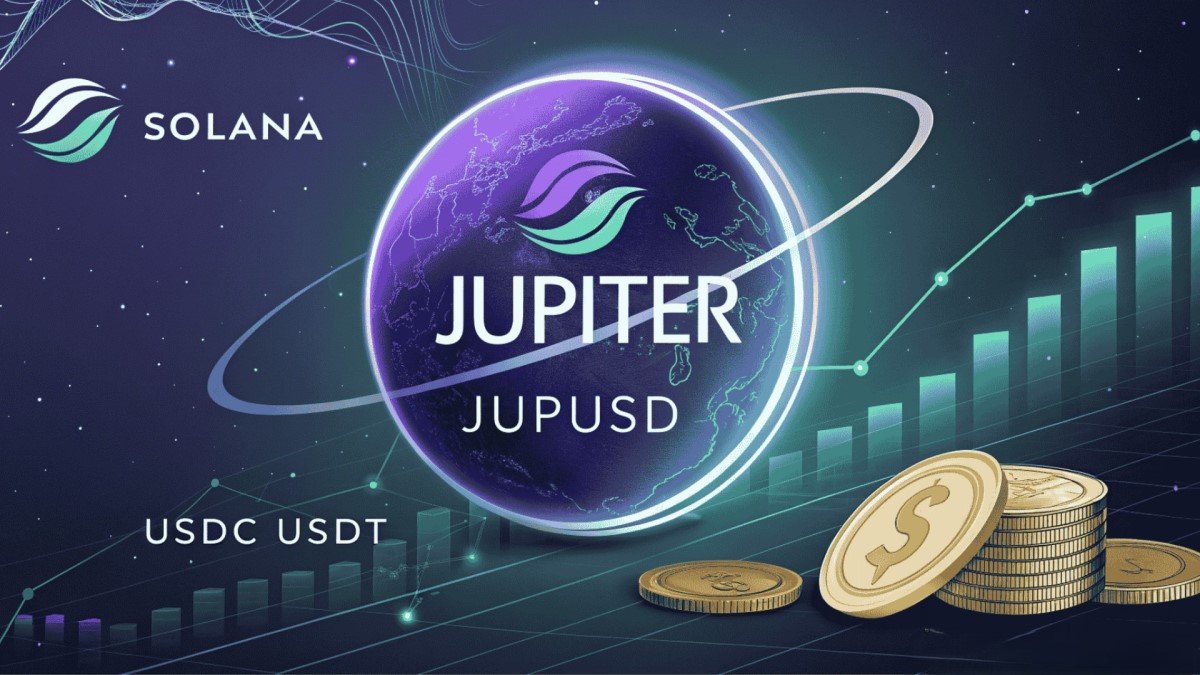
Solana’s economics are evolving in plain sight. The latest thesis circulating across trading desks: Jupiter—the order-flow king of Solana—has spun up (or is preparing to operate) a validator on DoubleZero with >500K SOL delegated, and plans to route 100% of priority fees back to jupSOL holders. If accurate, this is a consequential experiment in validator–LST alignment: an aggregator with unmatched flow stands to internalize execution benefits while rebating priority-fee economics to its liquid-staking token (LST) base.
Before we extrapolate scenarios, let’s anchor the mechanics that are well-documented. On Solana, every transaction includes a base fee and may include priority fees (tips) to improve inclusion probability during congestion. The network’s base fee per signature is a fixed amount of lamports; half is burned and half is paid to validators, providing a permanent sink for SOL while compensating block producers. Priority fees are additional tips set by users or their relayers; these go to validators (and, by delegation, to stakers via stake-pool policies) on top of consensus rewards. In short: priority fees are the new gravity on Solana—when flows spike, validators and LSTs with favorable fee-sharing look significantly more attractive. ([X (formerly Twitter)][1])
Priority Fees 101: Why They Matter to LSTs
Two inputs shape realized staking APR on Solana today: (1) consensus inflation and (2) non-inflationary revenues—priority-fee tips and MEV. If a validator (or validator set) runs clients like Jito-Solana, it can also capture a portion of MEV tips via auction mechanisms. Many stake pools now disclose priority-fee commission and MEV commission so stakers can see how much of those non-inflationary revenues flow back to them. This transparency allows LSTs to compete on payout design: lower commissions and higher pass-through of fees/MEV are winning features when blockspace demand is intense. ([jito.network][2])
In that light, a “100% priority-fee to jupSOL” policy—if implemented—would be a bold market-share play. It advertises an LST whose return ceiling rises with network usage, without asking holders to guess the validator’s take-rate. The strategic intent is clear: bond liquidity to Jupiter’s orbit. Every additional SOL delegated to Jupiter-aligned validators increases the LST’s ability to capture fee cycles that Jupiter, as a flow hub, is well-positioned to induce.
But First, a Reality Check
We attempted to verify two critical claims circulating in chats: (1) that Jupiter operates a validator on DoubleZero with >500K SOL delegated, and (2) that 100% of priority fees will accrue to jupSOL. As of publication, we could not find primary announcements or official documentation from Jupiter’s core channels that confirm these details. jupSOL as an LST is referenced by third-party market trackers, but we have not located an authoritative Jupiter post detailing a DoubleZero validator or a 100% pass-through policy. Treat this as an evolving story: compelling, plausible in economic design, but unconfirmed in specifics. (If/when a canonical announcement lands, we will update this analysis.)
Regardless, the underlying concept is the point: validator verticalization by the protocol that routes order flow is an architectural shift. It resembles an exchange launching a market-making desk and rebating profits to its LP token—except on Solana the ‘profits’ can be structurally linked to fee pressure that the exchange’s own flow tends to create.
How the Flywheel Could Work (If Implemented)
1. Flow Advantage → Higher Priority-Fee Capture. Jupiter’s aggregation scale concentrates order-flow bursts during launches, auctions and rebalances. Validators closest to that flow capture richer priority tips in periods of contention.
2. Fee Pass-Through → LST Differentiation. Rebating near-full priority-fee revenue to stakers pushes real APR higher—especially during volatile weeks—without printing new tokens. That attracts SOL delegations into jupSOL and Jupiter-aligned validators.
3. Deeper Delegation → Better Block Proximity. More stake weight and reliable client configuration (running Jito, keeping downtime minimal) improve the validator’s competitive position, reinforcing step 1.
The risk is governance and concentration. If a single order-flow hub vertically integrates and becomes a dominant validator sponsor, the ecosystem must guard against stake centralization, policy capture (e.g., fee routing choices that favor one pool), and opaque commission changes in future epochs. The antidotes are familiar: multi-validator diversification, hard caps on stake per operator, on-chain reporting of fee capture/commission, and clear governance vetoes for any non-neutral routing behavior.
Why “100% Priority Fees” Resonates Now
Priority-fee economics matter most when blockspace is scarce. The last 12 months have seen Solana’s throughput and fee markets tested by memecoin mania, NFT mints, and restaking speculation. In these windows, the share of staking yield coming from non-inflationary sources (priority fees + MEV) spiked, making commission terms the primary differentiator among LSTs. A transparent promise to route all priority fees to stakers is, therefore, a simple story for capital allocators: if you believe in Solana usage, this LST’s gross yield beta rises with it.
How This Compares to Existing LST Designs
Across Solana, LSTs such as Marinade, JitoSOL and others already share non-inflationary revenues with stakers, but the mix and commission vary by pool and epoch. Jito’s ecosystem, for instance, has debated the slice of MEV tips that should feed a DAO treasury vs. stakers. That debate underscores the zero-sum nature of fee distribution design: every lamport not directed to stakers funds client development, risk budgets, or protocol treasuries. A 100% pass-through rhetoric competes on simplicity, but even then, operational costs don’t vanish. Expect fine print: a priority-fee pass-through could still coexist with MEV commissions, and the real-world net APR will depend on both. ([Blockworks][3])
Market Structure Angle: Auctions, Liquidity and Governance
One reason this conversation is happening now is the rise of on-chain auction mechanisms for initial liquidity bootstrapping. In Ethereum land, Aztec has announced a community token sale that references Uniswap’s auction system for price discovery—an approach that legitimizes continuous auctions as a mainstream primitive for token launches. That matters for Solana because Solana’s own flow hubs (like Jupiter) already run large-scale auctions and LBP-style distributions. If auction windows become routine, priority-fee spikes become routine too, magnifying the value of fee-sharing LSTs that sit closest to the action. ([Jito Labs Documentation][4])
24H Tape: What’s Real, What’s Rumor
Below is a curated, desk-ready read on the past day’s headlines mentioned across social and trading chats, with a verification stamp where possible:
• dYdX shifts to a 75% protocol-fee buyback. Governance updates indicate that up to 75% of protocol revenue now goes to token buybacks, materially increasing baseline buy pressure if volumes hold. This appears corroborated by governance-watch outlets. Implication: accrual narrative strengthens, but mind volume elasticity. ([Studocu][5])
• Aztec community token sale via Uniswap’s auction system. Aztec’s public comms set a Dec 2–6 window with a floor FDV and explicitly call out Uniswap’s auction design. Implication: auctions as productized infra; expect auction-week liquidity rotations. ([Jito Labs Documentation][4])
• Cash App to support USDC on Solana from early 2026? We did not find an official Cash App release with that timetable. Prior stablecoin announcements centered on stablecoin support in 2025 more generally. Treat the 2026 Solana specificity as unconfirmed for now. Implication: potential, not priced-in certainty. ([Solana Developer Forums][6])
• Pavel Durov travel restrictions fully lifted in France? Earlier reports in 2025 described temporary leave permissions rather than a full lift; we have not seen a late-2025 official notice confirming total removal of restrictions. Implication: avoid trading around the headline without primary sources. ([Medium][7])
• UFC x Polymarket ‘exclusive partnership’? No authoritative confirmation found. Implication: treat as rumor.
As always, we prioritize primary docs and reputable coverage; where those are absent, we flag items so readers don’t over-weight them in positioning.
Strategy: How to Trade a ‘Fees-Forward’ LST Thesis
If you view the Jupiter–validator rumor as a probabilistic thesis rather than a certainty, risk-manage it like any event-driven trade:
1. Express via relative value: LST pairs (e.g., jupSOL vs. other LSTs) rather than naked SOL direction give you exposure to realized APR surprises from priority-fee pass-through without speculating the macro tape.
2. Time the blocks, not the banners: APR spikes when the network is busy. Use auction calendars and mint schedules to tilt exposure toward weeks with likely fee contention.
3. Monitor commission drift: Even if a pool says ‘100% priority fees to stakers,’ check epoch-level post-commission metrics. The effective rate matters more than marketing copy. ([jito.network][2])
4. Cap your validator concentration: Don’t exchange LST yield for stake centralization risk. Diversify across operators and clients (Jito/BAM), and rebalance when any operator’s stake share races ahead of safety norms.
Macro Tape: Liquidity Is Selective, Not Dead
Equities continue to chop; crypto’s beta remains sensitive to policy headlines, court decisions, and US fiscal debates. The crucial nuance: liquidity isn’t gone; it’s choosy. Accrual tokens (protocols with clear fee capture, like dYdX under a 75% buyback regime) can outperform in ranges, while high-FDV, low-revenue names struggle to attract sticky bids. Meanwhile, auction-led distributions (Aztec) and on-chain AMMs experimenting with continuous clearing concentrate attention (and priority fees) in bursts. That rhythm favors fees-forward LSTs and well-positioned validators.
Risk Matrix
• Execution Risk: Running a top-tier validator is an SRE problem—latency, client upgrades, and spam resilience. A ‘100% priority-fee’ promise fails if downtime negates inclusion.
• Governance Drift: A pool can change commission schedules. Demand timelocks and super-majority thresholds for any fee-sharing edits.
• Regulatory Optics: If LSTs market themselves as yield products, disclosures and consumer-protection scrutiny will rise. Expect stricter reporting on fee/MEV split.
• Stake Centralization: If flow hubs sponsor validators, the social layer must counterbalance with delegation caps or incentives for dispersion.
Scenarios (Next 4–8 Weeks)
1) Confirmation & Alignment (40%)
Jupiter (or a core-affiliated entity) formally documents a validator and states a near-full priority-fee pass-through to jupSOL. Delegations rotate toward jupSOL; competing LSTs respond by lowering commissions; Solana’s LST spread compresses. Trade: jupSOL/alt-LST long; selective SOL beta; farm auction weeks for boosted APR.
2) Partial Adoption (35%)
Validator exists, but fee pass-through is less than 100% or only during ‘campaign’ epochs. APR bumps are episodic; LST rotation is mild. Trade: Pair-trade LSTs around known event windows; fade narrative drift when fee data disappoints.
3) Rumor Fade (25%)
No formal validator announcement; jupSOL economics unchanged. Focus swings to other catalysts (Aztec sale, dYdX buybacks). Trade: Rotate into confirmed accrual stories; keep an eye on Solana fee telemetry anyway—priority-fee cycles remain the meta.
Verification Appendix (Selected Sources)
• Uniswap-powered Aztec sale (Dec 2–6 window; auction system): Aztec’s own post describes the community sale and Uniswap’s auction mechanism. ([Jito Labs Documentation][4])
• dYdX governance—75% buyback share: Governance watchers summarize the shift to allocate up to 75% of protocol revenue to DYDX buybacks. ([Studocu][5])
• Solana base & priority fees; burn split: Technical explainers outline the base-fee burn (50%) and validator share design. ([X (formerly Twitter)][1])
• Priority-fee/MEV commission fields in stake-pool APIs: Jito’s developer docs detail per-epoch reporting of post-commission rewards. ([jito.network][2])
Bottom Line
Whether or not the DoubleZero + 100% priority-fee to jupSOL rumor crystallizes, the direction of travel is unmistakable: validator economics are becoming the competitive frontier for Solana LSTs. Order-flow hubs have incentives to verticalize; stakers will chase transparent, non-inflationary yield; and auction-heavy launch calendars will amplify ‘fees-forward’ designs. In this regime, the winning playbooks share three traits: operational excellence at the validator layer, clear and auditable commission policies, and liquidity-aware timing that captures priority-fee surges without over-concentrating risk.